
I didn’t plan to end up sitting in the middle of a Costa Rican jungle, listening to howler monkeys, with the Pacific Ocean glittering in the distance. But that’s the thing about regeneration — it rarely looks the way you imagined it would.
A month ago, I met Regan Hillyer at a gathering in Sevilla, Spain. We recognized something in each other immediately — that specific kind of soul recognition that doesn’t need time to settle in. Within weeks, we had manifested sitting together at The Nest, her extraordinary 400-acre sanctuary, retreat center & burgeoning residential community, carved into the jungle above the Pacific. We were there to talk about something I’ve been thinking about for years: what it actually means to manifest regeneration — not just for ourselves, but for the communities, places, and world we’re building together.
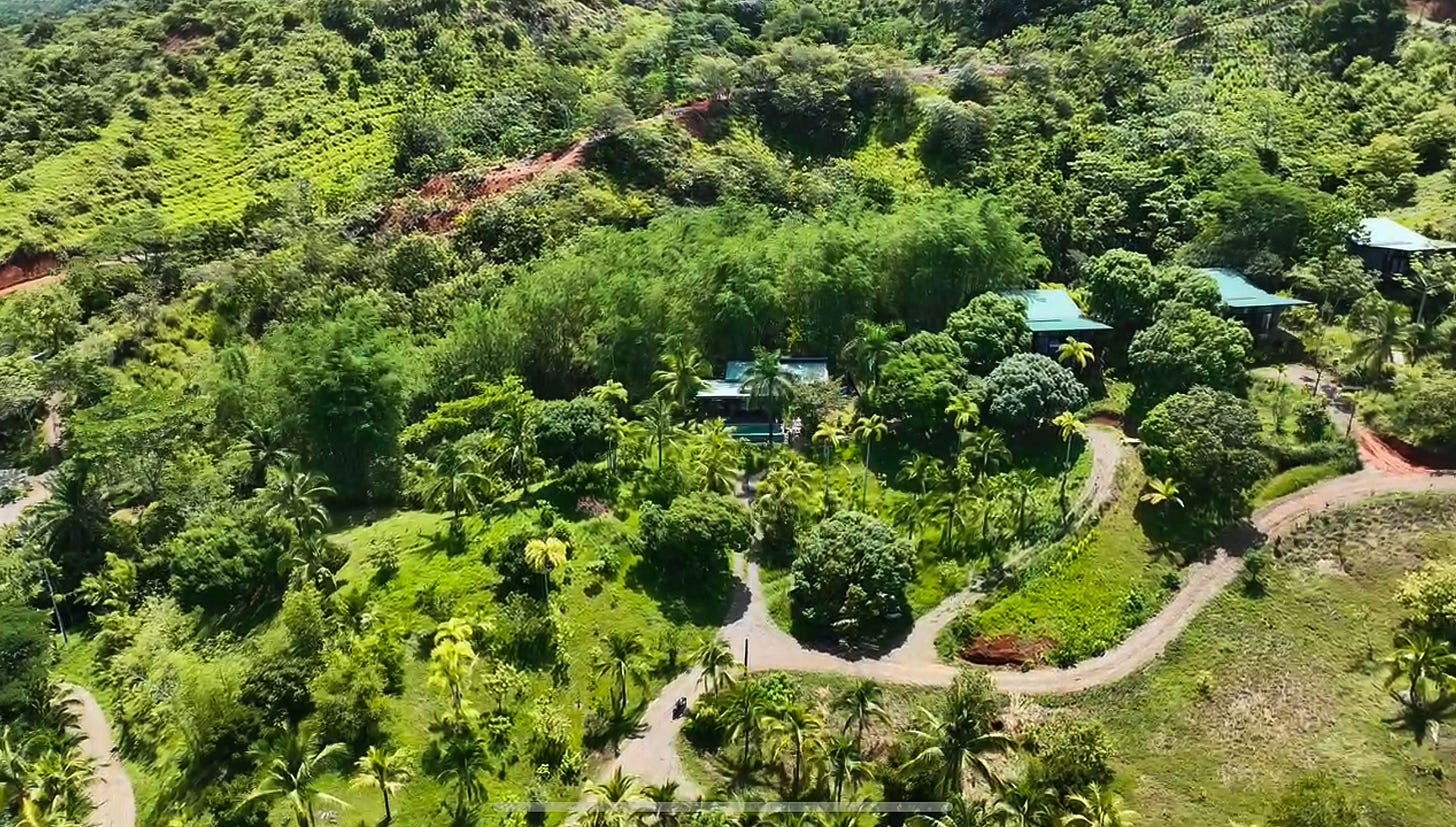
Regan didn’t arrive at The Nest with a grand master plan. She walked the land thinking she might build a simple house. Instead, the land told her otherwise — repeatedly, insistently. Every ridge she stood on, every point with a stunning view, the message was the same: This is for the people.
I’ve heard this kind of story before, and I’ve lived it myself. This is what I call deep listening — one of the core principles of regenerative placemaking. It can sound woo-woo to certain ears, especially in boardrooms. But strip away the language and what you’re really talking about is coherence. You’re asking: Is what I’m building in harmony with what’s already here? Water flow, soil health, the history of the people who came before — these aren’t spiritual abstractions. They’re design intelligence.
The alternative is what I call neocolonialism of place: arriving somewhere beautiful with your blueprint already rolled out, ready to impose it. The jungle doesn’t negotiate. It eats that kind of ego for breakfast.
Here’s something I say in my book Generation Regeneration (coming out this August) and I’ll say it again here: sustainability has largely failed. It’s become a politicized, watered-down term that essentially means “keep doing what you’re doing, just a little less badly.” It doesn’t ask us to give back more than we take. It doesn’t heal. It sustains broken systems.
As Regan put it so precisely: Why would we want to sustain what isn’t working?
Regeneration is different. It’s the self-healing modality of nature itself. It moves through cycles — death, chaos, reorganization, renewal. Quantum physics describes it, indigenous wisdom has practiced it for millennia, and our own bodies demonstrate it every single day when we sleep, rest, and rise again.
The framework I work with has three pillars: community, culture, and nature — and three codes: co-creation, co-design and co-evolution. The magic happens when all of these come into coherence together. Not just your personal coherence, but coherence with the land, with the people, with the living systems around you.
That’s when manifestation stops being a solo project and becomes something much larger.
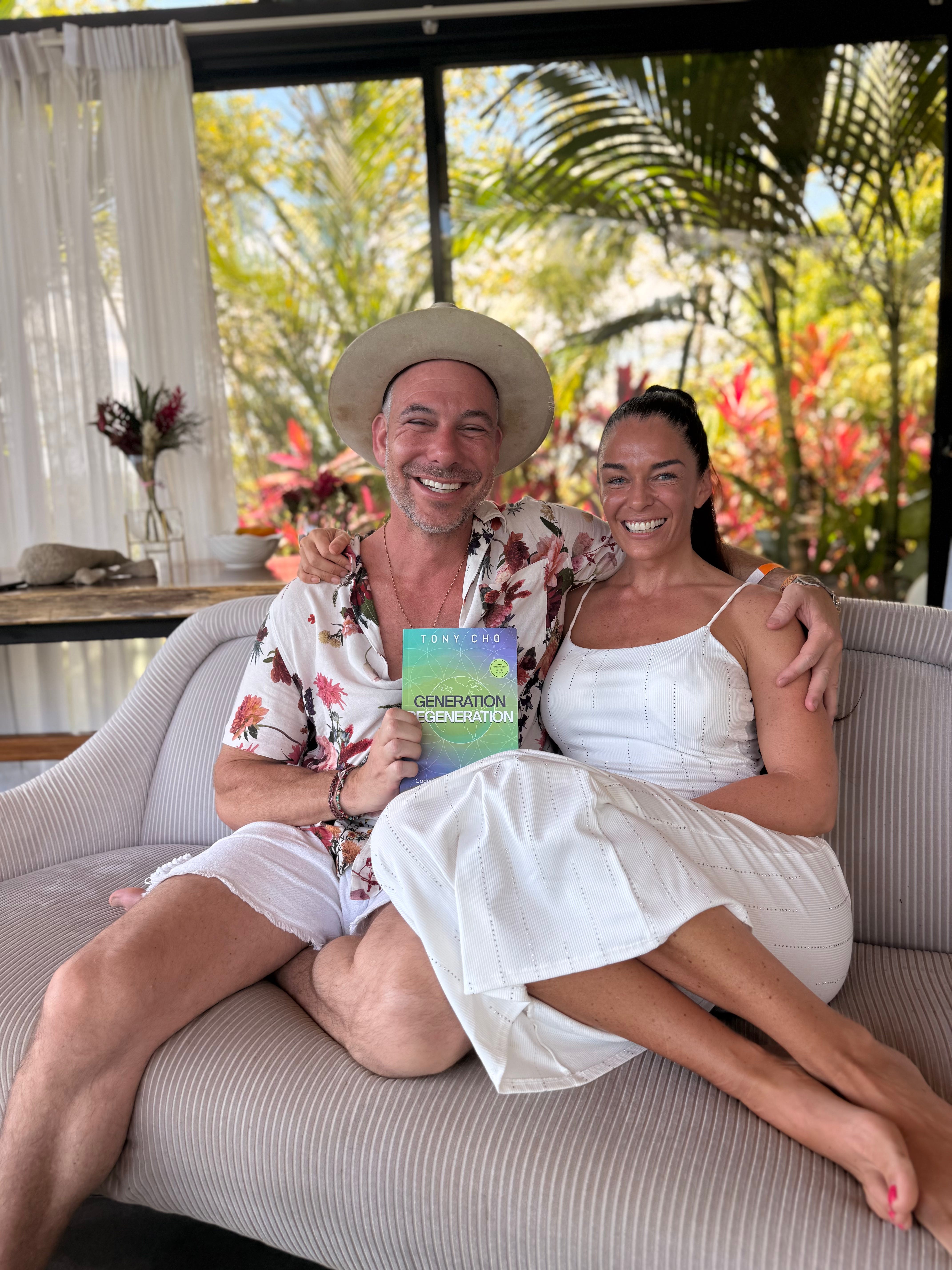
PRE-ORDER GENERATION REGENERATION
The U.S. Surgeon General’s office has released findings that loneliness is equivalent in health impact to smoking 15 cigarettes a day. We are living through the largest epidemic of loneliness in recorded history — in a world more “connected” than ever through screens and platforms.
This is not an accident. We designed for it. We built cities, neighborhoods, and communities that structurally isolate people. We replaced depth with convenience. We replaced presence with content.
People now trust AI chatbots over human beings for emotional support. An entire generation has developed more fluency with algorithms than with eye contact. And we wonder why depression and suicide rates are at historic highs.
The antidote isn’t an app. It’s authentic community. It’s nature. It’s being present in a room with other humans, hearing music played live, watching a puppy roll over on the floor while babies run circles and someone nearby has tears in their eyes from a song. Regan described exactly this moment — she was exhausted, carrying the weight of building something enormous, and then this small, unplanned gathering happened in her common space. Residents, guests, music, laughter, connection. And her entire nervous system remembered: This is why.
That’s medicine. That’s regeneration in its most human form.
At its core, what Regan teaches through her manifestation work — and what I believe regenerative placemaking is ultimately about — is remembering.
Not becoming something new. Not optimizing or upgrading yourself into a better version. Returning to your original blueprint. Your truest nature. The self that existed before all the noise and distortion piled on top.
When we remember who we are, we make different choices. We eat differently, speak differently, relate differently. We start to recognize that we’ve always been manifesting — the only question is whether we’re doing it consciously or by default.
The same logic applies to communities and cities. We don’t need to build from scratch. We need to remember what human settlements looked like when they were in right relationship with land and water and each other. Then we can integrate the best of what we’ve learned and built — the technology, the medicine, the connectivity — without losing the thread back to our nature.
The oldest urban planning framework that exists isn’t some Silicon Valley innovation. It’s indigenous. It’s called Seven Generation Planning, and the premise is simple: every decision you make should be examined through the lens of the past three generations, the present, and the next three generations — or seven generations into the future.
When Regan talks about why she’s building The Nest, she doesn’t give a business answer. She says: for the children. For the ones who aren’t here yet. For the generations that will inherit what we anchor now.
That’s the right frequency. That’s regenerative thinking.
No gated community, no bunker, no private compound is going to save anyone if the people around them are hungry and desperate. Build bridges, not walls. Invest in the communities that surround you. Understand that your wellbeing and the wellbeing of the ecosystem you inhabit are not separate things.
Ximena departed 9 months ago. She was the love of my life — my queen of hearts, my greatest teacher. She asked me, always, to simplify. To lighten the load. To stop overextending.
Last spring, while she was in the final chapter of her life, everything around me collapsed at once. And so I stopped trying to do anything. I accepted. I became present for my wife. I let gratitude erase the stress. I let go. Community showed up in ways I didn’t know possible. Something this devastating, this painful — and yet somehow so beautiful at the same time. I’m still in awe of it.
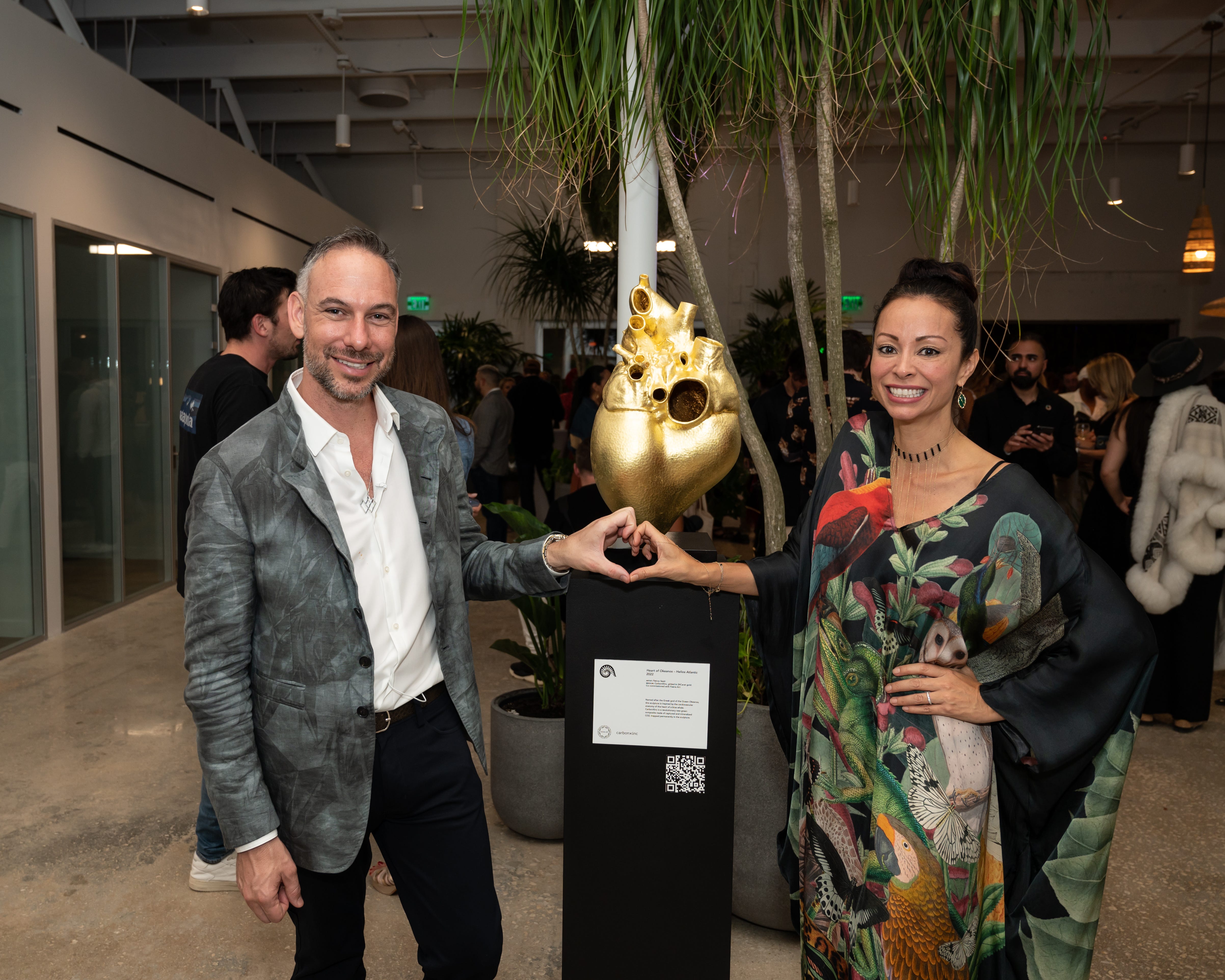
The book Generation Regeneration is dedicated simply to Ximena. There’s a photo of us together in the back, taken at an event for the unveiling of one of our many co-creations, the Climate + Innovation HUB in Miami — both of us standing next to a sculpture of a blue whale’s heart created by our dear friends at THE REEFLINE. One of the largest hearts in the world. She was that, too.
Dark nights of the soul are not obstacles to regeneration. They are the process. The chaos, the crumbling, the disorientation — that’s the particles reorganizing before the new form emerges. You can’t call in something new without creating space for it first. You can’t hold a new frequency while clutching the old one.
You don’t need 400 acres in Costa Rica to begin regenerating. You need:
20 minutes in nature. Daily. Without your phone.
One real conversation. Not a text thread. A conversation.
A practice of stillness. Meditation, breathwork, Shabbat, whatever fits your tradition or temperament. The form matters less than the intention.
Presence. Stop living in the future or the past. The present moment is the only place where connection — and therefore healing — can actually happen.
And if you feel called to something larger: find your people. Seek out the communities being built by those who share your values. Taste them. Visit. Contribute. Co-create. You don’t have to build the whole nest — but you can help weave it.
We are in the middle of something enormous. Old systems are crumbling. New ones are being anchored by people who are willing to listen — to the land, to each other, to their own deepest knowing.
I believe we are on the right side of this. I’ve seen too much beauty being built to believe otherwise.
See you at the summit!
— Tony
Generation Regeneration: Codesigning the Future of Cities through Regenerative Placemaking officially arrives on August 11, 2026 and we’ll be joined by Regan Hillyer, a manifestation teacher and the founder of The Nest Eco-Sanctuary in Costa Rica for the Generation Regeneration Online Global Summit taking place this July. Be sure to sign up for updates to learn more about what’s in store!
Comments
Nothing yet. Say the first thing.
Sign in to join the conversation.