
Part of the Adaptive Intelligence Playbook: A system for leading in the age of agents.
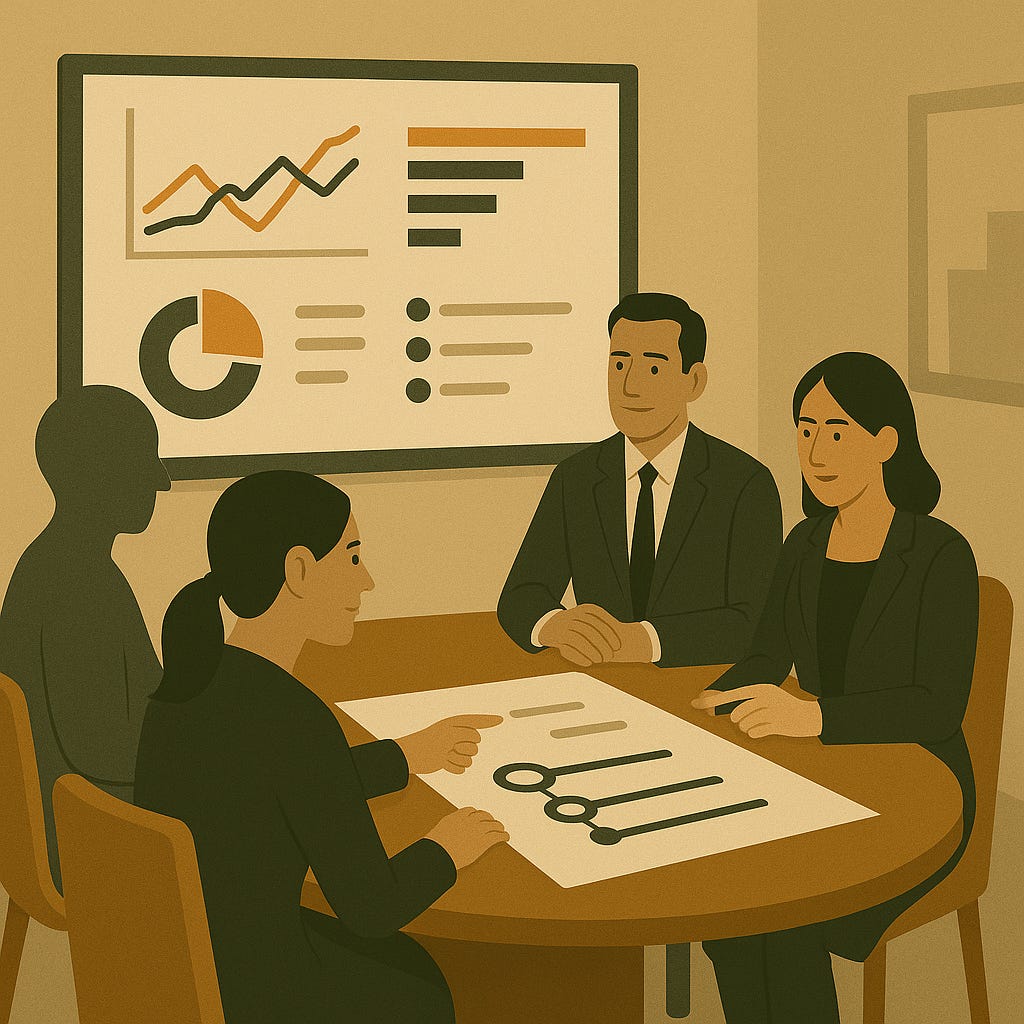
Alignment is no longer a quarterly ritual—it’s becoming the infrastructure your organization runs on. As agents gain autonomy, ecosystems evolve, and strategy emerges at the edges, the speed of change is outpacing the structures built to govern it. Static plans don’t cut it. Adaptive orgs stay aligned through systems of dynamic coherence—designed to flex, learn, and realign in motion.
Most organizations still treat alignment as a moment—a kickoff, a sync, a quarterly OKR review. But in reality, alignment is now a system-level capability. It must live in the interactions—across teams, across tools, and across both human and machine decision-makers. The new mandate is clear: don’t just aim for alignment—design it, maintain it, and scale it. Because when coherence fails, speed turns into risk.
At Microsoft's Build 2025 conference, the company unveiled its vision for an "agentic web," emphasizing the integration of AI agents capable of autonomous decision-making and collaboration across systems.
This initiative marks a turning point: agents are no longer just executing—they're adapting. This demands a shift in how organizations operate. To stay coherent, leaders must build systems that align autonomous behavior with human intention.
Lesson: As AI agents gain autonomy and integrate deeper into workflows, an Alignment OS becomes critical to ensure strategy doesn’t drift with every system update or market shift.
Share the Signal—Together:
Forward this briefing to 2–3 colleagues across functions. Each person picks one action to strengthen alignment this week—whether it's mapping decision flow, tracking agent influence, or surfacing tension.Start a Weekly 15-Minute Alignment Loop:
Set a recurring micro-ritual (15 minutes, 5 people max) to surface where coherence is breaking down. Don’t overthink it—just observe, learn, and adapt together.Make One Process Coherent:
Pick a fast-moving initiative. Ask: Where are the goals, decisions, and AI inputs misaligned? Now design one fix that makes alignment repeatable—not heroic.
This is more than collaboration—it’s coordination by design. Leading orgs are asking:
Where is alignment drifting as agents and markets evolve?
What systems catch drift—and which ones quietly reinforce it?
How do we architect coherence into daily workflows, not just slide decks?
→ Want help operationalizing this? Book a session .
To start building your Alignment OS, begin here with awareness and diagnostics:
Comments
Nothing yet. Say the first thing.
Sign in to join the conversation.