

“It (the short story) is not a documentary or rigorous accounting of the passage of time or a fair-minded attempt to show life as it is really lived; it’s a radically shaped , even somewhat cartoonish…little machine that thrills us with the extremity of its decisiveness.” George Saunders
I think we can also apply Saunders’s reasoning about narrative to writing novels, too. Because I see a lot of writers wanting their stories to be so close to reality, they keep saying that we don’t talk this way or that we do all these microexpressions in real life. But stories, though grounded in reality, balanced by specific details, real-life objects, and obsessions, aren’t our lives. There’s a reason reality television is scripted: it's edited to cancel out the boring parts of breathing, sleeping, sitting, and doing nothing of interest to most viewers.
Writers should cut out the boring parts, cut out the parts that don’t lead to causality, that don’t engage the reader in conflict and tension, of the good trouble of narratives.
So let your characters skip the boring, muddled parts of conversations. Find the dialogue that reveals their characters, moves the story along, and shows us the subtlety of being alive in the moment of your story. Let them say the wrong thing, the thing they’ve always wanted to say, let them also hold back when appropriate, let them explode later. Find the lines of dialogue that make your characters unique and specific. Unique characters have a way of creating story, of helping the writer find the plot they didn’t expect, that’s a new slant angle on our lives. We need new angles, new perspectives, new ways of thinking about problems. The writer is in conversation with all of the plots and hooks and premises that have already been created; you must burrow into new ideas, new amalgamations, that when revised and polished, make us hungry for the next page, the next way your character will mess up, will try to correct, and fail again. Break the veneer of perfection, and show us the struggle underneath!
Dialogue as action: Do not have your characters discuss a topic without the possibility for some sort of change. If two stubborn characters go back and forth about abortion, at best you’ve written a philosophical tract; at worst, an after-school special…To make this static argument even more compelling, recognize that people change their tactics when they talk—one of the characters can start off friendly and ingratiating, then becomes manipulative, then guilt-tripping, and finally hostile.`Teddy Wayne
Dialogue is action, so we don’t want it to house the exposition, the details of the backstory. Otherwise, it reads like exposition rather than the unique, specific character we’re hoping to see on the stage of the story! This has the effect of being only for the reader’s benefit, so it sounds wooden and doesn’t feel truthful to the moment you’re creating on the page. Characters and the reader should both be learning or hiding new information from each other and themselves!
If you must use a micro expression (clenching a jaw, raised eyebrow, glinting eye, shoulder shrugs, and those fingernails cutting through the skin of the palm, and so on…), use them sparingly, like a good kind of seasoning.
I believe it is very hard to picture the faces of imaginary people but that the movements of imaginary people are easier to see, if we’re given the right prompts. A body in motion is an easier lift for our imagination than a face scrunching and waggling or whatever. So keep your characters moving, even if it’s only to reach for the closest gin bottle. Matt Bell
It is the writer's job, regardless of what convention we are used to, to break the convention for the freshest, cleanest writing we can muster. Limiting these expressions allows us to use the pathetic fallacy (This should be another post!) more often, so our character looks outward rather than inward. This will decrease your use of filter (saw, felt, thought, noticed, etc.) and create a closer intimacy between the reader and the character.
Readers, I believe, want more intimacy, a feeling of being just behind the heels of the character they are following through the errors and triumphs, to be in the character’s head, of course, for this is the novel’s superpower, but also they want something other than the mundane or the benign. And maybe when I say reader, though I’m thinking of thousands of people, I know I have my own biases, and I love a clever turn of phrase, a keen insight, a metaphor that helps me see the world, the character, and therefore myself in a new way. We can get here in genre stories, in crime and mystery, Thriller works in the same way we do in literary novels, if the writer takes the risk of writing cleanly, of balancing the craft of showing and telling, and making sure that there is also room for inferences, for us to solve not just the mystery of the plot, but the mystery of character, too.
You’re creating a story, so feel free to use your imagination, to risk getting away from reality as much as you can while still giving us a sense of something universal. Even the most grounded stories take on a specific angle toward reality. One way to create this new angle is to use compression to weed out the actions, dialogue, and set-ups that aren’t necessary to the story.
Prompt: In a separate document, take a conversation from your writing in progress and cut out as many of the boring parts as possible, allowing your characters to say the things they shouldn’t, that they’ve always wanted to say. Let them talk past each other, and then catch the insult from the other character, let them challenge each other! Find the small actions, not microexpressions, that keep us grounded in the setting, but that also reveal your characters in the way they act in this conflict, in this moment. How can you evoke the 5 senses without focusing on only the visual, especially cutting out the visual of the other character’s facial expressions? What other small actions could reveal their emotional state?
Podcast:
I was invited to talk to the hosts of the Prose Pros podcast about how to land a literary agent!
For Books and Beyond, I talked to host Mylee J. Miller about writing and publishing short fiction!
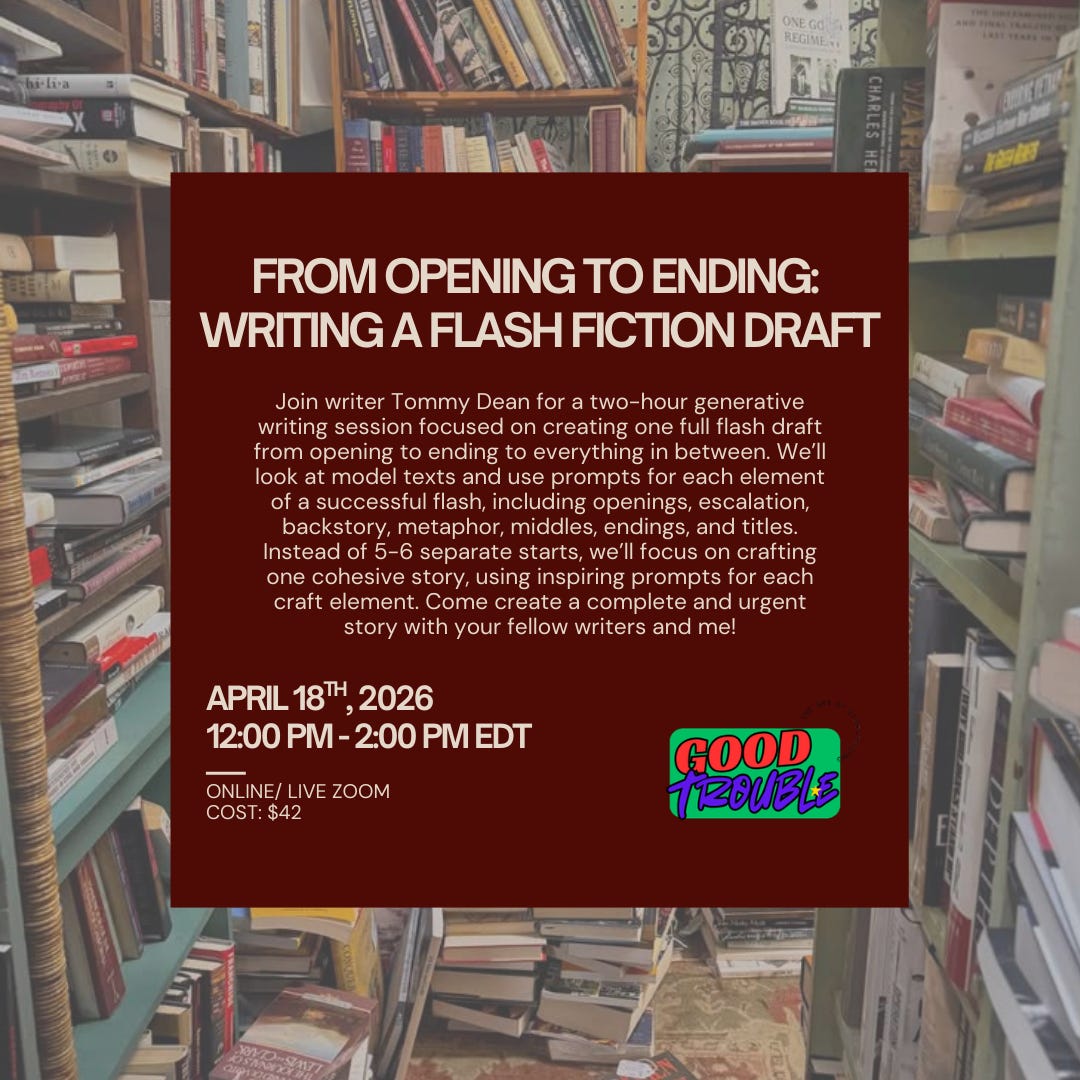
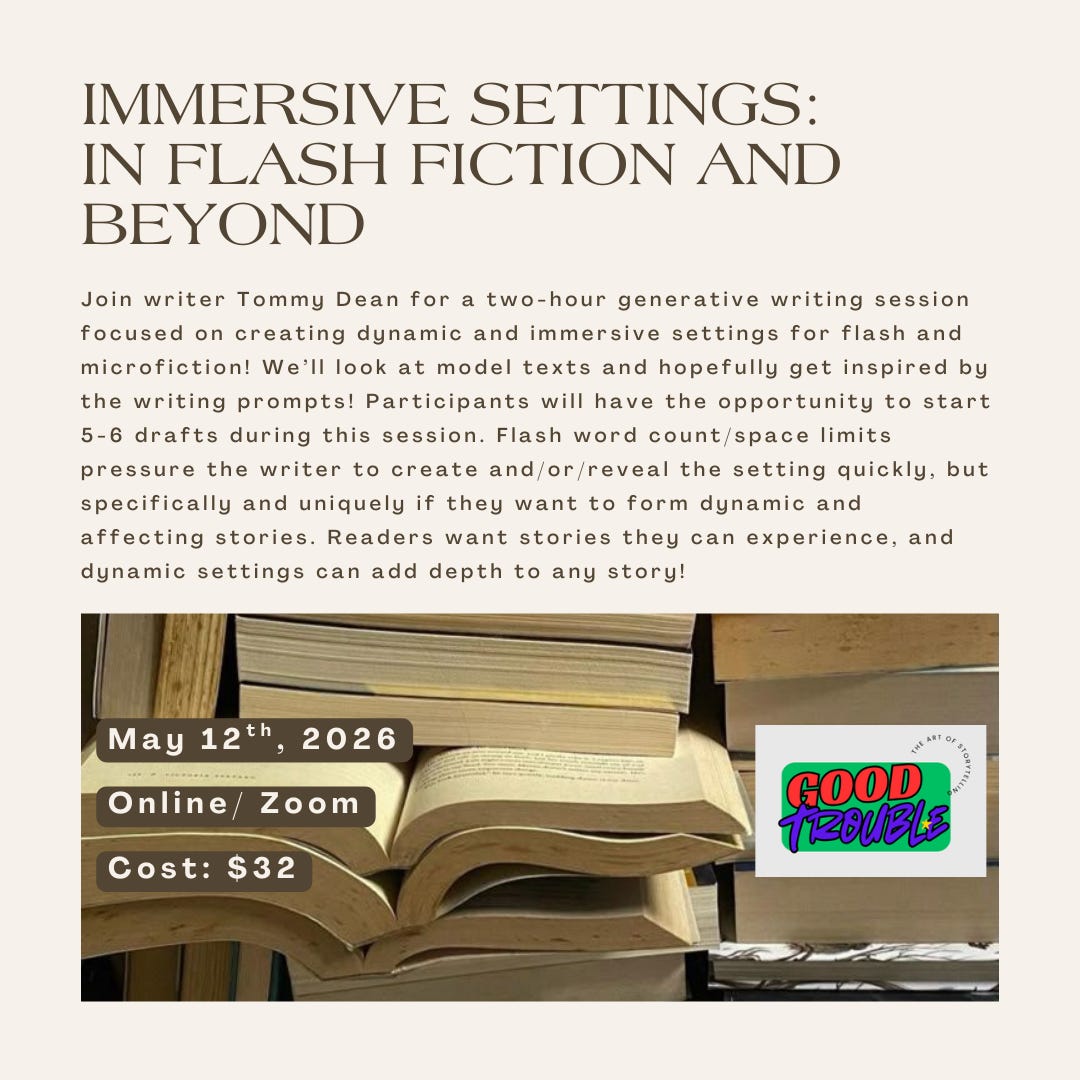
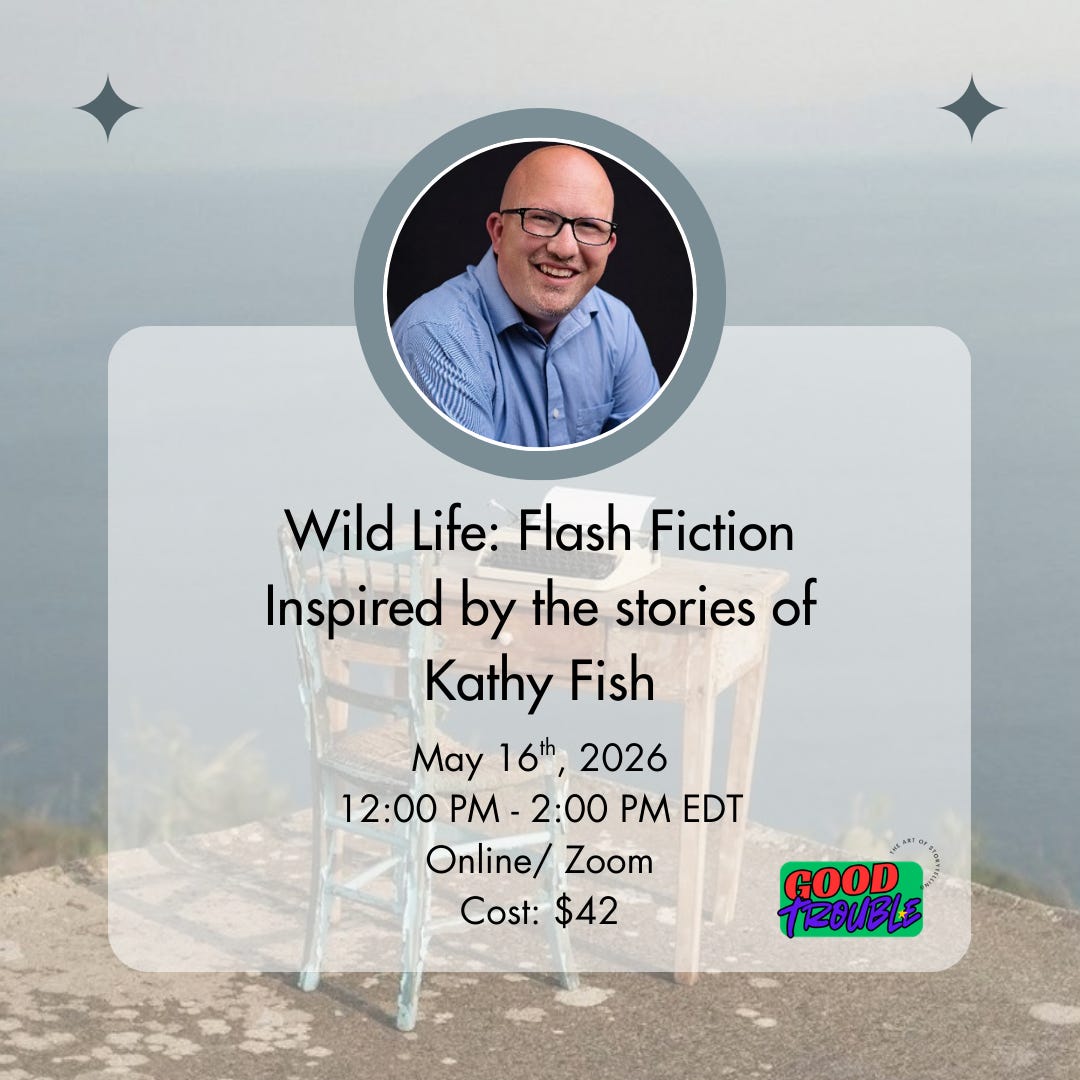
Write with Me:
Comments
Nothing yet. Say the first thing.
Sign in to join the conversation.