
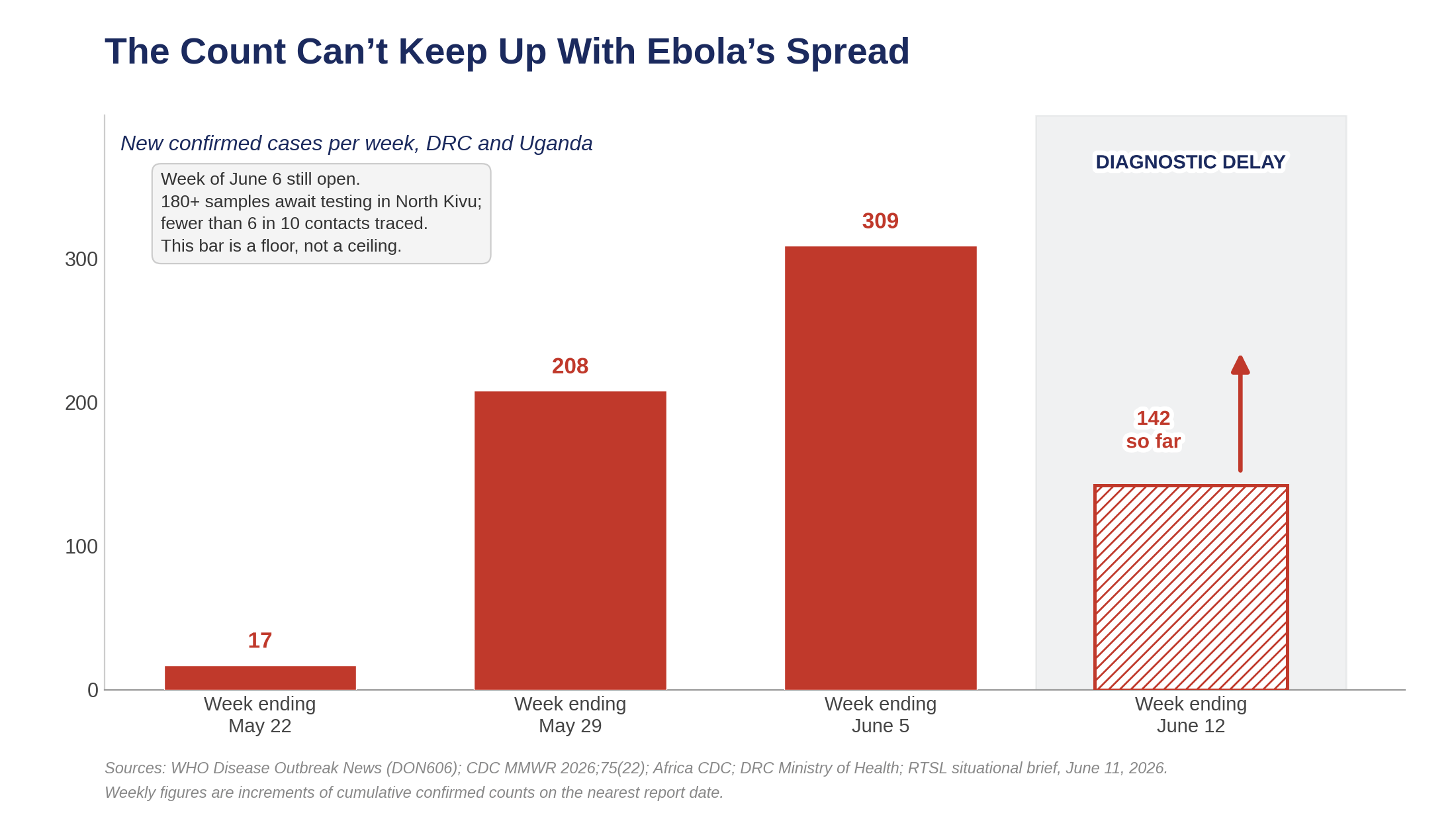
Three weeks ago I wrote that the Ebola outbreak in the DRC could be stopped. It still can, but it continues to move faster than the response, and the numbers understate how fast it’s moving.
Confirmed cases in the Democratic Republic of the Congo nearly doubled in a week, from 344 on June 3 to 635 on June 10, and confirmed deaths passed 100. June 8 brought 48 new cases and 14 deaths, the worst single day so far. Almost all the new cases came from three zones in Ituri—Bunia, Rwampara, and Mongbwalu—where the virus is now entrenched. In Mongbwalu, a gold-mining town, more than a third of confirmed patients have died.
Even these numbers don’t tell the whole story. North Kivu reported almost no new confirmed cases last week—not because transmission stopped, but because more than 180 samples were sitting untested. The province ran short of reagents for testing; every specimen had to travel nearly 1,000 miles across the country to Kinshasa. When testing caught up on June 10, twelve cases were confirmed in North Kivu in a single day, with more to come as the backlog clears. Contact tracing was reaching fewer than six in ten contacts nationally and almost none in parts of North Kivu, and burial teams have been attacked and driven away. The official count is a floor—and it’s rising fast.
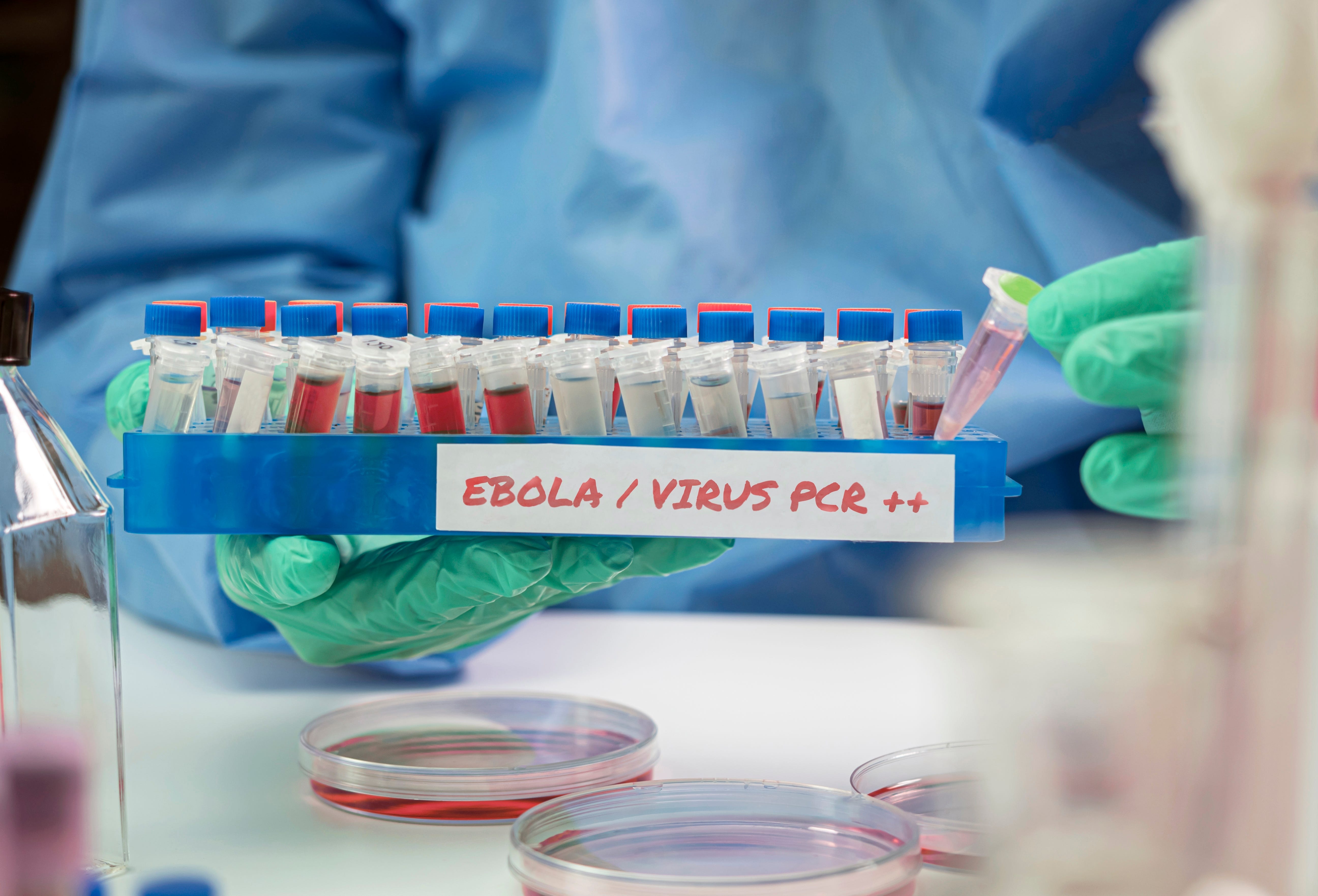
A case count that looks like it is leveling off can lull a response into easing, when the flattening only means that case identification, contact testing, and laboratory work has fallen behind. There’s a large gap between the actual number of cases and the number of confirmed cases. One critically important indicator to track is the proportion of new cases that arise from named and tracked contacts. As control progresses, this number should approach 100%.
A deadly gap is the one between what has been promised and what has reached the ground. The world has pledged more than $550 million. Reagents, test kits, and protective equipment are in short supply, and the money to pay many of the people doing the most dangerous work hasn’t reached them. Funds committed in capitals do nothing until they become a tested sample or a nurse’s hazard pay in Ituri.
The task now is to close those gaps at the pace the virus is setting. Send reagents, test kits, and protective equipment to North Kivu and set up a lab there so samples no longer need to travel across the country to be tested. Release the pledged money and resources to the groups and staff working in the affected zones, to the communities that need services in these areas, and to the public health teams that need it this week. One of the most searing memories I have is of a dedicated contact tracer in Guinea in Guinea quietly and respectfully telling me that he didn’t mind working 7 days a week and risking his life for $4 a day, but he hadn’t been paid in 4 months and could we please sure that he gets paid so that his family could eat. Pay frontline workers on time, every time.
No posts
Comments
Nothing yet. Say the first thing.
Sign in to join the conversation.