
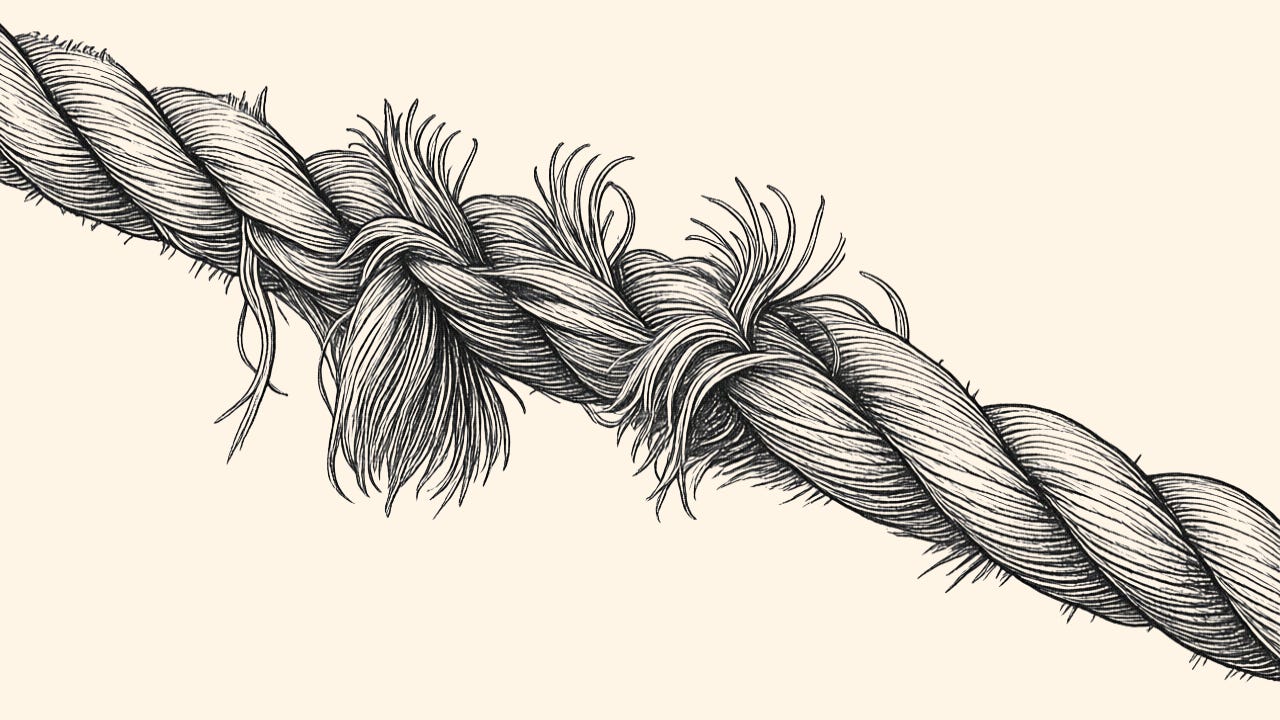
In 1997, on a sunny afternoon in New Delhi, with good progress on a tuberculosis project I’d been working on for years, I commented to Sir John Crofton that global health progress seemed inevitable. Crofton had been knighted for discovering how to cure tuberculosis. He was in his late eighties, still sharp, still humble, generally quite cheerful. When I said this, he became somber. He had served as an army doctor in World War II, retreating across Africa and Europe as the Allies lost one battle after another. “If FDR hadn’t gotten the Americans into the war when he did, Hitler would have won,” he said. “Progress is not inevitable.”
I think of Crofton whenever progress starts to slip. It’s slipping now.
This summer, outbreaks flared inside the United States: measles, cyclospora, and screwworm. Two more reached Americans from abroad: hantavirus on a cruise ship and Ebola in the Democratic Republic of Congo. The systems built to catch threats early and stop them have been thinned.
Recent cuts to health agencies, including the Centers for Disease Control (CDC) and Food and Drug Administration (FDA) make us more vulnerable. It’s difficult to prove causation for any single outbreak, because disease spread has many drivers and no one person or agency is fully responsible for any of them. But together, the outbreaks point to the danger of taking health progress for granted and the importance of robust, well-funded public health infrastructure.
Measles is a clear example. Decades of effort in the U.S. to increase vaccination and drive down cases culminated in measles elimination in 2000. That progress is being reversed. This year, the U.S. has already recorded more than 2,300 cases, topping last year’s total, which was itself the worst in 35 years. Vaccination rates were slipping even before Robert F. Kennedy Jr. took over at the Department of Health and Human Services (HHS), falling from 95% before the pandemic to under 93% in recent years. Even a seemingly small decline in vaccinations can lead to thousands of more cases. That decline created the opening, but mixed messaging from HHS leadership about vaccination and lack of clear direction have made this outbreak harder to contain.
Cyclospora has sickened more than 11,500 people across 41 states this summer, making it one of the largest outbreaks of the disease on record. Investigators are still working to pin down every source. Decisions to remove cyclospora from CDC’s foodborne surveillance network, reduce foreign food inspections and lay off 8 of 11 experts specializing in the pathogen didn’t lead to this outbreak, but they sure don’t help make our food system safer. State and local health departments lost federal funding and staff right when they needed more. The outbreak is a reminder that we rely on institutions to ensure the food we eat, the water we drink and the air we breathe is safe.
Screwworm has reached the U.S. for the first time in nearly 60 years, moving north from Mexico faster than expected. In early 2025, U.S. funding for animal disease control—including screwworm programs—was cut and delayed, and USDA lost more than 2,000 APHIS employees. Containing screwworm depends on producing sterile flies at scale, and that production is lagging behind the outbreak’s pace. As I wrote, risks accumulated until the parasite resurged.
Hantavirus at sea and Ebola in DR Congo show how fast disease can travel. Two U.S. citizens who contracted Ebola in the DRC were evacuated to Germany for care. Bringing people home safely, getting them proper care, and preventing further spread takes the kind of infrastructure and coordination that’s been under strain. The administration has made it worse, quarantining aid workers in Kenya and barring U.S. citizens in the DRC from coming straight home. Fewer American health professionals will be able to go overseas to fight disease.
The systems meant to keep us safe are being worn down. Disease monitoring, staffing, and lab capacity have been cut. CDC has been without a permanent director for almost a year. And global aid cuts make Americans more vulnerable to health emergencies originating abroad.
We know what works. More than 90 countries now use 7-1-7, a simple standard my organization, Resolve to Save Lives, developed with peers in Africa: detect an outbreak within 7 days, report it within 1, respond effectively within 7. The targets show exactly where a response broke down, hold governments accountable for fixing it, and give health leaders the evidence to demand the resources they need.
A public health system at full strength catches threats when the risk is low and an effective response is easy. A weakened system finds outbreaks late, when they are big and much harder to stop.
How do we strengthen public health systems? Start by rebuilding systems to monitor, filling the vacancies, funding state and local health departments at the level the work demands, and restoring the global partnerships that stop outbreaks before they reach us. This is the often-invisible work that determines whether the next threat stays small or reaches crisis level. Crofton understood that progress is not inevitable. Whether progress continues hinges on the actions we take now.
No posts
Comments
Nothing yet. Say the first thing.
Sign in to join the conversation.