
I was lucky enough to spend a day in Delft recently with a few newfound friends that I met in Holland. Together we strolled on the same cobblestones where Johannes Vermeer had walked nearly 400 years earlier. We stopped at the place he was born, where he was baptized, where he played as a boy, where he painted his masterpieces, where he raised his family, and where he died. He lived his whole life in an area not much larger than a couple of football fields. It was a spiritual experience for me.
I have had a fascination with Vermeer for more than half a century. It started when a small detail in one of his paintings captured my interest during a boyhood visit to the National Gallery of Art in Washington with my parents. Barring a future find in an attic in an old Dutch home, I have seen all his surviving paintings. I have spent enough time with them that I feel like I have spent time with Vermeer himself. I think I have a pretty good sense of how he put ideas together for his paintings before he ever touched the brush to the canvas. On this visit, I not only got to imagine his life on his turf but also got to share some of my love for Vermeer with these new recruits.
The Nieuwe Kerk
It is a bit funny that a church completed in 1495 would be called the New Church, but it is, in fact, quite a bit newer than the Old Church up the street.
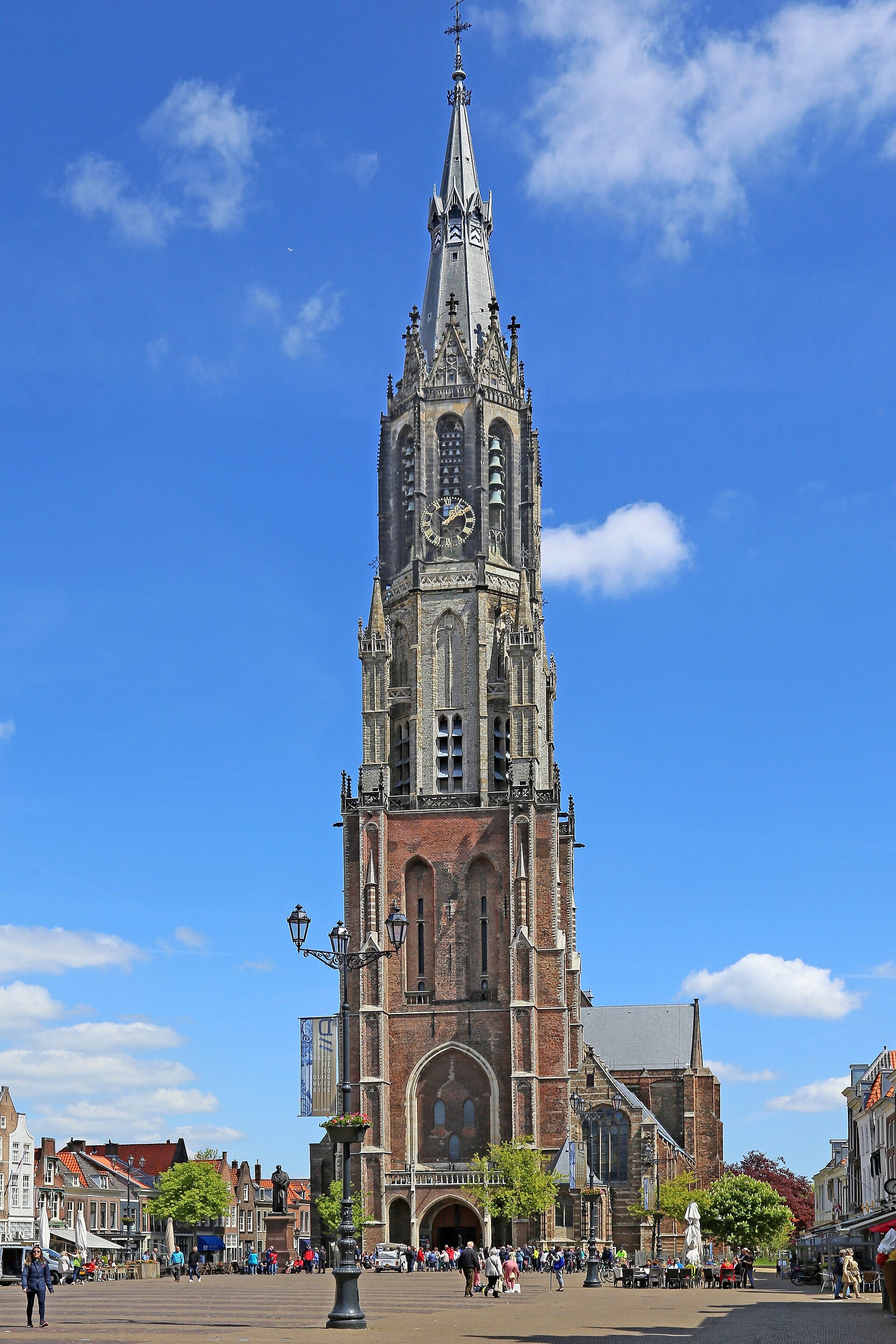
Vermeer was baptized in the Nieuwe Kerk and lived his life in a total of three homes, all in the shadow of that church tower.
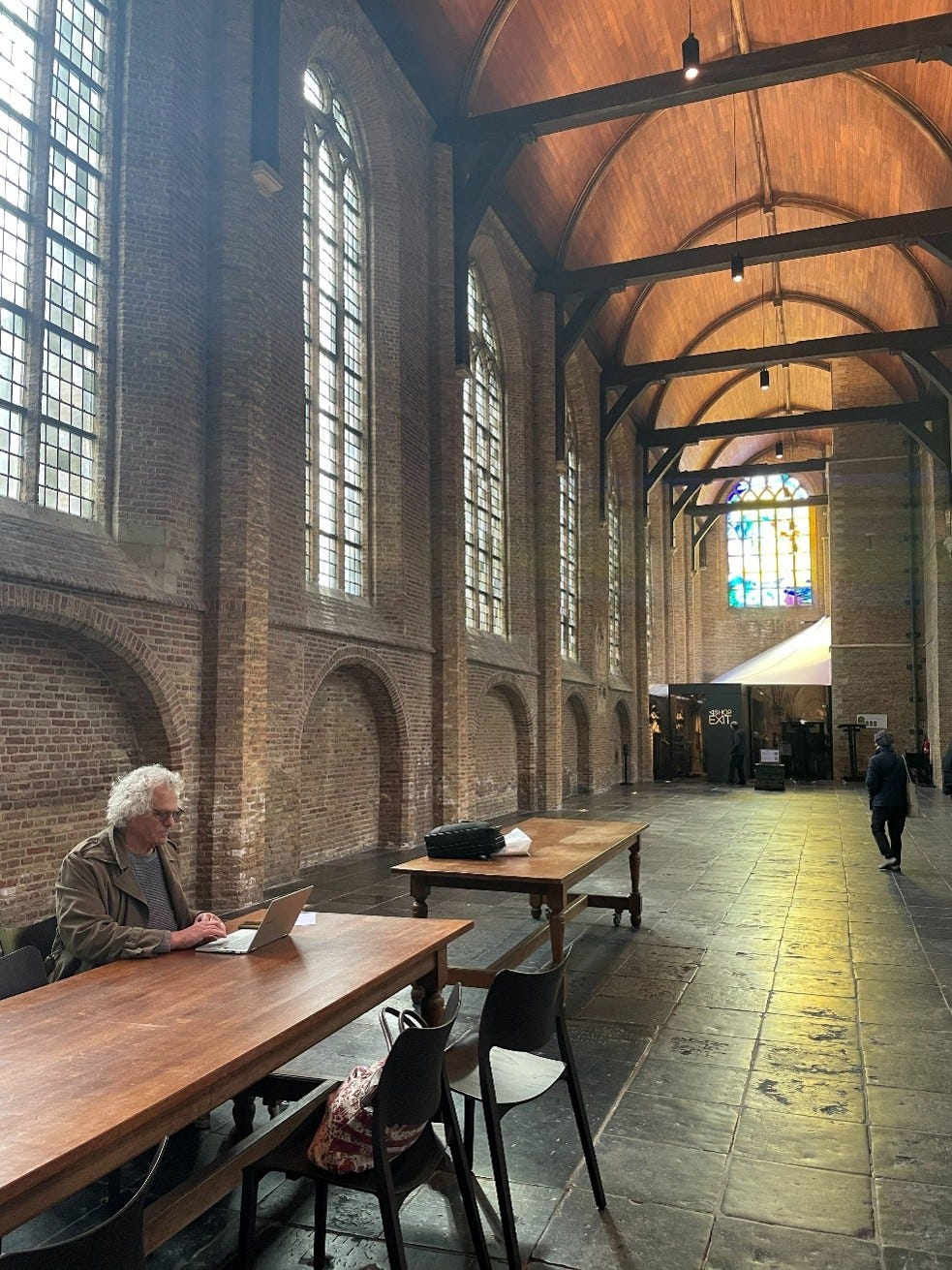
Here is a picture of me on an earlier visit to Delft, grading student papers in the church, combining two of my passions: teaching biology and being with Vermeer.
The Flying Fox
His first home was at an Inn his father ran, called “De Vliegende Vos” (The Flying Fox). It was probably located at what is now Voldersgracht 25/26. At the location now is the Café Johannes, and an antique shop.
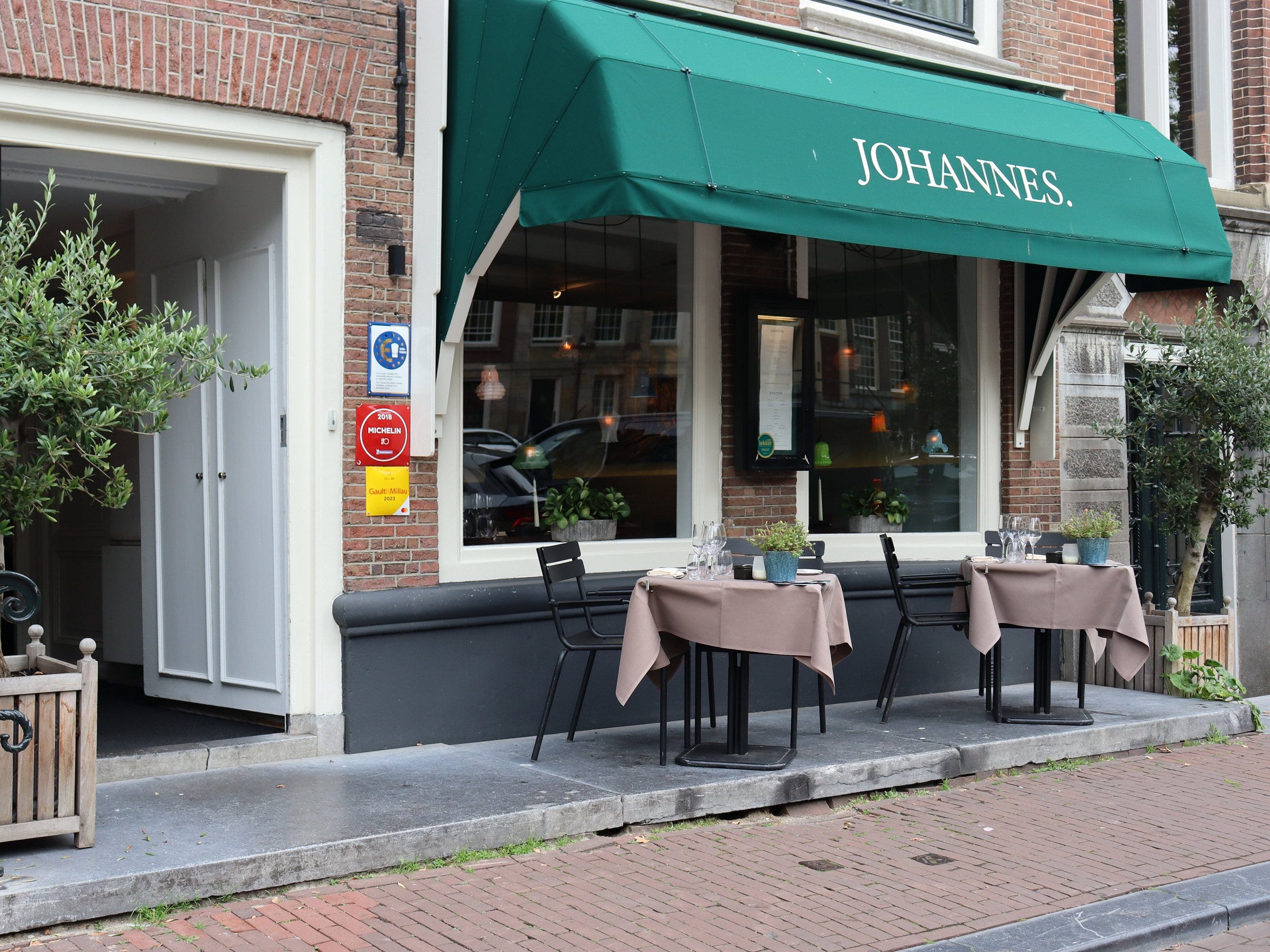
In Vermeer’s day, it was probably a brick-fronted building, two or three stories tall, with stepped gables and shuttered windows—common architecture in the 17th century and still common today in much of old Delft. As was typical of small inns at the time, it likely included sleeping quarters for guests, a room to enjoy a meal and a beer, living quarters for the family, and space for Vermeer’s father’s art-dealer business. It was adjacent to the Guild of St. Luke, which would play an important part in Vermeer’s life later on.
The Mechelen Inn
When he was 8 or 9 years old, the family moved to the Mechelen Inn. The building at the site today is a tourist shop.
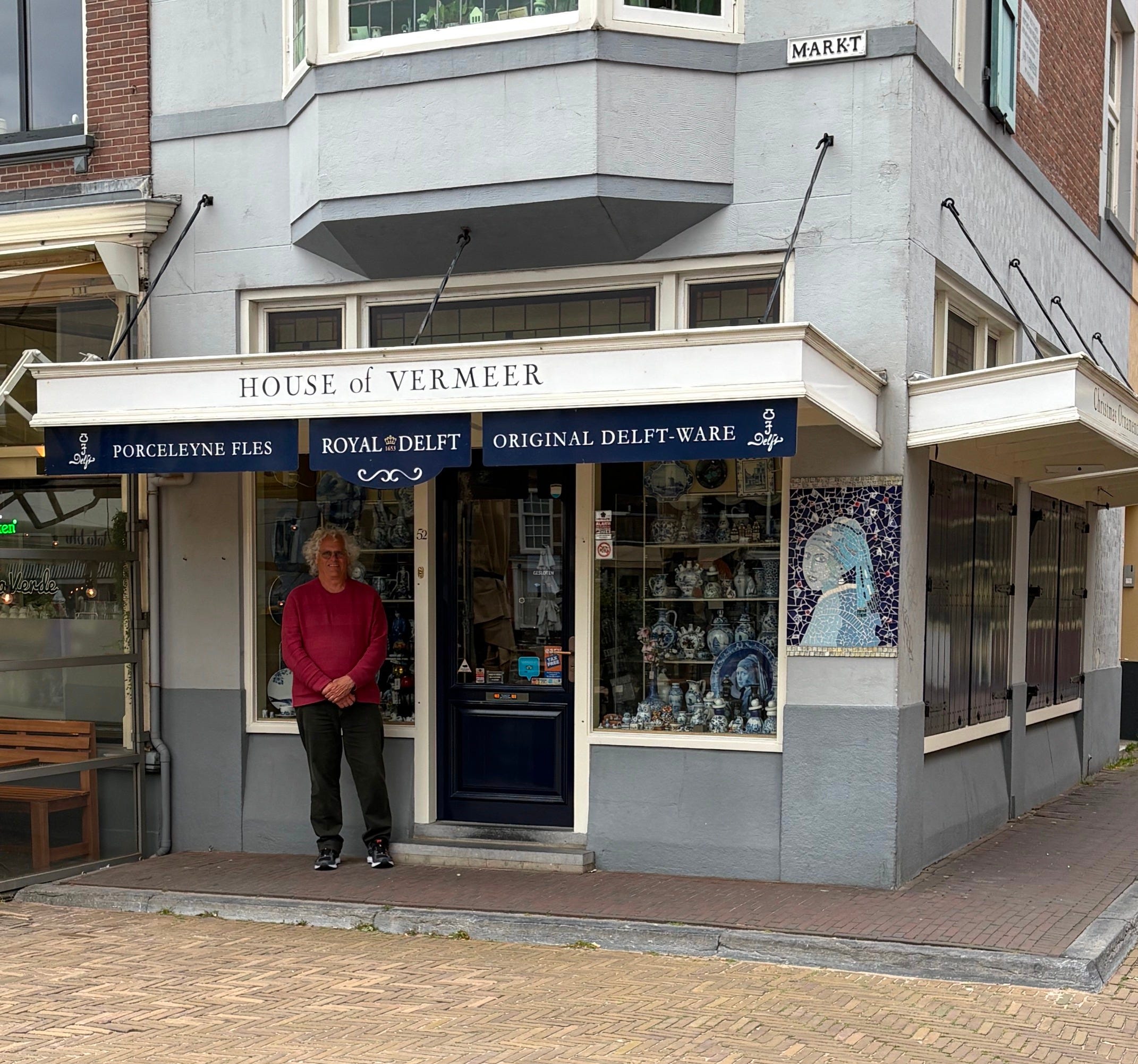
The move to the Mechelen Inn was a step up for the Vermeer family—it was larger than the Flying Fox and faced the busy market square—good for business.
When standing in front of the site today, I can imagine Vermeer as a boy in this same spot, watching customers entering and leaving the Inn. Because of his father’s work as an art dealer, he no doubt would have met artists selling their works through his father’s business. I had role models when I was a boy that influenced my career choices. Vermeer’s role models would certainly have included painters.
Vermeer’s friend, Antoni van Leeuwenhoek
Antoni van Leeuwenhoek is today known as the Father of Microbiology. He was the first person to build a microscope capable of seeing single-celled organisms. Vermeer and van Leeuwenhoek were both born at the end of October 1632 and were both baptized in the Nieuwe Kerk. Their names are on the same sheet of paper on the church’s baptismal registry. When Vermeer died, van Leeuwenhoek was the administrator of his estate.
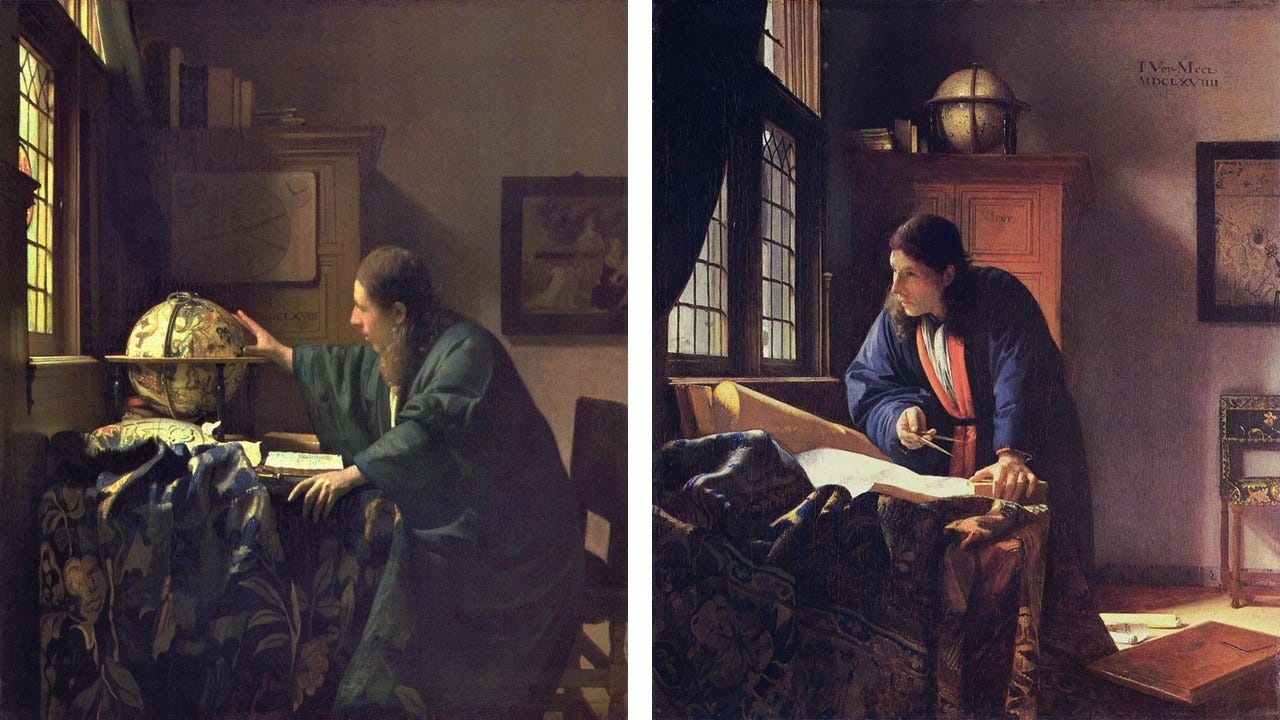
They surely must have known each other. Indeed, Vermeer seems to have used van Leeuwenhoek as a model in two of his paintings:
The house where van Leeuwenhoek lived is at Hippolytusbuurt 4, a short two blocks from Vermeer’s boyhood home.
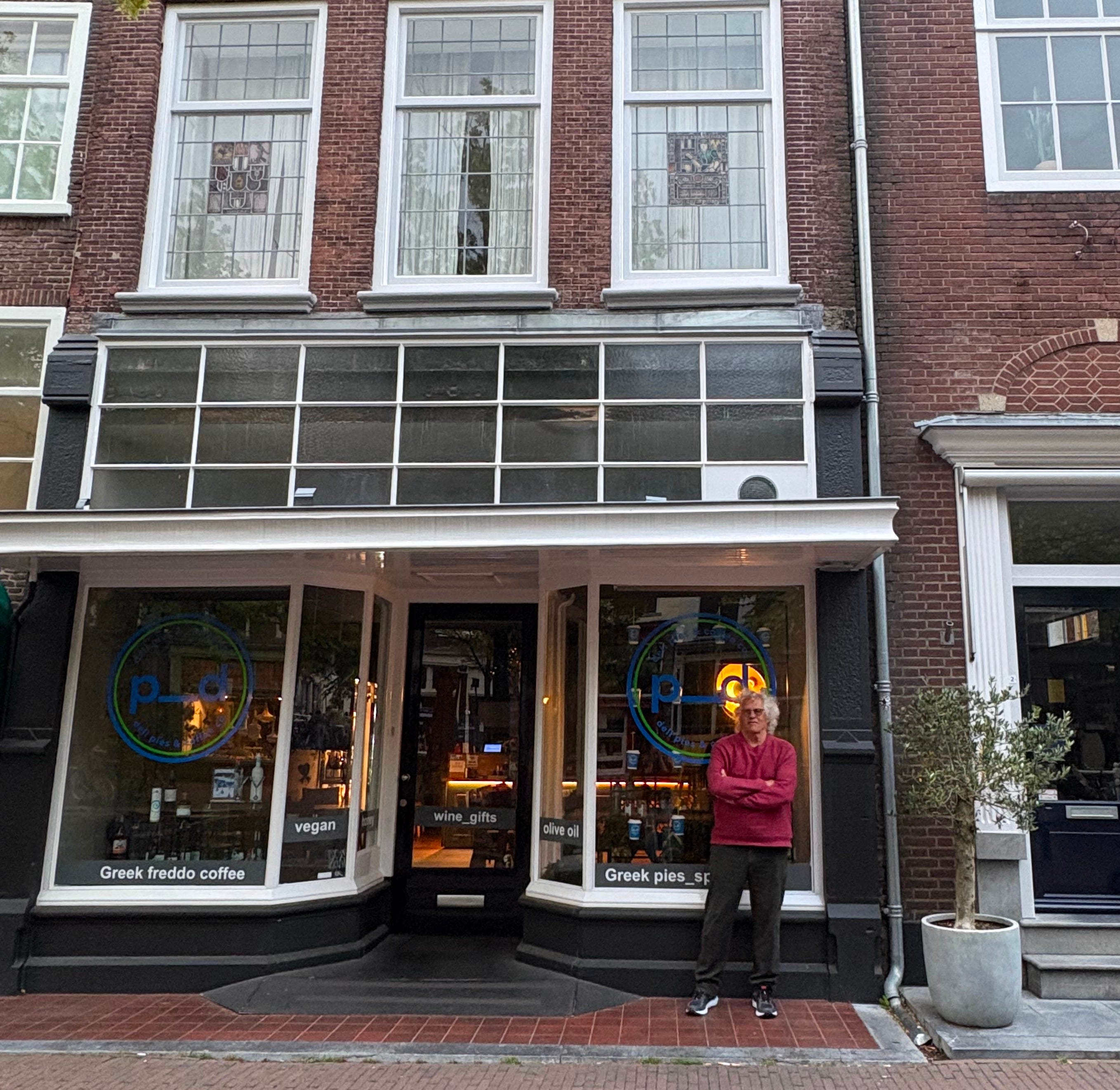
The building’s façade is different today, but records indicate that this is the place where he lived and built his microscopes. It is fun to imagine little Johannes and little Antoni playing in the street as youngsters, maybe sailing toy boats on the canal, just as I saw kids doing during my visit. It is that same canal water that van Leeuwenhoek would later inspect with his microscopes, discovering a world of what he called “little animals:” algae, protozoa, bacteria, and tiny animals such as rotifers.
The Maria Thins Home
When he was 20, Vermeer married Catharina Bolnes and moved into the home of his mother-in-law, Maria Thins. The house was located just across the market square from the Mechelen Inn, on the other side of the Nieuwe Kerk, in the upscale Catholic quarter of Delft known as the Papists’ Corner. It looked like this:
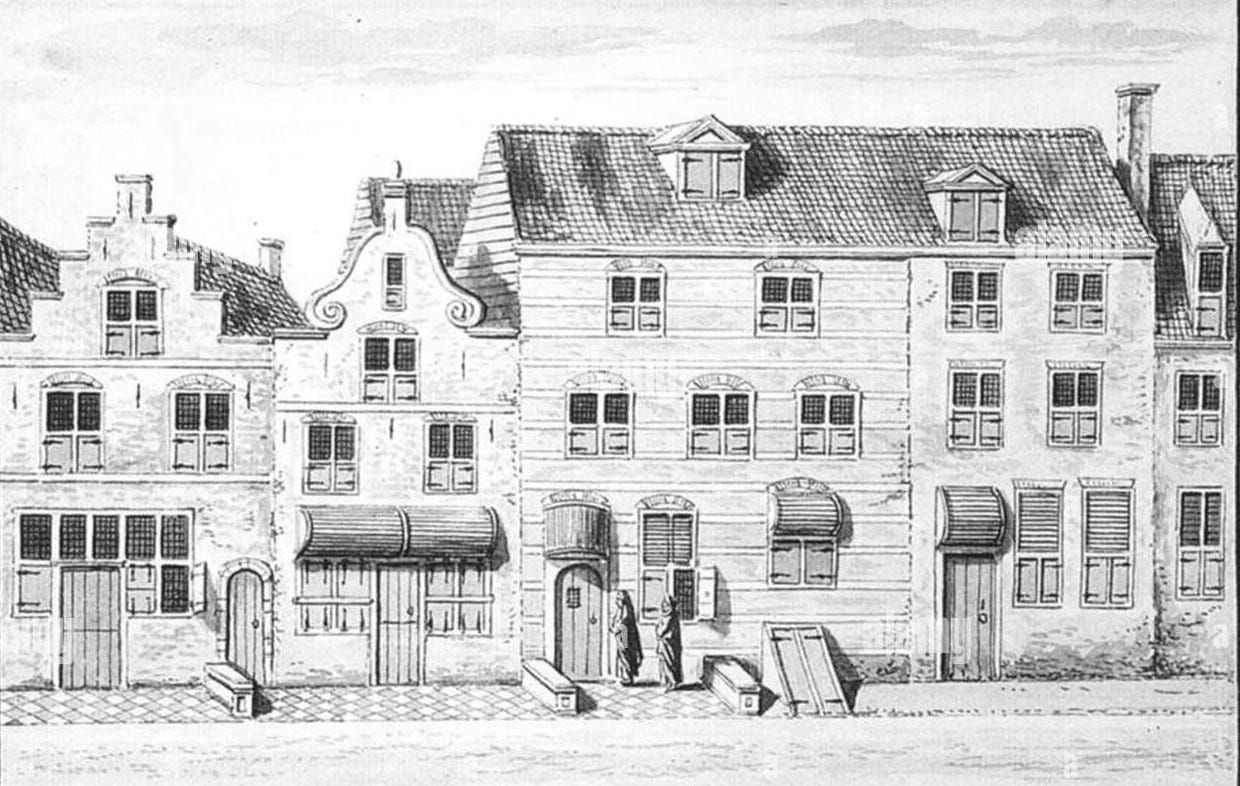
This brush-and-grey-ink drawing by Abraham Rademaker, made a few years after Vermeer’s death, shows, from left to right, a Jesuit school, a small private house, and the larger but inconspicuous Jesuit church with two entrances. Two women are entering the church through the left door of the church. The edge of the building on the far right is thought to be Maria Thins’ home. The window on the upper floor at the far right may be Vermeer’s studio window.
That building, too, is gone and has been replaced by apartments, but a plaque marks the spot where the old home stood.
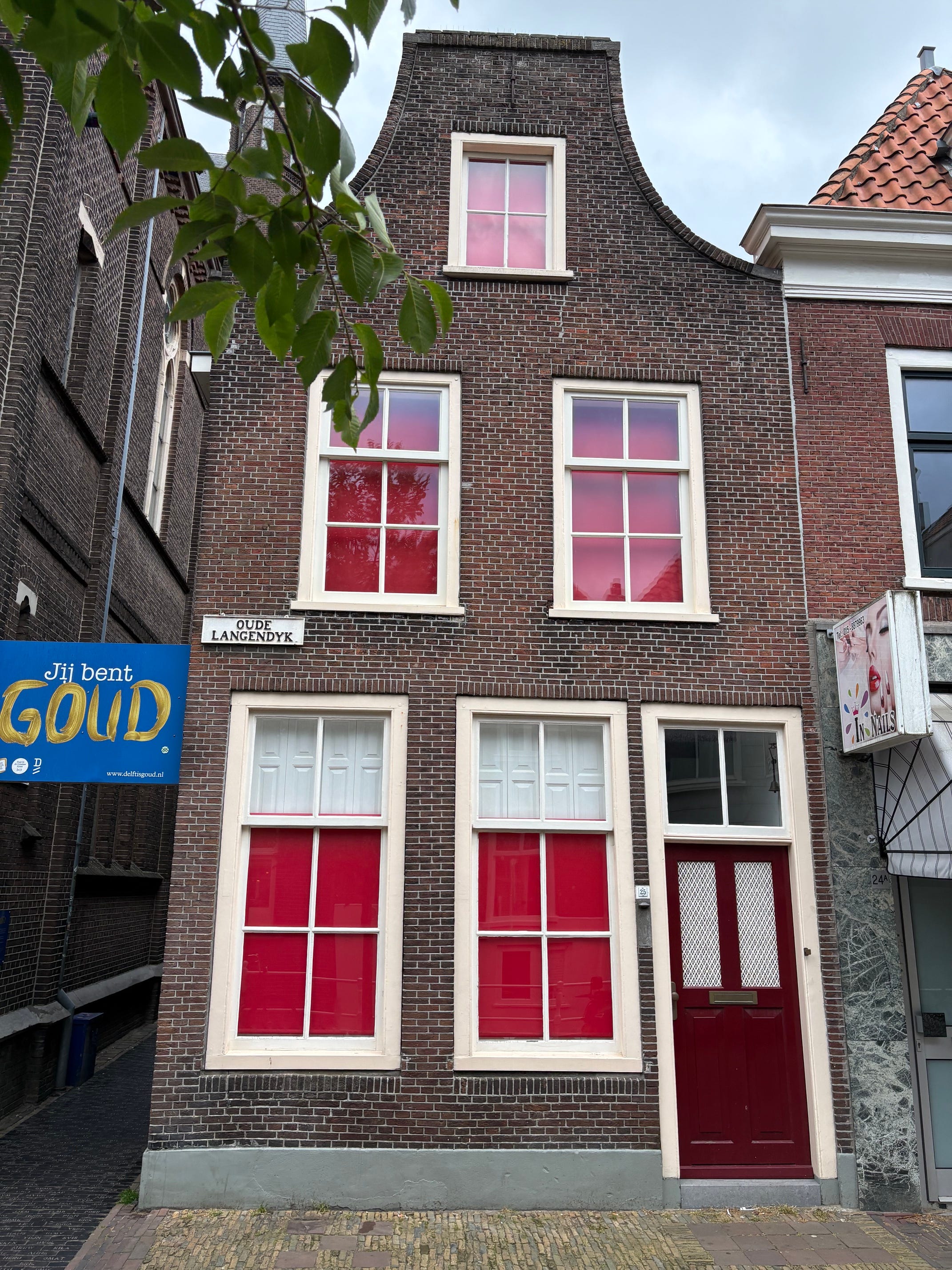
Even though this is not the building where he lived, I can imagine an upstairs window like this one lighting Vermeer’s studio, with light streaming through that window and into the scenes of so many of his paintings.
The Oude Kerk
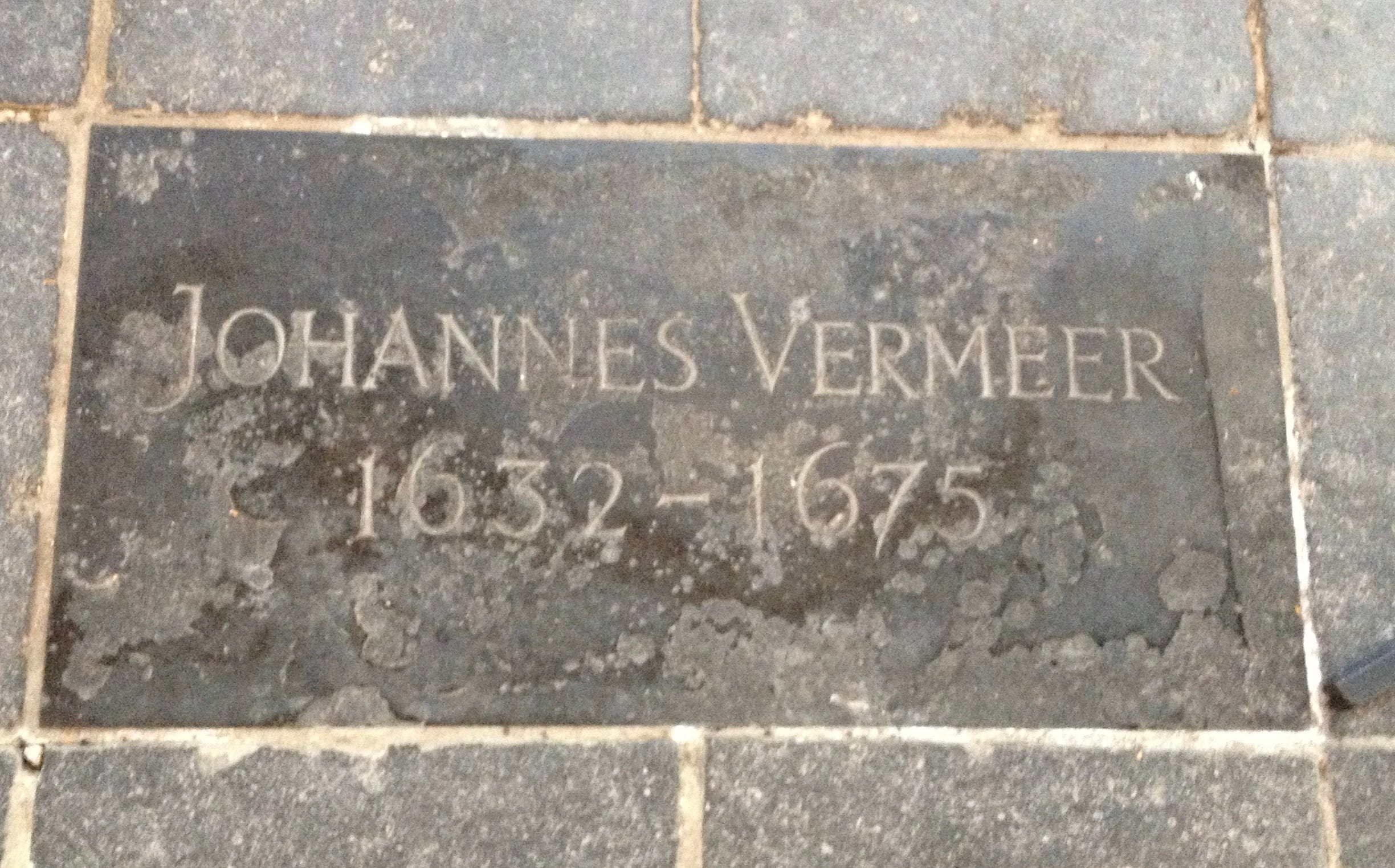
Vermeer died in 1675 at age 43 and was buried in the Oude Kerk, less than a kilometer from where he was born.
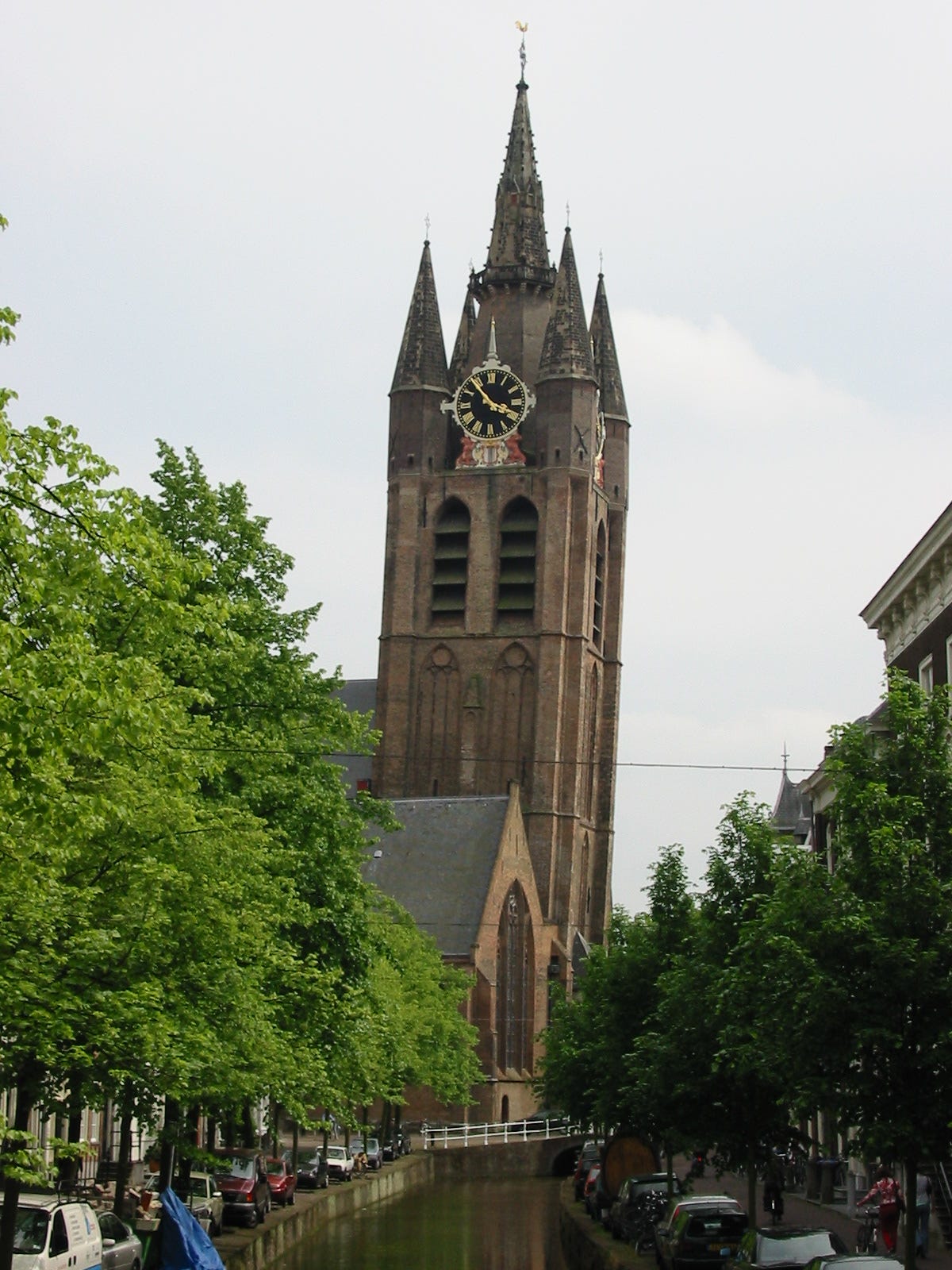
This church is indeed older than the Nieuwe Kerk, and was originally Catholic, although it was Protestant during Vermeer’s lifetime. He was buried there because his mother-in-law owned a family grave in the church. There is a modest marker on the floor of the church, although it is not entirely clear if that is where his remains lie.
The Trip to The Hague
We left the Oude Kerk and took the #1 streetcar to The Hague to visit the Mauritshuis museum, home to three magnificent Vermeer paintings: Girl with a Pearl Earring, View of Delft, and Diana and her Companions. I have written articles about each of these paintings and was relishing the opportunity to share my ideas with my new friends.
At one point we were standing in front of Diana and her Companions.
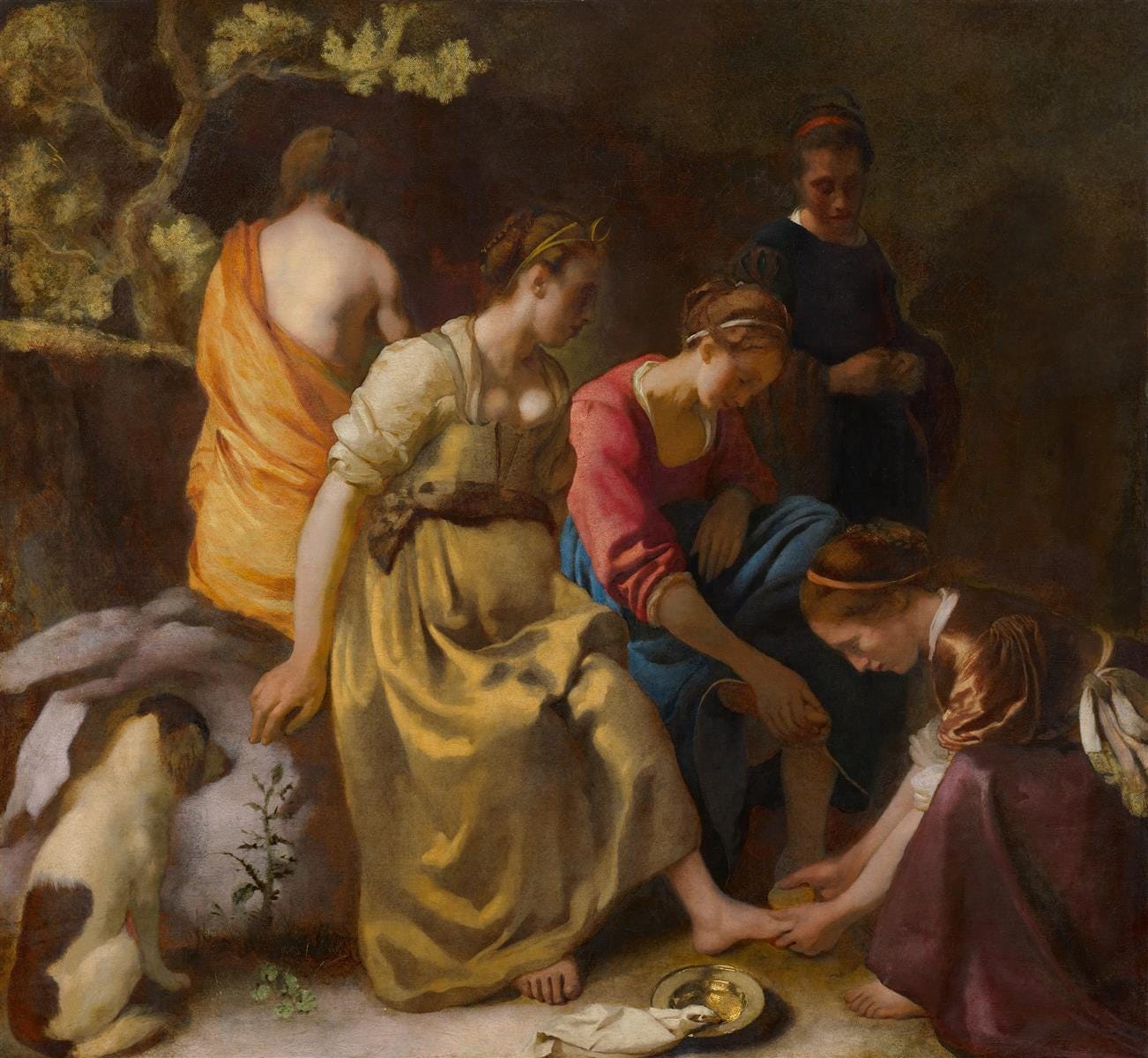
I was explaining how this painting seems to have very little to do with Greek mythology: Much more of the symbolism in the painting, particularly the washing of feet, comes from the Bible. I was admittedly enthusiastic about what I was saying, but I swear I was speaking sotto voce as I pointed out the details of the painting. I was pleased to see that a few other folks had gathered and were also listening to what I had to say. The security guards were apparently listening in too. One came over and asked if I had a badge identifying me as a guide. Apparently, external guides at the Mauritshuis are welcome, but there is an accreditation and registration process that results in the issuance of a badge. I assured him that this was just a conversation among friends, but I tamed my enthusiasm a bit and continued, albeit a bit more quietly.
It was a good day. I got to spend time retracing Vermeer’s steps in the town he loved so much. I got to share some of my ideas about Vermeer with my new friends. But the highlight was nearly getting in trouble for seeming to be a museum guide without a license. I am pretty proud of that one.
Thanks for reading Vermeer Stories! This post is public so feel free to share it.
Other Articles of Interest
The Astronomer and The Geographer
Love at First Sight: Girl with a Pearl Earring and Linda Ronstadt
No posts
Comments
Nothing yet. Say the first thing.
Sign in to join the conversation.