
Japan just told the foreigners who built lives here, who learned the language, paid the taxes, raised the kids, buried the years — you were too slow. No permanent residency. Not because you didn't earn it, but because it's easier to blame 3% of the population than to answer for thirty years of decline.
It's a good short-term play. Scapegoating always polls better than self-examination.
But the rot was never the foreigners — it was three decades of the LDP running the country like a family business. They take care of friends and cronies first, leaving everyone else to be a mere afterthought.
One day the math will catch up. People will look around and ask how it all fell apart. But by then the answer will be sitting in Singapore, or Lyon, or back in their motherland. The smart ones don't wait around to be blamed for a mess they didn't make. They just leave. And they don't come back.
Immigration lawyer Yuichi Takatsuka pointed out on a LinkedIn post one of the fundamental flaws in the new regulation.
“In this case, people in lower-salary industries, such as aged care workers - who are among the most needed workers in Japan - can be excluded from applying for Japanese permanent residency. This is unfair and detrimental to Japanese society.”
Someone should tell Minister Kimi Onoda that 2-dimensional characters are not actually able to take care of the aged. They don’t change bedpans, nor do they do the work of construction workers, or even 7/11 clerks.
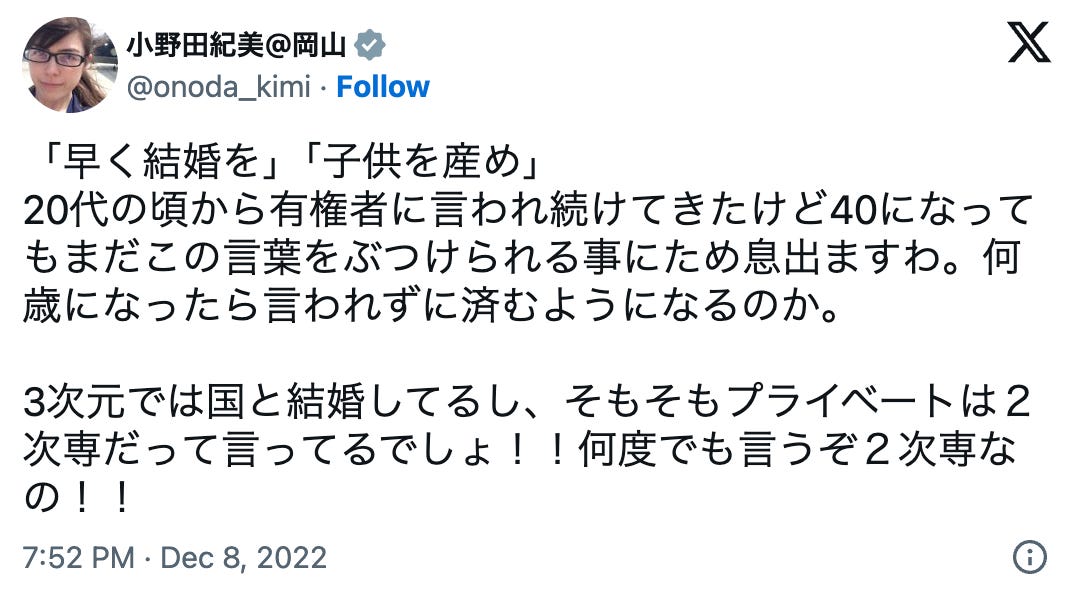
To be clear, it’s bad enough when foreigners are only tolerated in the jobs no one wants (or when they’re ultra-rich). But thanks to the current environment cultivated by Japan’s far-right, the Overton window on immigration has clearly shifted to the dehumanizing end: debating whether the utility of foreigners outweighs their unsightliness. But that’s where we’re at.
As the yen sinks, the xenophobia rises, and the same people who have been mismanaging this country for years look for an easy punching bag. Sounds like a great plan to attract talent. Who doesn’t want to work in a country where they’re not welcome, and you must master a difficult language, that’s really only spoken in one country and your wages are subpar? And when they kick you out because you never will be able to settle here, your savings will be in the doge coin of Asia, leaving you financially screwed.
“In this case, people in lower-salary industries, such as aged care workers - who are among the most needed workers in Japan - can be excluded from applying for Japanese permanent residency. This is unfair and detrimental to Japanese society.
Creating a comprehensive immigration plan that would make people want to live here and encourage permanent residency to attract talent and deal with the labor shortage would be too nuanced. It's just easier to parrot Trump with "Japanese First" and stoke up fear of aliens and make people believe there's a world in which foreigners get better treatment than Japanese.
And why aren’t Japanese people getting married and having children? No, it couldn’t be low wages that don’t keep up with inflation, nor the 90 hour work weeks, nor the lack of support for raising a child. It’s the 3% of the population that are foreigners, obviously. I’m sure getting rid of them will really help with the labor shortage, too.
The Trump Playbook in Takaichi’s Hands
It’s no secret that Sanae Takaichi admires Donald Trump and has borrowed his “America First” platform to score political points. It’s not an original idea. The founder of Sanseito, the once minor extremists right-wing party did it first and scored such political milage that Takaichi jumped on the Racism Express herself and is pumping the gas pedal.
If you’re watching what happened in the Christian Nationalist state Trumpistan (formerly known as the United States of America), you can see that xenophobic policy and rounding up immigrants (legal and illegal) has done nothing to improve life or help the economy.
Japan is becoming it’s own “Japanistan”. It’s also a theocracy (Shinto Nationalist) run ostensibly by a woman with a few woman in the cabinet, but dedicated to keep women second-class citizens and even cock-blocked Princess Aiko from ever becoming the Empress. Which, to the credit of the people, was a very unpopular decision by “Empress” Sanae Takaichi.
Just like Prime Minister Shinzo Abe was Trump Before Trump, Takaichi Sanae, the current PM is just Abe in a blue dress. And her Stephen Miller?
Kimi Onoda, the half-gaijin crusader now perched in the Takaichi cabinet as the minister for “well-ordered coexistence with foreign nationals”—a title so antiseptic it could sterilize a operating room. One almost has to admire the theatrical irony: the woman whose own American father walked out on her pregnant Japanese mother when she was a toddler, leaving them high and dry with zero child support, has decided the real threat to Japan is foreigners.
Abandoned by the original gaijin in her life, she seems to have spent decades polishing her Japanese credentials with the desperate zeal of someone who still hears the echo of that empty chair at the dinner table. Dual nationality scandals, frantic renunciations, public lectures on the sacredness of pure Japanese identity — the insecurity about whether she truly belongs has curdled into a tidy little xenophobic performance. If she can’t erase the foreign blood in her own veins, she’ll damn well police everyone else’s.
And then comes the pièce de résistance: her recent little tour of Fuchu Prison this August (2026), after which she announced that roughly one in four inmates was a foreigner. Technically true—for that particular facility, which the Justice Ministry deliberately stocks with non-Japanese speakers because it has the staff and systems to handle them.
Nationwide, the figure is closer to one in fourteen.
But Onoda’s framing was pure Trumpian stagecraft: drop a selective, inflammatory statistic, let the internet do the rest, and watch the xenophobic fever rise. When a cabinet minister hands the online mob a loaded talking point that inflates the “foreign crime” threat by a factor of three or four, yes. It’s the equivalent of yelling “they’re eating the cats and dogs” while quietly knowing the cats and dogs are just fine.
Takaichi rose to power by claiming that “foreigners are kicking and beating the deer in Nara!” This was later denied by the custodians of the park. But anything for a laugh.
It was just Onoda’s turn deliver her own one-liner: “Yeah, here in Fuchu where one fourth of the prisoners are gaijin! WTF, people?”
And how can she be racist? She’s half, right? So everything is fair. It’s time to realize a terrible thing. We’re no longer in Japan. We are in Japanistan, a puppet state of Trumpistan. Neither nation is prospering but both have the same flawed ideology and corrupt leaders. The rising sun is sinking under its own xenophobia.
To all of this, the response from the usual suspects, is simply: If you don’t like it, leave.
The Battle Cry of the Bored, the Smug, and The Bigoted
If you don’t like it, leave.
It’s phrase so intellectually bankrupt it should qualify for a government bailout. Here are the 3 people who say it.
First, the apathetic. Men whose engagement with civic life peaked at complaining about traffic. For them, “leave, if you hate it so much” is a thought-terminating statement. They’ve never fixed anything in their life. They’re certainly not about to start with a society. Suggesting you leave is easier than admitting they have no compassion. Or passion, for that matter.
Next, the elitist. More insidious, because they’ll say it with a smile and a blazer. What they actually mean is: this country belongs to people like me, and your complaints are an inconvenience to my brunch. They’ve mistaken “I was born here” for “I built this.”
Third — and let’s not be delicate about it — the racist, who has simply found a phrase polite enough to say in public. “If you don’t like it, leave” is a dressed up version of “go back to your country.”
Here’s the thing all three have gotten backwards: living in a country, paying into its systems, raising your kids in its schools, and contributing to its economy for years or decades doesn’t disqualify you from criticizing it. It’s the opposite. It’s the deposit that buys you standing. Citizenship isn’t a loyalty oath that forbids improvement — it’s a shared mortgage, and everyone making payments gets a say in the renovations. Telling a decades-long taxpayer to shut up and leave isn’t patriotism. It’s asking someone to keep funding a company and never attend a shareholder meeting.
Which brings us, inevitably, back to Japan.
People built their lives — homes, businesses, marriages, kids in local schools — on the understanding that permanent residency meant something close to permanent. But “permanent,” it turns out, now comes with an asterisk the size of Godzilla.
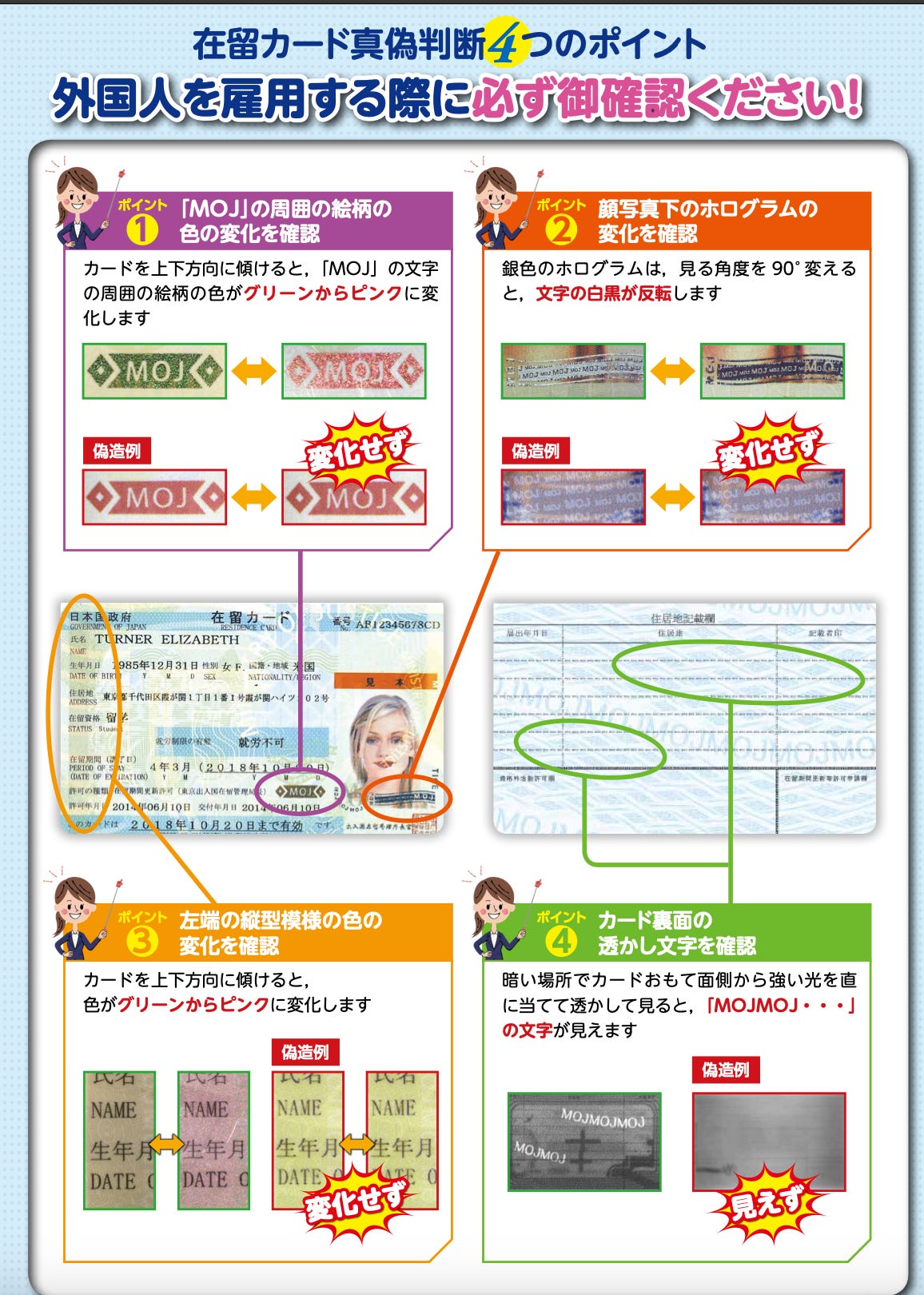
Japan’s revised immigration law — passed in 2024, set to take effect in 2027 — lets the government revoke permanent residency from people who’ve held it for years over things like unpaid taxes or social insurance, or, in some readings, simply not carrying your residence card.
Japan already has entirely functional tools to collect unpaid taxes from anyone, citizen or not: garnishment, liens, the whole bureaucratic toolkit. Stripping someone’s residency on top of that isn’t enforcement, but a second, harsher punishment looming over the necks of foreigners exclusively.
It’s a strange choice for a country simultaneously running ad campaigns begging skilled workers to move here. You cannot beg people to build a life in your country with one hand while quietly rewriting the terms of “permanent” with the other — and expect anyone to take you up on the offer.
No posts
Comments
Nothing yet. Say the first thing.
Sign in to join the conversation.