
Our posts are completely free to read. If you enjoy our work and wish to support our book, there’s an option to upgrade to paid, but only if you want to. We are grateful to all subscribers! We encourage readers to share about our book Beyond the Politics of Contempt: Practical Steps to Build Positive Relationships in Divided Times on social media and, if you can write a review on Amazon or elsewhere, that could help give the ideas in our book a boost!
Author Note: This week’s post is written in collaboration with Samantha Ball, Dignity Initiative Research Director. She oversees research related to the 2026 Dignity Barometer and the Dignity Index, an eight-point tool for measuring how we talk to each other when we disagree, developed to ease divisions, prevent violence, and solve problems.
Samantha recently presented her findings from the 2026 Dignity Barometer at a Listen First Project meeting and we wanted to shine a spotlight on this impactful work.
This article shares some of the standout findings from the 2026 Dignity Barometer – a baseline measurement of how Americans perceive, experience, and think about dignity. The Dignity Barometer will be updated annually to provide a longitudinal look at how Americans experience dignity and how it changes over time. The shared opinions, experience, and values expressed in these findings provide a resource for understanding division, and a foundation for easing the extreme polarization in the United States today.
Figure 1. The Dignity Gap.
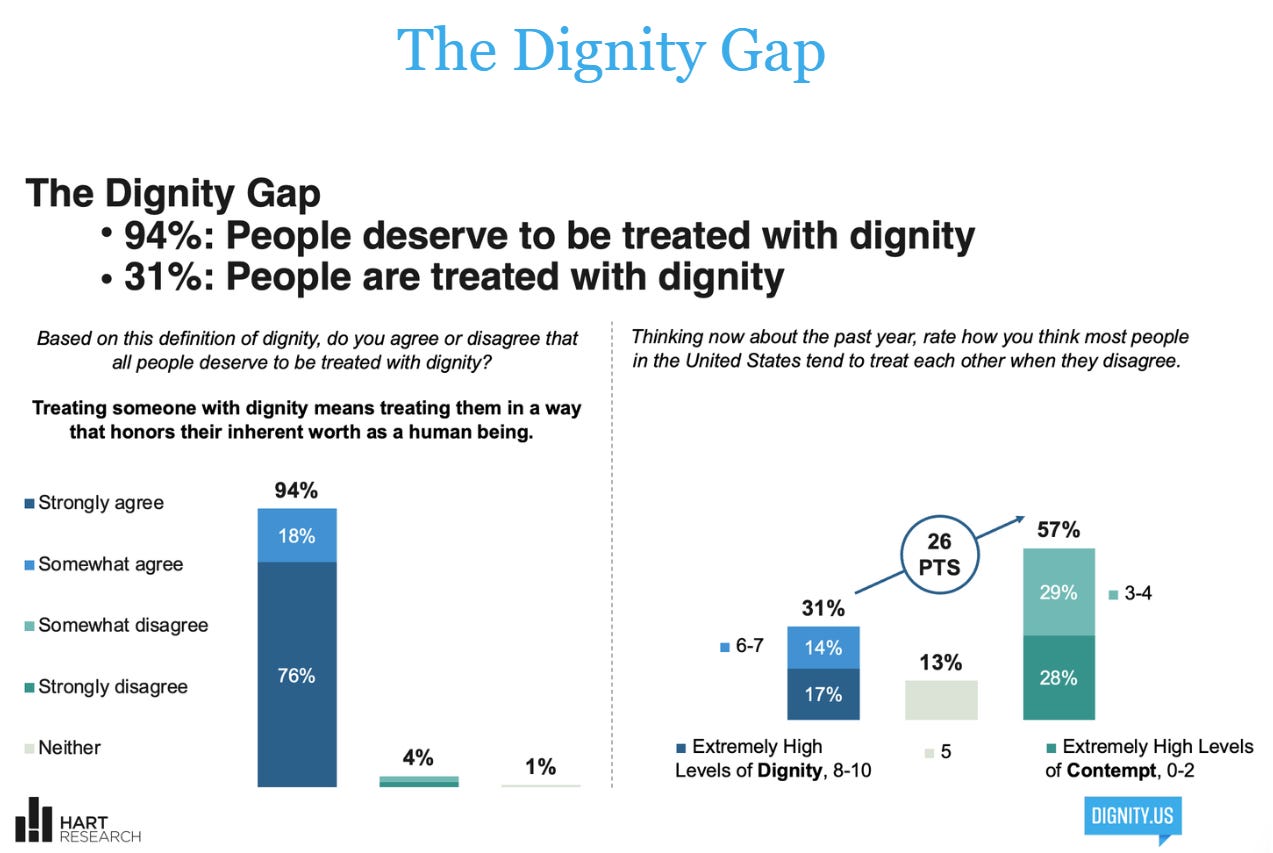
Figure 1 shows agreement on a foundational value shared by people regardless of political affiliation: that all people deserve to be treated with dignity. The Dignity Barometer defines treating someone with dignity as treating them in a way that honors their inherent worth as a human being. This is an extremely high level of agreement – and surprising given the level of polarization and division we see in most public conversation today.
This high level of agreement related to treating all people with dignity is contrasted with only 31% of Americans thinking most people in the United States treat each other with dignity when they disagree.
Figure 2. American dissatisfaction with how we treat each other.
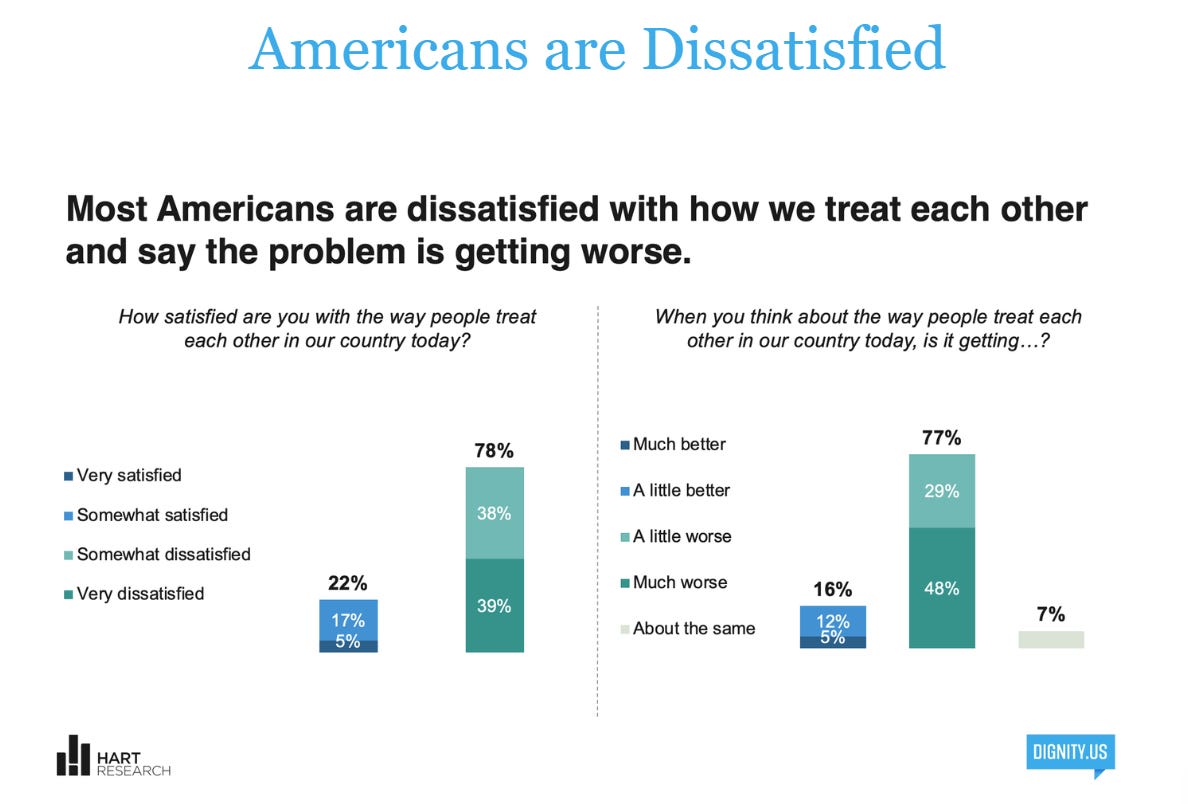
Figure 2 shows that the vast majority of Americans (78%) are dissatisfied with how we treat each other and 77% believe the problem is getting worse. Majorities of Democrats, Republicans, and Independents all feel this way, though the percentage is larger for Democrats and Independents than for Republicans.
Figure 3. The majority of Americans are optimistic that we can ease and heal divisions. The percentage is higher among those who engage across political disagreements.
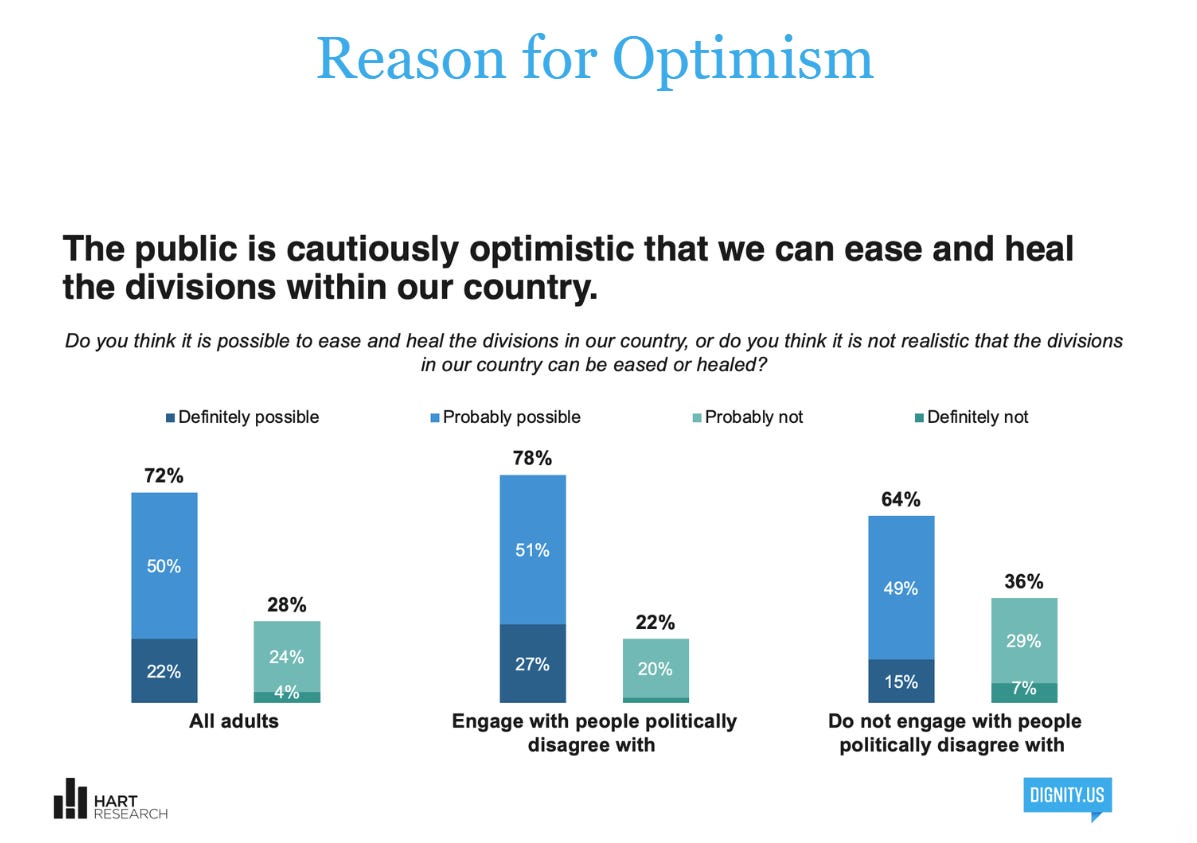
Figure 3 shows a hopeful and unexpected finding. The majority of Americans believe we can ease and heal divisions within our country. Seventy-eight percent of those who engage with people they disagree with think we can “probably” or “definitely” ease and heal division, compared to only 64% of those who do not engage with those they disagree with.
While you may have guessed that Americans interacting with those they disagree with would be the least optimistic about easing division in our country, the opposite is actually true.
Figure 4. Americans want to participate in positive change to encourage more dignity and less contempt.
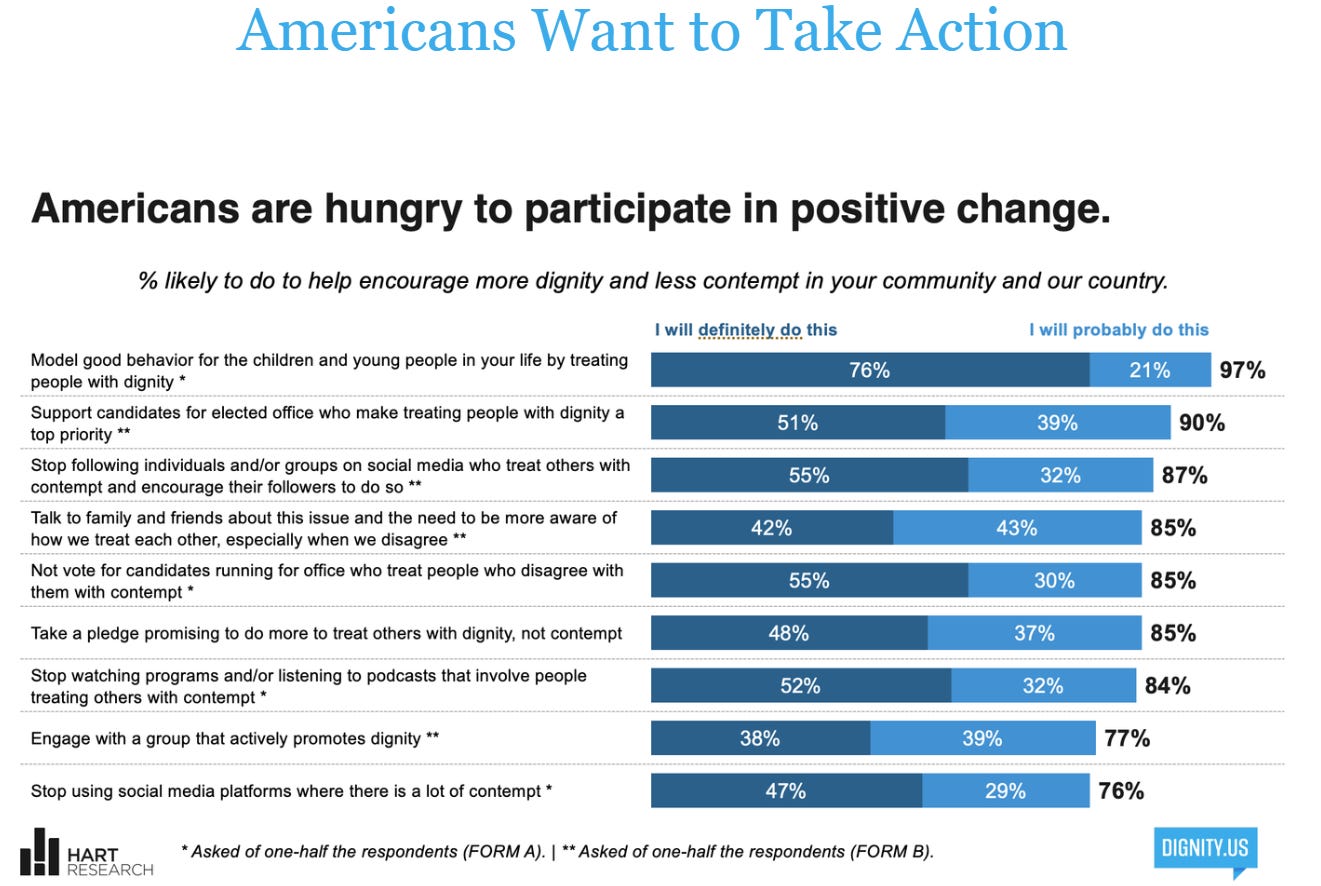
Finally, Figure 4 shows that Americans are very interested in taking positive actions to reduce the amount of contempt in their own lives and in the public square. Nearly all of those asked say they would “model good behavior for children and young people in your life by treating people with dignity.”
Ninety percent would “support candidates for elected office who make treating people with dignity a top priority” in order to help encourage more dignity and less contempt in their community and country.
Together, these findings provide hope for movement away from polarization and division. They point to a significant opportunity: Americans have a strong foundation – they can work together across differences to promote dignity and respect.
No posts
Comments
Nothing yet. Say the first thing.
Sign in to join the conversation.