
Naval Ravikant suggested
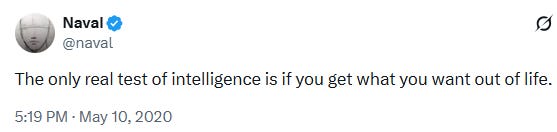
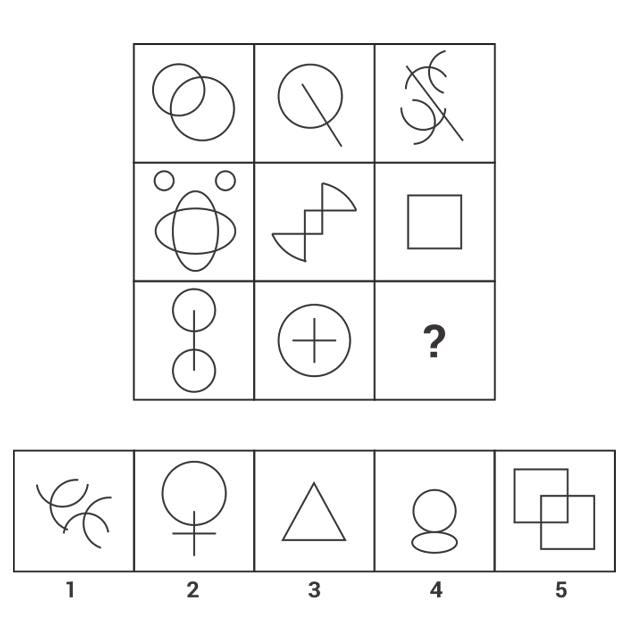
This definition is far removed from the IQ test we sweated through on whether a Tetris-like shape could be rotated.
A billionaire with a private island argues that intelligence is getting what you want. And this is how IQ evolved since the test Alfred Binet built in 1905 to discover which French schoolkids needed extra help. Binet described intelligence as judgment, good sense, initiative, and the knack for adapting yourself to whatever the day throws at you (sounds like psychological flexibility - SEE OUR MODEL). He warned that treating intelligence as a fixed quantity stamped on a child was a cruel misuse of his scale (LINK). And yet, this is what schools most likely did to you….
That said, intelligence scores predict wonderful things, and for those heavily interested in education, cognitive ability tests predict school achievement. The LSAT, GMAT, MCAT, GRE, and other testing determinants of graduate school worthiness predict how people fare, especially first year grades.
Whether g (the funky cold medina term for general intelligence) earns the crown is an intellectual brawl for another day. What intrigues me are comparisons between narrow numerical evaluations and the definitions others offer as alternatives.
When I shared Naval’s definition online, the pushback came fast.
Loads of billionaires get what they want but this speaks nothing of their wisdom.
If everyone started from the same line, sure, getting what you want might pass for brains.
People get what they want by lying.
Everyone gets what they want, but not what they say they want.
This last one was by a student in my college class who points at the gap between the goals you tell others versus what you are truly into, and ignoring that self-delusion is problematic with Naval’s definition.
Scott Barry Kaufman took a swing at the definition in Ungifted claiming intelligence is the dynamic interplay of engagement and abilities in pursuit of personal goals (LINK). Treat g as the full story and you miss what a person might become once raw ability starts reacting over years with directed curiosity, opportunity, and intrinsically motivated strivings. A boy gets hooked on marine biology in elementary school, finds a mentor, and turns ferocious at pursuing knowledge. Engagement lifts ability, ability feeds engagement, and developmental research on expertise has plenty of research documenting this upward spiral.
The formula is where I might quibble.
Ability x Engagement x Personal Goals
Ability belongs in a theory of intelligence. Engagement probably doesn’t. Engagement is influenced by some combination of motivation, perseverance, openness, opportunity, self-regulation, and a half dozen other psychological constructs. Personal goals drag in values and identity, that often are irrelevant to intelligent thought. Multiply them together and you get an exquisite model of human development but not quite this thing called intelligence.
Consider a girl who turns into a great violinist because she has sharp ears, practices like a lunatic, loves the instrument, has parents who drive her to lessons throughout childhood, and stumbles onto a career path. You cannot pry apart the element that is intelligence from those that are its causes, complementary features, and the aftermath of intelligent decision-making. How do we know she is intelligent? She chased a meaningful goal and got it. Why did she get it? Because she is intelligent.
A second problem is about the notion of personalizing intelligence. John D. Mayer, one of the co-developers of emotional intelligence published his own construct called personal intelligence in 2008 (LINK). Mayer’s version approximates the opposite of Kaufman’s, reflecting the capacity to reason well about personality, your own and everyone else’s, and to act on what you figure out. You can discover where you stand with Mayer’s Test of Personal Intelligence. Use personal intelligence without stating which and it is hard to understand what you mean.
Then, of course, we must drag Howard Gardner and his multiple intelligence model into the storyline with a separation of linguistic, logical-mathematical, spatial, musical, bodily-kinesthetic, interpersonal, intrapersonal, naturalistic, and existential tacked on later. What makes his work a regular target of criticism by scientists is that Gardner assembled these categories from intuition and case studies (no researcher found support for separate, independent intelligences in a factor analysis) (LINK). Musical talent is obvious, and so is physical coordination, and being an excellent listener and communicator with people. It is such an alluring framework because referring to these talents as intelligences is incredibly flattering.
Robert Sternberg also attempted a definition with his triarchic theory (LINK) and later his successful intelligence framework which suggests three parts: analytical (think of those asinine analytical problems on the SAT), creative (producing ideas that are new and useful), and practical (being able to get home when dropped off at Grand Central Station with $1 - LINK).
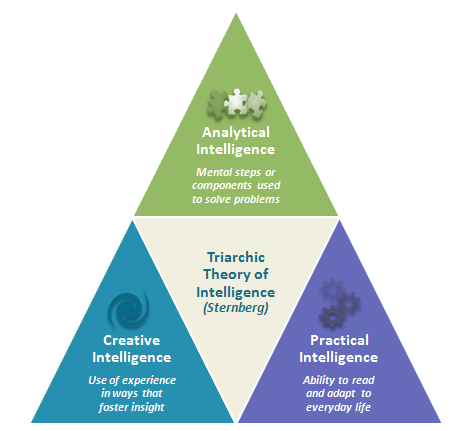
His later work defines intelligence as whatever lets a person attain success inside their own culture, by their own standard, leaning on strengths and overcoming weaknesses. With greater empirical support than Gardner’s list, this model extends Naval’s definition in that success is judged against your own baseline.
You might have noticed that I have yet to describe a definition that is led by a woman. I wanted to wait because the field’s consensus statement was led by Linda Gottfredson, at the University of Delaware, who wrote the 1994 statement Mainstream Science on Intelligence, signed by 52 scientists (LINK).
Her definition is close to an official answer in psychological science with intelligence as a general mental capability that involves reasoning, planning, solving problems, thinking abstractly, grasping complex ideas, learning quickly, and learning from experience. She is explicit that it is not book learning or test-taking skills but rather a wide talent for making sense of the world and working out what to do next.
What I like about this definition is that there is no requirement for healthy downstream outcomes. What happens to a highly intelligent person is irrelevant to whether they possess the quality.
Her colleague Elena Grigorenko emphasizes this point with fieldwork in Kenya, where children’s practical mastery of local herbal medicine, knowledge about how to best treat illness, showed no positive link to their scores on a standard cognitive test; the knowledge says nothing about whether you work with environmental forces to produce healthcare gains.
Intelligence is the general mental capacity to reason, learn, and solve problems across situations, mostly what psychometricians call g, decently measured by standard tests. It predicts school and job performance, occupation, social mobility, health, illness, life longevity, goals reached, shaped by motivation, opportunity, culture, timing, and now and then by a willingness to take action when the odds tilt your way (LINK). Naval’s aphorism and Kaufman’s model grab some of these downstream results. It feels right because achievement and intelligence often co-exist in a person and this makes the distinction feel blurry.
The quote by Naval describes what a good life looks like once you already exhibit high levels of the baseline quality plus everything else that has nothing to do with your mental wattage and much to do with the family and community you were dropped into.
NOTE: Below are a few things I would rather not say with the entire internet looking over my shoulder. (There is a hidden section of provocations and thought experiments only visible to paid subscribers.)
The kid rotating shapes in a windowless evaluation room and the man with the private jet plane are not measuring the same thing. One is a mind. The other is a biased autobiographical account. Confuse the two and you will spend your life feeling stupid when there are things outside of your control. So put down the excessive judgments on what you accomplished then and what you hope to accomplish later. Go be brilliant at something that has nothing to do with mandatory schooling or paid work.
Know someone who would enjoy this? Forward it. Want it to keep showing up? Subscribe, it's free. And if my writing helps you to think, become a premium subscriber to give me a burst of joy and meaning!
No posts
Comments
Nothing yet. Say the first thing.
Sign in to join the conversation.