
How do climate goals actually get financed — and what does it take to turn them into action?
As Toronto Climate Week 2026 approaches, momentum is building across the city. More Info Session dates have been added, with the next session taking place this Wednesday, February 11, and March 2 marks the launch of the TOCW 2026 Events Calendar, opening registration for a city-wide week of climate action from June 1–7.
In this week’s Q&A, we spoke with Colin Guldimann, Senior Director in RBC’s Sustainable Finance Commercial Banking group, about what sustainable finance is and how it works in practice for mid-market Canadian businesses. Learn why companies seek sustainable finance support, the types of projects being financed, and why many businesses are focused on resilience and managing physical climate risks.
Hosting an event during Toronto Climate Week is a powerful way to showcase your climate leadership, expand your network, and amplify your impact.
The refreshed Host Resource Hub includes:
Step-by-step guidance to submit your event
Venue, vendor, and speaker directories
Practical planning tips and best practices
Whether you’re hosting a panel, workshop, networking event, or creative activation, TOCW supports you in reaching new audiences and connecting with Toronto’s growing climate community.
Join our next Info Session — Wednesday, February 11 | 11:00–11:45 AM
Toronto Climate Week returns June 1–7, 2026, and our General Information Webinars are a great place to begin — especially if you’re still exploring ideas.
We’ll walk through:
What Toronto Climate Week is and who it’s for
Different ways to get involved
How hosting works, key timelines, and available support
Live Q&A with the TOCW team
Register today at Luma. You’ll receive a Google Meet invite, plus a recap email after the session.
Can’t make this one? Check our Events page for future dates and details.
This week we talked to Colin Guldimann, a Senior Director within RBC’s Sustainable Finance Commercial Banking group, about what sustainable finance is and how it works to finance projects that help businesses achieve their sustainability goals.

1. What is sustainable finance?
RBC has a stated ambition in our climate strategy to be the bank of choice for the transition to a low carbon and resilient economy. I work in the commercial banking part of RBC, where we focus on mid-market Canadian businesses at all stages of their sustainable journey across all sectors. We’re a team of experts in corporate sustainability: we speak the language of scope 1, 2, and 3, emissions; we understand IFRS, CSRD, and other reporting frameworks; and we help clients through the planning and business strategy activation of sustainability measures that are relevant to their businesses.
Clients come to us for a variety of reasons. Some are responding to regulatory requirements to cut carbon emissions. Others want to future-proof their businesses against physical climate risks. And others are clean tech companies developing new products that help other companies reduce their emissions.
As advisors, we meet clients where they are, providing bespoke, critical advice on sustainability topics. Through our partnership with Carbonhound, a startup in the carbon accounting space, clients have access to a calculation of their baseline emissions. Baselining is very challenging and a common barrier to getting started on building a climate strategy.
On the financing side, we offer sustainable finance products like Green Loans and Sustainability Linked Loans (SLLs) following the LMA, LSTA, and APLMA1 guidelines. For green loans, we verify that the activity the loan will finance is an Eligible Green Activity, such as installing solar panels, constructing an energy-efficient building, or developing an energy-efficient industrial process. SLLs are general corporate purposes financing, but the lending rate that the client is charged is tied to sustainability performance KPIs. These need to be material and ambitious targets for the client, and run a pretty broad swath of sustainability — energy efficiency, decarbonization, health and safety of employees, diversity. The client’s financing then becomes linked to performance against those KPIs via that SLL structure.
2. What are some client projects you’re especially proud of?
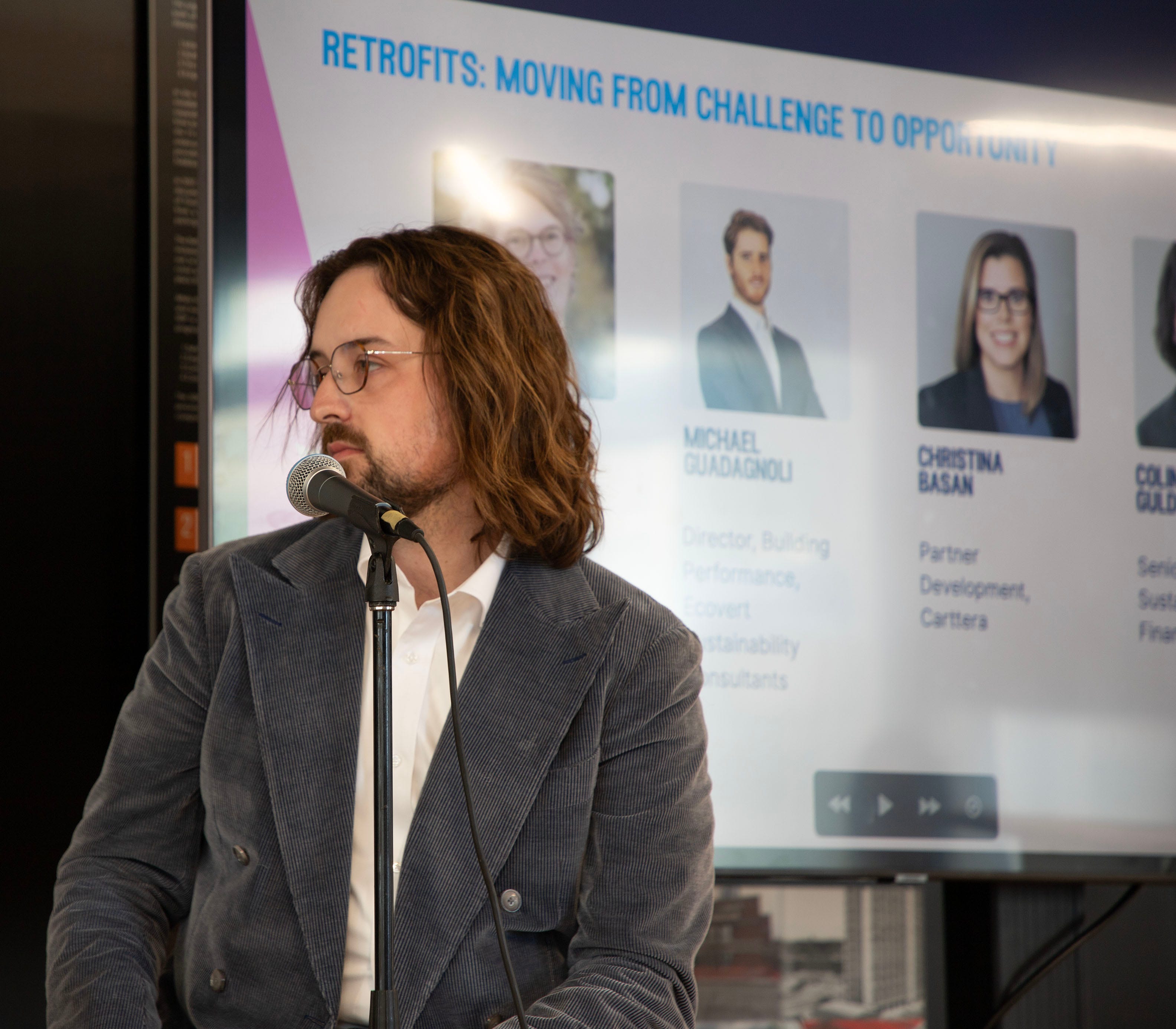
I’m really proud of our team for rolling up our sleeves on retrofits over the past year. We were able to finance a retrofit directly for an office building, where the client’s motivation was a tenant who really cared about sustainability and wanted to see the building retrofitted, and whose lease was coming up for renewal in a couple of years. We met with the client and asked, “What are you looking to do? How much do you need? How can we support you? What’s the innovative structure financially that we can bring to bear? Building retrofits can be extremely challenging projects economically, and it’s exciting to make them happen.
3. What’s giving you optimism in 2026?
While 2025 was a challenging year for climate action globally, we’re still seeing clients keeping climate action top of mind, trying to find ways to make investments that are sustainability related, and in some cases in new ways. We’re starting to see a lot more clients than we have historically taking those first steps, seeking corporate and government incentives that have become available, and looking at these projects as good financial sense.
Another thing I’m very optimistic about, specifically related to buildings, is the new focus on the industry-wide barriers for low-carbon buildings and what we need to do to unlock retrofits. I’m looking forward to more conversations about the valuation and value premium of low-carbon buildings.
4. What draws you to support Toronto Climate Week?
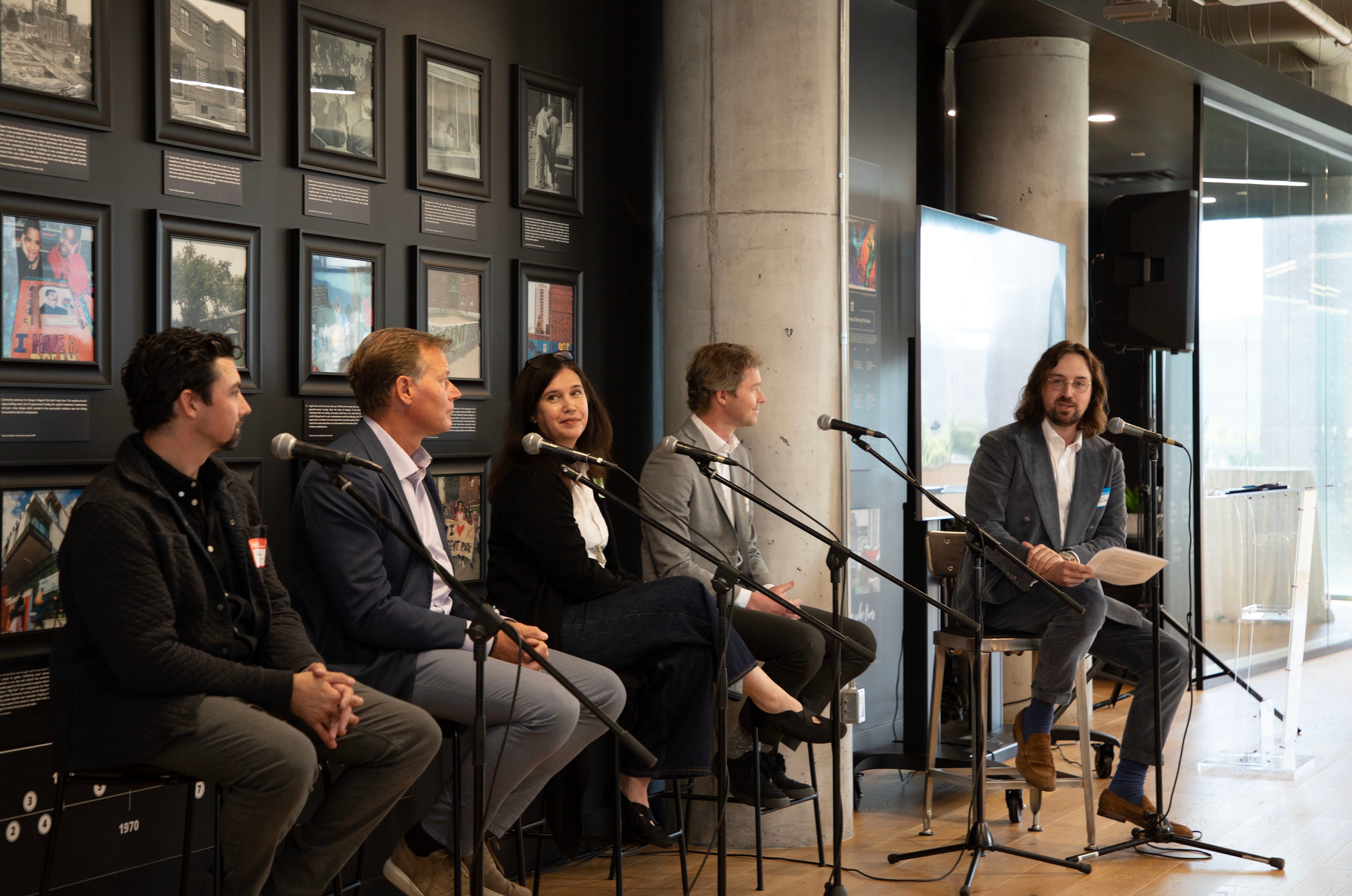
I was involved in the TOCW flagship event Building What’s Next on October 2, 2025 and really liked the quality of the conversation. The right people were in the room, especially on emerging topics like construction circularity and reuse of materials — areas where the real estate industry can do a lot better.
We need forums where we can talk about the toughest industry-wide sustainability topics and hear what other industries are focusing on, challenges they’re facing, how they’ve tackled them, so that we can learn from one another and apply these learnings. It’s so important for us to talk about how we adapt to and mitigate climate change across the different parts of our society. Toronto Climate Week does an excellent job casting that wide net and making sure topics and participants are the right mix to truly drive forward important impact.
5. Why do you love what you do?
As Canada’s largest bank, RBC takes its leadership position seriously. It excites me to think I can have a role in supporting Canadians and Canada in becoming more resilient to climate change. I love helping businesses take advantage of market shifts and the opportunities that new industries and clean tech will create, and to navigate the challenges and opportunities global climate action will present over time.
We’re building a team of volunteers who want to help establish Toronto — and Canada — as global climate hubs. Every contribution counts, from professional skills to simply a desire to get involved.
We’re currently looking for support across several areas, including Finance, Social Media, Design, and Publicity.
You can learn more about all open roles and apply here.
Deadline for sponsorships and partnerships — March 31, 2026
Deadline to have events public on Luma with details finalized — May 15, 2026
With gratitude,
The TOCW Team
LMA = Loan Markets Association; LSTA = Loan Syndications & Trading Association; APLMA = Asia Pacific Loan Markets Association.
No posts
Comments
Nothing yet. Say the first thing.
Sign in to join the conversation.