
Remember the outcry over American influencer Sam Jones, when she posted a video of herself taking a baby wombat from its distressed mother on the side of an Australian road?
40.000 people signed a petition to ask for Jones’ deporation from Australia. The separation of mother and child apparently struck a cord.
At least when it’s about wombats. When it’s about farmed animals, not so much. On Mother’s Day, let’s spare a thought for the non-human mothers - and their children.
You know where eggs come from. But have you ever thought about where the chickens who lay the eggs, come from?
They obviously come from other chickens, but these so-called parental animals are even more invisible than the egg-laying hens or the chickens raised for meat.
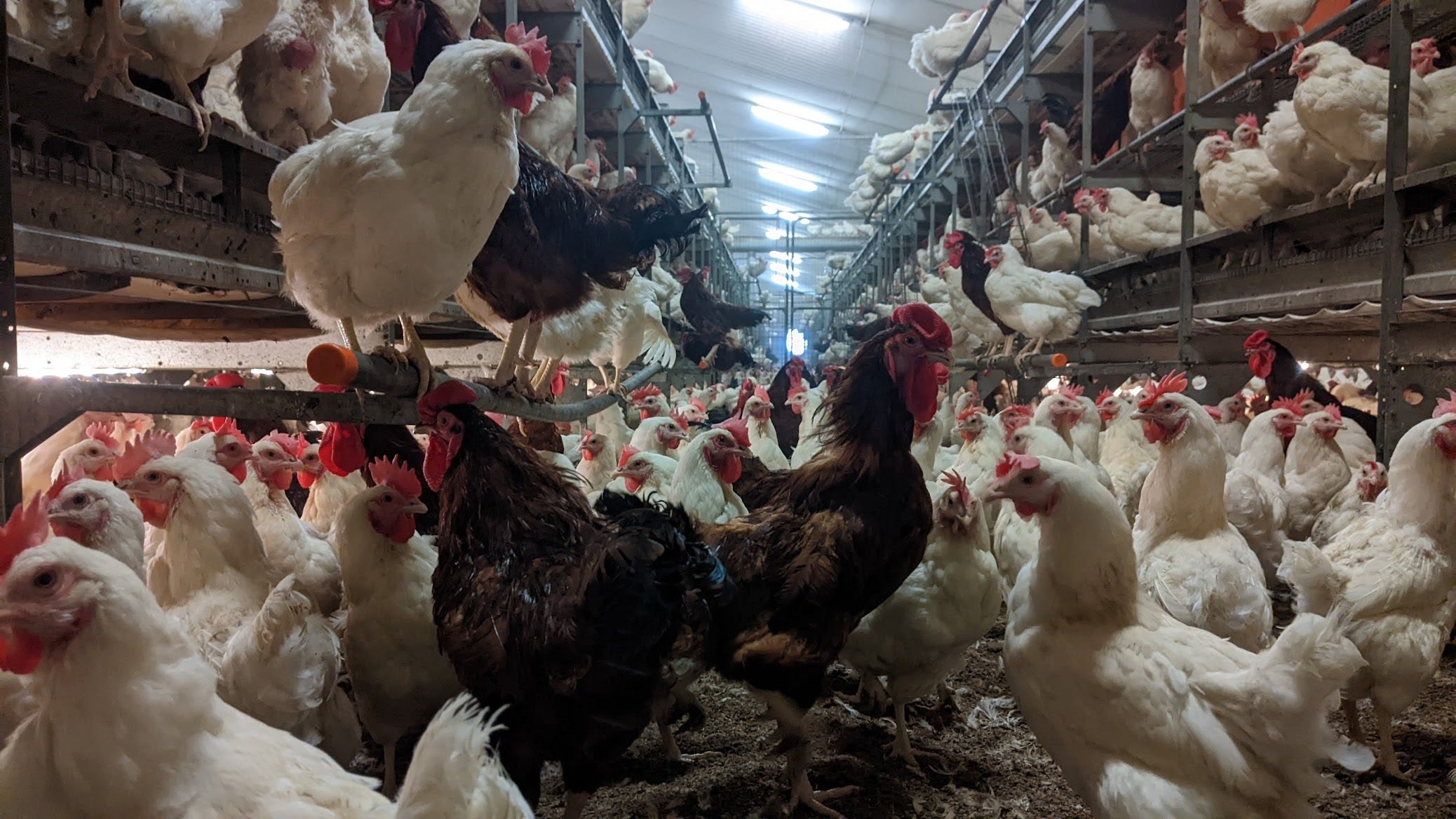
Parental animals live on what we call breeding farms or parent stock farms, in intensive conditions (nine birds per square meter in the EU). About 10% of the animals in any group are roosters, who have to make sure the fertilisation rate is as high as possible.
These roosters are much larger than the hens, and the latter have no choice but to endure the roosters. Severe injuries from the males’ spurs and claws to the hens’ backs, necks, and wings are common and can be fatal. Even a small bleeding wound can trigger pecking by other chickens, often resulting in death.
When after 70 weeks, the hens’ egg production starts to decline, the hens and roosters are sent to the slaughterhouse. By then, the hens have laid around 170 eggs. These eggs go to a hatchery to be hatched. The female chicks will go to a laying barn as laying hens, and the male chicks are killed on the day they are born.
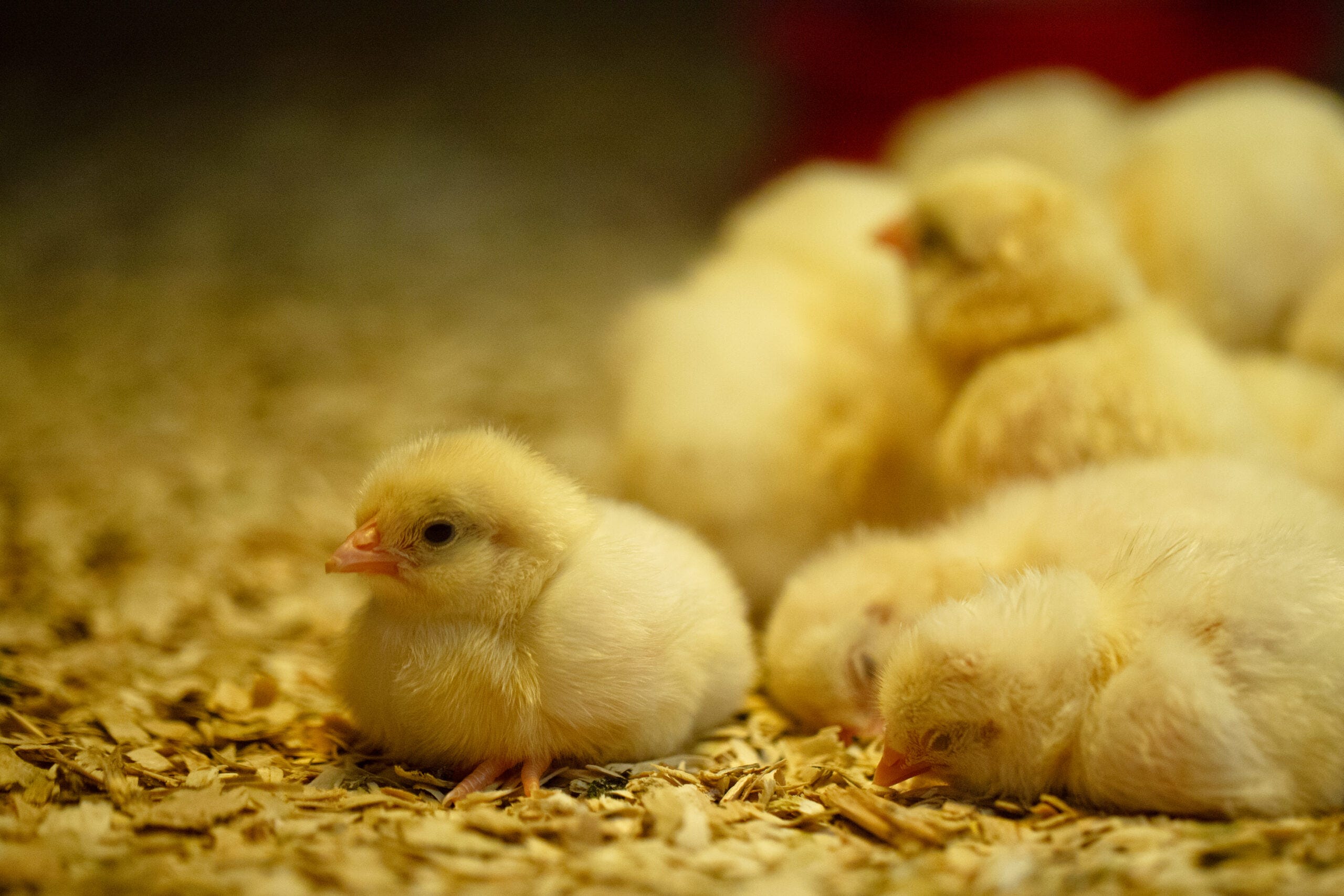
Something else most people never think about: when both the egg-laying hens and the broiler chickens peck through their eggshell and see the light, there will be no one around to guide them or give them love. Broilers will be killed after six weeks, without ever having known maternal care.
In “normal” circumstances, a hen already communicates with her chicks while they are still inside the egg. Hens are very protective of both their eggs and chicks, defending them with their life if they have to. Mother hens teach their chicks everything they need to survive, from scratching and searching for food, to finding a safe place to sleep, as well as social behavior.
Chickens who grow up without a mother often imprint on each other, rather than on an adult animal, which can lead to very problematic behavior. Without a mother to model foraging, pecking can turn on other birds - feather and toe pecking may escalate to cannibalism and death. Without a protective adult, birds are also more fearful; so-called “panic crowding” can lead to smothering.
I suspect that most people in the meat industry - and many people who eat meat - will dismiss talk of mothers and children, of family bonds and separation, as mere sentimentality.
But motherhood is not a sentimental add-on: it is a hard-won evolutionary adaptation that dramatically boosts offspring survival through protection, nourishment, and the transfer of learned behaviour.
All this, the intensive animal industry destroys - ruthlessly, across all species. A dairy cow is impregnated, gives birth, has her calf taken within hours. She was tricked into producing milk for a calf she will never raise - year after year, until she is worn out. A sow in a gestation crate can feed her piglets through bars, but cannot turn to reach them. And then there are the mothers who never get that far. A British abattoir vet has testified to seeing unborn calves kicking inside the wombs of cows hanging on the slaughter line, bleeding to death.
The tiny Australian wombat had a mother to be taken from. That is why we noticed. The billions of mothers in the animal industry have their children taken before they can even meet them.
For the animal mothers, it’s never a Happy Mother’s Day.
Comments
Nothing yet. Say the first thing.
Sign in to join the conversation.