
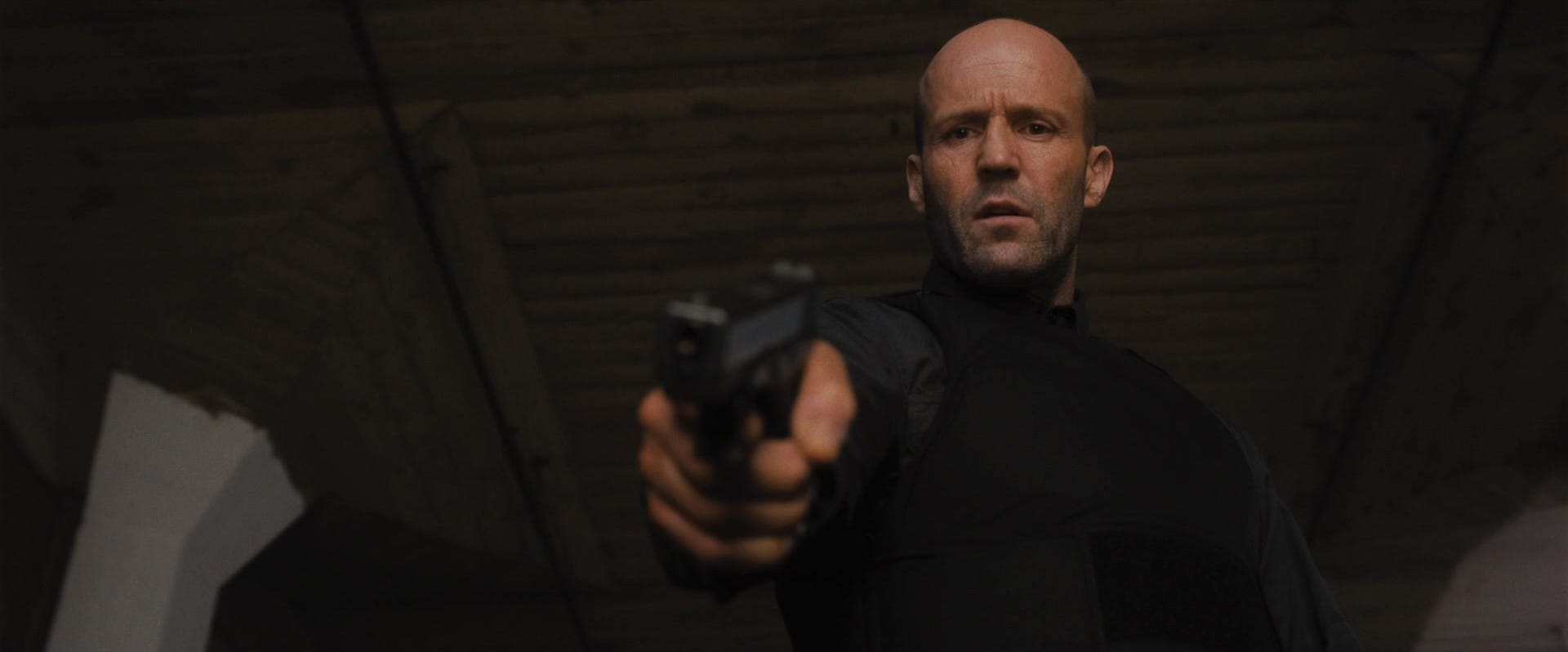
This week, I was one of dozens who went to the theater to see Guy Ritchie’s new film In the Grey. I did this solely on the strength of Matt Zoller Seitz’s positive review. And strangely enough, this was not the first time I watched a new Guy Ritchie movie in theaters because of a Matt Zoller Seitz recommendation, without hearing any other buzz or even seeing a trailer: the same thing happened in 2021 with Wrath of Man.
This never happens with any other film critic.
The nature of the industry, wherein critics watch a movie and hasten to churn out a review while it is still a hot topic of internet discourse, means that quite a lot of film criticism is, unfortunately, pure fluff. When I see or am interested in a film, and want to know what critics think of it, I never scroll RottenTomatoes, but seek out a handful of critics who I’ve come to believe will reliably have something interesting to say (among them Adam Nayman, Bilge Ebiri, and sometimes David Ehrlich – and for older films, Roger Ebert, Pauline Kael, Steven Greydanus, and Joshua Gibbs).
But there is no film critic who I Google nearly as often as Matt Zoller Seitz (see such queries as “matt zoller seitz jurassic world fallen kingdom,” which brought me to a chain of tweets from 2018, which did in fact say interesting things!). And there is no other film critic for whom I will watch a movie I otherwise had no interest in, purely because of his recommendation. That’s not even a judgment so much as a simple, practical observation: if someone else had positive things to say about In the Grey, I might make a mental note to check it out sometime down the line, but it wouldn’t actually get me into a theater.
Seitz writes beautiful, compelling prose that is a pleasure to read for its descriptive power. Like Roger Ebert, whose website he now contributes to, he has a knack for coining pithy turns of phrase that are memorable for how elegantly they articulate specific things movies can do.1 In a great 2006 piece on Star Wars Episode III: Revenge of the Sith, for instance, he calls George Lucas’ broad-strokes, simple-but-not-simplistic mythmaking “cinema as cave painting” – an insightful expression that at once succinctly captures a specific project’s primal power and suggests a distinct mode in which a whole pantheon of movies might operate. (Come to think of it, the description “cinema as cave painting” could be applied to a host of my favorites, from Metropolis to Excalibur to Avatar. I leaned on the phrase in my review of Robert Eggers’ Nosferatu a few months ago.)
Reading Seitz’s reviews, one quickly gets the sense that he is a writer with a capacious and densely populated mental landscape, and he has a gift for seamlessly broadening the scope of his writing to set his subjects within a wide and varied range of larger contexts. In a given piece, he might compare a film to classic literature, pull out its social-cultural-political implications, refer to the bodies of work of the actors, writers, and directors involved, and/or (my favorite, I think) draw lines connecting it to older films you would not necessarily expect. In the above-mentioned review of Wrath of Man, he discerns the influence of classic neo-noir crime movies like The Killing and The Killers, likens Jason Statham’s lead performance to Clint Eastwood’s “hero-as-horror-movie-stalker” turns in films like Dirty Harry and Pale Rider, and describes the ensemble cast of character actors as “a roster of men with faces that Humphrey Bogart could’ve punched.” By the time you reach the end of the piece, he has not just described the movie and given it a thumbs up or thumbs down, he has situated it in an entire cinematic heritage.
I think the single quality I most prize in Seitz’s writing is his generous willingness to meet a film on its own terms. He has his own specific standards and is not taken in by the mere fact of a thing being popular, but his reviews are rarely written in a spirit of condescension, and even when he thinks a film gets certain things wrong, he can write with lucid enthusiasm about the things he thinks it gets right. His 3.5 out of 4-star review of Christopher Nolan’s Interstellar, for example, stuffs its opening paragraph with significant caveats and then admits, “there’s something pure and powerful about this movie.” Sometimes he is quite a bit more generous than I am (say, when he gives Godzilla vs. Kong 4 stars out of 4), but I love his willingness to stand apart from the majority and give anything a fair shake.
Perhaps the first time I encountered Seitz’s work – or at least became conscious that he wrote with a distinct voice I admired – was when I found his review of The Lone Ranger, an infamous financial and critical flop I was low-key notorious for defending in my college years. (He gave it 3.5 stars out of 4 and described it as “a personal picture, violent and sweet, clever and goofy… as obsessive and overbearing as Steven Spielberg’s ‘1941’ — and, I’ll bet, as likely to be re-evaluated twenty years from now, and described as ‘misunderstood.’”) Whenever there is a blockbuster film that I think is artfully made in a way most people are dismissing – and this happens with some regularity – I will look to see what Matt Zoller Seitz has said about it. His review of Gareth Edwards’ 2014 Godzilla is clear-eyed about the film’s limits but beautifully articulates its formidable merits (“The sheer filmmaking craft on display here shames almost any comparably budgeted superhero picture you can name… the wide shots of kaiju grappling in ruined cities are gloomily magnificent, like oil paintings of Biblical miracles”). Last year, his glowing review of TRON: Ares was the only one to identify and articulate the specific things I found thrilling about the film (“a remarkable leap in [director Joachim Rønning’s] career, with a style that… embodies and amplifies the content”) rather than reflexively consigning it to the pop cultural garbage bin.
But whatever the preceding paragraph might suggest, I do not like Matt Zoller Seitz because he is my own personal echo chamber. (I did not even like In the Grey, the film that sparked the writing of this post!) I appreciate his work not because we always see eye to eye, but because it is always a pleasure and an education to see movies through his eyes.
For an example of Ebert doing something similar, see his description of Indiana Jones and the Temple of Doom as a “Bruised Forearm Movie”: “the kind of movie where your date is always grabbing your forearm in a viselike grip, as unbearable excitement unfolds on the screen. After the movie is over, you’ve had a great time but your arm is black-and-blue for a week.”
Comments
Nothing yet. Say the first thing.
Sign in to join the conversation.