

Today is launch day for Vxd on Kickstarter. Our 40-page, black-and-white conspiracy comic is very, very different from any of the comics I have written and published before. While this unexpected zig when others expect me to zag is consistent with how I’ve lived my life, I have to admit that this divergence comes with some heavy emotional baggage. Fortunately, a research paper I recently came across has helped me reframe much of my anxiety about writing in a different genre.
In our house, we jokingly say that I go through seven-year cycles of intense interest. Many times, these interests overlap, and sometimes the time frame varies, but in general, this observation is accurate.
During my 62 years on the planet, I can recall being passionate about:
Astronomy1 & space travel
Rock collecting
Freshwater fishing (especially fly fishing); marine biology (I blame Jacque Cousteau)
Programming & computer applications - especially machine code, hypermedia programming (HyperCard & Supercard), desktop publishing, CD-ROM archiving, website development
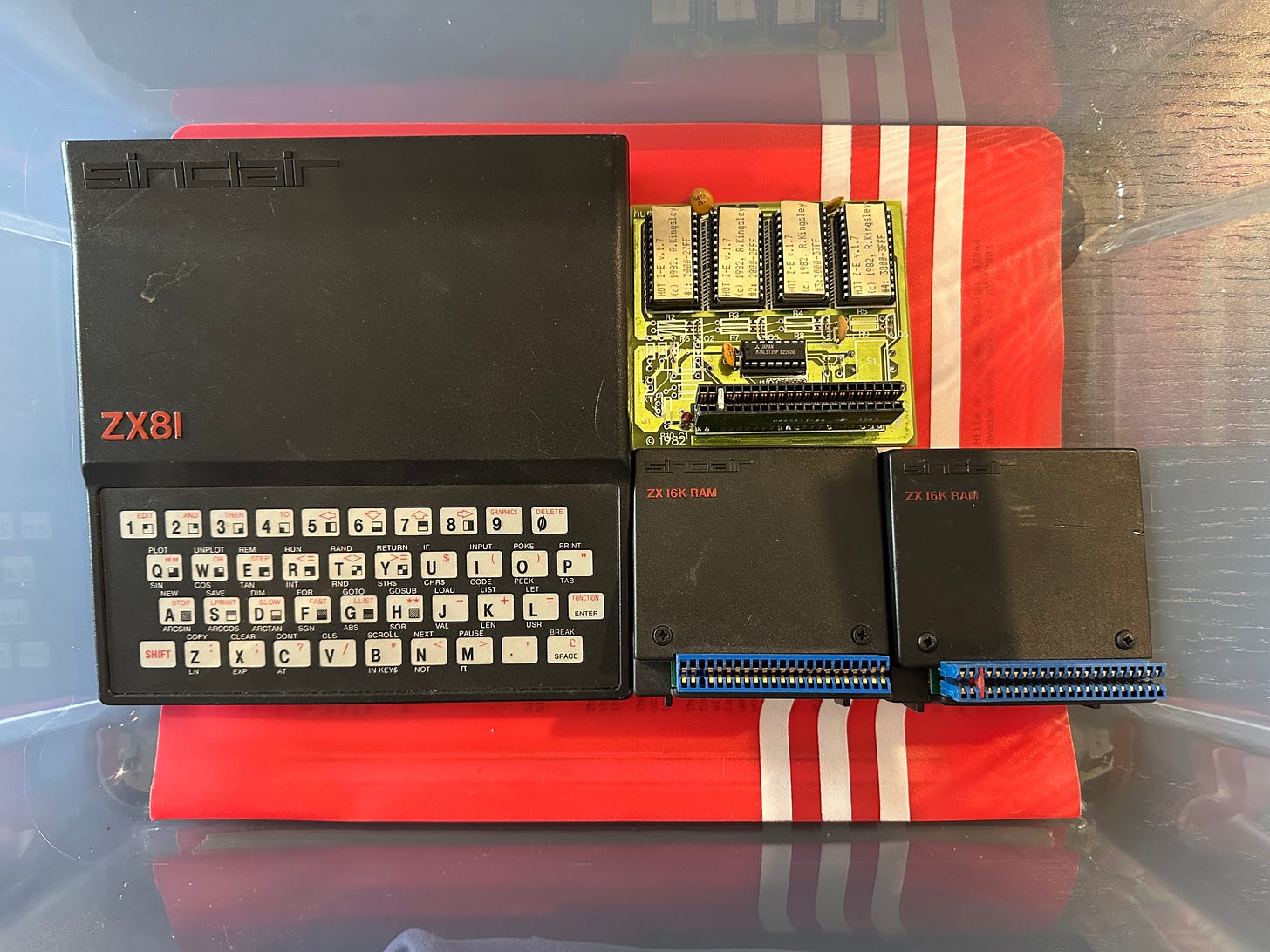
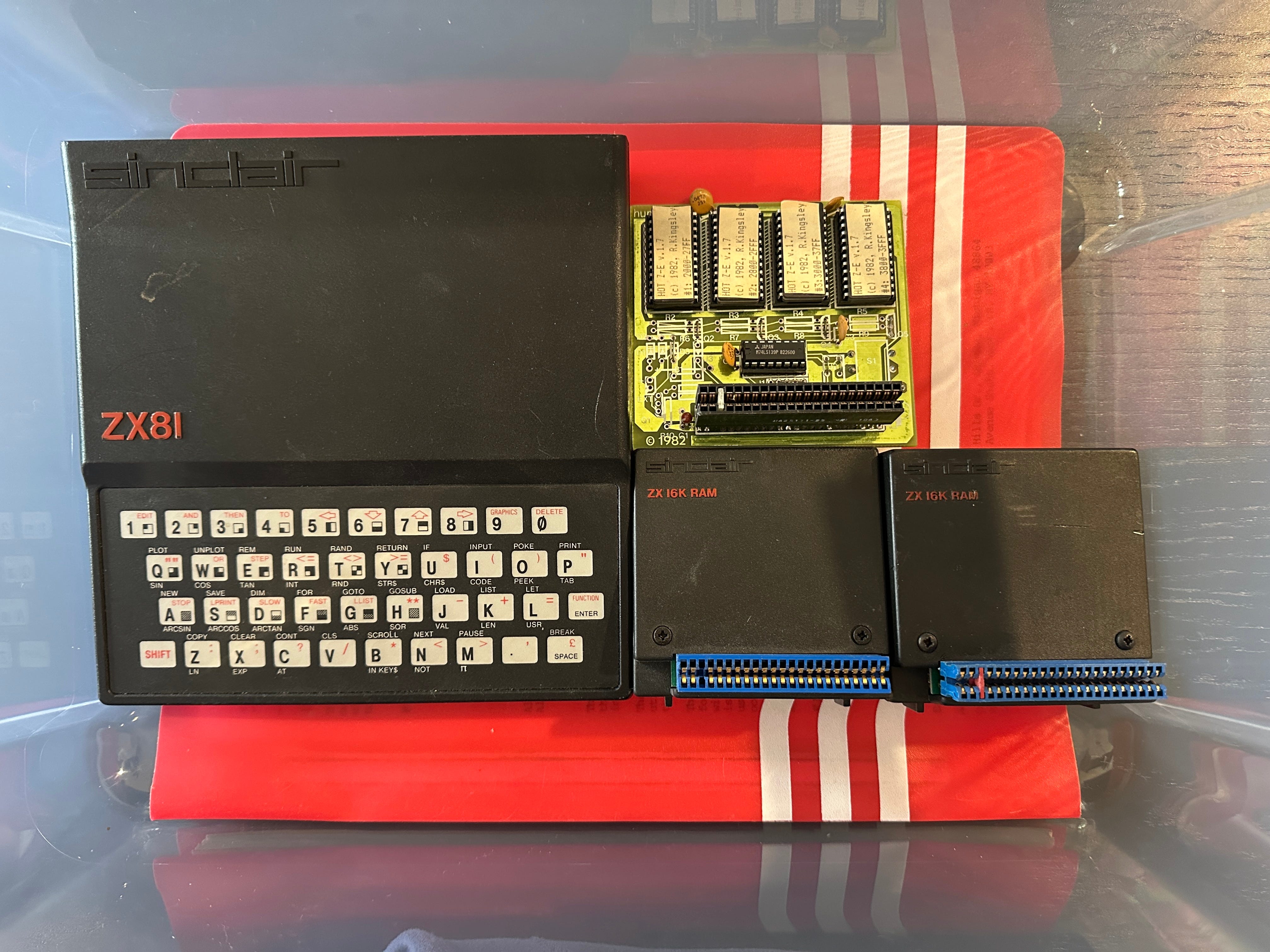
My first computer. Tape recorder for storing code not shown. Audio recording and music management
Motorsports (especially PR); classic car restoration
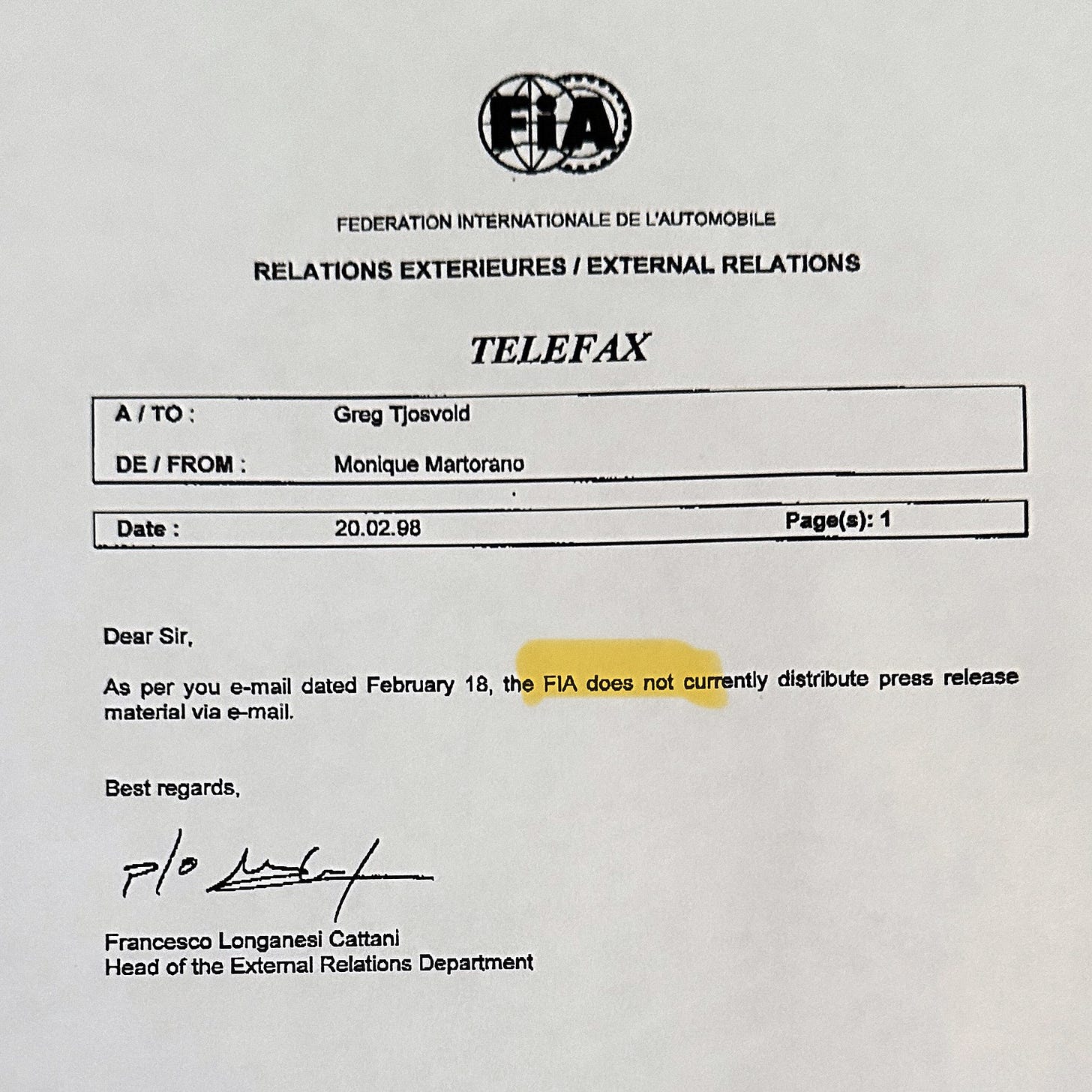
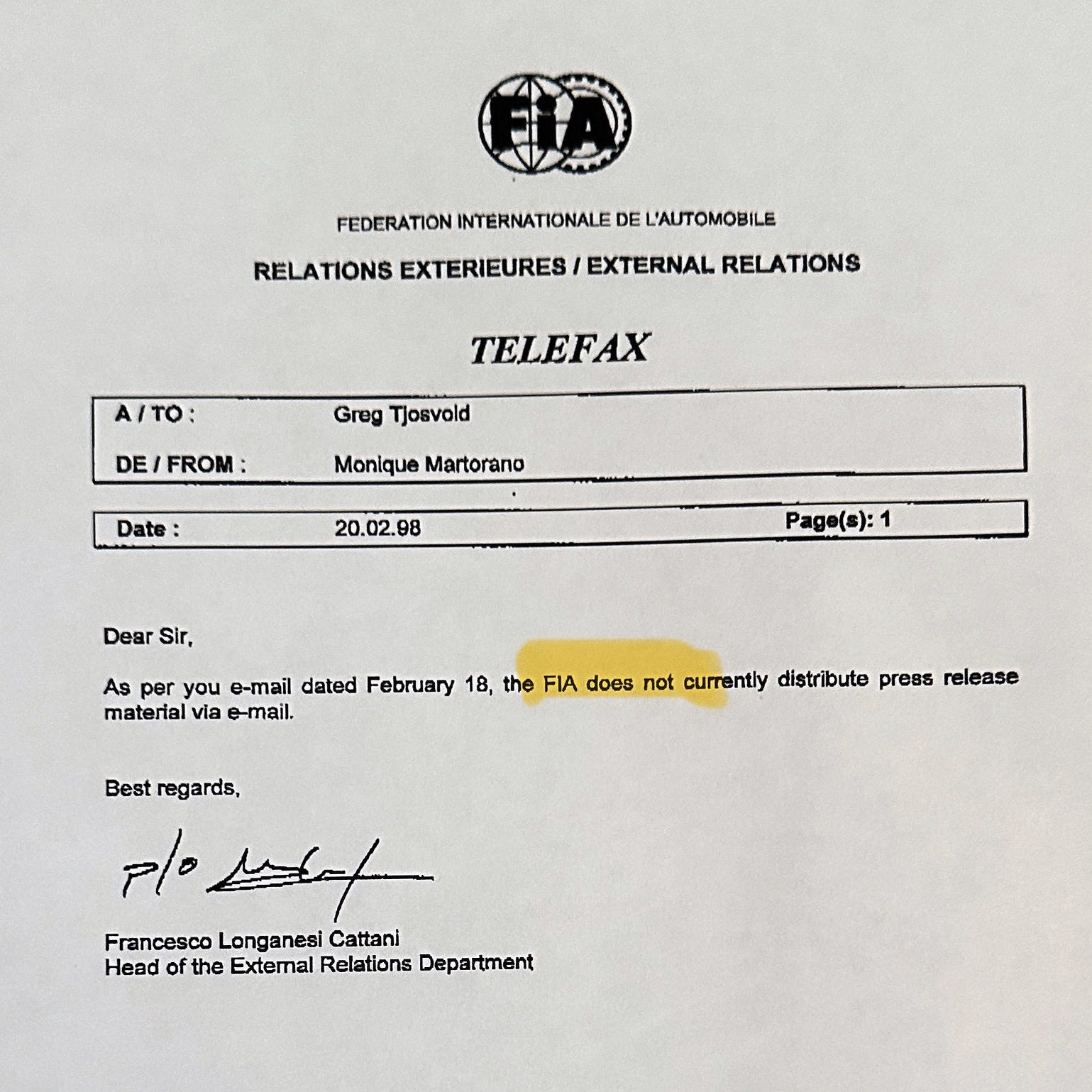
How times have changed! Teaching (on-set tutoring, technology, gifted education)
Travel, especially for pseudo-surfing
Romantic gestures and relationship psychology (especially attachment theory)
Wildlife photography; birding

I don’t get out with my camera as much as I once did. Electric vehicles and renewable energy
Blockchain, cryptocurrency, and NFTs
Writing - novels, comics

I may have forgotten some, but the general concept holds. I love to learn, and a good, multi-year deep-dive into something that fascinates me truly lights my soul. They say that everything is a win when the goal is experience, and I tend to agree. I’ve lived a good life, so far, full of learning, connecting, creating, and hopefully helping those around me. The ultimate compliment for me is to be called a modern-day Renaissance man.
But the reality is that this sort of life also comes with its share of negative labels. They range from the mostly neutral “Jack of all trades and master of none” to more negative monikers like “flighty” or “flakey.” When I took early retirement from an award-winning teaching career to pursue my creative to-do list, my uncle summarized out loud what I am sure many others were thinking… “If it wasn’t weird, it wouldn’t be Greg.” My life has been a breeding ground for imposter syndrome and the guilt of not “giving people what they want.”
What I learned much more recently is that this sort of life is also a pretty solid indicator for a clinical diagnosis of ADHD (Attention-Deficit/Hyperactivity Disorder). I recently took the time to investigate this as a possibility, and when I told my adult children I probably had been living with ADHD, they simply replied, “Duh!” I started on a low dose of meds and literally gained a full day a week of productivity.
In retrospect, the oscillation between novelty seeking2 and hyperfocus3, along with mind wandering and impulsivity4, were textbook indicators of ADHD. And it turns out, they might just be the perfect soil for cultivating a comic career.
In the last post, I mentioned I was looking for a video that referenced a study on the success of comic creators. While I still haven’t found that video, I am confident that I found the study it referenced.
The research paper is one by Alva Taylor and Henrich R. Greve titled “Superman or the Fantastic Four? Knowledge Combination and Experience in Innovative Teams,” published in the Academy of Management Journal (2006)5. The researchers looked at the success of comics in the collector aftermarket and the creative teams that made them6. I will include a link to the paper in the footnotes so you can look at the results yourself, but in overview, not-too-academic summary speak, these are some of the findings that reassured me that writing something different was actually a good thing for my comic career.
Increased Quality
The study found that the number of different genres a creator has worked in has a positive and significant effect on the average quality of their work. Your overall proficiency as a storyteller increases the more genres you have created in. Vxd and TLSS are very different, so I am well on my way to adding more genres to my palette.7
Breadth Beats Depth
Want to create a blockbuster? Breadth beats depth. Multi-genre experience is a significant predictor of what the researchers call “performance variance.” With more genres under your belt, you become more likely to produce a unique and potentially very successful combination of the “vocabulary and grammar” of those different genres.
This makes sense to me. If you write 100 issues of the same SF series, it is believable that your “innovativeness” might plateau. As a result, if you’ve worked in, for example, superheroes, crime noir, romance, and non-fiction, your subsequent work is statistically more likely to be a hit.8
The Superman Effect
Individual creators are more effective at combining diverse knowledge than teams. Specifically, “genre experience held by a single individual has an effect on innovation, but genre experience dispersed over team members does not.” They continue, “Although single creators start out with lower innovativeness, their curve crosses that of teams at three genres. Hence, genre experience is especially valuable for increasing individual innovativeness.”
The researchers call this “The Superman Effect.” As a single creator, it is easier to create more coherent and radical innovation.
Doing creator-owned comics with a work-for-hire team means that I am working on my own the majority of the development cycle of a particular comic issue. It is reassuring to know that this is not necessarily a bad thing.
The Knowledge Blender
Innovation in comics often stems from the process of taking existing knowledge components from different domains and combining them in new ways. The study posits that it is essential for making non-incremental creative leaps. Furthermore, they say “combining knowledge requires a deep understanding of knowledge, rather than information scanning or exposure.”
Boy howdy, do I have hyper-focused experience in multiple domains.
Find Your Fantastic Four
It is important to acknowledge that while individuals are better at achieving the extreme highs of innovation, they often struggle to maintain consistent quality compared to teams. “Fantastic Four” teams that have worked together on multiple previous projects showed a higher average quality. In addition, the paper found that teams with multi-genre experience can indeed innovate; however, having that extra domain knowledge spread across the team is not as effective as having it with one creator.
While we do have a team that has worked together for a while now for The Lump Sum Saga, this is the first time that I have ever worked with Stan Yak, the illustrator of Vxd. Hopefully, we’ll be able to work together more often in the years ahead to maximize our potential.
It was reassuring to discover that working in a new genre could be a career success multiplier. It was also very affirming to know that my serial deep-dive history has the potential to aid my becoming an innovative comic book creator.
I’m choosing to ignore the warning that innovation is not always a good thing. I am confident that Vxd is a compelling story that will find its conspiracy story fan base. We’ll know for sure when the campaign ends four weeks from today.
I put together my first “book” when I was 9 or 10 years old. It was a spiral-bound notebook full of plagarized carefully researched facts about our solar system.
Gvirts HZ, Mayseless N, Segev A, Lewis DY, Feffer K, Barnea Y, Bloch Y, Shamay-Tsoory SG. Novelty-seeking trait predicts the effect of methylphenidate on creativity. J Psychopharmacol. 2017 May;31(5):599-605. doi: 10.1177/0269881116667703. Epub 2016 Sep 13. PMID: 27624151.
Champ RE, Adamou M, Gillibrand W, Arrey S, Tolchard B. The Creative Awareness Theory: A Grounded Theory Study of Inherent Self-Regulation in Attention Deficit Hyperactivity Disorder. J Clin Med. 2024 Oct 7;13(19):5963. doi: 10.3390/jcm13195963. PMID: 39408023; PMCID: PMC11477866. https://pmc.ncbi.nlm.nih.gov/articles/PMC11477866/pdf/jcm-13-05963.pdf
Girard-Joyal O, Gauthier B. Creativity in the Predominantly Inattentive and Combined Presentations of ADHD in Adults. J Atten Disord. 2022 Jul;26(9):1187-1198. doi: 10.1177/10870547211060547. Epub 2021 Dec 12. PMID: 34894845; PMCID: PMC9096579.
Taylor, Alva & Greve, Henrich. (2008). Superman or the Fantastic Four? Knowledge Combination and Experience in Innovative Teams. Academy of Management Journal. 49. 10.5465/AMJ.2006.22083029. The PDF is downloadable here.
I found it rather brilliant that the researchers chose the comic book industry for this study. They did so because it provided a perfect “closed loop” of data: clear credits (writers/artists), specific genres, and measurable success (sales and historical significance). I can’t think of another creative industry where this data is so clear-cut and available.
If you get a chance (it doesn’t appear to be offered currently), I found Paul Allor’s genres class at Comics Experience well worth the time and money.
If I am reading the study correctly, it also increases the likelihood of creating something different that turns out to be a dud. It’s a topic for another post, but sometimes innovation is not what a reader expects or wants.
No posts
Comments
Nothing yet. Say the first thing.
Sign in to join the conversation.