
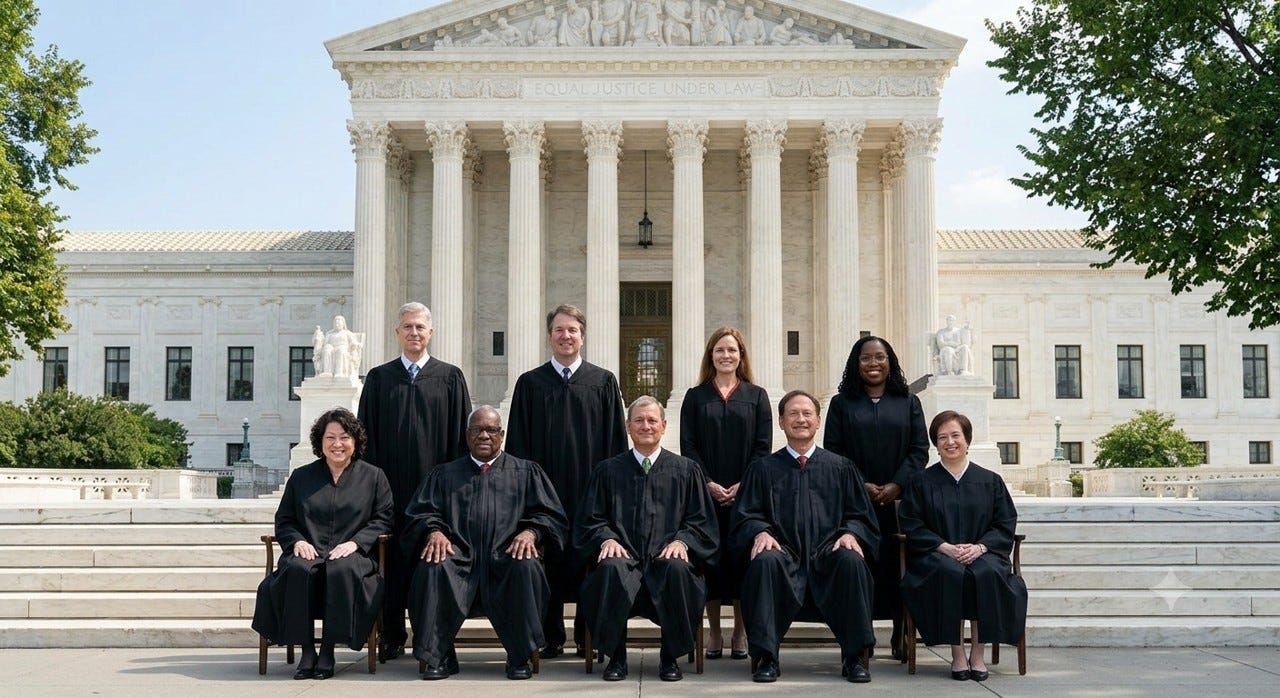
Just like the rest of us, Supreme Court Justices have all led different lives with different experiences. However, they do have a few things in common: a deep understanding of the law and a personal commitment to it. That being said, each intellectually addresses the formation of their opinions from their own perspective. There are a range of judicial philosophies in play that have a greater role in influencing the Justices’ opinions than any Left/Right leaning they may have. Let’s examine those philosophies to understand their potential impact.
TEXTUALISM
Textualism is fairly easy to understand. It focuses strictly on the plain meaning of the legal text as written. It asks the question: What do the exact words on the page say?
The Premise – A law should be taken at face value. It should not be interpreted to include or exclude anything that isn’t specifically covered by its text. The legislature had the opportunity to craft the law exactly as it chose, and the judiciary (even at the Supreme Court level) has no authority to broaden or restrict the law’s application.
The Challenge – Legislation is rarely drafted with the precision that Textualism assumes and often without the diligence this judicial philosophy demands.
ORIGINALISM
Originalism is deeply entrenched in the interpretation of the Constitution. It looks at the public meaning of the Constitution’s words at the time they were ratified and asks the question: What did the authors and public understand these words to be at the time they became law?
The Premise – Similar to Textualism, Originalism believes the words of the Constitution and Amendments are controlling. The difference is that Originalism adds a temporal component that addresses how the meaning of words might have changed over time. It requires the words to be interpreted as they were defined at the time they were drafted. Followers of Originalism also look to the history of the legislation that led to the Constitution and its Amendments in order to gain clearer insight into why the words were chosen and how they were meant to be interpreted. (Note: This will be particularly interesting when the birthright citizenship decision is released.)
The Challenge – While Originalism seems to be a refinement of Textualism, it often poses a challenge. While the historic background of the Constitution and its Amendments can provide additional insight into what each sought to address, interpreting the words in that context can still be difficult. This is particularly true of the period during which the Constitution and the Bill of Rights were written since “olde English” was used. It adds difficulty to understanding the meaning of the words as they would have been interpreted at the time.
Comments
Nothing yet. Say the first thing.
Sign in to join the conversation.