
This is the eighth installment of Builders of Justice, a profile series celebrating nonprofit and philanthropic leaders who are challenging the status quo and reimagining what’s possible for our communities.
“I will never work at a nonprofit. I would never do this work because I saw how hard it was.”
That’s what Nourbese Flint believed as someone who grew up as a “legacy kid” in Los Angeles’s nonprofit sector. Surrounded by some of the most prominent founders of the reproductive justice movement, including her mother, she knew early on that dedicating your life to social justice comes with a heavy toll.
She held on to this thought process into her young adulthood, majoring in journalism at San José State University. However, she found it difficult to resist what felt like a clear calling. She regularly attended reproductive rights events and was regarded by her friends as the go-to source for information on birth control and sexual health.
She explains, “The work of repro justice has always been with me. That’s just where I grew up. Whether among friends or family, they never let me escape from it.”
She went on to work at university campus health clinics, spent ten years at her mother’s organization, and founded the nation’s first Black women’s reproductive justice 501(c)(4). Today, Nourbese serves as President of All* Above All and its Action Fund, directing nationwide efforts to advance abortion justice and strengthen the political influence of voters of color.
Not bad for someone who said she would never take on this type of work.
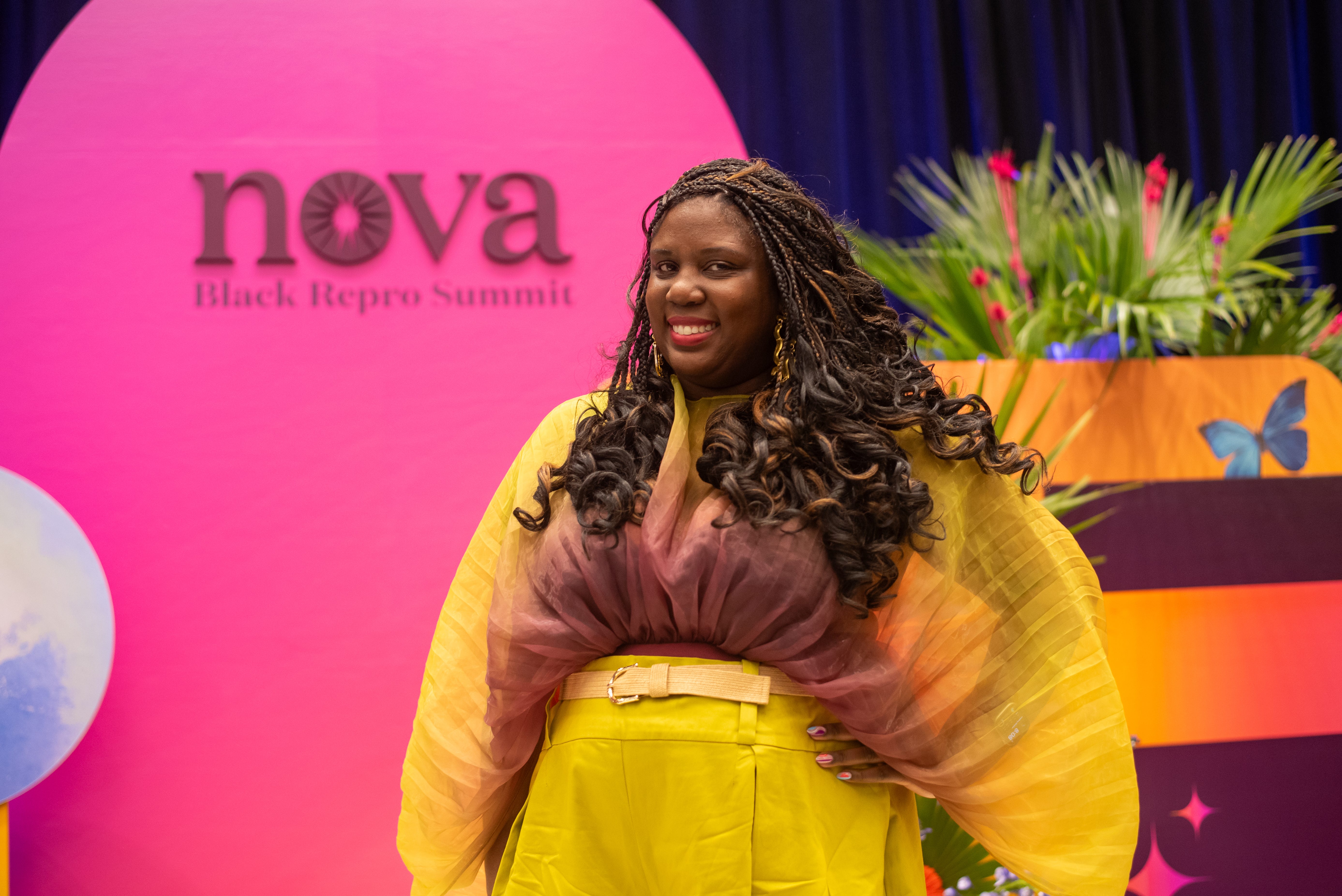
After undergrad, Nourbese worked at an organization dedicated to addressing health disparities. She recalls sitting in a room full of highly educated people discussing these disparities.
However, she wasn’t allowed to speak because she lacked the credentials (which is code for “you don’t have enough degrees, you have a junior-level job title, and the topic is above your pay grade”). During a break, she suggested a solution to one of her colleagues, who responded politely but dismissively: “Interesting idea. Go take notes.”
Sound familiar? It definitely does to me. I know I’ve had my fair share of being a notetaker while those with more credentials echoed my ideas.
Flint continued, “I was like, I could do this. I could do this in the real world. I’m running circles around some of these people with fancy degrees.”
Instead of leaving that room that day believing she wasn’t ready to lead, she left knowing she was. She went back to school for her master’s in women’s health at Suffolk University and fully began embracing her calling.
Flint came home to Los Angeles after completing grad school to help her mother at Black Women for Wellness (BWW), the organization Flint’s mom founded in 1997. The plan was to stay for three months before returning to the Bay Area.
However, three months quickly became a decade.
During that time, Trump took office for his first term, and BWW became an integral part of the community, largely serving as the place where people asked, “Who do we vote for?” As a 501(c)(3) organization, they weren’t allowed to endorse candidates. The legal constraints of a traditional nonprofit limited their ability to use their resources fully and to engage in highly partisan issues.
So, Flint handled the paperwork, assembled a board, and established Black Women for Wellness Action Project, the nation’s first Black women’s reproductive justice 501(c)(4).
The organization was formed for reasons that went beyond a single election cycle. It aimed to address the well-documented disparities that Black women face in California through political advocacy. Being a 501(c)(4) enabled the identification and support of candidates committed to Black women’s health and the holding of them accountable once in office.
“Although we were putting people in office, folks weren’t thinking about us and our health and our issues when it came to delivering on the policy objectives that would impact our lives,” she says. “We needed some more tools in the tool shed to be able to hold folks accountable to the lives of Black women and girls in California.”
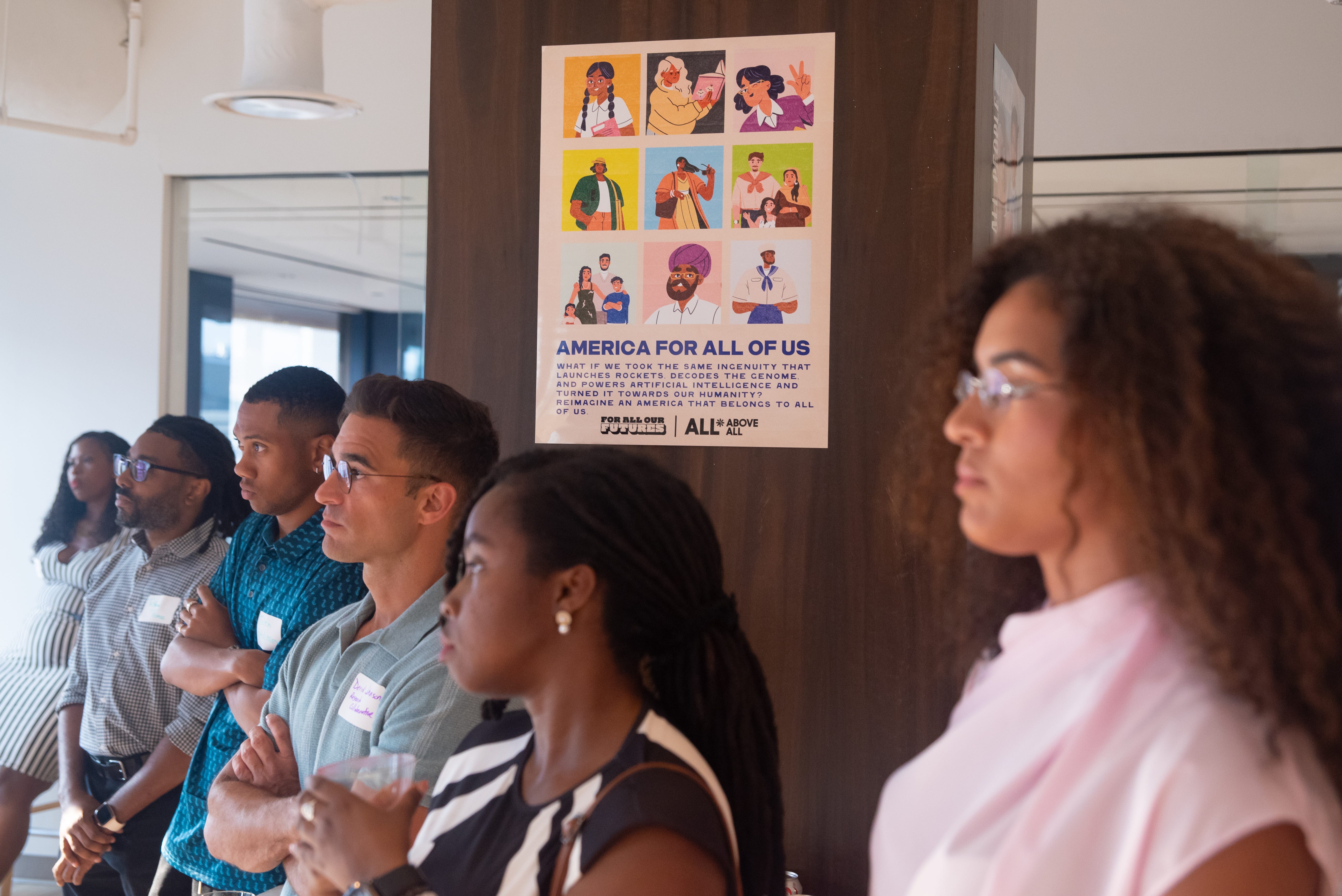
Flint frequently returns to the question of accountability when discussing her years of state work.
“Who am I accountable to, and why?”
Earlier in her career, she worked at a community organization where people could come into the office to share what was happening in their neighborhoods. She attended community events to stay informed and accessible. The open-door culture kept her connected to the community and honest about whether the policies she was pushing matched what her community said it needed.
She also has fond memories of a woman named Miss Barbara, an elder Flint met at a meeting who strongly believed in her team’s work. She would visit the office and contribute her pocket change, saying, “Just put this to the work.” This wasn’t for any specific program or campaign. She was supporting the work as Flint and her team saw fit.
“Knowing how valuable that was to her, her investment into the work that I did, it would make my heart very full,” Flint explains. “But it also just sat with me on why I am here.”
Around the same time, California hit several walls. Despite its significant efforts, federal policies continually hindered its progress. Achieving real change required federal participation, prompting Flint to transition to the Planned Parenthood Federation of America, where she served as Senior Director of Black Leadership and Engagement. She joined at a challenging time, amid the overturning of Roe v. Wade in 2022.
She describes it as a hectic moment that revealed both the power of national work at that scale and the sheer devastation the decision inflicted on abortion access. It also underscored the importance of maintaining a sense of community while overseeing policy, narrative, cultural shifts, and strategy from a broad perspective.
“Many people who work in the national arena have never actually done local work,” she says. “There’s just something missing.”
She considers herself fortunate to have experienced both levels of advocacy. The years spent in community-centered organizations and events gave her experiences you don’t always get at the national level. She expresses gratitude for being able to apply those lessons in every national setting she’s in.
With Flint being a founding member of Trust Black Women and the Black Women’s Democratic Club, I asked her what it takes to build lasting coalitions.
Her response wasn’t what I expected. She had been watching interviews with astronauts who orbited the moon. When asked about their experience in the small capsule, they described the preparation needed to maintain harmony among themselves. Flint sees the same pattern in movement work.
“What makes things last is holding the mission and vision of why we came together, while also understanding how to be in conflict with each other so we can get to where we need to go without it destroying the space itself or the relationships that we have in it,” she says. “A lot of broken spaces got to a moment and didn’t know how to be in integrity with each other, and that collapsed the actual movement.”
Her advice for new coalitions is to initiate those discussions early, while enthusiasm is high. What should we do if disagreements arise? How can we maintain communication and continue progressing?
“If you’re asking people to show up for you, what does it mean to show up for them?” she asks. “I try to show up for folks in the ways I would want somebody to show up for me.”
That’s not always easy, however. Flint is candid about her ongoing learning in coalition building, particularly on the East Coast. The DC culture can be overwhelming for her, and she explains that it is often a transactional, gossipy, and mean-spirited environment that seeks to undermine people’s integrity.
“That’s something that I’m still having to figure out how to reground myself in,” she admits. “Approaching conversations with grace, maintaining my integrity with the work.”
This is important for anyone involved in advocacy. Integrity is something you must actively uphold, practiced through small, intentional decisions.
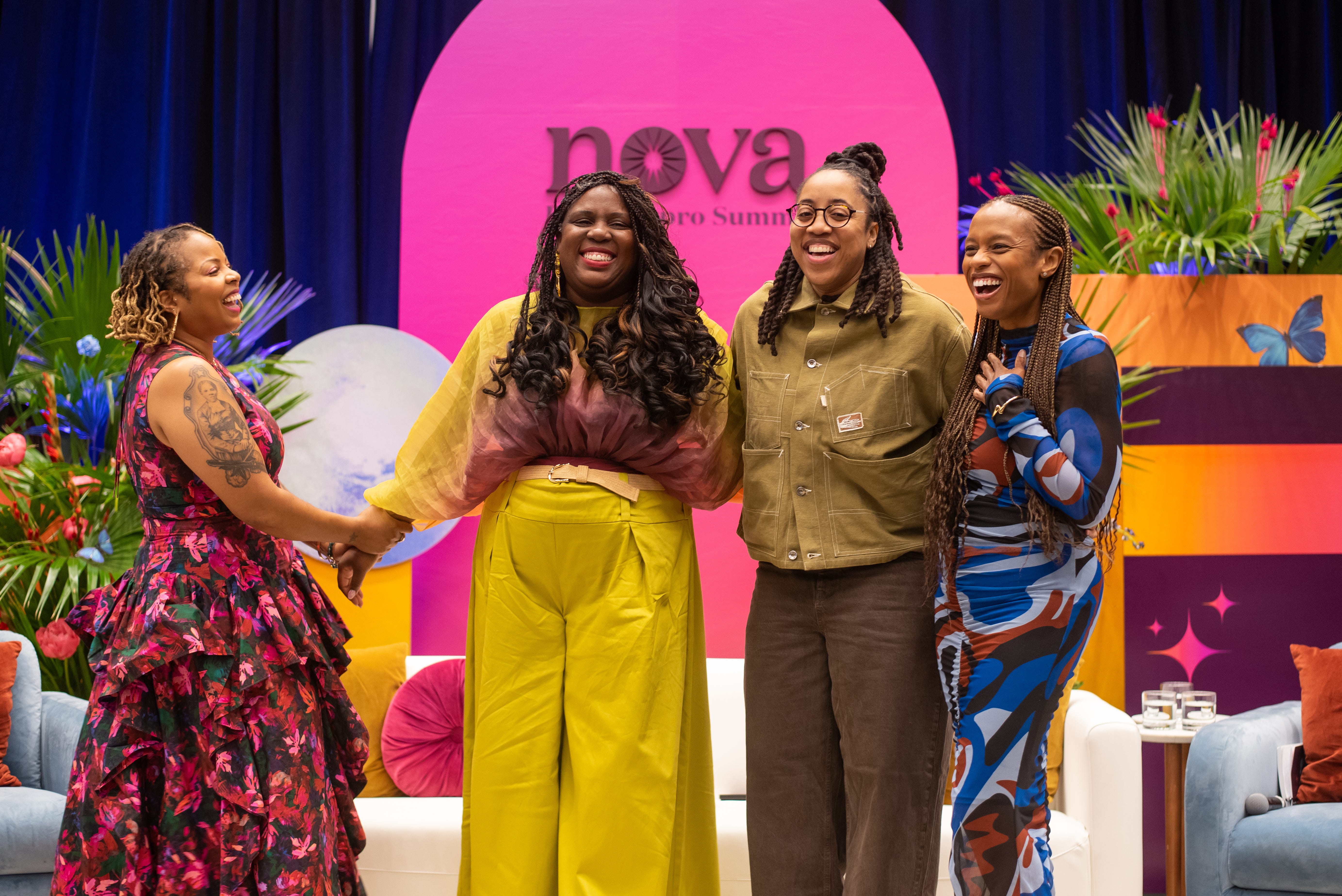
Flint emphasizes the importance of using the terms reproductive rights, reproductive health, and reproductive justice accurately, as they are often used interchangeably but have different contexts.
Reproductive rights are established through laws, court rulings, and legislation, involving court cases, bills, and organizations advocating on those issues. In contrast, reproductive health refers to the actual delivery of care, managed by clinicians and providers such as Planned Parenthood and women’s health specialists.
Reproductive justice is a distinct concept. It was first introduced in June 1994 by the Women of African Descent for Reproductive Justice, who define it as the human right to bodily autonomy, to have children, not to have children, and to parent the children one has in safe and sustainable communities.
The framework takes a human rights approach and applies Kimberlé Crenshaw’s concept of intersectionality, which recognizes that social categories such as race, gender, class, sexuality, and ability are interconnected and that different forms of discrimination and privilege often overlap, creating unique challenges for people with multiple identities.
“You are not doing reproductive justice work if you are not looking at race, class, and gender,” Flint says. “There are people who do reproductive rights work that is not reproductive justice. Some people do reproductive health work that is not reproductive justice.”
Flint emphasizes that an intersectional perspective is essential given historical injustices against Black, brown, Indigenous, and trans women.
“There’s no world where I can look at repro justice and not have to look at the race and gender lens,” she says. “If you are not looking at the race, gender, and class lens while you are approaching your work, you’re actually not doing your job.”
Currently, the campaign keeping Flint energized and excited about her work is For All Our Futures, which connects directly to her origin story and to the idea that the future isn’t just something that happens but something we shape through our actions.
“The notion that the future simply unfolds is a story used to disempower people.”
For All Our Futures aims to outline the full scope of reproductive justice by highlighting all aspects of having or not having children and of raising families with dignity. This includes everything from comprehensive maternal care and abortion access to paid leave and child care. Various states and local governments are already passing resolutions to support this cause, and the campaign is moving toward federal recognition.
“We’ll never be in the space where folks are just like, oh, we don’t know what you want, and undersell us,” Flint says. “We want to put out what the vision is so we can work towards it and declare it and be incredibly bold around it.”
She is also pragmatic about the political obstacles posed by politicians who argue that reproductive issues can be postponed, claiming that elections and living costs should take precedence, with women’s issues being sidelined.
“The asterisk in our name is a symbol of the people who always get left out of the conversation when people say they did something for ‘all’,” says Flint. “We are no longer going to be left out of the conversation. When we say for all our futures, it is for all of our futures.”
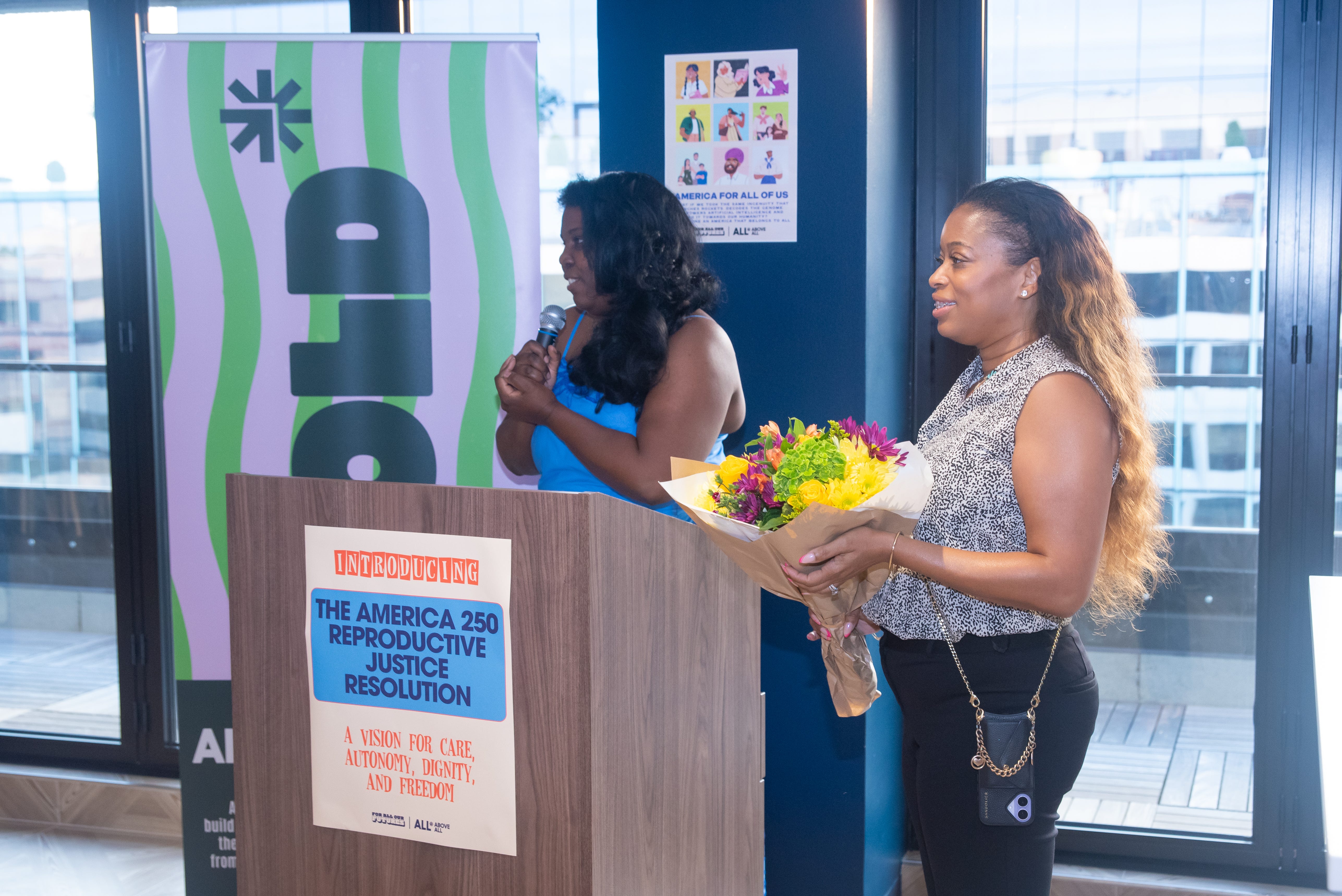
As a writer, I asked her where the media often gets it wrong in coverage of repro work. More newsrooms should take her answer to heart.
The anti-abortion movement’s image has evolved, but most coverage hasn’t reflected this shift.
“They’re still viewing it as a religious zealot issue or a theological debate,” she explains. “However, it’s really a struggle over power.”
She highlights a growing group of pronatalist tech advocates who support a modern eugenics movement, alongside cultural voices promoting the idea that some groups should have more children and that feminism should be reshaped to focus on increasing birth rates. Meanwhile, the media presents these issues as separate stories with no connection to one another.
“There’s a new villain, and this villain is intersectional in the way they are approaching the work,” she says. “We need to step up our game.”
Newsrooms continue to report on abortion, voting rights, health disparities, and environmental harm as separate issues, resulting in fragmented stories that readers struggle to piece together. Meanwhile, opponents are actively engaging in all three areas, but the coverage hasn’t yet reflected this interconnectedness.
Near the end of our discussion, I asked Flint what advice she would offer to someone aspiring to work in this field. Her response: volunteer. Seek out someone involved in the work you desire, ask for mentorship, and if they can’t, request an introduction to someone who can help.
“Nothing can replace that mentorship,” she emphasizes. “It doesn’t matter how many degrees you have.”
I also asked about legacy, beyond just the policy campaigns and wins.
“I know this is cheesy, but I do want to be known as a good mom,” she says.
Raising a healthy, whole, and joyful child into adulthood is a responsibility she takes as seriously as anything in her career.
The second part of her response focuses on inheritance and gratitude to those who helped launch her career. As the daughter of a reproductive justice advocate, she is acutely aware of whose work underpins her success. She describes it as a relay race, where the true measure of a leg is how far you carry the baton before passing it on.
“I sit on a legacy of folks who hoped and dreamed and pushed when there was nothing to hope for. There was no light at the end of the tunnel. There was just really a lot of darkness, and they still worked and pushed and fought for me to be here today,” she says. “My piece is to grab and hold that mantle and run it as far as I can, so the next generation can see liberation and know that we fought as hard as possible for them to be free one day.”
She wants to be an ancestor generations after her can admire, embodying boldness and courage without becoming a martyr.
Finally, mission-driven work often rests on the idea that individuals fighting for social justice must be prepared to sacrifice everything. But Flint has kept her whimsy and joy throughout her journey, and still does.
“Being a leader and fighting for the right side of the work doesn’t mean that you have to sacrifice your joy.”
She has made significant progress in her work and has remained true to herself throughout. This is the legacy she’s creating, and it’s one worth passing on.
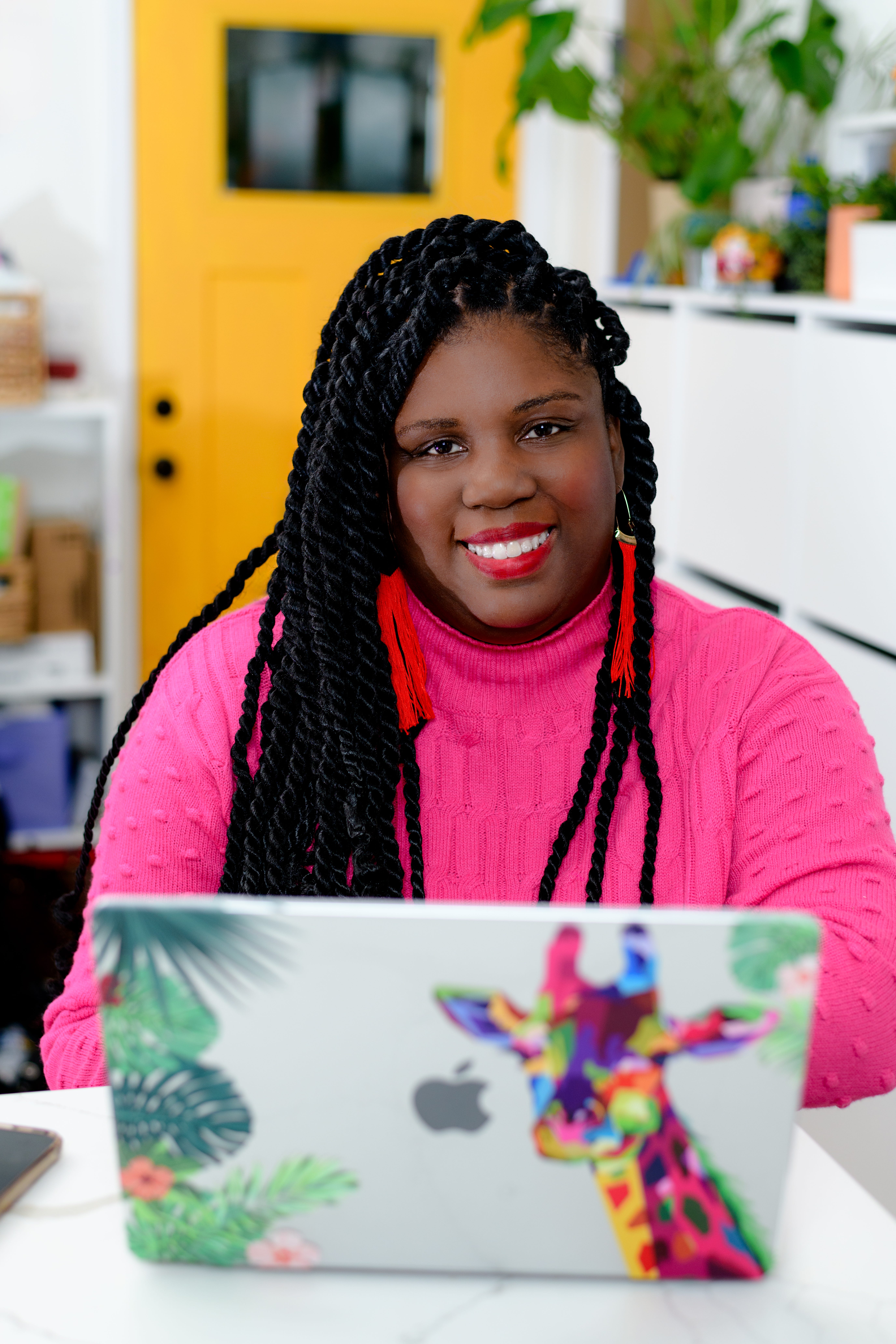
Nourbese Flint is President of All* Above All and the All* In Action Fund, where she directs efforts to achieve abortion justice and empower voters of color nationally. Previously, she served as Senior Director of Black Leadership and Engagement at Planned Parenthood Federation of America and was the founding Executive Director of Black Women for Wellness Action Project, the first Black women’s reproductive justice 501(c)(4) in the U.S. She is a founding member of Trust Black Women and the Black Women’s Democratic Club. Her work has been featured on MSNBC, CalMatters, Newsweek, and other outlets.
Learn more about All* Above All at allaboveall.org.
No posts
Comments
Nothing yet. Say the first thing.
Sign in to join the conversation.