

We live in an age of information abundance, enabled by communications technology that has inverted the power dynamics of the media landscape, shifting us from a small number of editors and curators of opinion to a digital wilderness where anyone with an opinion and a wifi connection can publish their perspective on the world. It is a kind of anarchy: decentralised, disconnected from the levers of power and wealth. Or so we are meant to believe.
In truth, our information feeds are still governed by gatekeepers in the form of algorithms developed by social media companies, invented to filter the infinite realms of digital culture into something you actually want to see.
From one perspective, this is the revolution the internet promised. It has turned journalism and public opinion into a free-for-all in which the best ideas bubble to the top and assist the evolution of thought.
From another, we are being farmed by corporate oligarchies whose chief intent is to generate engagement through clickbait perfectly attuned to your particular cognitive bias in order to generate maximum profit.
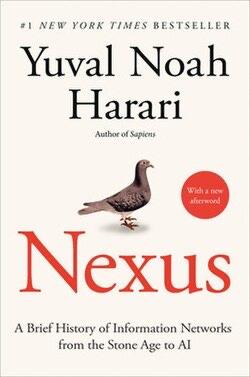
Yuval Noah Harari puts the mechanism plainly in Nexus, his history of information networks from the Stone Age to AI: the social media algorithms were given a single, innocuous-sounding instruction, to maximise engagement, and in pursuing that goal they built a system that rewards our basest instincts and starves the fuller spectrum of human potential. The machine was never malicious. It was simply told to keep us watching, and it learned that outrage and fear keep us watching best.
Both can be true. How else would the code elves behind Google and Facebook, Amazon and Spotify, Instagram and TikTok ever sift through the mountainous piles of content? It is the most logical thing in the world for them to do, because it is the only way not to waste people's time. If they didn't do it, competitors would have, and those that didn't are probably already extinct.
On the flipside, the danger of algorithmic curatorial logic is its tendency toward clickbait and endless distraction in the attention economy, to say nothing of bad actors in the media ecosphere.
When I was studying Media Arts at university in the final years of the twentieth century, I began my political education through the prism of student politics. I discovered the undercurrent movements of activism primarily through the student newspaper, which I stumbled into as a designer keen to stretch my graphic-design muscles, and somehow stumbled out of as its editor. At that point there were no blogs, no alternative online media, no YouTube, and definitely no such thing as social media. A website was an expensive undertaking, and the student newspaper was the only place alternative viewpoints could be put to print in a town dominated by a single Murdoch-owned tabloid, the infamous NT News, which would sooner run a story about crocodiles than genuine political reportage, and whose idea of an opinion writer was syndicated Andrew Bolt, one of Australia's most offensive right-wing columnists. I saw it as my duty to share the alternative viewpoints I was discovering. My first story covered the Jabiluka blockade in Kakadu National Park, where mostly young students had travelled from across Australia to protest a new uranium mine in solidarity with the Mirarr people, the traditional owners of that country.

In the early 2000s I moved to Melbourne to continue my studies, in the halcyon period of Internet 1.0, and was inspired by the potential of this revolutionary technology, a potential that had culminated in a new open-source website for independent journalists named Indymedia. Suddenly there was an international network of grassroots journalism that, just a few years earlier, would have seemed like a dream. Within a few years the first blogging platforms appeared, making it easier still for writers and artists to share their thoughts. Then came the social apps, Friendster and MySpace, a precedent to the boom about to take place. Soon there would be YouTube for filmmakers, or anyone with a camcorder, and finally Facebook for connecting with friends. Back then there was no news on Facebook. It was a place to share photos and stay in touch with people you'd met across the world.
Everything has changed. We now live in a different world. An entire online dimension has blossomed, or metastasised, depending on your skepticism, into every nook and cranny of the cultural landscape. Everyone has an online identity, or many, in order to navigate these worlds. And they have become the primary source of news and information for the vast majority of people.
None of this is news. If you're over thirty, we've all watched it happen, and taken part. Anyone under thirty was born into it, and the idea that anything preceded it seems as ancient as the world before the telephone must have seemed to our grandparents. This is the ocean we all live within now.
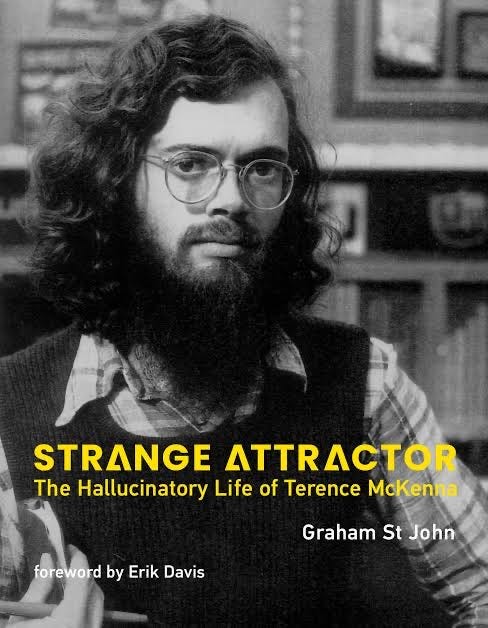
Recently I read Strange Attractor: The Hallucinatory Life of Terence McKenna, Graham St John's biography of the psychedelic philosopher and early adopter of the internet who waxed lyrical about the potential of cyberspace to open access to information and knowledge for all humankind and usher in a new Age of Enlightenment. For those pioneers dialling into chat rooms and speaking with fellow travellers in the early days of the World Wide Web, it must have seemed that this was the trajectory. And in many ways the promise has come true.
But what I have come to realise is that human culture is far more complex than any single trajectory could predict. We have given license not only to the radical idealists and visionaries, but also to the pornographers and charlatans, the narcissists and profiteers, the scammers and liars. Cyberspace was never going to be the sole domain of the utopian imagination; the entire shadow of the human id has found its way online too, and that is part of what it means to democratise the media. People do not simply change their minds because Wikipedia has published the sum total of consensus reality, even though that encyclopedia dwarfs any resource known to humankind. We are still caught in our own dramas and conflicts. We have merely extended them into the digital realm.
And the algorithm that seeks to provide us with the most relevant information is compounding our biases rather than challenging them, rather than liberating us from false belief. This is the pluralism postmodern thinkers wished for, but it is far messier than anyone imagined. Harari warns that a culture engineered for engagement does not merely misinform us, it degrades our capacity to think at all, breeding a population of sloppy reasoners who mistake the feeling of certainty for the work of arriving at it. Even science, that bastion of objective truth, has become a battlefield of ideological positions that have undermined faith in the empirical method, because there is always an alternative opinion to be found if you dig hard enough. Harari argues that what distinguishes science is not certainty but its self-correcting mechanism, the willingness to disprove its own conclusions, and it is precisely that mechanism the algorithm has no incentive to reward. Flat Earthers are perhaps the most obvious case in point. This is the fertile breeding ground for conspiracy theories, the vulnerable points of consciousness where disinformation lays its rotten eggs.
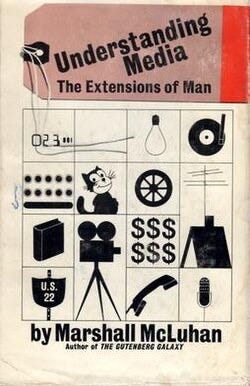
It was Marshall McLuhan, decades before the first server hummed to life, who saw the shape of this most clearly. The medium is the message, he told us, and we have spent sixty years mostly misunderstanding him, assuming he meant that content carries bias. He meant something stranger and more total: that the form of a medium reshapes us more profoundly than anything it delivers. The printing press did not merely distribute ideas; it rewired how we think, isolating the reader, privileging the linear and the private. The algorithm is the newest and most complete version of this old sorcery. It is not neutral plumbing carrying content to us. Its form is the message, and that message is being written into our cognition regardless of what appears in the feed.
McLuhan's most useful idea is also his least known. He spoke of figure and ground, the figure being the thing we fixate on, the post, the argument, the outrage of the day, and the ground being the environment the medium creates around us, invisible precisely because we are standing in it. We are fish, and the algorithm is the water, and no fish has ever needed to think about water. McLuhan believed it was the artist alone who could perceive the environment while everyone else swam in it unconsciously, the one who could see the ground and hold it up to the light.
Harari, writing half a century later with the machine fully assembled around us, is less sure the water can be seen at all, let alone escaped. He describes the new information network as a kind of alien intelligence, inorganic and increasingly autonomous, making decisions in a black box that no human fully understands. And yet he is not a fatalist either. His hope, arrived at only at the very end of a very dark book, is that we are still capable of building information networks that keep their own power in check, if we abandon both naive faith and cynical despair and commit to the mundane, unglamorous work of correction.
Here I want to extend both of them, because McLuhan diagnosed the trap and was cagey about whether there was any way out, and Harari found the exit only in the collective, in institutions and self-correcting mechanisms. I am more hopeful, and my hope rests on a single revision of their idea: In a way, we are all journalists - and artists - in the age of social media, crafting the reality we want to share with the world. The tools that farm us are the same tools that let each of us publish, curate, compose, and contribute. To tell the brief history of this new media, as I have tried to do here, is itself an act of surfacing, of making the water visible. And once you can see the current, you can begin to direct it. You can choose your inputs. You can starve the feed that fattens on your worst instincts and feed the one that sharpens your best. You can stop being a fish moved by an invisible hand and become something that swims with intention.
This is what it means to take control of your own algorithm. Not to escape the ocean of ideas, we cannot because we are social animals of deep intellect and that is our ecological niche, but to stop pretending we do not live in one, and to move through it consciously, deliberately, as artists rather than as prey. We are all contributing to the great work, whether we know it or not. Our opinions are the sum total of our experience and intuition, and we cannot help but want to find the truth beneath the cacophony. The only question is whether we do so with our eyes open.
And in the end, isn’t that why we make art?
No posts
Comments
Nothing yet. Say the first thing.
Sign in to join the conversation.