
Last week, I wrote about the criticism I received after one of my presentations. Some of the feedback was incredibly kind, while some of it was difficult to read, and although I would much rather hear what I did well than where I fell short, I also know that growth usually happens somewhere between those two places. If we’re willing to listen, encouragement and criticism both have something to teach us, and I genuinely believe I walked away from that experience as a better speaker because of it.
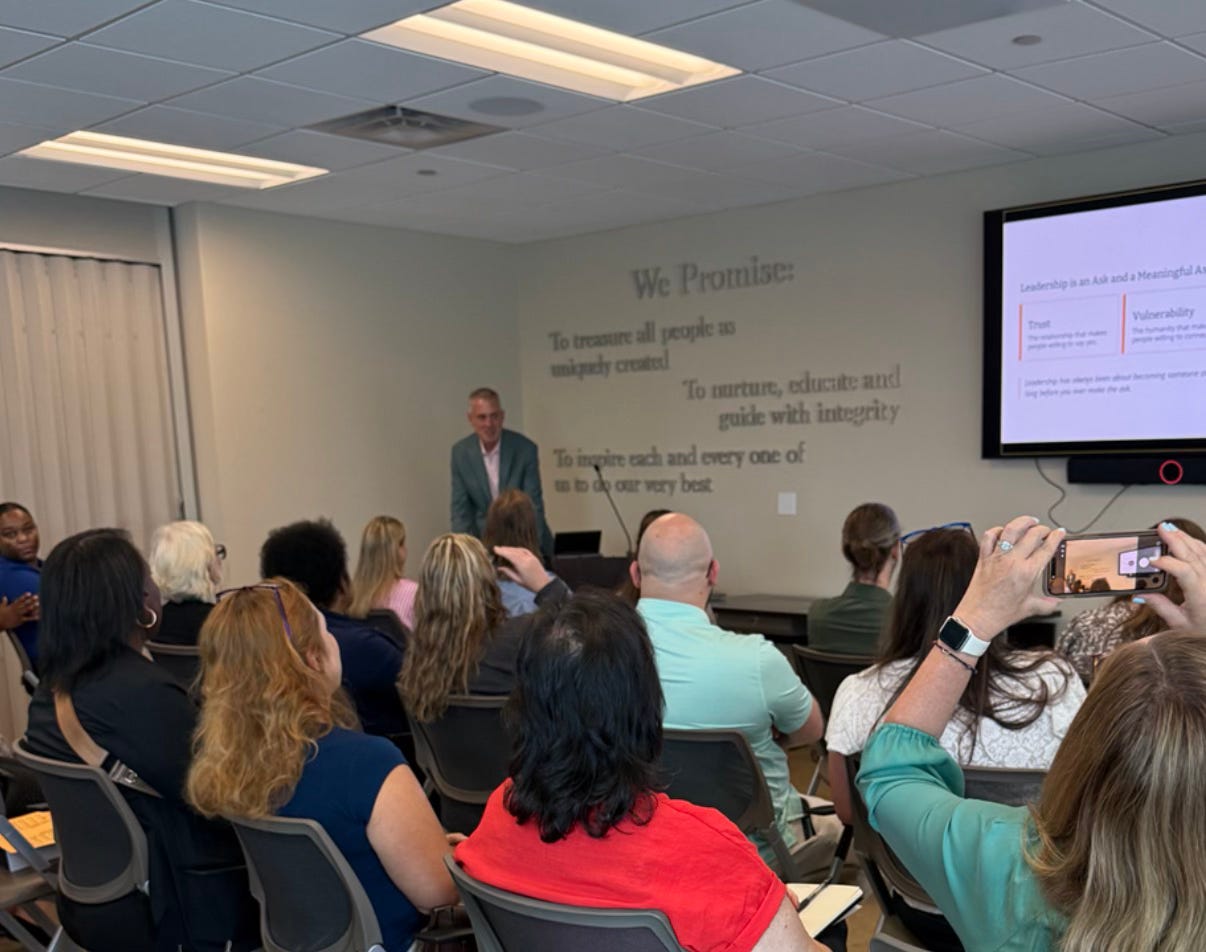
This week, I had the privilege of speaking to the Talent and Human Resources leaders at Lakeland Regional Health. The presentation was built around my book, but instead of focusing on fundraising, I adapted it into a conversation about leadership. It felt especially meaningful because I was speaking to a room full of people whose careers are dedicated to developing leaders, building culture, and helping others become the best version of themselves.
Before I tell you about the presentation, I want to recognize two people who made the afternoon especially meaningful.
Our Senior Vice President of Human Resources, Scott Dimmick, invited me to speak, and over the years Scott has become much more than a respected colleague. He has become a genuine friend, someone who has consistently believed in me, encouraged me, challenged me, and quietly created opportunities for me to grow. Every one of us needs people like that in our lives. We all need someone who sees potential we haven’t fully recognized ourselves and who is willing to open a door simply because they believe we’re ready to walk through it.
As I looked around the room before we began, I also couldn’t help but notice another familiar face. Christine Ankerson, from our Talent team, has been part of my journey for well over a decade. We’ve worked together through organizational changes, leadership transitions, celebrations, and challenges, and throughout it all she has been one of those steady people who never hesitates to encourage others. She is the one I always go to, even if it’s not in her scope. She has inspired me more times than she probably realizes and seeing her in the audience reminded me just how fortunate I am to work alongside people who genuinely want one another to succeed.
After I shared an early copy of this very essay with Christine, she sent me a note that stayed with me. She wrote that she believes the people we love never truly leave us. They continue to walk beside us, proud of who we’re becoming and quietly watching over our journey. As she prepares to remember her mother in a special way this week, her words reminded me that the people who shape our lives continue influencing us long after the moments we shared with them have passed. I found that thought incredibly comforting because maybe leadership, encouragement, and love all work the same way. They leave footprints that never completely disappear.
When I think about Scott and Christine, I also think about all the people who have quietly shaped us, including some who are no longer here. None of them probably wake up each morning wondering whose life they’ll impact that day, yet that’s exactly what great leaders do. They believe in people, they create opportunities, and they often have no idea how deeply those simple acts of encouragement stay with someone years later. Scott has been that person for me more than once. Christine has as well. So have teachers, mentors, friends, and family members whose words still echo long after the conversations themselves have ended. I don’t think we say “thank you” nearly often enough to the people who quietly invest in us, cheer us on, and remind us that we’re capable of more than we sometimes believe ourselves.
As I drove home the evening after this presentation, I found myself reflecting on something that surprised me. It wasn’t the audience, the room, or even the content that felt different.
It was me.
I’ve been fortunate to speak professionally for many years, and every audience has taught me something. Some presentations have reminded me to prepare more thoroughly, others have taught me to simplify an idea or slow my pace, and a few have humbled me enough to recognize that no matter how long you’ve been speaking, there is always something new to learn. Every time I step onto a stage, I leave carrying something I didn’t have when I walked onto it.
This presentation, however, felt different because somewhere along the way I stopped trying to deliver a speech and simply started telling stories.
I shared the story of writing to Joni Mitchell before my wedding, never imagining she would actually write back. I talked about Sue from Shipping and Receiving, whose kindness reminded me that leadership isn’t built nearly as often in conference rooms as it is in hallways, and I laughed about my former CEO telling me that if I wanted to become a leader, I needed to buy shirts that actually fit.
Looking back, I realized those stories weren’t interruptions in the presentation at all. They were the presentation.
Because every story pointed back to the same lesson: leadership is built on trust, vulnerability, presence, and helping other people believe in something bigger than themselves.
When everything was over, several people came over to talk, and while their comments were incredibly kind, what struck me most wasn’t any one compliment, but what those conversations represented. One person smiled and said, “I see TED Talks in your future.” Another quietly said, “Every leader in this organization needs to hear this.”
Those words meant a great deal to me, but they weren’t what stayed with me.
What stayed with me was the feeling in the room. There was laughter exactly where I hoped there would be laughter, moments of complete silence when you could almost hear people thinking, and an energy that made the presentation feel far less like someone standing at the front of a room delivering a keynote and much more like a conversation among people trying to become better leaders together. For a little while, I forgot I was giving a presentation because it simply felt like we were sharing ideas, experiences, successes, mistakes, and lessons that all of us could recognize in our own lives.
That realization has stayed with me ever since because, for a long time, I believed the goal of speaking was to teach people something.
Today, I think the greater goal is to help people feel something.
Facts, strategies, and practical takeaways absolutely matter, but they rarely become the parts of a presentation people carry home with them. What they remember is how they felt, whether they saw a little of themselves in your story, whether they laughed, reflected, became emotional, or left believing they were capable of something they hadn’t believed before.
The older I get, the more convinced I become that this is true of leadership as well.
Leadership isn’t about having all the answers, delivering the perfect presentation, or always saying exactly the right thing. It’s about helping other people believe in themselves a little more than they did before they met you, and if that happens because of a story, a conversation, an encouraging word, or simply because someone took the time to genuinely see another person, then perhaps that’s what leadership was supposed to be all along.
I’m incredibly grateful to everyone who spent part of their afternoon with me this week, but I’m especially grateful to Scott Dimmick for creating the opportunity and to Christine for reminding me, simply by being in that room and then by sharing her beautiful reflection afterward, how many people have quietly shaped my own journey over the years.
We all can be that kind of leader for someone else.
Sometimes the greatest gift we can give another person isn’t advice or instruction at all. Sometimes it’s simply believing in them before they fully believe in themselves.
Because long after the presentation ends, long after the meeting is over, and long after the applause has faded, people rarely remember every word we said.
They remember how we made them feel.
And perhaps that’s the greatest leadership lesson of all.
A Personal Invitation
If you’ve been enjoying these weekly essays and would like to support my writing, I’d be honored if you would consider becoming a paid subscriber.
A paid subscription is just $50 a year, which works out to about 14 cents a day. Like many independent writers on Substack, reader subscriptions make it possible for me to continue investing the time to write, reflect, and share these stories each week.
As a small way of saying thank you, anyone who upgrades to a paid annual subscription will receive a personally signed copy of my book, Joni Mitchell Called Me Ugly: Persuasion and the Power of the Ask. It’s my way of expressing my gratitude for believing in my work and becoming part of this growing community.
Whether you’re a free subscriber, a paid subscriber, or someone who simply shares these essays with a friend, thank you. Knowing that you choose to spend a few minutes with me each week is something I’ll never take for granted, and I hope these stories continue to encourage, challenge, and inspire you along the way.
No posts
Comments
Nothing yet. Say the first thing.
Sign in to join the conversation.