

The tragic part about decision making is most people never make a decision.
It’s taken me 12 years to see this in action. When someone is asked to decide, they’ll often put off making the decision. They’ll dress up the decision, like putting lipstick on a pig, and say they need more information or they’ll decide later.
But 9 out of 10 people I’ve met online don’t make decisions. They just stay stuck in indecision. And this royally screws up their entire life without them necessarily understanding that’s happening.
You don’t need to get better at making decisions or to read more decision-making books. You just need some simple frameworks that will actually help you make decisions instead of being stuck in indecision.
Tony Robbins once said in a live event I was at, “It is in your moments of decision that your destiny is shaped.”
This is what high performers understand.
And not deciding or saying “maybe” is actually a decision. If you don’t decide, you don’t make a change. That means you get the same outcomes that the decision you were supposed to make was designed to fix.
Use these mental models to make smarter decisions.
In 1856 a New York woman played with glass cylinders in the sun.
She wanted to see if the mercury in the cylinder would rise in temperature. The science community back then was a brotherhood of bros.
Women were laughed at.
They were considered inferior or even defective.
If you were a woman you were supposed to keep your ass at home, cook & clean, and shut your trap. The men would do the important work, not the women.
To operate as if you were as good as a man was deemed stupidity. There was extreme social risk if you even tried. The public would ridicule you, exclude you, and label you “unwomanly.”
This would most likely ruin your family.
A woman named Eunice was badass enough to ignore the rules. She had no corporate backing, no money, and zero credentials. She just loved science.
She spent her afternoons pumping gases into cylinders for fun and putting them in the sun like a mad scientist. All she wanted to know was “How does the atmosphere actually trap heat?” It became her obsession. It consumed her.
When she placed the cylinder filled with carbon dioxide in the sun, the mercury didn’t just climb—it spiked. And when she removed it from the light, it stayed hot for hours.
From her kitchen table, Eunice wrote a paper that soon changed humanity. One sentence is all it took:
“An atmosphere of that gas would give to our earth a high temperature...”
She had no clue at the time, but she had discovered what is now known as The Greenhouse Effect. The next part is tragic. Women were unable to read their papers at any American Association for the Advancement of Science meeting.
Only a male professor could read her paper for her. So a man read it.
The reaction was complete silence. No one cared. A housewife created a little science experiment in her cute little kitchen and that’s all it was to these male professors.
3 years later a male scientist, John Tyndall, ran the same experiment using expensive equipment. Men cheered for him. His male anatomy was deemed to be gloriously larger than a normal male.
John got all the credit for Eunice’s discovery.
For 100 years, people saw John as a scientific hero. The history books wrote about him. Eunice, on the other hand, was erased from the textbooks.
Then something odd happened. In 2011 her paper was rediscovered. History was f*cking wrong. John didn’t make the discovery first. Eunice did.
Eunice’s story shows the difference between seeing a decision as risky or as an opportunity.
                          DECISION FRAMEWORK
   RISK-FOCUSED THINKER                 OPPORTUNITY-FOCUSED THINKER
   (External Permission)                 (Intrinsic Truth)
  ┌──────────────────────────────┐      ┌──────────────────────────────┐
  │ "What will people think?"    │      │ "What is fundamentally true?"│
  │                              │  vs  │                              │
  │ "What status do I lose?"     │      │ "What contribution remains?" │
  └──────────────────────────────┘      └──────────────────────────────┘
When you evaluate a decision through the lens of external permission—status, consensus, safety, applause—you will always over-weight the immediate risk. Staying silent in her backyard was the “safe” decision for Eunice.
When you evaluate a decision through the lens of intrinsic truth, the risk of public failure shrinks, and the asymmetric opportunity to discover or build something real becomes the only metric that matters.
An opportunity today doesn’t look like one at all. It look like a giant freaking risk. Opportunities only look like opportunities in hindsight. So as Hormozi once said…
Playing it safe isn’t actually safe. You’re just trading the chance of winning for the guarantee of nothing.
This is where I get vulnerable.
In 2016 I was a single man. Just got out of a breakup. I was insecure as hell. I felt like I was getting old and had to find a woman to marry. I went on Tinder. I got rejected. Complete silence. No one wanted to go on a date except a few creeps.
I thought if I stayed single I would have deep regrets. I eventually got married and had two kids. Then I had regrets about not being single for longer, traveling solo, and being more rebellious at bars and clubs to maximize my youth.
I saw a tweet a few months ago that explained it:
You'll regret it if you get married, you'll regret it if you don't get married. You'll regret it if you have kids and you'll regret it if you don't.
The two biggest decisions of your life have no clear win. Both produce regrets.
Philosopher Søren Kierkegaard explained it more than 200 years ago. Whatever decision you make you will regret. The decision isn’t the problem. No.
Romanticizing your life is the problem.
Here’s the wisdom. The decision you don’t make is mysterious, weird, and makes your curiosity go insane. So naturally you can be drawn to the decision you didn’t make. The important step isn’t to make the right decision, it’s to decide which regret from the options in front of you are you willing to live with.
With every decision you must choose the regret that comes with your choice.
I chose to get married and have two kids. I’m happy with that decision because the regret of being single for longer is one I’m more than okay with.
Same applies to you. Pick the regret you can live with.
Smart people often struggle in life.
They learn at a young age to make decisions with huge data sets and lots of opinions and evidence. This curse of knowledge, combined with being overly thorough, prevents them from making decisions when they don’t have enough information.
The wealthiest people I’ve met in my life all have one trait in common: they can make decisions fast with incomplete information.
Why? They understand circumstances will never be perfect. And there are no guarantees in life. There’s one other component…
These wealthy people aren’t relying on external validation or someone else’s system to succeed in life. They know that the outcome of a decision is mostly down to them and how they act.
You are the differentiator. The decision will work in your favor if you make it work.
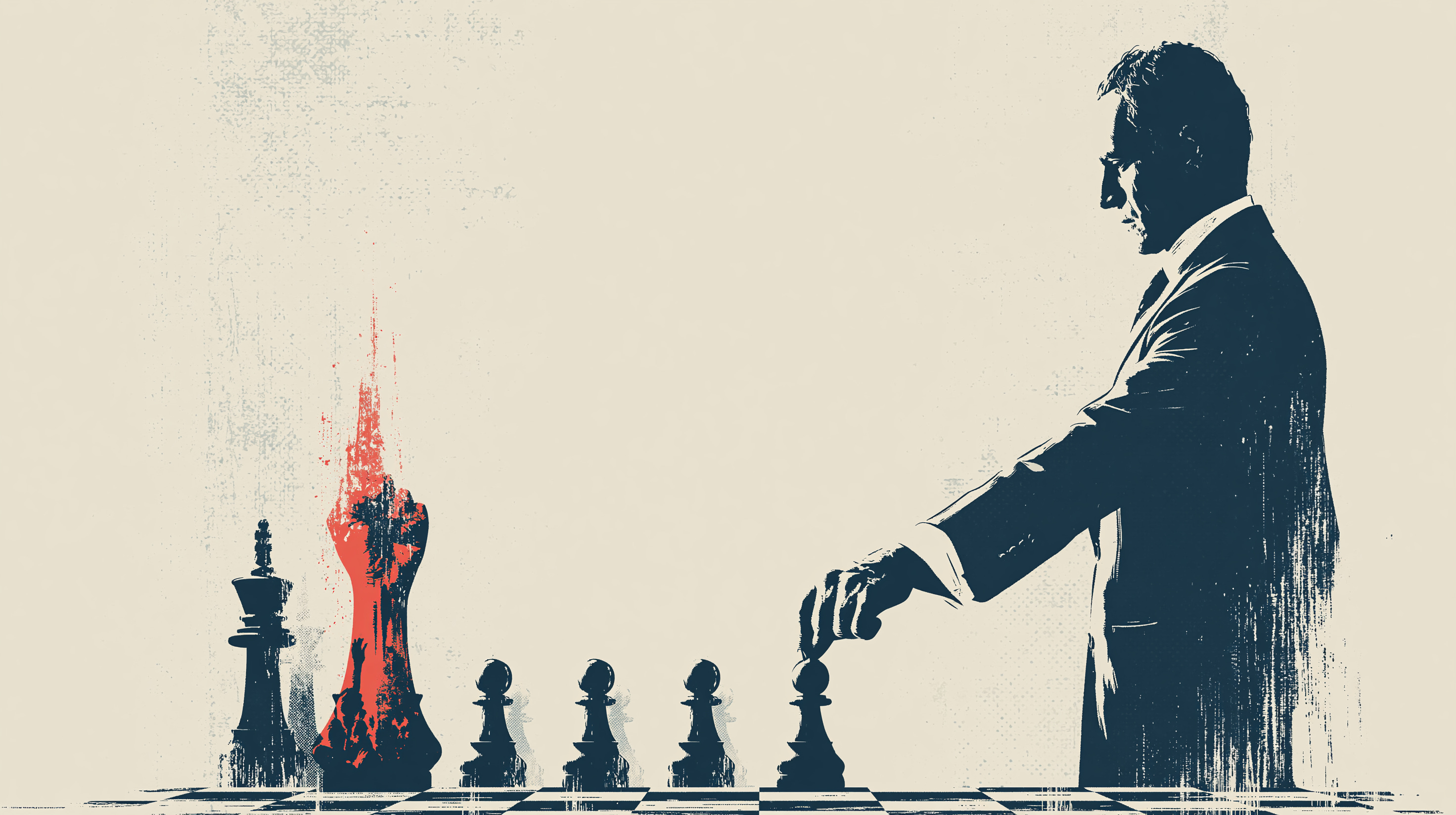
This is where this essay takes a dark turn.
To help you make better decisions I must say what is unsaid. With every decision you must make in life, no matter how big or hard it is, you already know the answer in 30 seconds. Wait, what?
Yep.
“You already know what to do, you’re just negotiating with comfort.” – Silvia
Most decisions seem like a lack of information problem or a skepticism problem. But the word decision comes from the Latin word “decisio” which means to cut off. Making a decision is another way of saying “making a change.”
Making a change is uncomfortable. And most people are addicted to comfort which is their real underlying problem.
Staying in indecision is staying in comfort.
Now you know why most people can’t make a simple yes or no decision. They’d prefer to stay in their pillow-covered bedroom, holding their teddy, sucking their thumb, wrapped in their blue blanky. Similar to my 3 year old daughter.
Get used to making decisions that lead to discomfort, and you’ll completely change your life in 6 months.
Strategy: when you don’t know what option to choose, pick the one that leads to being uncomfortable.
My friend Dickie Bush blew my mind with this mental model:
There is no “right” decision because each decision just leads to a different set of problems.
The average person is unconsciously looking for a problemless outcome. This is what secretly holds them back.
But when you see every decision as creating a different set of problems, you go from looking at problems as an issue, to looking at the list of problems you’d most like to end up with.
And if you see problems as opportunities, now you have a decision-making framework that can help you make smarter decisions faster.
Political commentator Thomas Sowell goes a step further to really expand your mind. “There are no solutions. There are only trade-offs.”
This idea really messed up my view of the world.
Corporate told me there were solutions, but that was another one of those PowerPoint lies. Focus on accepting trade-offs and you’ll stop looking for complete solutions that don’t exist and are nothing more than p0rn fantasies that rot your mind.
Many people treat decisions like they’re set in stone. Like they decide once and the outcome can never be reversed. But this isn’t true.
99% of decisions are reversible.
So if you make a wrong move you can likely undo the decision or quickly change course. What actually screws you isn’t the cost of a bad decision. No. It’s the cost of inaction. This internet meme explains it best:
“The best math you can learn is how to calculate the future cost of current decisions.”
Once you do that math the decision looks different. For example, you could be fat and need to lose weight. You could focus on finding the best gym or the most experienced personal trainer. But doing so means you don’t start exercising.
If you stay stuck in research mode for long enough, the weight problem turns into high blood pressure, and maybe even diabetes or a heart attack. The cost of inaction in this scenario can be fatal. It’s usually better to make an imperfect decision fast and stop the bleeding than it is to unconsciously stay in inaction.
Writer Sahil Bloom says this: “Decisions are generally reversible, inaction is not.”
If you practice inaction for long enough, it really messes up your life. It leads to deep regrets too. And that can’t be reversed. You’re stuck with the painfully sh*tty outcomes inaction produces and you can’t take a time machine back to change it.
Inaction looks like “I need to think about it.”
Every time you say this to yourself you train your brain’s neural pathways to reinforce hesitation. Those pathways get deeper and deeper over time until they become quicksand.
Neuroplasticity is the discovery that your brain isn’t fixed. It can change and grow just like your bicep muscle. Every time you take an action or complete a habit you’re training your brain to produce more of that outcome.
In successful people, their brain helps them reinforce good behavior. In unsuccessful people, their brain reinforces more bad behavior that leads to more failures.
Every decision you make is literally training your brain to be more or less successful.
Making decisions should logically feel hard if you’ve spent the last 10 years being bad at making 1000s of tiny decisions.
Whenever you can’t decide which path to take, pick the one that produces change.
– Kevin Kelly
This is a controversial one. But it’s helpful so I’ve included it.
When I was poor the cruelest outcome I experienced was that a lack of money prevented me from making bad decisions that led to failure. Every decision I made had to work. If I invested $2000 in a Tony Robbins seminar, it had to change my life or I’d be bankrupt because that was all the money I had.
When every decision has to work out, it becomes do or die. And this is a terrible way to pursue a new opportunity.
No wonder opportunities all look like risks when you’re poor.
It makes sense.
When you can’t have failures because of the financial impact, you miss out on all the wisdom failures create. Knowing what doesn’t work is how you figure out what does work. This is why when I was poor I over-consumed information. I used it as a replacement for not being able to take action and fail.
So… the critics will hate me, but making more money helps you make smarter decisions. Worth remembering.
A lot of people are bad at spotting scams.
It’s why starting a faceless Youtube channel, running a “boring business,” or starting an “AI agency” or “info product” business are all popular ways people lose money.
Obviously no one trusts a faceless social media account. Obviously selling cleaning services and doing zero cleaning yourself doesn’t work. Obviously everyone is trying to get rich with AI, and having AI do all your work while you do nothing is a lie. Obviously selling info products in a world of AI where information is free is dumb.
I can spot these scams from a mile away, so I don’t waste time on them.
30 seconds of research exposes them. More importantly, when something looks easy and designed for lazy people, it’s probably a scam. And it’s bullsh*t.
I ran a vending machine business in my 20s with over 500 machines in service. It was hard. Coca-Cola kept killing our profit margins. The machines broke down non-stop.
The machines that made money had to be serviced and cleaned daily. Finding profitable places to put the machines was like finding a needle in a haystack. And when 7-Eleven opened up on every corner, it tanked our business.
Yet I see this same opportunity promoted online and it mentions none of that.
So well-intentioned people with good morals fall for the scam. They get lied to. And when the lie is exposed, they are angry, but it’s too late. Their money is gone, and more importantly, so is their time.
Being able to spot scams saves you a lot of decision-making time.
If it looks easy, run.
When you’re presented with a decision, notice how you feel right away. I find if my brain doesn’t instantly say “f*ck yes,” then I should probably say no.
Your first reaction usually tells you the answer. Listen to it more.
Most decisions lead to indecision because humans think we have an endless amount of time. We forget we could get hit by a bus or die from cancer in a month.
I had a near-miss with cancer in 2015 that accidentally woke me up. It forced me to make decisions differently because the time I had alive shrank. And I was freaking healthy and I ate all my vegetables like a good little boy with no drugs or junk food.
Humans are so privileged for believing they won’t be dead tomorrow.
And it messes up many of our decisions. Anu on X says to shrink your lifespan in your mind from 80 years down to 40. Assume you’ll die much sooner than you think.
Now the thought that says “I’ll start my business in 2 years when the kids have left home” seems totally idiotic through this new death lens.
Let’s bring it all together.
Indecision is the kiss of death. And the speed at which you make decisions is correlated with how much progress you make in life.
A simple solution to make smarter decisions is to make every major life decision in 72 hours or less. Wasting the next 6 months on trying to make a decision to quit a job, leave a relationship, have kids, or start a business isn’t smart.
The moment you need to make a big life decision, you already know the answer in the first few minutes. The remaining 5 months and 29.99 days are simply spent being fearful and pretending to do research and due diligence.
Make decisions and then change paths if you need to later.
If your life isn’t moving forward the way you want, you’re likely not making enough decisions. Start making decisions and watch your progress skyrocket.
P.S.
Speaking of smart decisions, here’s one you can make right now.
Check out my most popular video of the month.
It contains some very good news for aspiring (and existing) digital business owners
Comments
Nothing yet. Say the first thing.
Sign in to join the conversation.