
When I began freelancing, I didn’t have a solid vision for what kind of work I’d do. I was open to anything and everything — pitching articles, leading workshops, speaking at conferences. Now, eight years later, I seem to have found my lane. Most of what I do centers on the great work of local newsrooms and the people supporting those outlets.
I appreciate this focus because I am reminded, again and again, of how much journalists care about the communities they serve and the lengths they’ll go to keep local news alive. I’ve interviewed dozens of one- or two-person operations, spoken to reporters who continue to cover topics long after the mainstream media has moved on, and gotten to know leaders who find surprising ways to keep their publications running.
After so many years and so many stories, some of these conversations naturally blend together. But there’s one interview that, four years later, I still can’t forget. In 2022, I was assigned a feature for the Institute for Nonprofit News about member newsrooms that cover the environment. One of the people I spoke to was Amy Martin, the host and executive producer of Threshold, a podcast about our place in the natural world.
About halfway through the interview, I asked Amy the same question I’d posed to the other environmental journalists I’d spoken to.
“Sometimes — or a lot of times,” I hedged, “when people think about environment and climate news, they think about doom and gloom. What, if anything, makes you feel optimistic these days?”
There was a long pause. An almost uncomfortable stretch of silence. Finally, Amy spoke.
“I will be totally honest and say, I think there is something about that question — nothing personal — but this is a question that we’re asking ourselves over and over again in a world that I think deserves a little bit of pushback.”
I still have the recording from that interview. The moment when Amy said “nothing personal,” I can hear myself murmur and gulp. I gulped! I remember feeling nervous to hear her answer. I was surprised she was going off-script, and unsure where we were headed next.
“I think optimism and hope are important things to have,” she conceded. “But I also worry about that frame, because I think that there’s a way that we — especially people who are living in relative comfort and relatively privileged societies — focus a lot on how bad the news makes us feel, and how we need something good to make us feel better.”
At this point, I’d stopped typing. I trusted the recording and just listened to Amy’s words.
“It’s a totally valid question — but I also feel like I’m getting asked it so many times,” she continued. “I think we need to be focused much more on what we are going to do. What are we doing? Let the doing — the action, and the solutions-building — be the thing that brings us hope. You get optimistic by doing the work.”
Amy was wildly kind in her response. We ended our conversation laughing and exchanging pleasantries. But I walked away with a lingering sense of shame. I felt silly not just for asking that question, but for what her answer revealed.
She was right: I did want to feel better. I’d asked this journalist — someone examining our complicated relationship with the environment, who was not shying away from reality — to soften the blow. I wanted a neat and tidy answer I could easily slot into the article I was working on. I wanted to hear that maybe things weren’t actually so bad after all.
Afterwards, I was left with a set of even bigger questions. Is it silly to focus on hope? What does “doing the work” really mean? How can an average person make any kind of difference? And if we don’t have hope, how do we stay motivated to make change in the first place?
It felt like an existential chicken-and-egg conundrum. We’re told we find hope by taking action. But we need hope to take action in the first place. It’s no wonder I’ve been turning this over in my head for years.
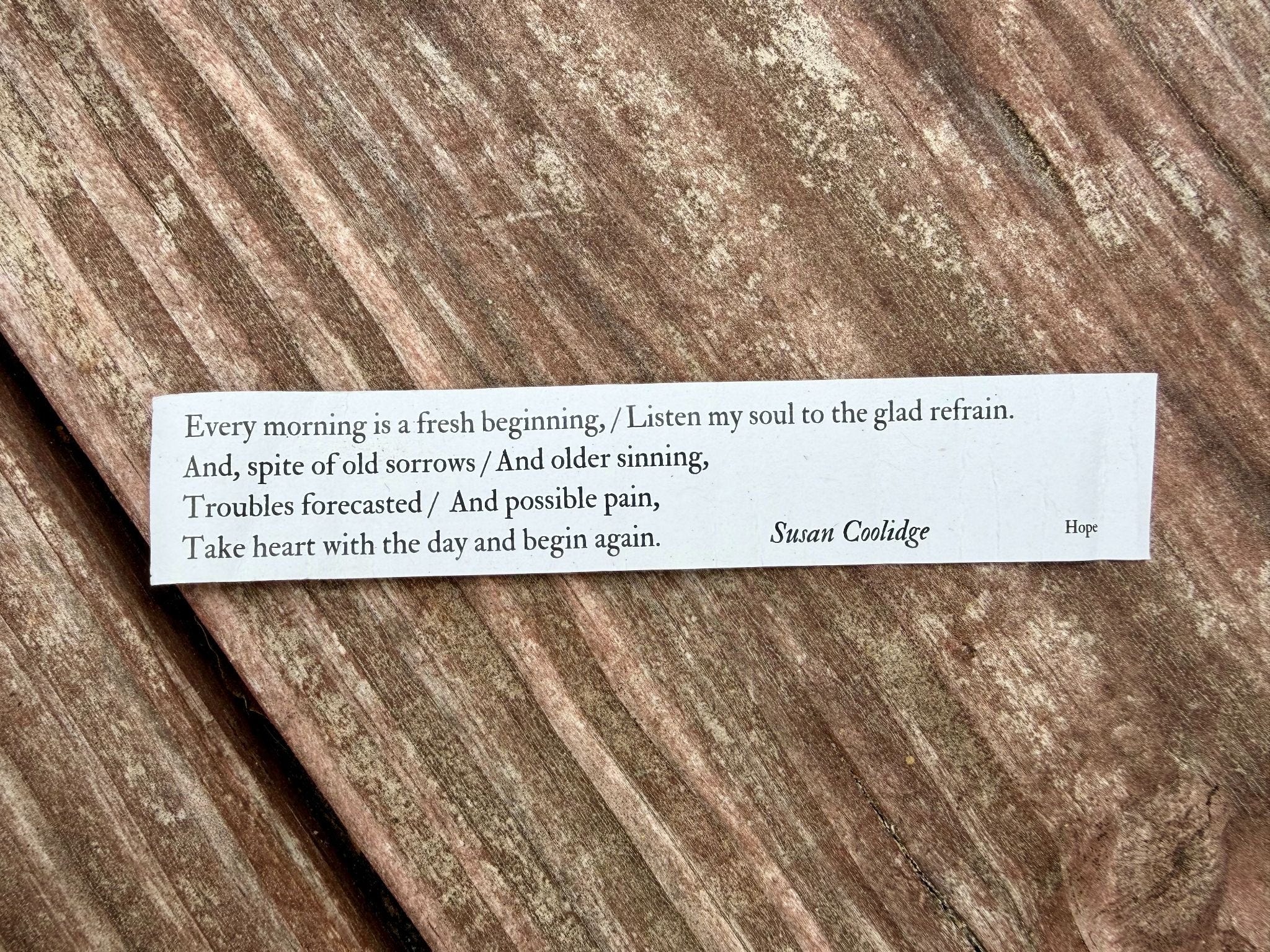
Despite my shame and confusion, I haven’t given up my search for reasons to feel hopeful. In the four years since I’ve spoken to Amy, I’ve gone through my share of dread and fear; you may have, too. From climate disasters to war, mass shootings to losses in reproductive rights, immigration raids to lawless leaders, the reasons to feel overwhelmed are too many and too significant to measure. It’s a persistent, all-encompassing heaviness.
Last fall, at a particularly low point, I asked you all to share your own reasons for hope. In response, a reader and friend — the brilliant Emma Lacey-Bordeaux, who I’m admittedly sometimes intimidated by — pointed me to an article she’d written.
The title of my post was “Dear reader, I’m looking for hope.” The title of her article was “The danger of hope.”
Oof. There it was again — that feeling of shame. Once more, I felt like my craving for hope was somehow small-minded or misplaced.
In her piece, Emma argued that hope, when untethered from action, can be counterproductive. It can create the illusion of progress, allowing us to feel like something’s being done when nothing actually is. She explained that unearned hope can drift into complacency — softening urgency instead of sharpening it.
Like Amy, Emma wasn’t dismissing hope entirely. Instead, she offered a useful warning: hope can be dangerous if it becomes a substitute for action instead of a byproduct of it.
To find hope, we need to take action. But when it feels like everything is on fire — war, climate disasters, food insecurity, income inequality, families torn apart, unchecked leaders, polarization — it’s hard to know where to begin. It’s hard to imagine even making a dent. It’s natural to reach for reassurance instead.
Emma ended her piece with a bit of wisdom she’s held onto for years.
“One day, during the start of the pandemic, when my home doubled as my office, I got a piece of professional advice I’ve held tight. A therapist who works with ER doctors shared with a group of us journalists that when we work on tasks that seem never ending, burnout is more likely. To prevent it, he advised that we right-size the problem. Put down the work from time to time, celebrate our achievements (especially in tough times), develop rituals and build out perspective to nourish us as we keep doing the work.”
You have to put down the work every so often. But you keep doing it.
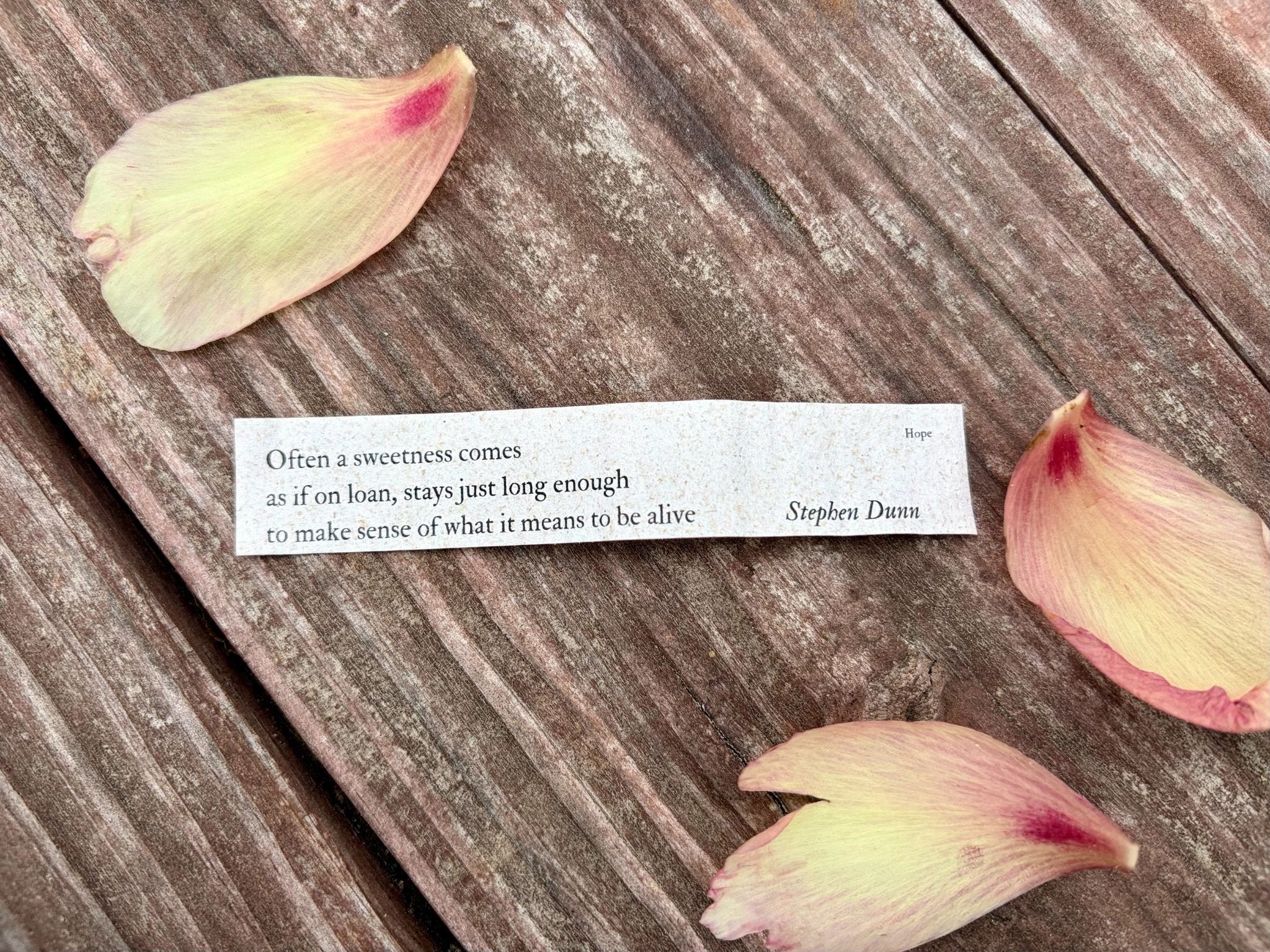
There’s another conversation about the nature of hope that’s been tumbling around my head. It happened last fall, around the same time that I asked readers for their perspectives. I was at a neighbor’s house — celebrating the fifth birthday of a wonderful, funny, amazing kiddo for whom I hope we can create a better, less bleak world — and wound up chatting with a woman named Marilyn.
Marilyn is a teacher at my daughter’s outdoor preschool. She’s also a board member and volunteer with El Refugio, an organization dedicated to supporting immigrant detainees and their families. I asked her a version of the same question I’d asked Amy all those years ago. Perhaps I hadn’t learned much. Or maybe I was better at listening. I was hungry for hope, and I wanted to understand how to use that desire for good.
“What brings you hope?” I asked. “When everything feels like it’s falling apart, what keeps you going?”
We were standing near a bounce house filled with small children shrieking and laughing with delight. If all goes right in the world, those children will outlive us, inheriting a future brighter than we can imagine.
A friend had recently asked her a similar question, she said. This friend felt overwhelmed by all the crises that demanded attention and didn’t know how best to use her time. Marilyn pointed her to a lesson she’d learned from reading the work of Nobel Prize-winning journalist Maria Ressa: you hold the line.
“We all need to find our own lane,” Marilyn told me. “We can and should lend a hand to other movements when we’re able, but it doesn’t do anyone any good if we sacrifice our expertise and passion for our own work and allow ourselves to be distracted by whatever else seems the most urgent at the moment.”
For Marilyn, that issue is immigrant rights. For her friend, it’s climate awareness. For the journalists I interview, it’s access to reliable, trustworthy information.
For me? Much like my relationship with hope, I’m still figuring it out.
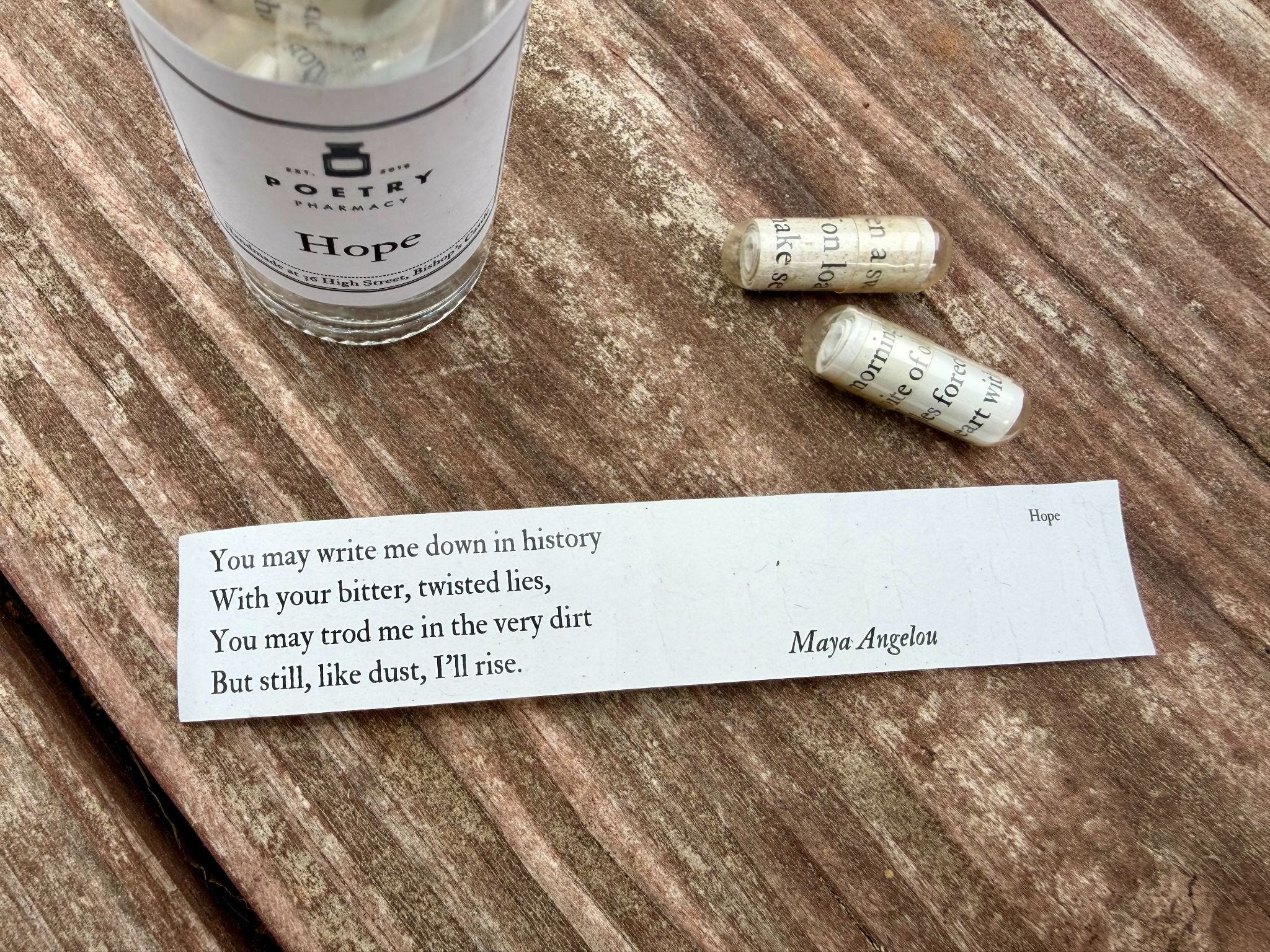
My blood boils when I hear politicians offer nothing but thoughts and prayers for the victims of a mass shooting or some other kind of preventable disaster.
Thoughts and prayers are, of course, hope. But hope on its own gets us nowhere. We need action.
Lord, do we need action! Not only in the hands of kind and competent leaders (do those people exist? If the Artemis II mission taught us anything, it’s yes), but in our own lives. We must consistently take steps, no matter how small, toward a better tomorrow.
The minute we stop, we’re truly cooked.
Hope alone doesn’t get us anywhere. But using hope as fuel — a way to power our action, to get us closer to the future we’re imagining — is something different. Hope isn’t the work. It’s what the work produces.
Hope gives us the motivation to do the real work, work that is sometimes discouraging and oftentimes thankless. Things like visiting detention centers, registering voters, supporting your local news outlet, making meals for neighbors, donating to a cause you believe in, creating art, marching in the streets, going out of your way to actually recycle things — and showing others how to do it, too.
There are a million things to lose sleep over. Pick one. What can you do to make the situation a little better? Take that step. Celebrate it. Rest if you need to. Then do it again.
I’m still figuring out how to incorporate more hope-fueled work into my own life. The idea of you all doing it alongside me is an encouraging one. The idea of my daughter knowing I worked to create a better future for her and her peers is even stronger motivation.
While you’re doing the work, take stock of what you’re feeling. It might be many things, but I’ll bet there’s at least a little bit of hope mixed in.
And that feels good, right?
Text within this block will maintain its original spacing when published
xoxo
KHG
Becca and I will be launching the second round of the My Sweet Dumb Brain Hope-Mail Exchange soon. If you, too, are looking for reasons to feel hopeful, I hope you’ll sign up! (And this go-around? We’ll talk about the actions we’re taking, too.)
This pen-pal exchange is only open to paying subscribers of My Sweet Dumb Brain. If you’re not one yet, here’s your chance! We’ll contact all paid subscribers later in the week with more information about participating in the exchange. We hope (!) you’ll join us.
Comments
Nothing yet. Say the first thing.
Sign in to join the conversation.