

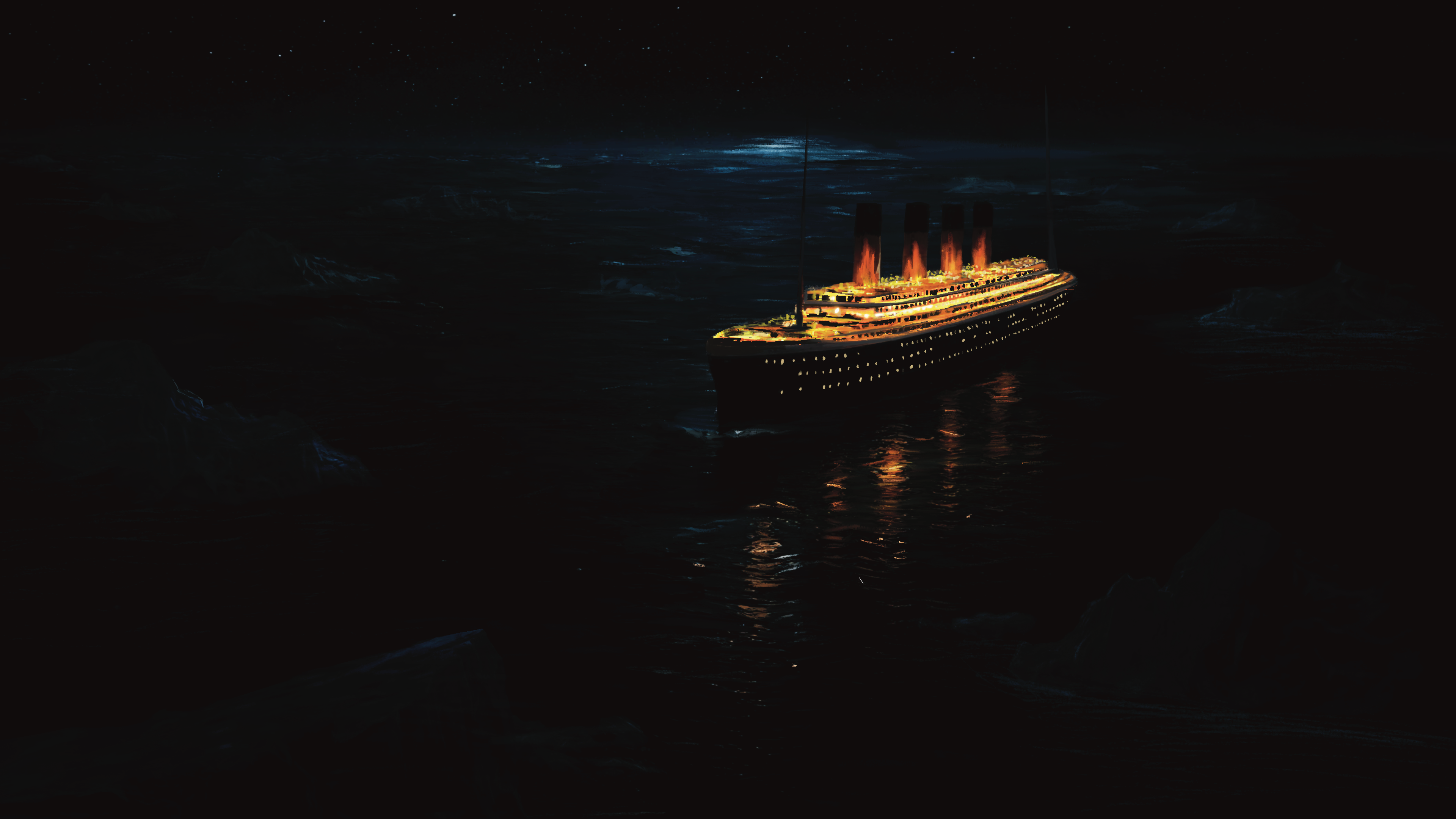
Titanic didn't sink because of missing binoculars. Not because of too few lifeboats, not because of any conspiracy, not because the steel was brittle or the captain was reckless. It sank because of physics. And I know that sounds like a cop-out, so let me explain exactly what I mean because this is one of those stories where the real explanation is so much stranger than the myth.
Here's what most people don't realise about the night of April 14th, 1912. Titanic wasn't sailing through normal ocean. She was crossing from the warm Gulf Stream into the frigid Labrador Current, two bodies of water with dramatically different temperatures running side by side through the North Atlantic like rivers that refuse to mix. The sea surface temperature had dropped to below freezing. But just 200 feet above the water, warm Gulf Stream air was still trapped by something unexpected: the icebergs surrounding Titanic on all sides, acting as natural barriers that kept the warmer air trapped close to the surface.

What this created was a temperature inversion so steep, around 10 to 15 degrees Celsius across just 200 feet of elevation, that it produced a rare atmospheric phenomenon. Something Titanic historian Tim Maltin spent six years of research identifying, and that the 1912 inquiries almost cracked but didn't quite reach.
Comments
Nothing yet. Say the first thing.
Sign in to join the conversation.