
Buffett said that you should judge investment performance over the course of at least three years—five are better—and a full market cycle.
The result of any given year is meaningless. This past year is a perfect example: more than 70% of my 2025 performance was generated in the final six weeks of the year, when my two largest holdings (TUI and Pabrai’s coal bet) surged in tandem. Had that rally been delayed by just two months, the annual report you are reading today would look very different.
However, results over many years might not mean much either if that period does not include a market downturn. Any series of returns multiplied by zero—even once—is zero. An 80% drawdown effectively erases a 5x return. That’s why:
Rule No. 1: Never lose money. Rule No. 2: Never forget Rule No. 1. (Buffett, 1986)
Value investing isn’t just about buying assets for less than they are worth—no rational investor sets out to do the opposite—it is about prioritizing downside protection. Value investors generally aim to match the market on the way up and outperform on the way down. Consequently, the only logical reaction to significant outperformance during a bull market is to question whether there is still adequate downside protection.
With that perspective in mind, here are my 2025 results:
An investment of €10,000 in this portfolio in 2022 would have grown to €25,610, compared to €15,460 for the index. I believe this outperformance was achieved while taking on less risk. Consider the “Top 10” constituents of the MSCI ACWI, which represent 25% of the index:
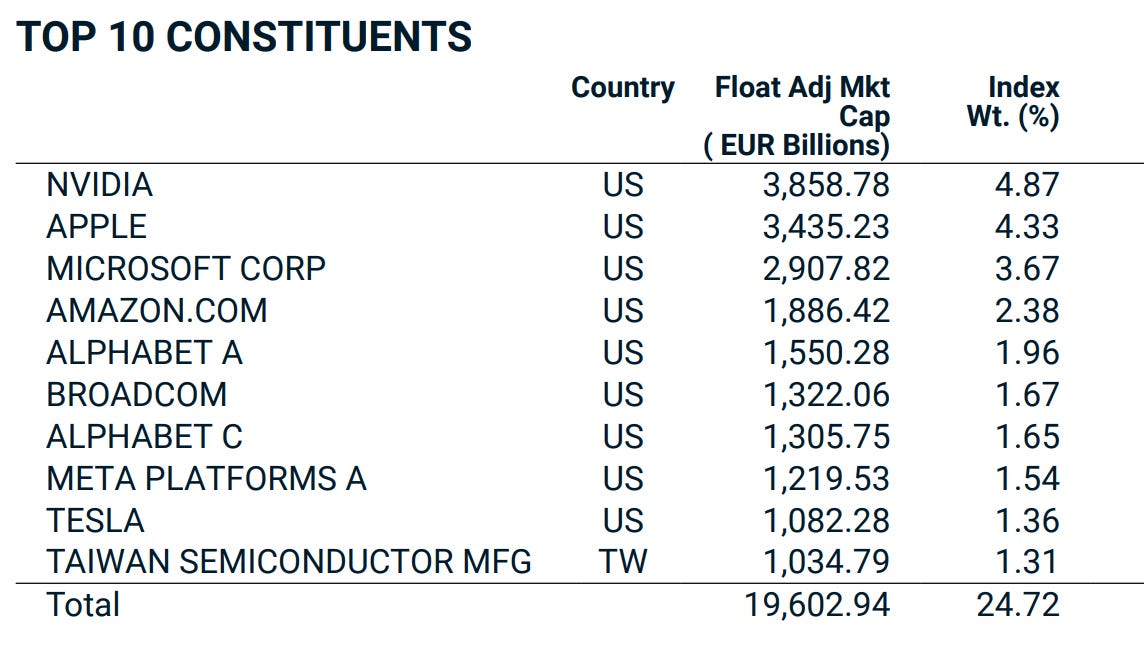
When I speak of risk, I am referring to the permanent loss of capital—the only risk that truly matters—rather than mere price volatility. I believe my risk profile is lower because I am strictly invested in companies priced significantly below a conservative estimate of their intrinsic value. One cannot easily say the same about the indices these days.
Last year’s results also include the impact of a depreciating US Dollar. Since the majority of my holdings are US-listed companies trading in USD, the exchange rate matters. We started the year at $1 = €1 and ended at $1 = €0.85.
The impact is clear when comparing the ACWI results in both currencies: in USD terms, the index appreciated by 22.3%, whereas for a EUR-based investor, the gain was just 7.9%. While currency fluctuations tend to neutralize over long horizons, this “FX headwind” was a major factor in last year’s results.
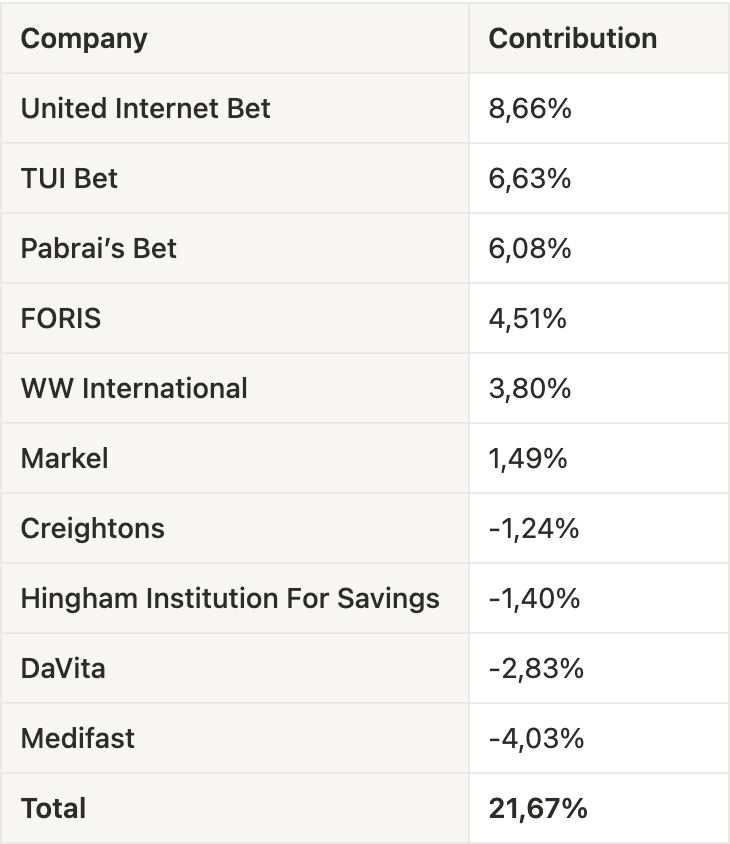
The following table breaks down how each individual position contributed to the total return:1
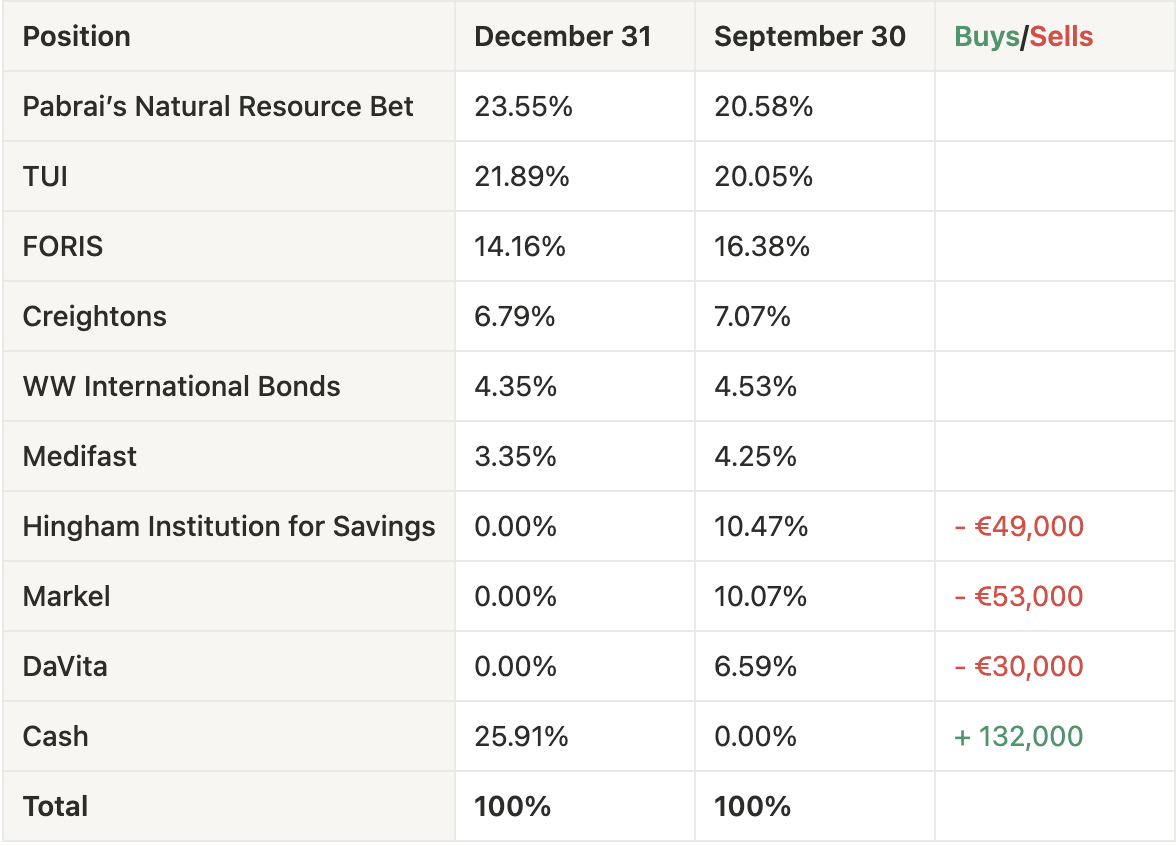
This is my current portfolio - and your starting point, if you want to mirror my performance going forward. For details, see “How To Use”.
I wish you all a great 2026!
No posts
Comments
Nothing yet. Say the first thing.
Sign in to join the conversation.