
Everyone is talking about AI.
Very few are talking about the leadership capabilities that will determine whether AI, or any innovation, actually creates value.
Most organizations don’t struggle because they lack ideas. They struggle because good ideas never make it beyond the pilot phase. Innovation labs generate promising concepts. Teams build impressive prototypes. Leaders celebrate early wins.
Then momentum stalls.
The technology wasn’t the problem.
The organization was.
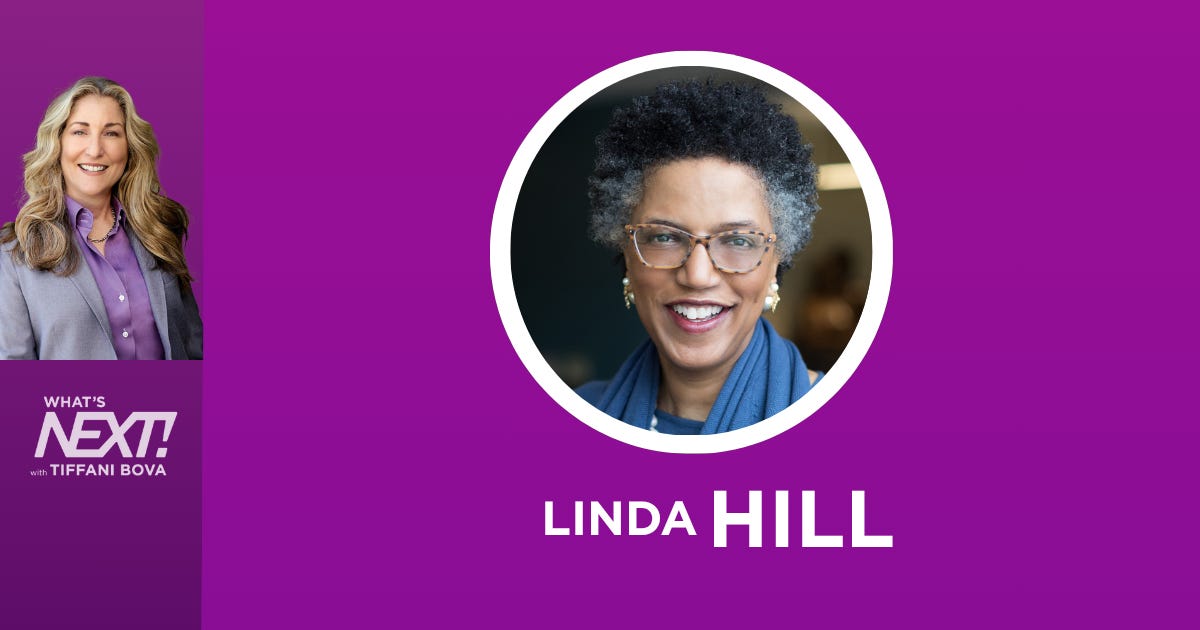
That became the central theme of my conversation with Dr. Linda Hill, Harvard Business School professor, leadership researcher, and one of the world’s foremost experts on innovation. After decades studying organizations around the world, she’s reached a conclusion that challenges one of leadership’s oldest assumptions:
The future doesn’t belong to leaders with all the answers.
It belongs to leaders who know how to bring the right people together to discover them.
Apple Podcasts: https://podcasts.apple.com/us/podcast/how-great-leaders-unlock-genius-with-linda-hill/id1262213009?i=1000753380379
Spotify:
We spend a lot of time developing specialists.
Far less time developing connectors.
Linda calls them Bridgers.
They aren’t necessarily the smartest technical experts or the highest-ranking executives. They’re the people who connect functions, translate between disciplines, build trust across organizations, and move ideas from concept to reality.
Think about what happens inside most companies.
Engineering speaks one language.
Legal speaks another.
Finance measures success differently than product.
Sales hears customers differently than marketing.
Innovation dies in those gaps.
Bridgers close them.
As AI becomes embedded into every business function, this capability becomes even more valuable. The technology itself isn’t what creates competitive advantage.
The ability to help different groups use it together is.
This week:
Identify one initiative stalled between two departments.
Instead of escalating the issue, facilitate a conversation where each side explains how they define success.
Look for translation before looking for agreement.
One misconception continues to hold organizations back.
Innovation is often treated as an individual activity.
Someone has a brilliant idea.
Everyone else executes it.
Reality looks very different.
Linda describes innovation as three activities happening together:
Collaboration
Experimentation
Continuous learning
None of those happen in isolation.
They require people who trust one another enough to challenge assumptions, debate ideas, and learn as the work evolves.
That’s uncomfortable.
It’s also why innovation can’t simply be assigned.
It has to be invited.
The role of leadership isn’t generating every answer.
It’s creating an environment where people are willing to search for better ones together.
One concept from our conversation immediately stayed with me.
Linda contrasted two types of leaders.
Pathfinders believe the destination is already known.
Their job is getting everyone there.
Wayfinders begin with a direction, not a map.
They discover the path while moving.
That distinction feels especially relevant today.
Markets change faster.
Technology evolves faster.
Customer expectations shift faster.
Pretending certainty exists doesn’t create confidence.
It often creates rigidity.
Wayfinders don’t confuse uncertainty with weakness.
They accept uncertainty as the starting point for better decisions.
The best leaders today don’t know exactly what the future looks like.
They build organizations capable of discovering it.
AI receives enormous attention.
Rightfully so.
But AI doesn’t eliminate the need for human relationships.
It increases it.
Linda shared multiple examples where breakthrough innovation required organizations, governments, startups, regulators, and technology companies to work together before anything meaningful could happen.
The technology was available.
The relationships weren’t.
Without trust, information isn’t shared.
Without shared information, learning slows.
Without learning, innovation never scales.
Technology moves quickly.
Organizations move at the speed of trust.
Many companies invest heavily in innovation labs.
Fewer successfully scale what those labs create.
Linda’s research found that organizations often produce exciting ideas but struggle to integrate them into everyday operations.
The challenge isn’t generating innovation.
It’s connecting innovation back to the business.
That requires leaders who can:
Build credibility across multiple stakeholders.
Balance short-term execution with long-term exploration.
Tell stories that help others understand why change matters.
Create enough early wins that momentum begins to build.
Innovation rarely fails because the idea wasn’t good.
More often, it fails because the organization wasn’t prepared to adopt it.
As your organization navigates AI, transformation, or growth, ask yourself:
Where are ideas getting stuck?
Which teams need translators more than additional technology?
Are we rewarding collaboration as much as individual performance?
Do our leaders create certainty, or create the conditions for discovery?
Those answers will tell you more about your innovation capacity than your technology roadmap.
Leadership is changing.
Not because AI is replacing people.
Because complexity is making collaboration more valuable than ever.
The organizations that outperform won’t simply have better technology.
They’ll have leaders capable of connecting people who think differently, work differently, and solve problems differently.
That’s the work Linda Hill has spent decades studying.
And it’s becoming one of the defining leadership advantages of the next decade.
If this resonated, share it with someone leading change inside their organization. The next breakthrough may not depend on finding a better idea. It may depend on building a better bridge.

Tiffani Bova is Chief Strategy and Research Officer at The Futurum Group.
Ranked for the last six years in the Top 50 Business Thinkers in the world by Thinkers50, Tiffani Bova is a thought leader who Forbes says “reshapes our perception of growth.”
As both a practitioner and academic she offers a unique perspective and has helped lead the tech industry through several evolutions over her nearly 30-year career as Salesforce’s former Growth and Innovation Evangelist, and previously as a Distinguished Analyst and Research Fellow at Gartner and a sales, marketing and customer service executive for start-ups and Fortune 500 companies. She is the author of two Wall Street Journal bestsellers: GrowthIQ and The Experience Mindset.
No posts
Comments
Nothing yet. Say the first thing.
Sign in to join the conversation.