
Everyone is talking about what AI will automate.
Fewer people are talking about what it will expose.
As organizations rush to deploy copilots, agents, automation platforms, and AI-driven workflows, a different challenge is emerging beneath the surface.
Technology can increase productivity.
Technology can increase efficiency.
Technology can increase scale.
But none of those things automatically increase trust.
And trust may become one of the most important leadership currencies in the AI era.
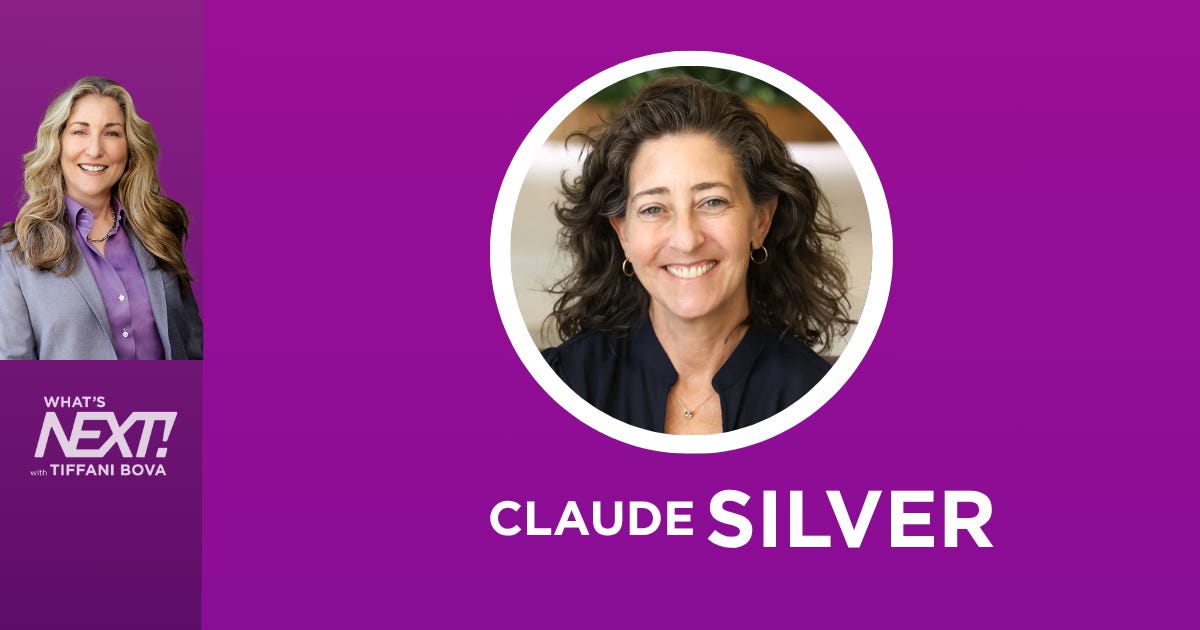
That was one of the themes that stayed with me after my conversation with Claude Silver, Chief Heart Officer at VaynerX and author of Be Yourself at Work. Claude’s perspective is particularly interesting because she sits at the intersection of culture, leadership, talent, and organizational performance. She spends her days helping people perform at a high level without sacrificing their humanity.
Apple Podcasts: https://podcasts.apple.com/us/podcast/leading-from-the-heart-with-claude-silver/id1262213009?i=1000754863752
Spotify:
During our conversation, we started with a debate about AI employees.
I shared how we’re using AI agents within our research organization to help a small team operate at a scale that would otherwise be impossible. These agents continuously monitor information, surface insights, and help analysts focus on higher-value work. They don’t replace people. They enhance them.
Claude’s response was nuanced.
She isn’t anti-AI.
Far from it.
She believes AI can make people smarter, faster, and more productive. But she also believes there are parts of leadership that technology cannot replicate.
An AI system might identify performance trends.
It might flag risks.
It might even suggest interventions.
But it can’t put a hand on someone’s shoulder.
It can’t look someone in the eye.
It can’t genuinely communicate, “I’ve got you.”
At least not today.
And that’s where the real conversation begins.
The future of work isn’t a choice between technology and humanity.
It’s about understanding where each creates value.
One of the most important moments in our discussion came when Claude challenged how we think about burnout.
Many organizations treat burnout as an individual issue.
Employees need better time management.
Employees need more resilience.
Employees need stronger boundaries.
Sometimes that’s true.
But often burnout is revealing something much larger.
A leadership problem.
A management problem.
A system problem.
When leaders consistently reward overwork, create false urgency, overload teams with competing priorities, or fail to recognize warning signs, burnout becomes predictable.
And predictable problems are rarely individual failures.
They’re organizational design issues.
Claude made a distinction that I found particularly useful.
She doesn’t focus on time management.
She focuses on energy management.
That shift matters.
Because the goal isn’t squeezing more hours out of people.
The goal is helping people sustain performance over time.
As AI becomes increasingly capable of handling administrative work, reporting, scheduling, tracking, and analysis, something interesting may happen.
Managers may lose the ability to hide behind tasks.
Historically, many managers spent significant portions of their time on administrative activities.
Status updates.
Reporting.
Tracking.
Monitoring.
Information gathering.
Much of that work is becoming increasingly automatable.
Which raises an uncomfortable question:
If AI handles the administration, what becomes the manager’s job?
The answer may be what it should have been all along.
Coaching.
Developing.
Listening.
Creating clarity.
Building trust.
Helping people grow.
In other words, the distinctly human aspects of leadership.
This may be one of the biggest leadership shifts of the next decade.
Not because leadership is changing.
Because leaders will have fewer places to hide from the parts of leadership they’ve often avoided.
Claude introduced a concept I found compelling.
She believes leaders need to move beyond emotional intelligence and toward emotional fluency.
The distinction is important.
Emotional intelligence is recognizing emotions.
Emotional fluency is being able to respond intentionally instead of reacting impulsively.
Every leader knows the feeling.
The email that instantly triggers frustration.
The Slack message that creates defensiveness.
The unexpected feedback that sparks irritation.
The difficult meeting that generates anxiety.
The question isn’t whether those emotions occur.
They will.
The question is what happens next.
Can you pause?
Can you process?
Can you choose your response instead of simply reacting?
The leaders who master that skill will become increasingly valuable in environments that continue accelerating around them.
One of the themes explored in Claude’s new book is that belonging is not something organizations declare.
It’s something they build.
Many leaders talk about culture.
Far fewer create the conditions that allow people to feel safe contributing their best work.
Psychological safety often sounds soft until you understand its business implications.
When people don’t feel safe:
They stop sharing ideas.
They stop raising concerns.
They stop challenging assumptions.
They stop taking risks.
Innovation slows.
Collaboration weakens.
Performance suffers.
The irony is that many organizations desperately want innovation while unintentionally creating cultures where people feel safest staying quiet.
Belonging isn’t a cultural initiative.
It’s a performance strategy.
One of the misconceptions about AI is that it reduces the value of human skills.
In many cases, it may do the opposite.
As technology becomes more capable, distinctly human capabilities become more differentiated.
Trust.
Empathy.
Judgment.
Self-awareness.
Communication.
Connection.
These are becoming harder, not easier, to replace.
Claude’s framework centers on three ideas:
Emotional Optimism
Emotional Bravery
Emotional Efficiency
Not because they’re nice-to-have traits.
Because they’re increasingly practical leadership capabilities in a world defined by constant change.
Organizations are spending enormous amounts of energy asking what AI can do.
They should also be asking what AI cannot do.
Because the answer may reveal where the greatest leadership opportunities exist.
Technology will continue to transform how work gets done.
That part is inevitable.
What remains uncertain is whether leaders will use that transformation to create more human organizations or simply more efficient ones.
The companies that get this balance right won’t just outperform.
They’ll build cultures people actually want to be part of.
And that may become one of the most sustainable competitive advantages of all.
What leadership capability do you believe becomes more valuable as AI becomes more capable? I’d love to hear your perspective.

Tiffani Bova is Chief Strategy and Research Officer at The Futurum Group.
Ranked for the last six years in the Top 50 Business Thinkers in the world by Thinkers50, Tiffani Bova is a thought leader who Forbes says “reshapes our perception of growth.”
As both a practitioner and academic she offers a unique perspective and has helped lead the tech industry through several evolutions over her nearly 30-year career as Salesforce’s former Growth and Innovation Evangelist, and previously as a Distinguished Analyst and Research Fellow at Gartner and a sales, marketing and customer service executive for start-ups and Fortune 500 companies. She is the author of two Wall Street Journal bestsellers: GrowthIQ and The Experience Mindset.
No posts
Comments
Nothing yet. Say the first thing.
Sign in to join the conversation.