
There have been several underreported events about the situation in Iran that viewed in isolation appear disconnected. Strung together, they tell a clear story about where things stand — and where they're headed. Iran has been neutered to the point that it can no longer act meaningfully against its neighbors, so the regime's remaining play is to sit back and manage the optics of decline while trying to save face with its own people. Those people aren't fooled, and they're likely to rise up once the dust settles. As Bessent put it: the Strait will open by itself.
First, let’s start with an article that President Trump just asked us to read.
PRESIDENT TRUMP: A must read! Thank you to James Jay Carafano!
Donald Trump Won the Iran War
We are about to see the biggest reshaping of the Middle East since Moses led the Jews out of Egypt.
Like the pharaoh, who missed every warning sign up to the parting of the Red Sea, the critics and questioners of Trump’s tug-of-war with what’s left of the Iran regime seem obtuse to the prophetic truth that the region will never be the same again—in a good way.
Condemnation of the Trumpian way of war comes from corners that have a vested interest in seeing Trump’s triumph as a loss.
Maximalists. They would only be happy if Trump fought the war they wanted, arguing that nothing less than overthrowing the regime would do. Anything else is a defeat and a humiliation. That’s a perversion of the president’s more limited goals to eliminate the regime’s capacity to bully and destabilize the region—objectives largely accomplished.
Minimalists. They would only be satisfied if America did nothing, contending, “Trump has dragged the United States into a needless war with Iran—and one with no clear end,” ignoring that the regime building a nuclear arsenal; constantly threatening its neighbors; plotting the assassination of U.S. officials; and engineering the horrific October 7 attacks on Israel were clear and present dangers, and that Trump demolished these threats in a way that no other American president ever came close to even denting.
Procrastinators. They are impatient and confused by what they see as Trump’s waffling, vacillating between negotiating and punishing the regime, overlooking the deep conviction behind his strategy, a sincere humanitarian streak which abhors needless loss of life—ours and theirs. Since he has largely accomplished our war aims, Trump can take a more measured approach to get to the end-state he wants without unnecessary loss of life and needless destruction. Instead, he is “de-risking—every time the Iranians fail to meet their obligations or retaliate, he takes more capabilities and assets of Iran off the table.” Rest assured, worriers, that while the war may only be over when the enemy quits—the truth is that the enemy has already lost, and now the only prospect they face is that the more they fight, the more they lose.
Obstructionists. They are what’s left leading Iran, insisting that as long as they are still standing and resisting, they win, conveniently passing over the point that Trump has humbled and humiliated the regime, virtually decimating their armed forces and crippling Iran’s economy.
All the above opinions can largely be discounted. Not only are they wrong, but none have the power or capacity to deter Trump from his course. Nor should he take the counsel of their fears.
There is zero evidence to doubt Trump’s resolve—and plenty of facts to argue he should steel his determination and follow through.
The victor gets to define victory.
Every war leader, in every war, has their detractors. Commanders-in-chief need a better metric to judge their efforts than taking the counsel of discontented doubters.
A good fight has a “theory of victory,” a logical, feasible, suitable, and acceptable means to justify calling a win in war. That guidepost is the best measure of success.
For Trump, a win is to squash Iran’s capacity to destabilize the region, creating space for regional collective security, reconstruction, and economic resilience, providing a long-term deterrent against a resurgent regime. From the Abraham Accords to the work of the Board of Peace, and major economic initiatives like IMEC and Tripp, the expectation is that the real measure of Iranian defeat is if these initiatives flourish. That’s the theory of victory.
The real test of “is Trump winning” is if there are signs that the long-term peace structure the president is seeking to replace the overshadowing threat of Iran is emerging. Everywhere you look in the region—the answer is yes.
Energy Resilience. Only a year ago, the Iranian regime could threaten to shut down up to a third or more of the world’s oil exports. Even today, while fighting in the Strait of Hormuz still lingers, that is no longer true. Regional exports are rebounding, by some estimates up to two-thirds of pre-war levels. The UAE, for example, is already exporting at 85% of pre-war levels.
Nor is oil rocketing toward $200 a barrel like the IRGC hoped. In fact, prices are bobbing below wartime highs. Part of this is because the region is rapidly developing redundant and resilient means to move product through new cooperative initiatives, including potentially a Saudi-Israeli pipeline. The prospects that Iran can hold the flow of the world’s energy hostage are now nil.
Reconstruction. Recently, the Board of Peace announced, over the objections of Iran, an unprecedented agreement to disarm Hamas, a precursor to the reconstruction of Gaza. The board also announced a pilot reconstruction project in Gaza to begin in November. Further, the U.S. is leading a trilateral framework with Israel and Lebanon and aggressively working to normalize relations with Syria.
These efforts will further help jump-start regional reconstruction projects. All these initiatives reflect a real movement to replace lands overlorded by Iranian surrogates with regions blessed with security, stability, economic growth, and good governance.
Economic integration. The U.S. and Iraq recently announced over $60 billion in future economic deals. Washington also trumpeted an additional multi-million dollar investment in TRIPP in Armenia.
Further, the Iran War has helped even more urgently make the case for the importance of IMEC. On every flank, Iran is seeing their neighbors more tightly integrating with each other and partnering with the U.S. and other global good guys from Europe to India, Japan, and South Korea.
Security Cooperation. The U.S. and Saudi Arabia recently took action against Iran-backed militias in Iraq. Saudi Arabia just announced the establishment of a multinational coalition to provide maritime security in the Red Sea. Israeli recently expanded defense cooperation with the UAE.
All these initiatives point to the growing willingness of regional powers to expand collective security and build a conventional deterrence framework against the current Iranian regime.
Trump Won the Iran War
So, here is the reality check—the inconvenient truth the doubters don’t want to talk about.
If Trump were losing his war, none of these initiatives would be happening. Instead, what is being witnessed is increased American influence, increased partnerships, and more momentum for the framework Trump envisions to bring long-term peace and stability to the region. These are not signs of defeat, but regional transformation on an unprecedented scale.
The spin doctors can spin whatever the damn well please, but the historians are going to write that Trump is the most consequential force in reshaping the Middle East in modern memory.
In the long run, that is only going to make the task of making and keeping America great again easier, partnering with a part of the world that will bring more benefits to us than problems to solve.
-Dr. James Jay Carafano
James Jay Carafano is a national security expert and a 25-year Army veteran. His most recent books are Cold Combat: Mountain Warfare in Italy and the Battle of San Pietro, 1943, and Digital Dominance: Winning in a Socially Networked World.
Carafano's argument comes down to this: judge Trump's Iran strategy by outcomes, not rhetoric. Oil is flowing again and prices are coming down, regional integration deals are stacking up from Iraq to Armenia, Gaza reconstruction is moving forward over Tehran's objections, and Gulf states are knitting together security partnerships that don't include Iran. None of that happens, he argues, if the U.S. is actually losing. While the world rebuilds around Iran, Iran itself is running out of road.
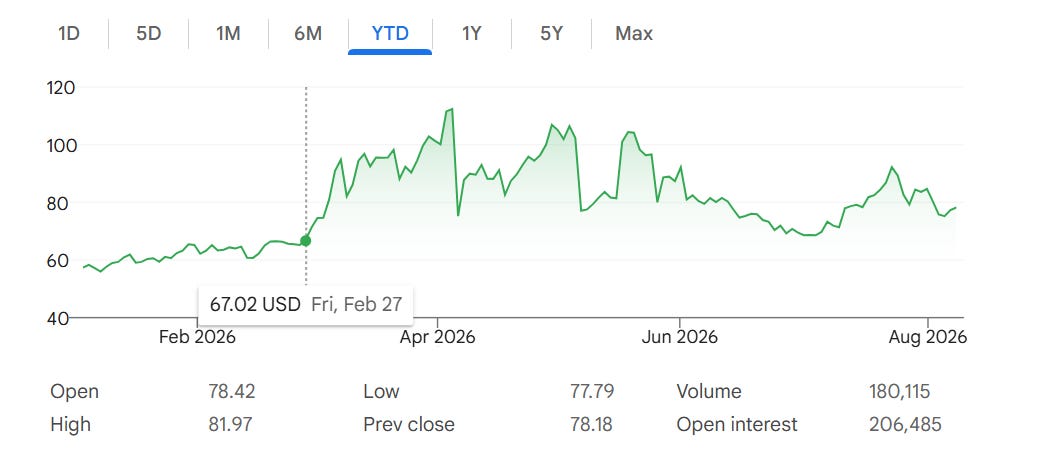
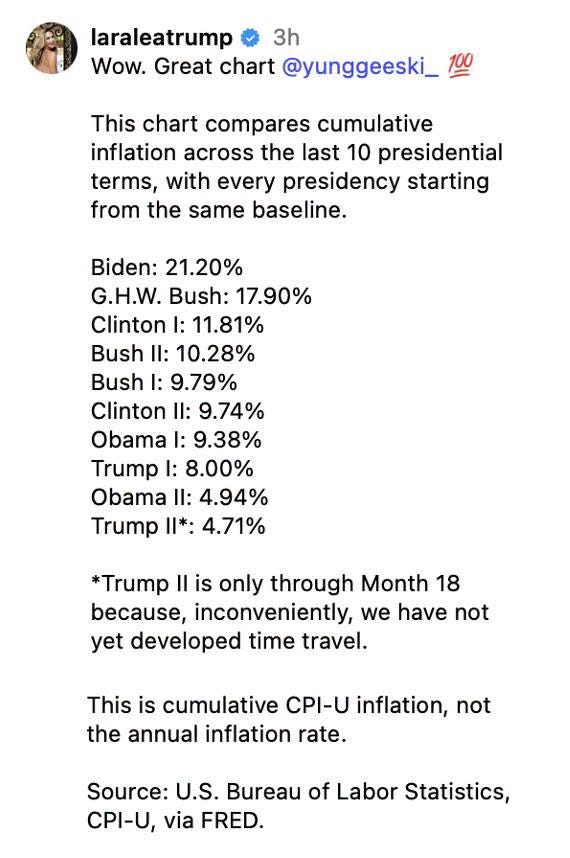
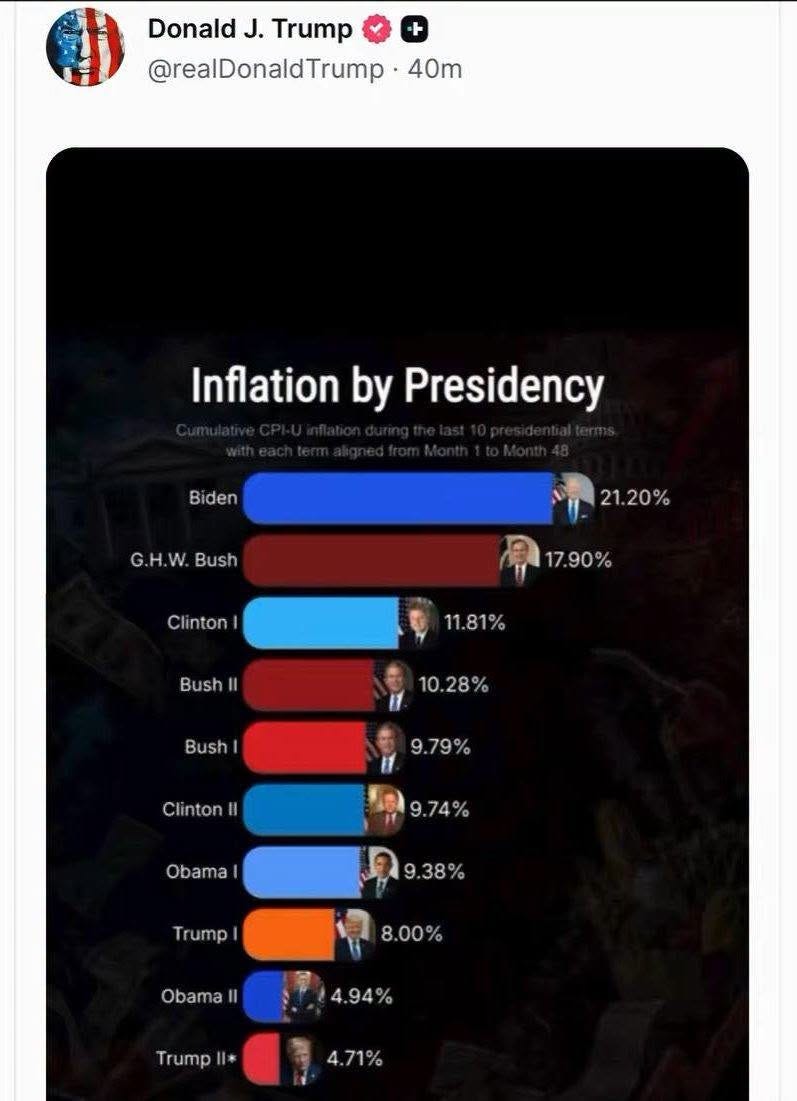
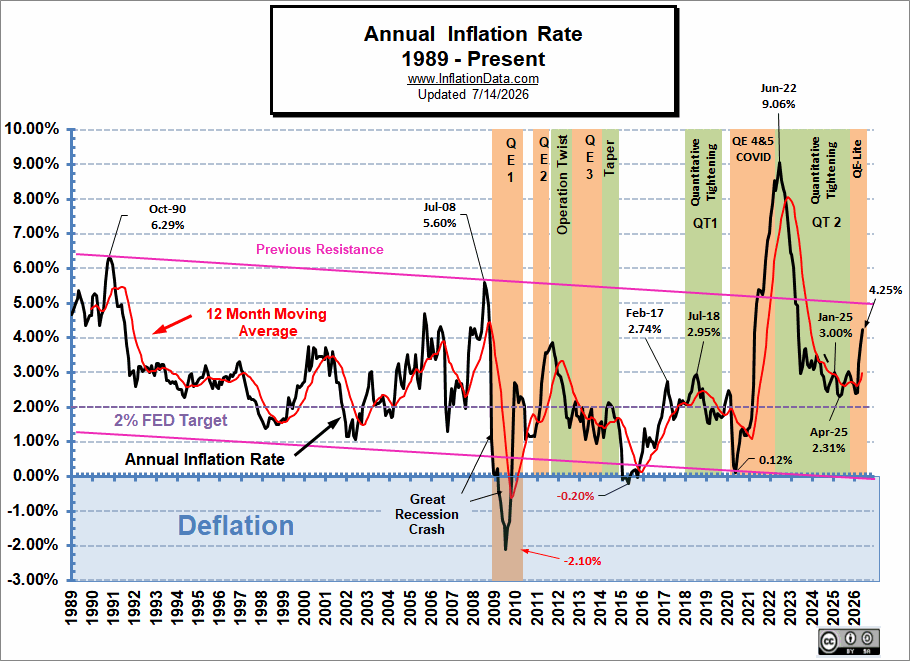
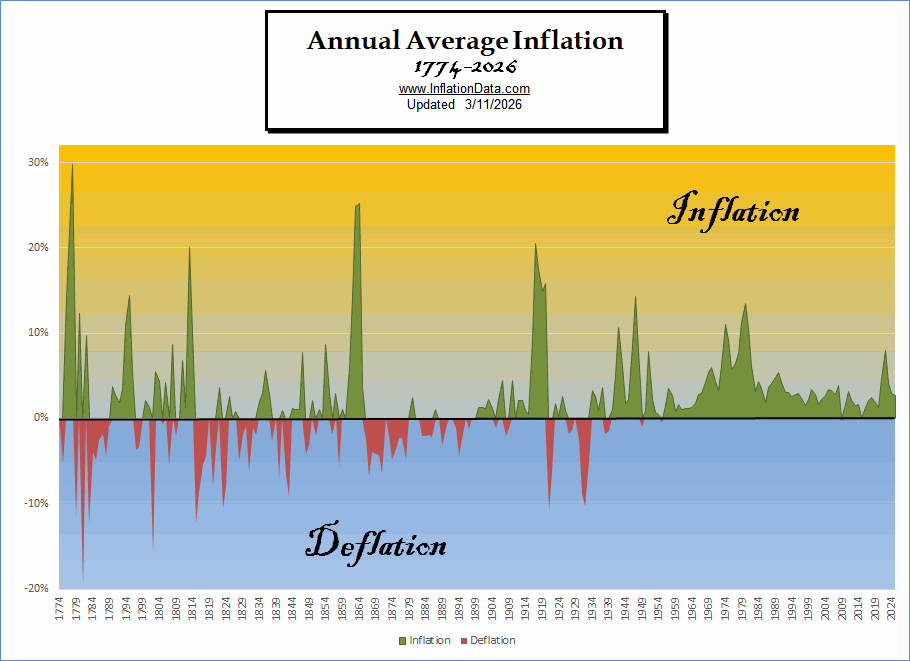
Add to that the inflation story the administration has been pushing out — U.S. numbers versus Iran’s — and you get another tell. Despite attempts to paint Trump as a high-inflation president, crude is only about $10 a barrel higher than when the Iran war started: $67 on February 27, 2026, versus $78 last Friday.
As I reported a few days ago, the only ones gouging us at the pump are the oil companies, traders, and retailers running their usual pricing games on the public.
Gouging us at the pump
·
Aug 3
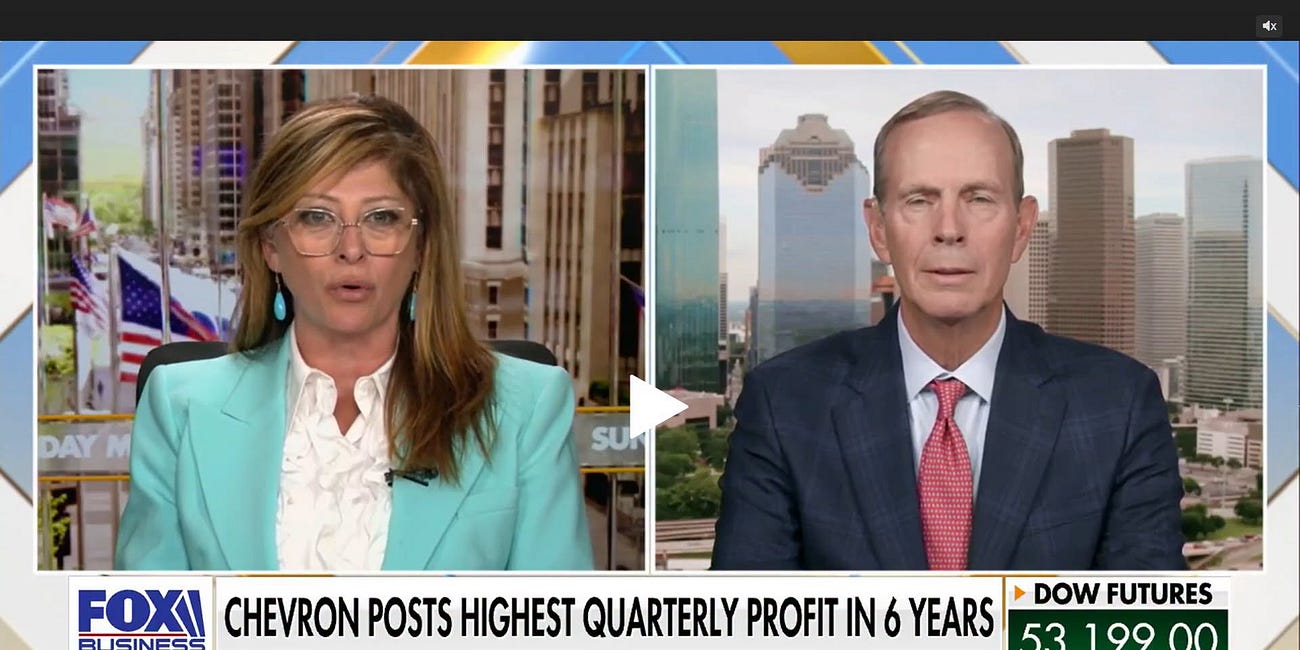
Chevron gave an interview to Maria Bartiromo this morning and bragged about how much money they were making off gas prices. Profits are up 12 times what they were a year ago - they made $12 BILLION in second quarter.
Meanwhile, Treasury Secretary Bessent put it bluntly: “We have them by the throat. Iran has got 150–180% food inflation and not able to pay the troops.”
So U.S. inflation is easing, crude is drifting back toward pre-war levels, and Iran is moving in the exact opposite direction. Trump has made clear there’s no more “negotiating” in the traditional sense — the strategy now is making the Strait irrelevant and grinding down Iran’s leadership and IRGC financially until they can no longer sustain themselves, leaving the Iranian people to handle the rest.
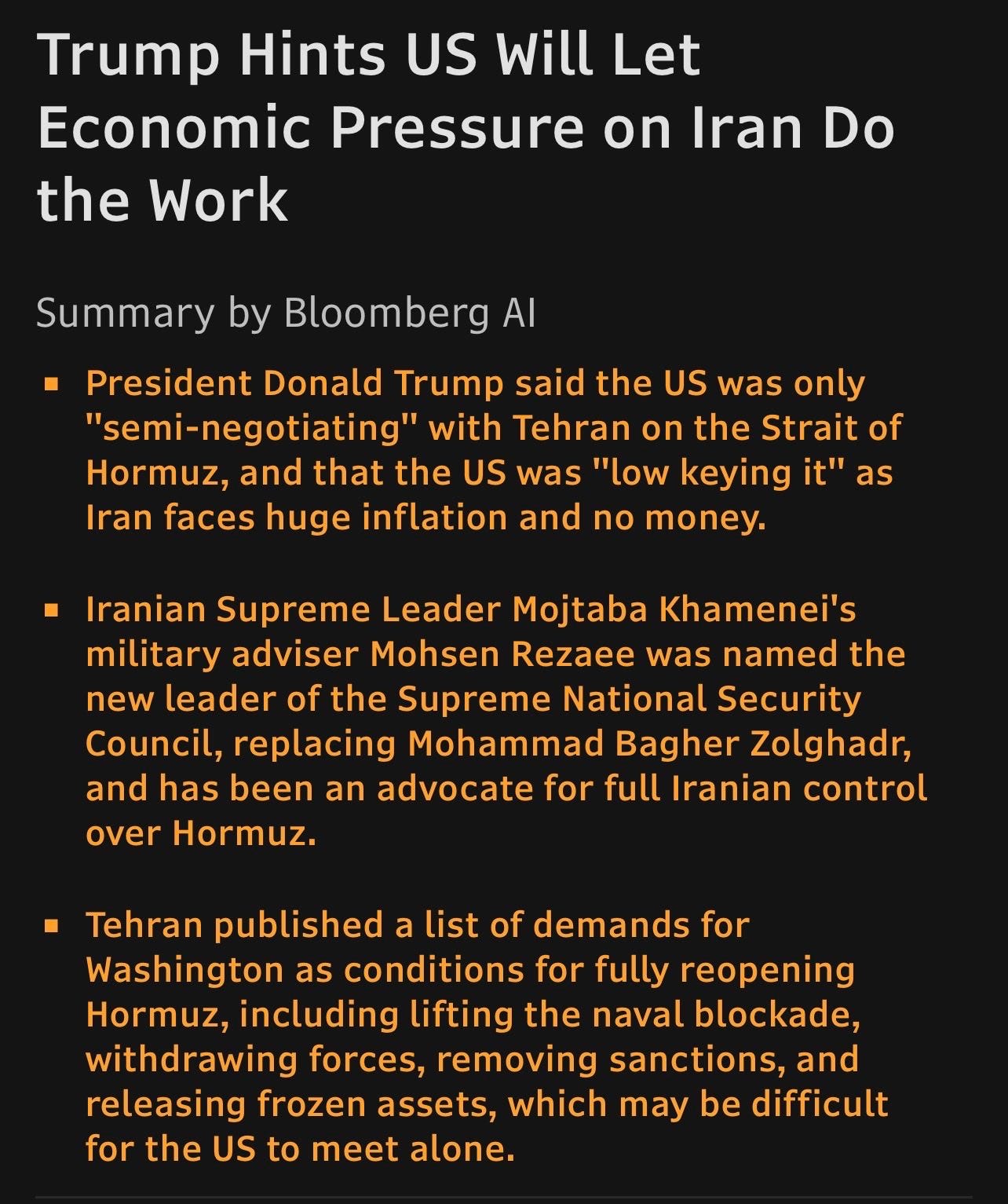
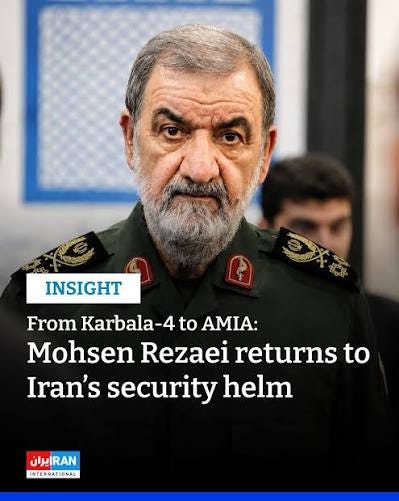
To that end, Iran just made a leadership change that, to me, reads as an admission the game is over — and that what's left is managing appearances. Iran appointed veteran hardliner Mohsen Rezaei as Secretary of the Supreme National Security Council (SNSC), Iran's top body for coordinating defense, intelligence, and security policy, replacing Mohammad Baqer Zolghadr.
Zolghadr reportedly submitted his resignation, but the rollout itself was telling: Iranian media outlets first published, then quietly deleted, stories about the appointment before it became official. That's not how a smooth, uncontested handover usually looks.
The order allegedly came from the new Supreme Leader — worth remembering, that’s no longer Ali Khamenei. It’s his son, Mojtaba Khamenei, who hasn’t been seen in public since February 28, 2026, the day his father was killed and he himself was reportedly wounded. Iranian officials are still promising future footage of him “among the people” as of this week, which itself tells you something. Multiple intelligence assessments — per Trump and Rubio — suggest he’s alive and engaged at some level, but there’s still no independent visual confirmation months later. Iran’s president has said he recently met with the new Supreme Leader in the back of a car, but couldn’t actually see him and thought he didn’t sound like the same person. Make of that what you will.
Rezaei, 71, commanded the IRGC for sixteen years (1981–1997), including through most of the Iran-Iraq War. He holds a doctorate in economics, previously served as Vice President for Economic Affairs, and is a perennial presidential candidate. He’s also a staunch hardliner who has taken aggressive public stances throughout the ongoing conflict — at one point suggesting a U.S. ground invasion would be “great” for Iran, since it would hand them thousands of high-value hostages to take. He’s fiercely defended absolute Iranian control over the Strait of Hormuz, calling it worth “more than dozens of atomic bombs.”
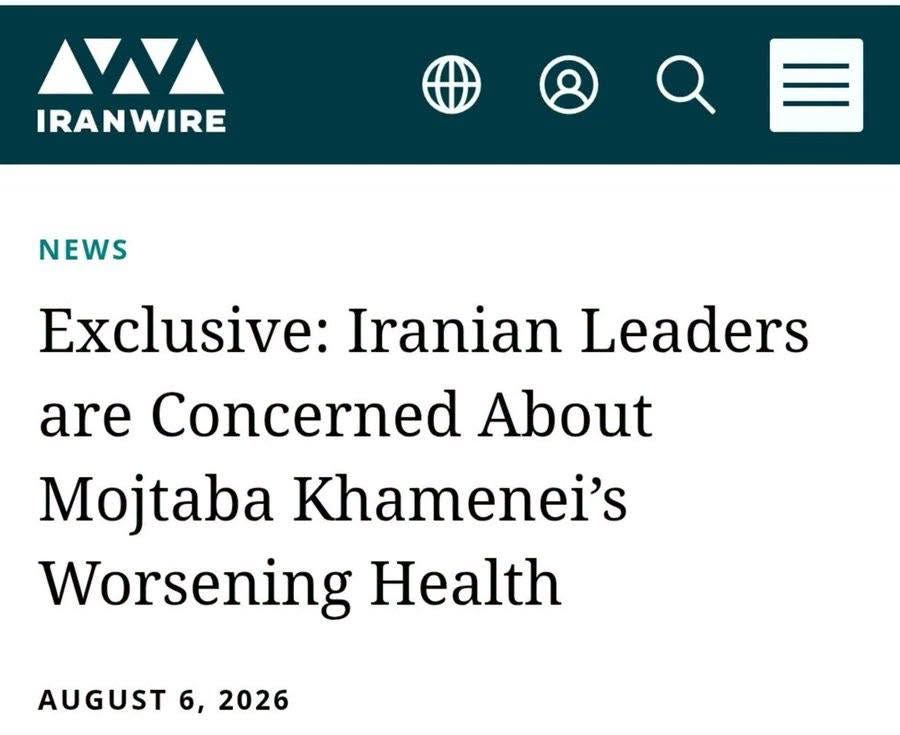
Placing Rezaei atop the National Security Council effectively sidelines civilian politicians like President Masoud Pezeshkian, and sends a clear signal to the U.S. and Israel: the IRGC isn’t compromising on its hardline positions. That signal lands harder given what’s reportedly happening behind the scenes — two sources close to the Pezeshkian administration told IranWire that Khamenei is in extremely critical condition and could die at any moment.
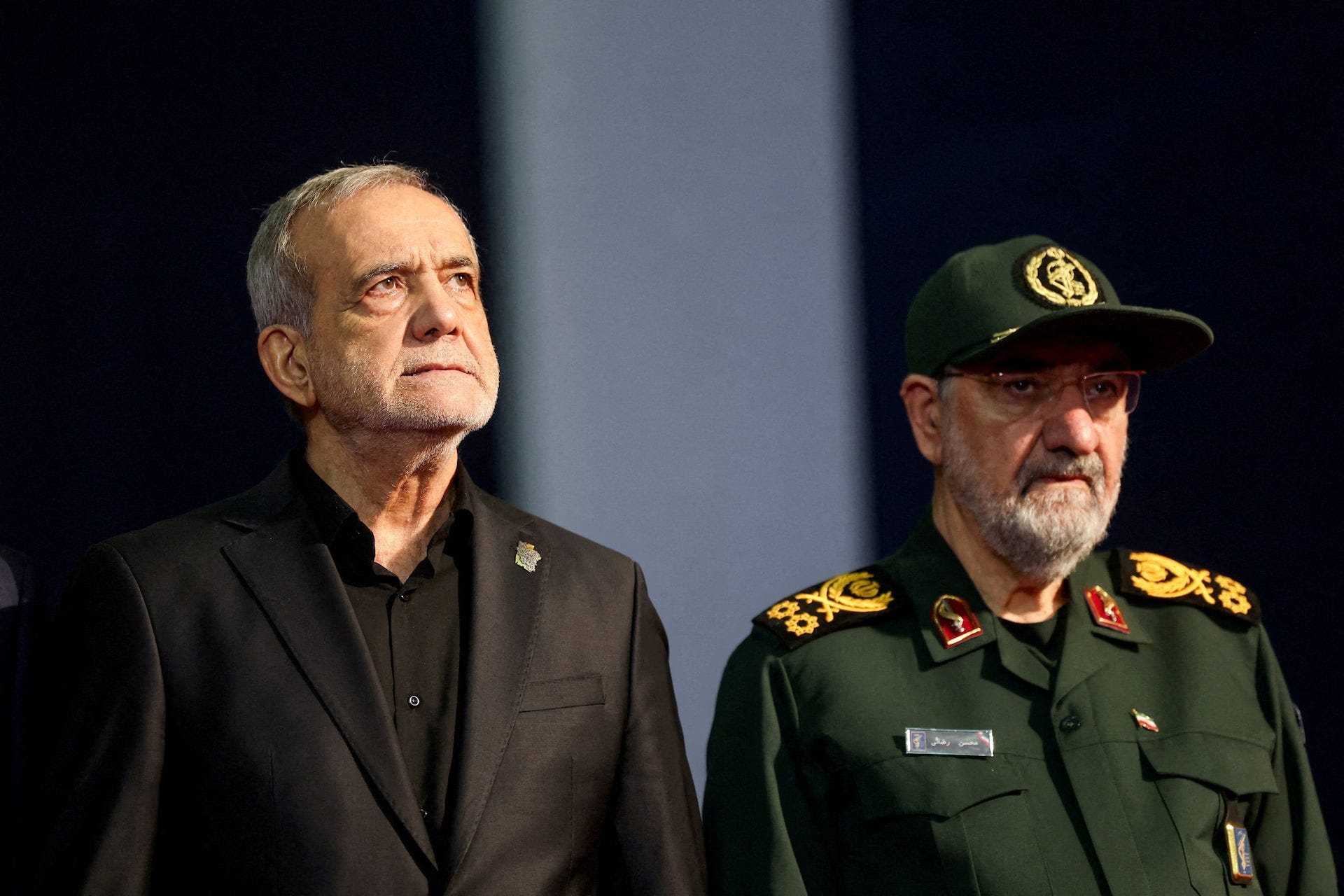
The timing here matters. A few days earlier, Iran’s president had already admitted he met with the Ayatollah in the back seat of a car but couldn’t actually see him or confirm it was really him. He also acknowledged Iran is dealing with significant “internal division” that’s stalling decision-making — which, given everything else, isn’t exactly a shock.
Put it together and it starts to look like Mojtaba has been gone for a long time, and the IRGC is laying the groundwork to announce his death when it suits them. We’ll see.
Bessent’s read is that it’s nearly time to wrap this up: the money supply is cut off, inflation is running near 200%, and the regime can’t pay its own troops. Which raises the obvious question — why would the IRGC suddenly need Mojtaba dead? Is it so they can sign a deal the real Mojtaba never would have agreed to? Will the official story be that he gave his blessing before he died, clearing the way for whatever agreement they’re actually angling for?
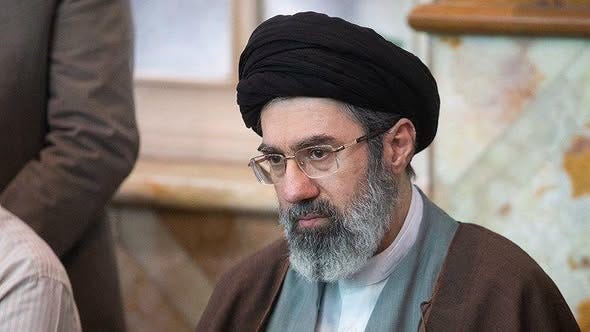
There's another thread worth pulling here. Regime insider Mohammad Bagher Khazali has reportedly claimed Mojtaba Khamenei was expelled from his father's inner office — the "beyt" — for three years. If true, that suggests Mojtaba was never Ali Khamenei's preferred successor to begin with - which makes sense with Mojtaba is allegedly gay which would never work in Iran. Which raises the real possibility that this entire succession story is the IRGC's cover for confirming his death while quietly installing an even more radical hardliner in his place — effectively swapping in their own man and attributing the move to Mojtaba's authority to make it stick.
After the promotion was announced - Trump posted this on social media…
PRESIDENT TRUMP: “I see that Representatives of the Islamic Republic of Iran are asking for compensation for the damage done to them during the last five month Military Conflict (started because, THEY WILL NOT HAVE A NUCLEAR WEAPON), even though it was never mentioned in any of our negotiations or meetings!
But it is an interesting idea because now I am likewise demanding compensation from Iran, for all of the people that they have killed and gravely wounded with their roadside bombs and many conflicts, for which they are famous, as led initially by General Soleimani, including the families of those killed on the USS Cole, and thousands of others killed in combat.
Additionally, compensation should be paid to the families of the hundreds of thousands of innocent protestors that Iran has killed over the last 50 years, not to mention the 52,000 that have been killed in the last five months. I have instructed my representatives to put this firmly into any, and all, future negotiations.
Also, with respect to the Iran negotiations, Iran should be responsible for the damages and death caused to the people of Lebanon, Syria, Yemen, and Gaza!
Thank you for your attention to this matter!”
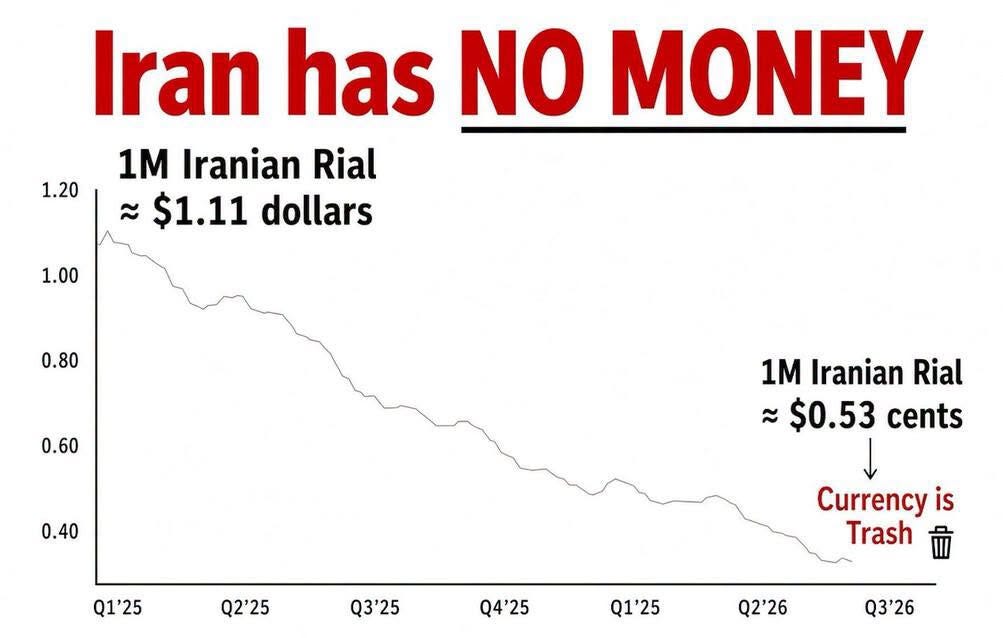
Read closely, this isn't a negotiating position at all — it's Trump mocking Iran's compensation request by piling absurdity on top of it, a signal that as far as he's concerned, the negotiating table has already been cleared. IRAN HAS NO MONEY AND NO LEVERAGE LEFT.
The U.S. has dismissed Iranian demands for post-conflict compensation, instead demanding restitution from Tehran for damages caused by its regional proxies and past terrorism. This shift in diplomatic terms signifies the total loss of Iranian leverage. With its currency collapsing, invisible leadership, and hardline, sanctioned leadership, the regime is struggling to maintain authority as it faces an impending economic and internal crisis.
My guess is Trump's post was aimed squarely at Rezaei — Iran's third SNSC secretary in under a year. Ali Larijani, who held the post before him, was killed in a U.S.-Israeli strike in March. His successor, Zolghadr, lasted less than five months before being shifted sideways to serve as a political adviser to the Supreme Leader. Rezaei is now the one left holding the job — installed at the exact moment Trump is publicly needling the regime over having no money left to negotiate with.
Who is Rezaei? This is important for a few reasons which will soon become apparent.
Born in 1954 in Khuzestan province to a Bakhtiari tribal family whose father worked for the National Iranian Oil Company, Rezaei joined the armed Islamist guerrilla group Mansouroun as a teenager, fighting the Shah’s government before the 1979 revolution. He was appointed commander-in-chief of the newly formed IRGC in 1981, at just 27 years old, and held the post for sixteen years — longer than anyone before or since — running it through the entirety of the brutal Iran-Iraq War from 1980 to 1988.
It was under his command that the IRGC founded and sponsored foreign proxy groups including Hezbollah, a legacy that still defines Iran’s regional strategy today. Rezaei has also been tied by Interpol to the 1994 AMIA bombing in Buenos Aires, a truck bomb attack on a Jewish community center that killed 85 people; he has been on Interpol’s wanted list since 2007 for that attack, though he denies the charges. The U.S. Treasury sanctioned him directly in January 2020.
He left the IRGC in 1997 amid political pressure, but hardly disappeared. He spent more than two decades as secretary of Iran’s Expediency Discernment Council (1997–2021), then served as Vice President for Economic Affairs under President Ebrahim Raisi from 2021 to 2023 — he holds a doctorate in economics from the University of Tehran. Most recently, he was serving as a military adviser to Mojtaba Khamenei and already sat on the SNSC before this week’s promotion to lead it.
There’s also a running joke about him inside Iran. Rezaei has run for president four separate times and lost every time: a withdrawn bid in 2005, third place with just 1.7% of the vote in 2009, another loss in 2013, and a runner-up finish to Raisi in 2021. Iranians have reportedly turned him into something of a “perennial candidate” — a man who has spent decades reaching for the top job and never quite getting it.
But the SNSC post may matter more than the presidency ever would have. Analysts reading the appointment describe it less as a shift in Iran’s negotiating posture than as an attempt to tighten control over how that posture gets carried out. Iran’s leadership remains split between hardliners pushing confrontation and pragmatists who still see a diplomatic opening with Washington.
I predicted back in March 2026 that former Iranian President Mahmoud Ahmadinejad might be Trump and Israel’s choice for a post-regime future.
Never Count Anyone Out
·
Mar 13
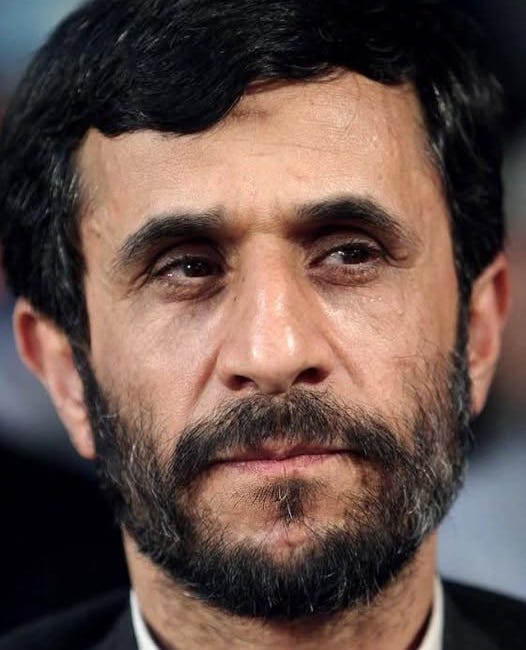
Why the World Should Not Dismiss the Possibility of Ahmadinejad’s Political Return to Iran
The rumors since have only deepened. Some claim Ahmadinejad, 69, isn’t dead at all — that he provided Israel and the U.S. with vital intelligence, that the strike on his security detail in Narmak was actually meant to extract him rather than kill him, and that he went into hiding before later being captured and placed under house arrest by the IRGC.
Ahmadinejad served as Iran’s president from 2005 to 2013 and became one of the most internationally controversial Iranian leaders of the 21st century. Persistent rumors claim he was Jewish on his father’s side, that his family converted to Islam and changed its surname — his actual family name is said to be Sabourjian, meaning “tallit weaver” — and that his mother is a Sayyida, a descendant of the Prophet Muhammad. Surname changes like this were common in Iran from the 1930s through the 1950s under modernization policies begun by Reza Shah, with families often adopting religiously meaningful or prestigious names; “Ahmadinejad” roughly translates to “of the lineage of Muhammad.”
Other rumors hold that his loyalty to the regime has been shaky for years, and that he met with Israeli officials on multiple occasions. He’s said to have fallen out of favor largely for challenging the Supreme Leader’s authority, promoting controversial allies, and repeatedly trying to reenter politics after being sidelined. He did reach out to Trump after the assassination attempt to offer condolences, praising him as an anti-establishment figure aligned with what he called the “actual demands” of ordinary Americans — and Trump recently said he might have somebody in mind to help “Make Iran Great Again.”
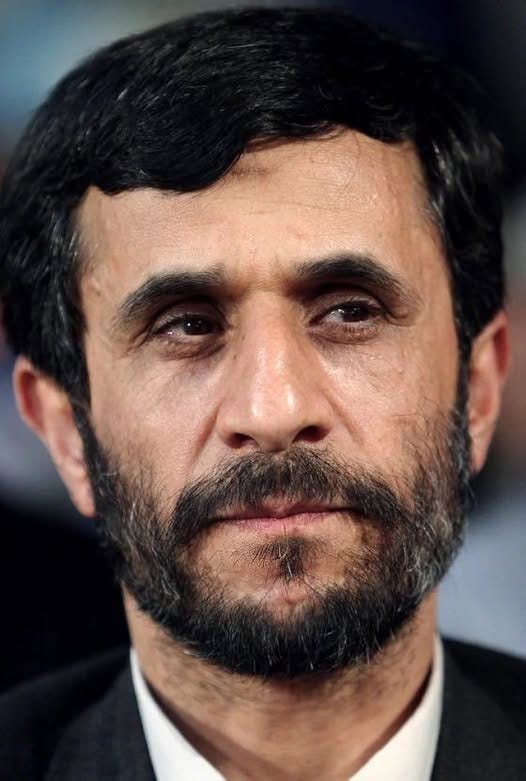
Whatever one thinks of Ahmadinejad politically, one fact remains: he operated at the highest levels of international diplomacy. He addressed the United Nations General Assembly in New York multiple times, in person, directly before world leaders including the U.S. delegation — not through intermediaries. That matters in diplomatic terms, and it’s part of why his current situation, whatever it actually is, carries weight.
Political authority inside Iran normally runs through a tangle of institutions — the Supreme Leader’s office, the Guardian Council, the presidency, the parliament, and the IRGC. But with the Supreme Leader’s office effectively unaccountable and the presidency sidelined, that leaves the IRGC holding the real levers. Ahmadinejad’s own attempts to reenter the presidency in 2017, 2021, and 2024 were all disqualified by the Guardian Council, a reminder that the system had already closed the door on him well before any of this year’s events.
Ahmadinejad was born the son of a blacksmith in Garmsar. A civil engineer by training with ties to the Revolutionary Guards, he became Tehran’s mayor in 2003 and won the presidency a few years later in a surprise populist victory built on promises of anti-corruption reform and aid for the poor and middle class. He later clashed with the Ayatollah over his hardline religious views and with the IRGC over what he saw as its outsized power — friction that, notably, echoes complaints from many who oppose the regime today.
It’s worth clearing up one persistent claim: Ahmadinejad was not directly involved in the 1979 U.S. embassy hostage crisis as a captor, guard, or operational participant, and a later CIA investigation found those allegations unfounded. He was a 22-year-old student leader affiliated with the Office to Foster Unity who attended early planning meetings and actually opposed targeting the U.S. embassy, proposing instead to target the Soviet embassy.
Venezuela offers a useful comparison here. Delcy Rodríguez, long viewed as firmly embedded in the existing political order, was elevated during a period of uncertainty that many outside observers assumed would break the system. Instead, leadership from within proved capable of adapting and holding continuity together under pressure — a template worth keeping in mind as Iran works through its own succession questions.
Rezaei and Ahmadinejad, meanwhile, have a real, documented history of political friction that goes well beyond ideological difference which may be in play here.
In the 2009 presidential race, Rezaei ran as a rival conservative candidate against Ahmadinejad, and in their final televised debate accused him of “thinking too highly of himself” and destabilizing Iran’s economy. Ahmadinejad crushed him at the polls, 62.6% to 1.7%. After that disputed election, Rezaei briefly joined the opposition in challenging the results as fraudulent, then abruptly withdrew his complaint less than two weeks later and fell back in line with the regime.
Ahmadinejad was popular in Iran with the people - Rezaei was NOT!
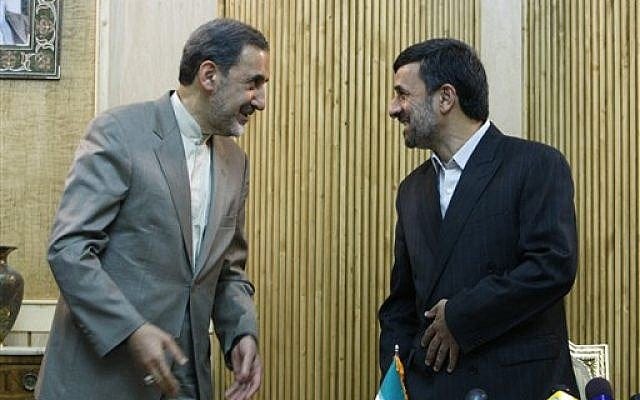
Then, in November 2011, during Ahmadinejad’s presidency and under Obama, Rezaei’s eldest son, Ahmad, was found dead in a Dubai hotel room under circumstances that have never been cleanly resolved. The defection and death of Rezaei’s son is an important fact here that no one is reporting. A father would not get over this easily.
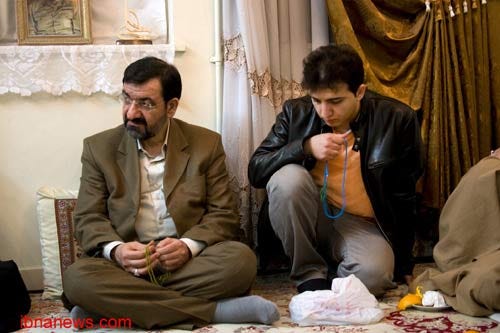
Ahmad had defected to the U.S. in 1998, sought political asylum, and told American officials his father had informed him the IRGC orchestrated the AMIA bombing.
Ahmad returned to Iran in 2005 and recanted those statements, then resurfaced in Dubai by 2011 living under the alias “Tom J. Anderson.”
The official accounts of his death conflict sharply — Dubai police cited suicide by wrist-slitting and, separately, an antidepressant overdose; Iranian state media claimed electric shock; his own father’s website called the death “suspicious.”
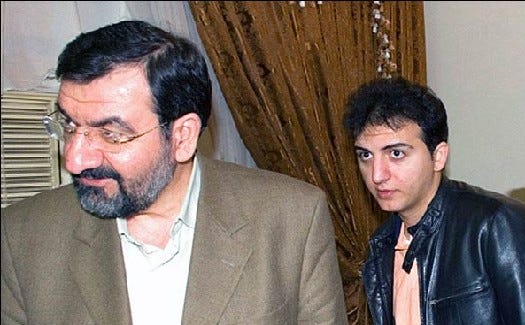
No suicide note was ever found. There’s no confirmed link between Ahmadinejad and Ahmad’s death — suspicion in Iranian opposition circles has generally pointed at the IRGC or the regime broadly, not at Ahmadinejad personally. But the bitter rivalry between the two and the timing are both real, documented facts sitting side by side, however you choose to read them.
Then there’s the question of what Ahmadinejad actually is right now — Israeli asset, Trump’s preferred candidate, or both. This isn’t fringe speculation anymore; it’s mainstream reporting.
The New York Times reported in July 2026 that Israel spent years cultivating Ahmadinejad as a potential intelligence asset and possible post-regime leader, including secret meetings with Mossad chief David Barnea arranged under cover of an academic climate conference in Budapest.
According to that reporting, the Israeli strike on Ahmadinejad’s own compound after the February 2026 opening strikes was intended to extract him from the house arrest he was already under, after which Mossad allegedly moved him to a safe house he later left on his own, reportedly disillusioned with Israel’s plan.
He was seen briefly at Khamenei’s funeral, masked and surrounded by guards, and is believed to be back in IRGC custody now.
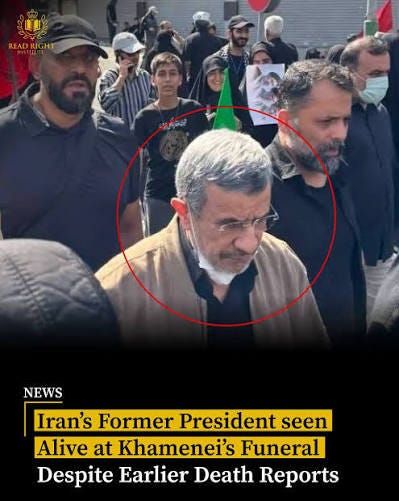
Ahmadinejad’s office has flatly denied all of it, calling the report “Hollywood-style” fake news. Separately, and worth remembering, there was real speculation back in March 2026 — before any of this broke — about whether the Trump administration saw Ahmadinejad as a useful figure to engage or even back for a future role, given his outreach to Trump after the assassination attempt and his populist, anti-establishment positioning against the regime.
Trump has said he “might have somebody in mind” to help a post-war Iran; whether that somebody is or ever was Ahmadinejad has never been confirmed, but the timing lines up.
Rezaei’s own ties to oil and the IRGC are worth spelling out plainly, since they matter for reading what this appointment signals. Oil runs in the family — his father worked for the National Iranian Oil Company. The IRGC is essentially his entire institutional identity: sixteen years as its commander, decades of continued closeness to it since, and now a return to the center of Iran’s security apparatus through the SNSC. His economic policymaking background — Vice President for Economic Affairs, the Supreme Council for Economic Coordination — gives him a skill set suited to managing a regime under real financial siege. The U.S. Treasury’s “Economic Fury” campaign has been aggressively sanctioning IRGC financial networks, crypto exchanges, and shadow banking systems moving regime money; this week alone, two more crypto exchanges were hit as part of an exposed $4 billion sanctions-evasion scheme. Taken together, most analysts read Rezaei’s appointment as a consolidation of IRGC-rooted, hardline control over Iran’s security and negotiating apparatus at precisely the moment the regime is facing war aftermath, economic collapse, and nationwide protests demanding its removal.
None of these threads — the Rezaei appointment, the Iranian currency in freefall, the silence around Mojtaba, the Ahmadinejad rumors — prove anything on their own. But strung together, they stop looking like scattered headlines and start looking like a regime managing its own unraveling in real time.
An IRGC hardliner installed to keep the security apparatus in line. A Supreme Leader nobody has actually seen in five months. A former president who may or may not be an asset, a hostage, or a hedge, depending on who ends up needing him. That’s not the profile of a government negotiating from strength — it’s the profile of one buying time, one face-saving move at a time, while the money runs out and the people underneath it start doing the math themselves.
Bessent’s line may end up being the most literal forecast in this whole story: nobody has to force the Strait open. Iran may simply run out of ways to keep it closed. We’ve already won the war.
If you value my work, please consider making a donation. My work is free for all but supported by many generous readers like you.
How can you donate? You can fund me by credit or debit card here or send a check to Peggy Tierney, PO Box 242, Spooner, Wisconsin, 54801. You can also support me by becoming a paid subscriber on Substack or by Cash App at $TierneysRealNews or by Venmo to @TierneysRealNews. Make sure to select the profile marked ‘Business’ so it goes to the right place! Thank you so much.
I accept no annoying ads to get in the way of truth. My only source of funding comes from readers like Sparky. I don’t need much to live on but it helps pay the bills.

90% of those who started with me years ago are still with me. Thank you.
Comments
Nothing yet. Say the first thing.
Sign in to join the conversation.