
I have been swimming in sewage lately.
Not actual sewage. That would probably be easier. You can identify sewage. You can wear gloves or even hazmat suits. There are established procedures for getting it off your shoes.
Social sewage is more complicated. The anger. The ugliness. The astonishing things people will say about people they don’t know. The certainty with which they’ll say them. The endless expenditure of energy on things that seem to make absolutely no one’s life better.
Which can lead a public servant to come home and say, “Excuse me, I have much kinder and more financially positive paths available to me than this one.”
So every once in a while, I wonder why anyone voluntarily signs up for work that requires wading through the toxicity.
Thursday, I remembered.
I went to a graduation ceremony at a county jail. Thirteen women in orange sat in front of us, graduating from an anger management and victim impact program.
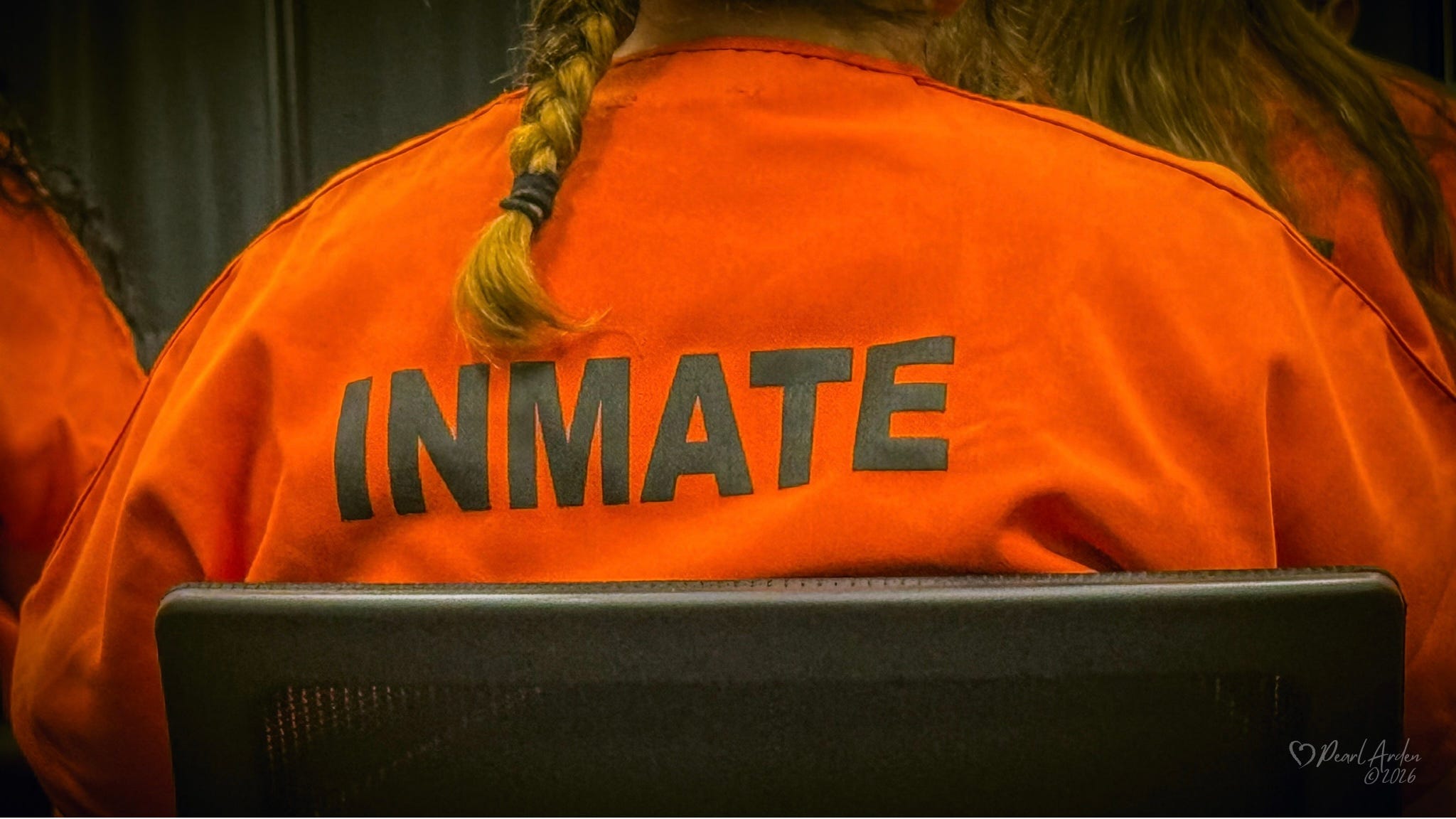
One might expect a solemn occasion.
Nope. They joked. They teased one another. They laughed. There was the particular kind of merciless affection that develops among women who’ve spent enough time together in rough circumstances to know exactly where to poke.
There was sisterhood in that room. Love, actually.
They ranged wildly in age. One woman, my age or older, sat in a wheelchair. Most were mothers. Some were grandmothers.
And their faces were shining with hope.
Which made some of what they told me considerably harder to hear.
One woman said she’d been coming to that jail since she was 18. Another said this was her 18th stay. Thursday was one woman’s 40th birthday, and she had to be reminded not just that it was her birthday, but which birthday.
There’s a saying about people caught in the revolving door of county jail:
Serving a life sentence, three to nine months at a time.
The serious crimes eventually send people somewhere else. State prison. Federal prison. County jail catches the smaller stuff.
Three months. Six months. Nine months.
Out. Back. Repeat.
A life sentence assembled in installments.
So no, I did not look at thirteen hopeful faces and think:
Yay! Solved!
I’m not naive. Some of these women will be back. Maybe many of them will.
But for a couple of hours Thursday afternoon, they were intensely proud of themselves, and they had every right to be.
Their instructor talked about a progression they’d learned: storming, norming, conforming, performing.
Storming is the rage. The emotional explosion. The place where instinct can make the next decision for you, with no good outcome. Then comes the work of talking yourself back down, recognizing what’s happening and regaining control instead of being controlled by the thing you felt five seconds ago.
Eventually, the goal is performing.
Living differently.
The women called the lessons back to their teacher from their seats. They knew this stuff.
Then I was asked to speak.
I started by telling them something I’ve said before in a very different correctional setting:
I was born on second base.
I didn’t earn second base. I just woke up there.
I had parents who gave me virtually every opportunity to succeed: security, expectations, education, encouragement. People who taught me how the world worked and expected me to find my place in it.
That doesn’t mean I’ve never screwed up. Lord knows. But there is an enormous difference between screwing up from second base and being handed a bat when nobody ever bothered to explain the game or even identify where the ball field is.
Looking around that room, I knew many of those women had not started where I did. Some learned survival long before they learned stability. Some were trying, as adults, to acquire skills I had been given before I was old enough to understand what a gift they were.
I wasn’t there to pretend our starting lines had been the same.
After that, mostly, I asked questions.
“How many of you were homeless before you came here?”
Almost every hand went up.
Eleven or twelve of thirteen.
Well.
There you are.
For some time, I’ve been involved in an effort to create a place we call Citrus Hope. The concept is simple: give someone who is homeless a tiny place to land while working toward something permanent.
A private sleeping pod about twice the size of a bunk bed. Hurricane-rated to Cat 5. Air-conditioned and heated. A bed, a door that locks and a safe place for belongings.
Outside those tiny rooms would be the things that help someone move forward: bath facilities, dining hall for three meals a day, computer lab, employment assistance, counseling and medical services.
It isn’t intended to become permanent housing. It’s the place between having nowhere to go and having somewhere of your own.
Get a job. Keep the job. Save some money. Move out.
Because of where it would be located, there’d be razor wire adjacent. I told them that, too. But unlike a tent in the woods, you could sleep safely and leave knowing your belongings would still be there when you came back. You’d have people helping you find work and somewhere to stay while you saved enough for stable housing.
“Would that help?”
Hands up.
“Would you use it?”
Hands up.
Suddenly, something that had existed in my world as plans and costs and meetings and logistics had faces.
They were looking directly at me, hoping I would make it a reality.
There’s another piece we’ve been working on, too. That one is no longer an idea. It’s imminent.
Workforce training is coming inside the jail.
Gotta say, very excited about this.
Men and women will be able to leave with actual construction-related credentials: OSHA and other certifications and skills that mean something to an employer.
Not good luck.
Not make better choices.
Something you can put on a job application. Something that can produce a paycheck.
Because you can teach someone to manage anger. You can teach accountability. You can teach someone to recognize the storm coming and perhaps, next time, make a different decision.
But then you have to release them.
If you release someone with no job, no money, nowhere safe to sleep and everything they own in a bag they have to protect every minute of the day, we’ve made “performing” one hell of a final exam.
Toward the end of the ceremony, the women sang.
Their teacher led them through Children Learn What They Live, by Dorothy Law Nolte, both audibly and in American Sign Language.
“Damn,” I said. “Mad respect. I don’t know any ASL.”
They did.
Their hands began to move. I can’t convey the beauty and hope in their sometimes halting, sometimes fluid execution of those words, sung aloud and with their hands.
Sitting there listening and watching their newfound voices, I realized the song had just collided with what I’d told them about being born on second base.
Children learn what they live.
Of course they do.
I did.
I lived with security, encouragement and expectations, and learned that I was capable. I had adults who prepared me for adulthood before sending me into it.
Some of the women sitting in front of me had learned very different lessons.
The poem begins with what children can absorb from the world around them — criticism, hostility, ridicule, shame — and then turns toward what they can learn from encouragement, acceptance, fairness and security.
“If children live with encouragement, they learn confidence.”
And there was one more reason the song landed so hard.
Most of these women were mothers. Some were grandmothers.
They weren’t only singing about the children they had once been.
They were singing about their own.
Earlier, almost every hand had gone up when I asked who had been homeless. Their hands went up again when I asked whether Citrus Hope would help.
Now their hands were moving again, but this time they weren’t answering me.
They were speaking.
I know better than to believe a graduation ceremony changes thirteen lives. Neither will a certificate, a job credential, an instructor or a tiny sleeping pod. Some of these women will probably come back. Maybe the woman on her 18th stay will make it a nineteenth.
But the eighteenth time doesn’t get to decide how the nineteenth one ends.
Maybe someday she walks out with an OSHA certification in her hand and, instead of returning to homelessness, has a tiny room waiting for her. She gets a job, saves some money and eventually puts a key into a different door.
Her own.
Maybe that happens for one of the thirteen women. Maybe three.
I don’t need to know the number in advance to believe it’s worth building the door.
I walked into that jail profoundly tired of swimming in sewage and ready to be done in two years. I walked out knowing all of it would still be waiting for me — the anger, the noise, the ugliness, the people seemingly determined to make everything harder than it needs to be.
I hate wading through it.
But I keep seeing those thirteen women in orange, laughing and teasing and loving one another. Proud of what they had accomplished. Hopeful about what might still be possible.
Their faces were shining.
Maybe that’s what I’d lost sight of while staring at the sewage: the people on the other side of it.
Someday, one of those women may decide she is finally ready to get out of the revolving door. When she does, someone damn well ought to have built her somewhere else to go.
Thursday, thirteen women reminded me why I want to be one of the people who builds it.
Amen.
🩵
P.S. There were actually two graduations that day: men in the morning and women in the afternoon. I was only able to attend the women’s, so those are the people whose stories I’ve told here. I heard the men brought every bit as much positive energy to theirs.
I volunteer on the re-entry committee alongside people from law enforcement, the justice system, social services, local government and nonprofits. Different jobs, same basic hope: break the revolving door and give people a real shot at productive lives.
Enjoyed this story and want more like it?
Head to Renewal, Resiliance, & Ruminations.
No posts
Comments
Nothing yet. Say the first thing.
Sign in to join the conversation.