
This is a side article to the recently published The EAA Oshkosh Bucket List.
My first Oshkosh (EAA AirVenture) was in 1991, so thirty-five years ago. At the time, I was neck-deep in aviation marketing, and for over a decade after, the annual pilgrimage to Wisconsin was practically mandatory.
Client meetings and dinners. Booth duty. Product launches. Late nights. Early mornings. Repeat.
As my client base expanded to other industries, I started making the trip less often. Every few years instead of every July.
Which means it took me embarrassingly long to discover what I now think is Oshkosh’s best-kept secret.
The seaplane base.
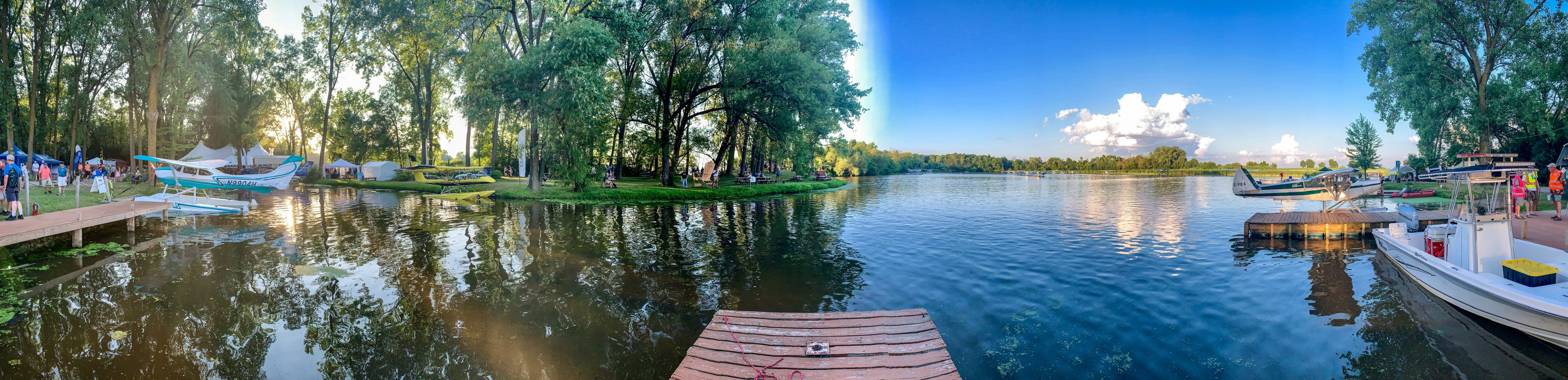
While the main grounds buzz with hundreds of thousands of visitors, warbirds, aerobatics, and enough radial engines to shake your fillings loose, the seaplane base feels like someone accidentally misplaced an entirely different event.
It’s tucked beneath towering trees along the waterfront.
It’s cooler.
Quieter.
The pace slows down.
There’s barbecue, watermelon, lawn chairs, and the kind of conversations that start with, “Whatcha fly?” and somehow last an hour.
Seaplane pilots are just… a wonderfully peculiar little tribe.
There aren’t many of us.
Some airplanes solve the problem by bolting giant aluminum pseudo-canoes underneath.
Some are more boat-like, with wings attached.
Every one of them is an engineer’s answer to the same wonderfully impractical question:
How do we make an airplane that floats?
Notice the question isn’t, How do we make a boat that flies?
Because the whole point is flying, and the moment you put wings on something, it makes for a pretty mediocre water craft.
I’ve flown both the floats-attached type, and the amphibious type, and in my oh-so-very limited seaplane experience, the amphibians – the Lake and SeaRey, for example – behaved much better for me on the water than the high-wing Super Cub on floats I trained in.
They each have their benefits though. And all are an absolute blast to fly.
As someone who grew up driving a ski boat and flying… I found it to be a delightfully odd experience to combine two passions, to fly and float with one vehicle.
Naturally, after hearing my new seaplane friends rave about it, I made a beeline for the seaplane base the next time I was back at Oshkosh.
Newly SES-rated, I was trying to figure out how to keep flying seaplanes regularly.
Flying isn’t an inexpensive hobby in any regard, and seaplanes just complicate things. Unlike renting a Cessna 172 down at the local airport, you can’t exactly call around asking if anyone has a seaplane available for the weekend.
There’s a reason.
Seaplanes are wonderfully fun… and notoriously unforgiving.
They’re more prone to pilot-error accidents than their land-based cousins, and the skills are perishable enough that you really do want to stay current.
About that time, a newly formed flying club a couple of hours south of me was featuring SeaReys.
An instructor took me up to get acquainted with the airplane.
And yes…
Dad buzzed his parents in a Corsair.
Brother did the same in a Tomcat.
I buzzed the Oshkosh cut in a SeaRay…
Let’s just say Thanksgiving stories were never a fair fight with those two at the table.
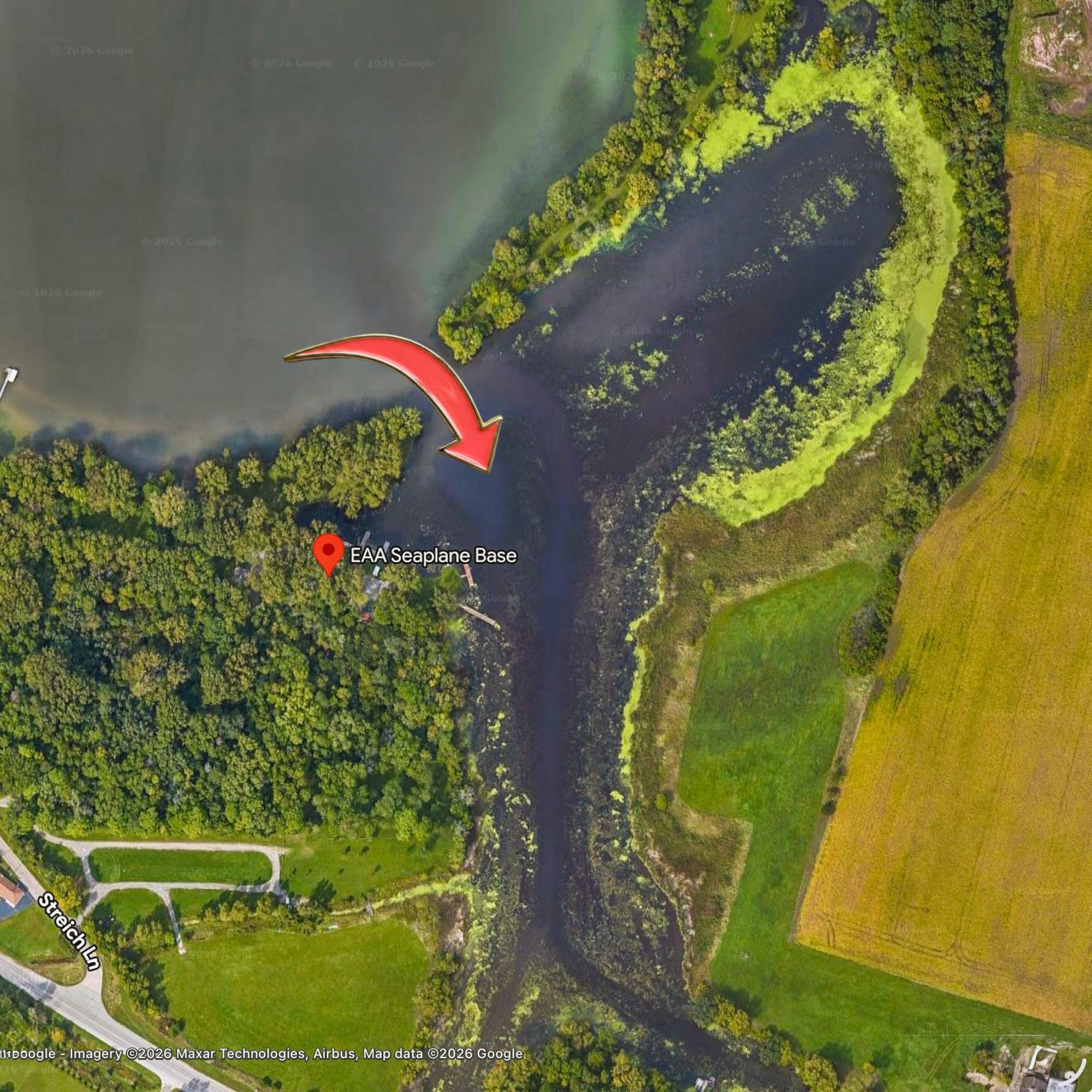
In this particular instance, the target run is the inlet that leads to the sheltered cove where all the seaplanes are anchored.
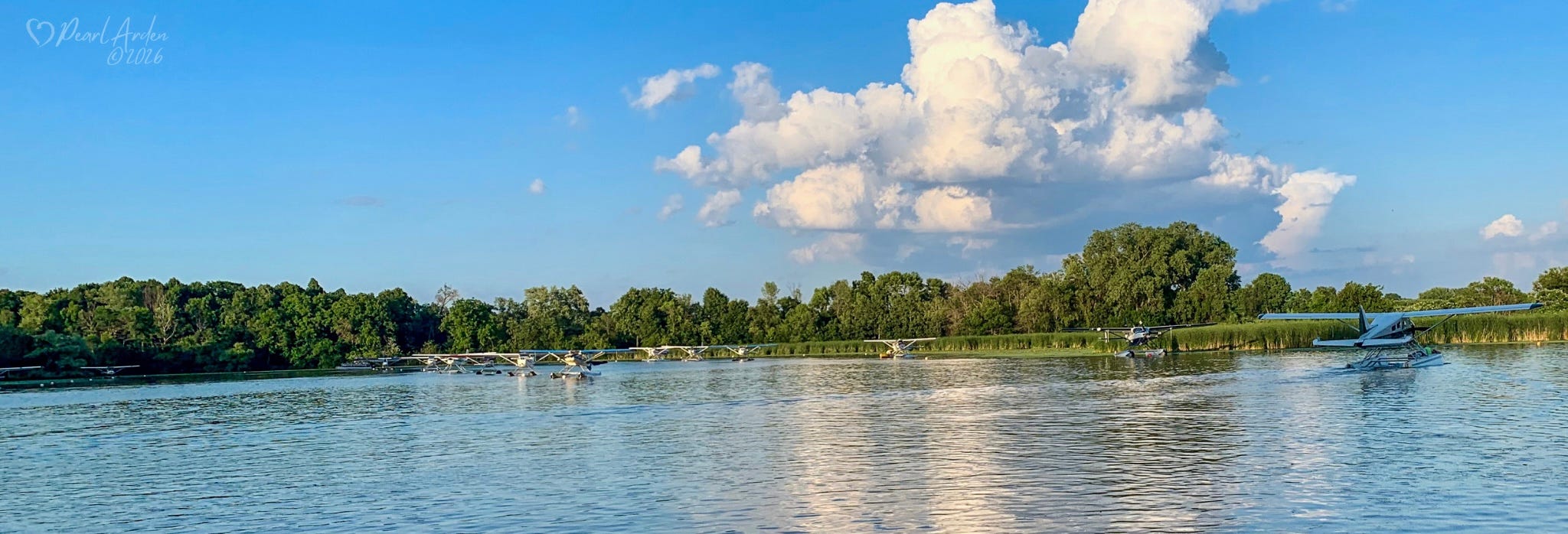
Everyone looks up when it happens… especially when it’s a De Havilland fire tanker.
But honestly, it didn’t even crack my top ten flying experiences.
It’s still a nice little aviation flex.
Except…
After I beached the SeaRay, I walked over to my friend.
Who had faithfully filmed me taxiing out.
Then somehow neglected to record buzzing the cut, the only part I really wanted.
Yeah I know.
No video.
Didn’t happen.
(But it did.)
And every time I return to Oshkosh, I find myself wandering back beneath those trees.
Not because it’s the most exciting corner of AirVenture.
Quite the opposite.
In the middle of the world’s largest aviation gathering, it’s the one place that reminds me flying doesn’t always have to be loud to be memorable.
🩵
Enjoyed this story and want more like it?
Head to the Flightline.
P.S. My friend Jerry (a single-engine rated seaplane pilot too) always said that the only real purpose in getting your multi-engine seaplane rating was to win a bar bet.
Two of those in my family. Dad flew the PBY for the Navy in the 50s, and decades later his wife got her MES so she could fill a need the FAA had for designated pilot examiners to do seaplane rating checkrides.
Yes, there are career reasons to get one too, Jerry.
He did make me curious though, so I looked up the numbers.
Total FAA certified pilots: roughly 500k, of which 40k are women.
Single-Engine Sea (SES) Ratings: roughly 15.5k, of which about 700 are women.
Multi-Engine Sea (MES) Ratings: just over 1k total, fewer than 50 are women
My stepmother is in a small club, indeed. And overall, women have gone up a couple of percentage points (6% to 8% of all pilots) since I began working in aviation in 1990.
No posts
Comments
Nothing yet. Say the first thing.
Sign in to join the conversation.