

The time of year where (generally) most of the snow actually falls. In this time we usually see the very first blooms of the season, skunk cabbage, draba, and early cress.
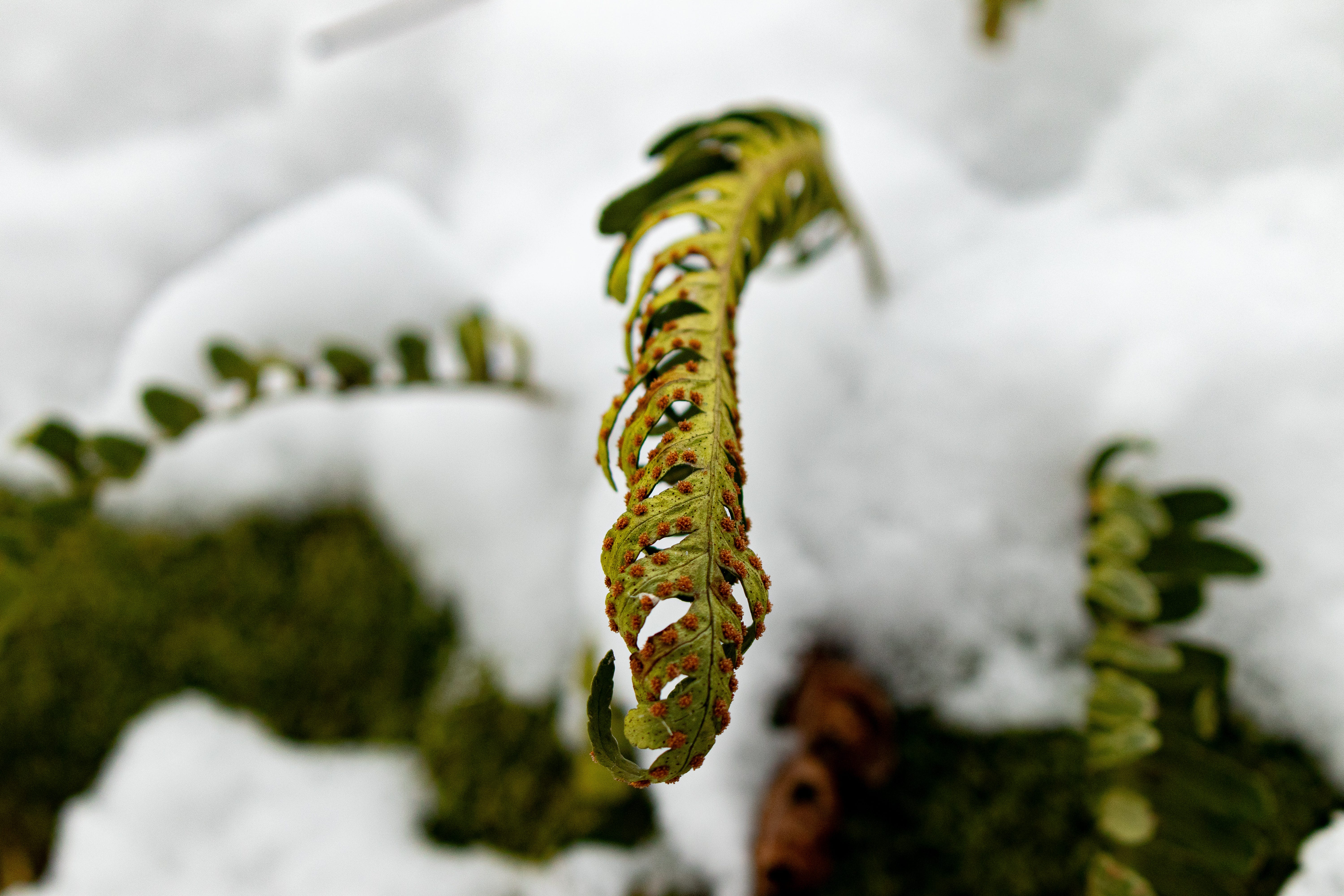
“Keep close to Nature’s heart…and break clear away, once in a while, and climb a mountain or spend a week in the woods. Wash your spirit clean.” - John Muir
Embrace the winter and let yourself experience the snow.
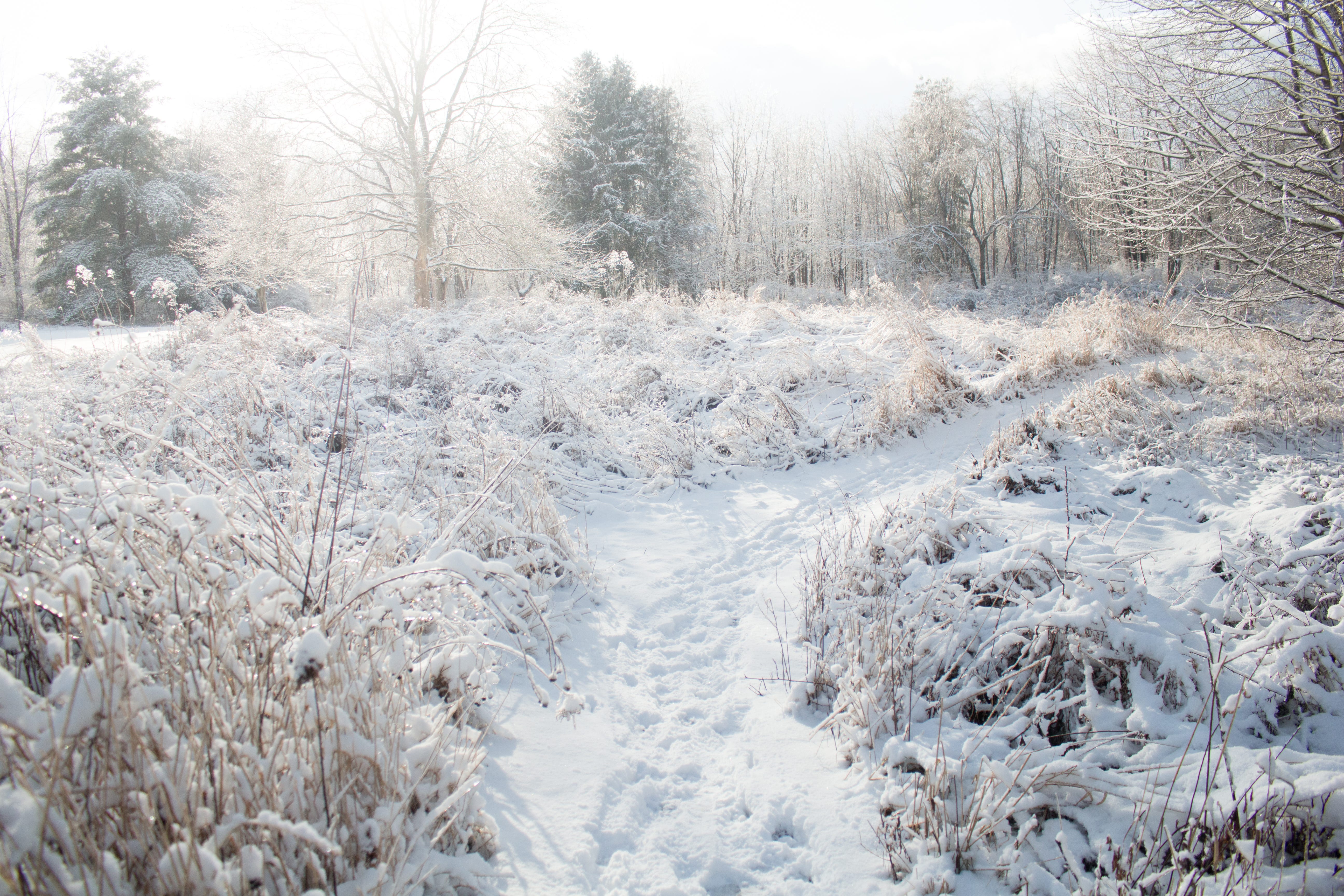
Bundle up - this is the #1 most important thing to do. Dress warm and comfortably.
You can do this walk while the snow is still falling, feeling the snow cling to your eyelashes and hair. Listen very close to the sounds the snow makes as it hits the already fallen snow. Watch the flakes land on your coat, how long do they keep their form, are they clustered or single, what shapes do they make?
You can do this walk after the snow has fallen, observing the various tracks, human or animal, that have walked before you. As the sun comes out and begins to melt the snow, how does it fall, in large clumps, in wispy curtains, in drippy droplets?
Find the joy in the season!
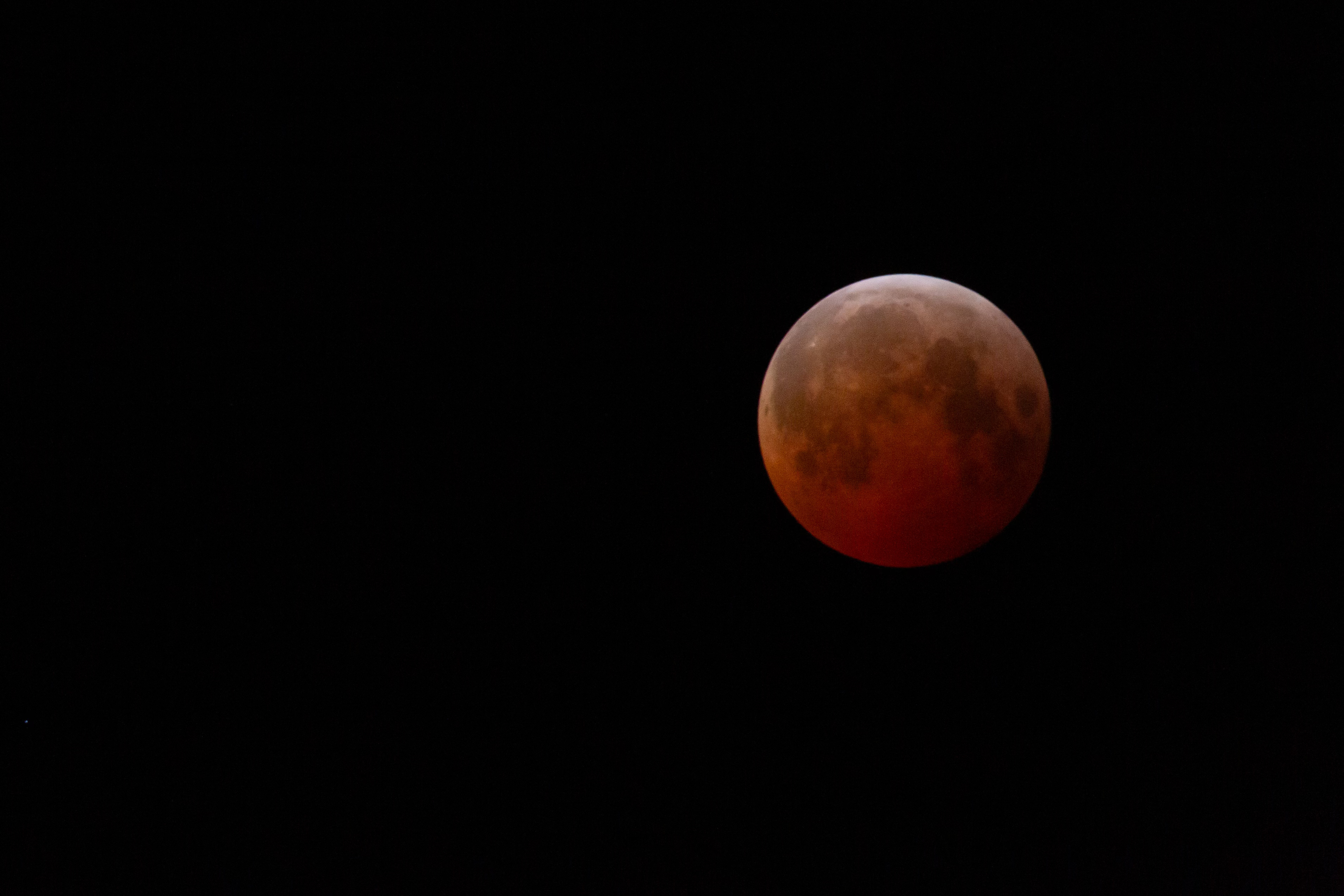
Late at night, under a full moon, take a walk in the snow.
The familiar scenes become new once more. All you’ll hear is silence beyond the crunching of your steps.
Even the shapes of trees look different in the moon’s glow.
Like a reverse image.
Take your time with it, pause often, breathe deep.
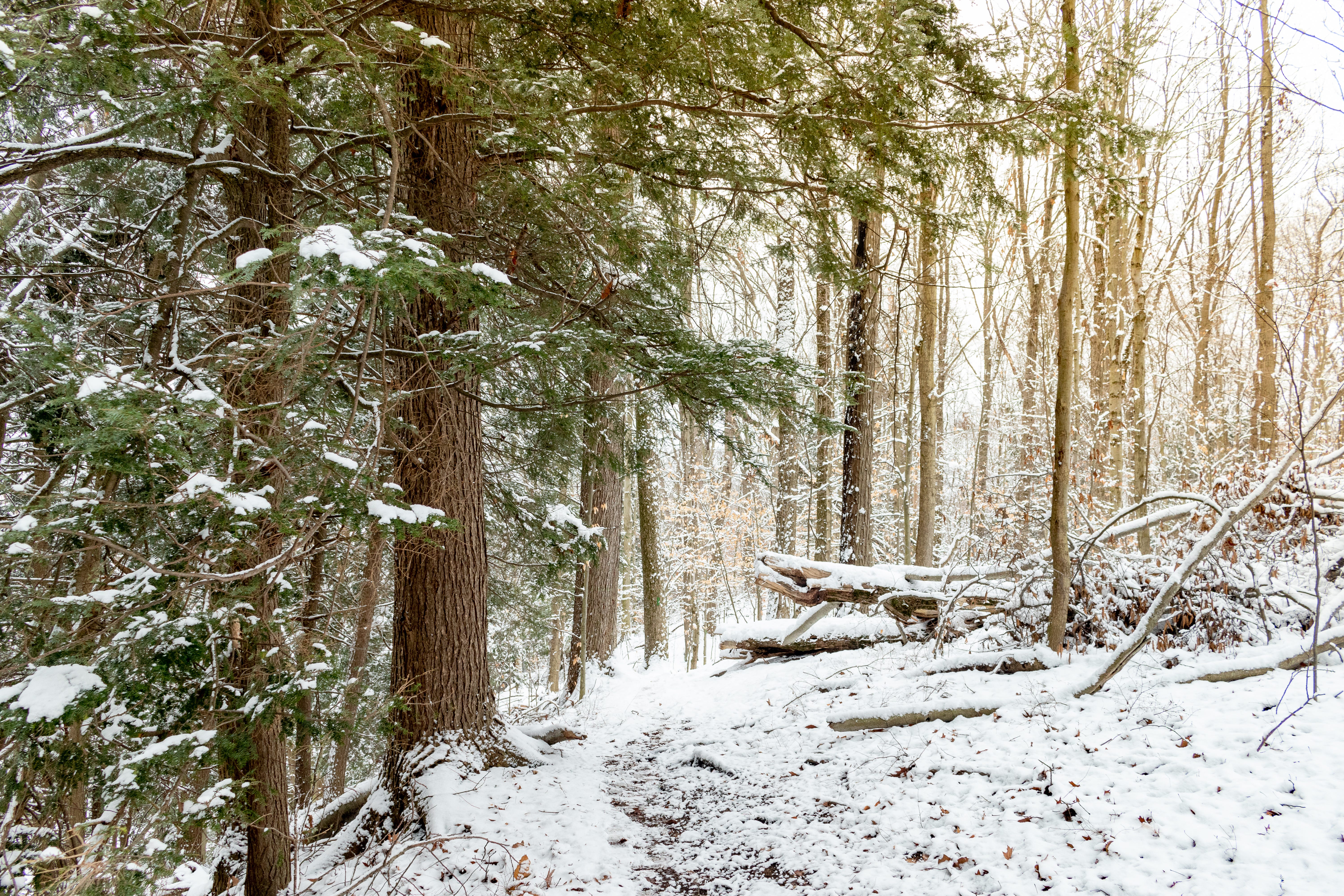
Winter is the great seasonal reset. The Earth is at rest. Most all of the color has faded. A visual quiet fills the eyes.
I’ve always likened the seasons to that of a canvas of a great artist.
The snow, the gesso, prepping the canvas.
The trees and grasses, the rough charcoal sketch.
Slowly as the months come, more color gets blocked in.
The spring ephemerals in their unique beauty come up then the artist changes their mind and they get painted over with water leaf and nettle.
Summer the artist finds some new hues, bright yellows, purples, expanding the greens, the brush strokes get wispier, a field of blooming grasses appears.
Fall comes around and the paints have gotten mixed together, everything turns gold and brown and the dark tones of muddy paint.
Muddier and muddier.
Until once again in late fall the artist decides to start over, and down comes the snow.
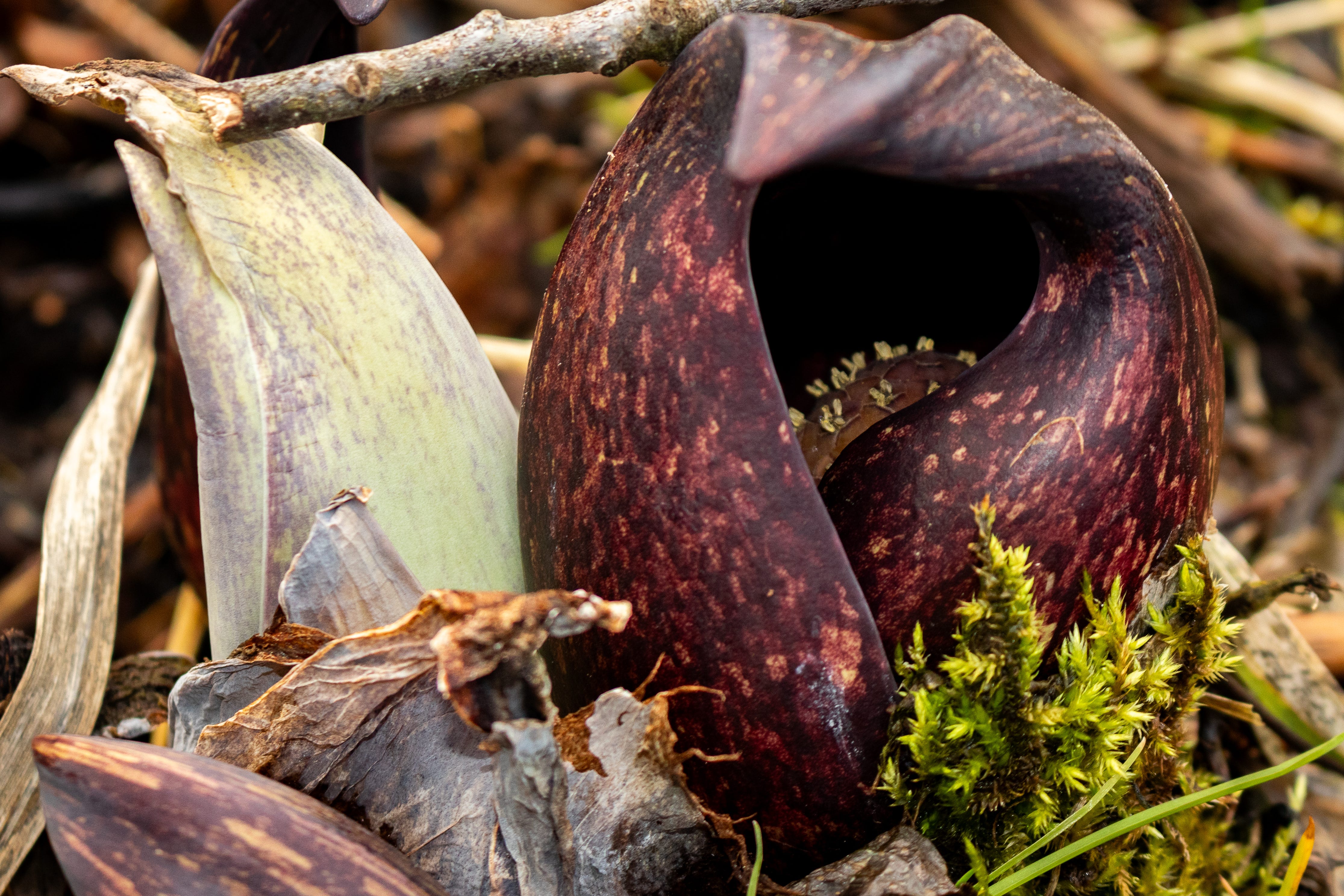
Beginning at the start of the year, the skunk cabbage is the first life to emerge from the cold snow covered ground. Through its rapid growth, its cellular respiration actually melts the snow around it reaching up to 60 degrees fahrenheit! The skunk cabbage gets its name from the smell emitted from the spathe generally after disruption or bruising. This smell is important as it attracts the flies that will then pollinate the spadix - round yellow ball that sits inside the spathe. By late spring, a tight roll of bright green leaves emerge from next to the spathe, slowly unraveling into huge green cabbage-like leaves that will blanket the wet and wooded area in which it lies.
Early Whitlow Grass
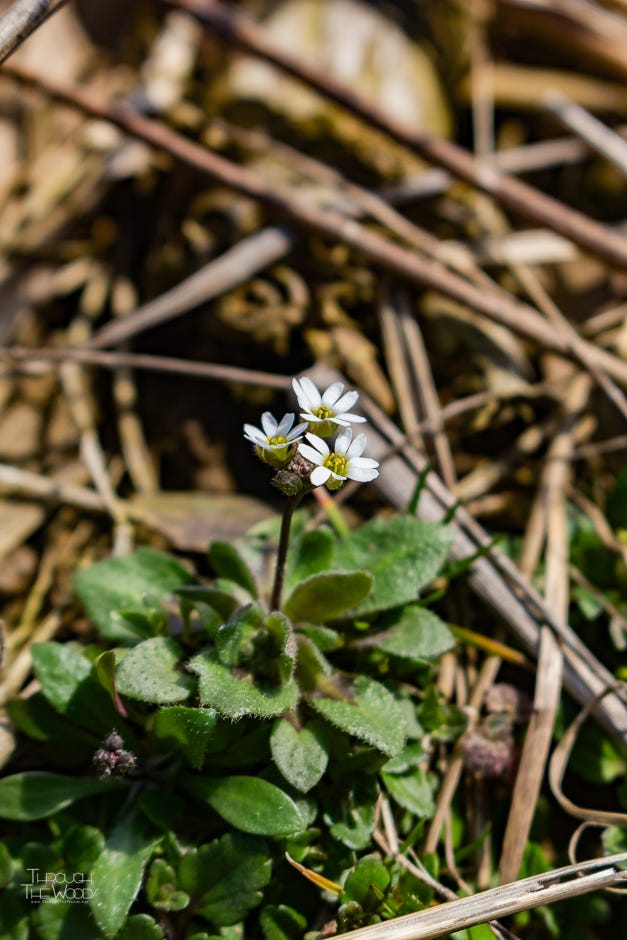
Draba verna, (name recently changed to Erophila verna) is one of the earliest blooming plants, often opening as early as February and blooming through May. It is found in waste areas - the edge of fields, along paths, areas that are often disturbed. The basal rosette is no more than 1 to 2 inches across - this example was no bigger than a 50 cent piece. Originally native to Eurasia, it has made its way across the US (except for a belt across the center of the Country). The flowers are self fertile - which is good as not many pollinators are awake in February - each flower producing very large seeds that drop and can create small colonies. Although the name suggests that it is a form of grass, it is not, it is a member of the Brassicaceae (mustard) family. Once spring passes and summer comes around, the Draba verna withers away.
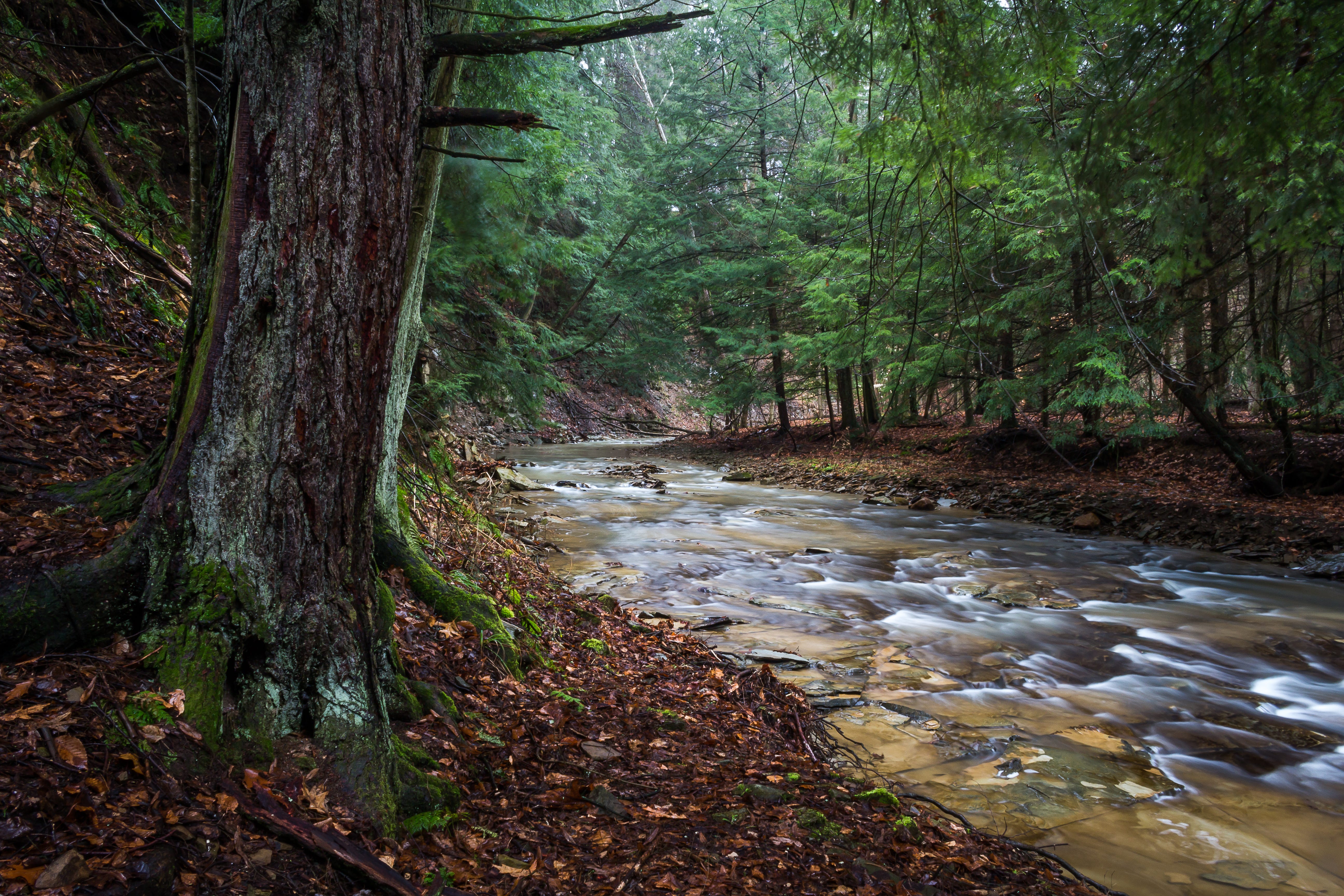
A member of the pine family, this coniferous species can be identified by its unique qualities
Soft “lacy” foliage
Fine rounded needles with white stripe on the underside
Unique small pinecones which hang down from the tip of branches
Grow up to 60 to 75 feet tall, in a pyramidal shape
Habitat
Prefers growing in cool, moist areas. Often found in gorges along sandstone cliffs where cracks in the rocks release cool air from deep underground. A native from Canada, these trees were brought to the area thousands of years ago when the glaciers moved through the area.
Animals
Important resource for food, nesting, and shelter for many animals including - barred owl, white-tailed deer, turkey, grouse, rabbits, porcupines (not around here), and others use as places to live. Squirrels, mice, and voles eat the seeds.
What are lichen?
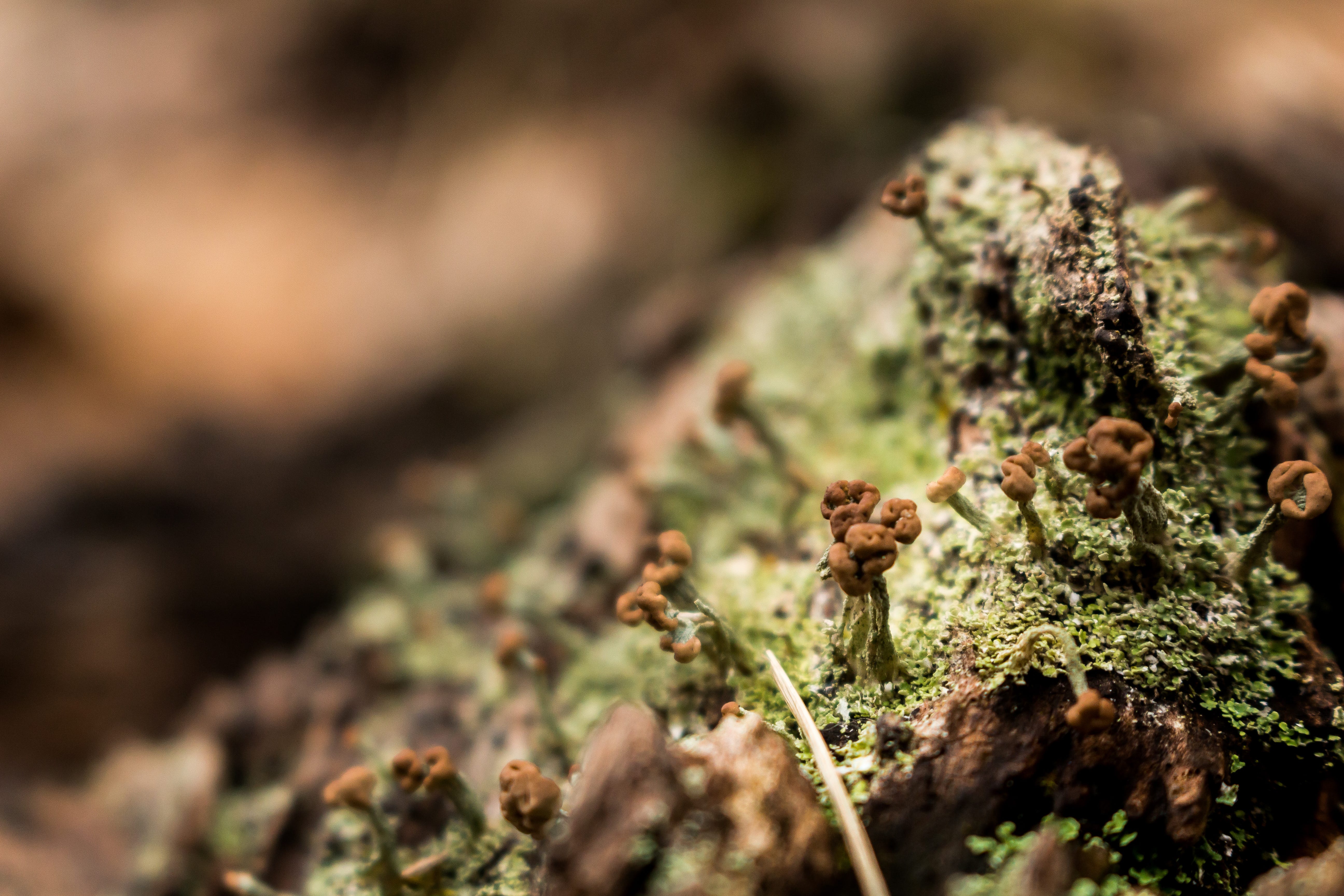
Symbiotic organisms, composed of a fungus and a photosynthesizing partner - could be a green algae (85% of lichen), or a cyanobacterium (formerly known as blue-green algae) (10% of lichen), or a combination of both (5% of lichens).
Fungi + Algae = Lichen
Fungi + Cyanobacterium = Lichen
Fungi + Algae + Cyanobacterium = Lichen
The symbiotic relationship between fungi and algae and/or cyanobacterium is unique in the way that it’s not just beneficial to both partners but both lose their own identity and a new different, dual organism is formed!
There are three different growth forms of lichen
Crustose - Crust-like, tightly attached to that which it’s growing on. Has upper surface but no lower surface.
Foliose - Flat and leaf-like. Can be loosely or tightly attached to surface. Has upper and lower surface.
Fruticose - Upright and shrubby, but sometimes hang down. Most of these lichen do not have a distinct upper and lower surface, but have an outer surface.
We will see you next month with Late Winter inspiration, identification and activities.
Until then, Happy Hiking!
“Live in each season as it passes; breathe the air, drink the drink, taste the fruit, and resign yourself to the influence of the earth.” - Henry David Thoreau
Comments
Nothing yet. Say the first thing.
Sign in to join the conversation.