

Late Winter - Feb 20 to Mar 20
Already we’re feeling the earliest changes in the air. The warmup this past week has melted nearly all the snow, people are out enjoying the sun. You may have noticed on the air the scent of the skunks (or in some instances on your dog). Skunk cabbage is making its first appearances and the witch hazel is starting to bloom. As this month goes on the earliest spring ephemerals emerge - the hepatica, the salt & pepper plants, false mermaid. Winter hasn’t gone anywhere, we will soon be under snow once again, but the brief warmup has been a nice reminder of days to come.
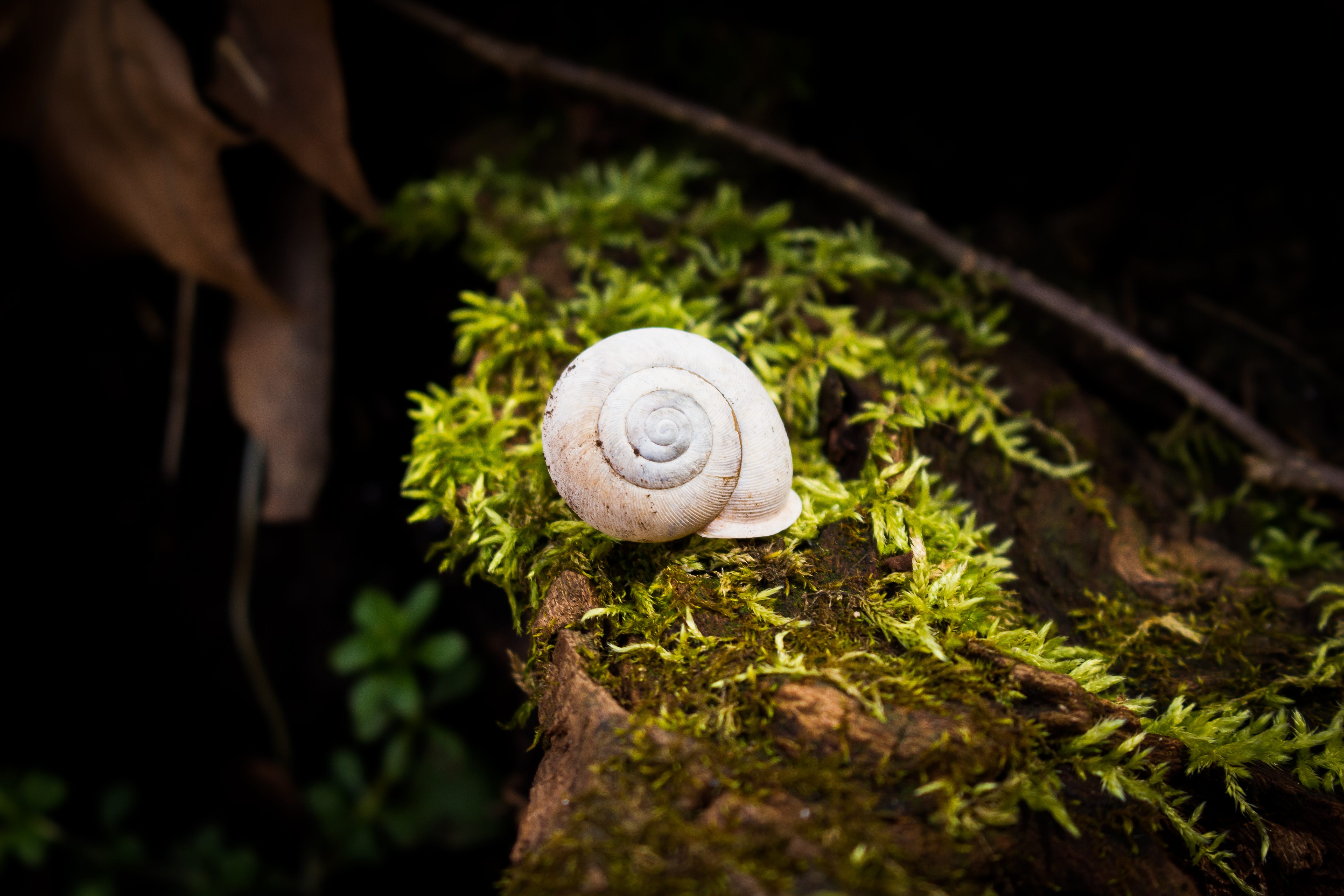
“What good is the warmth of summer, without the cold of winter to give it sweetness.”
― John Steinbeck
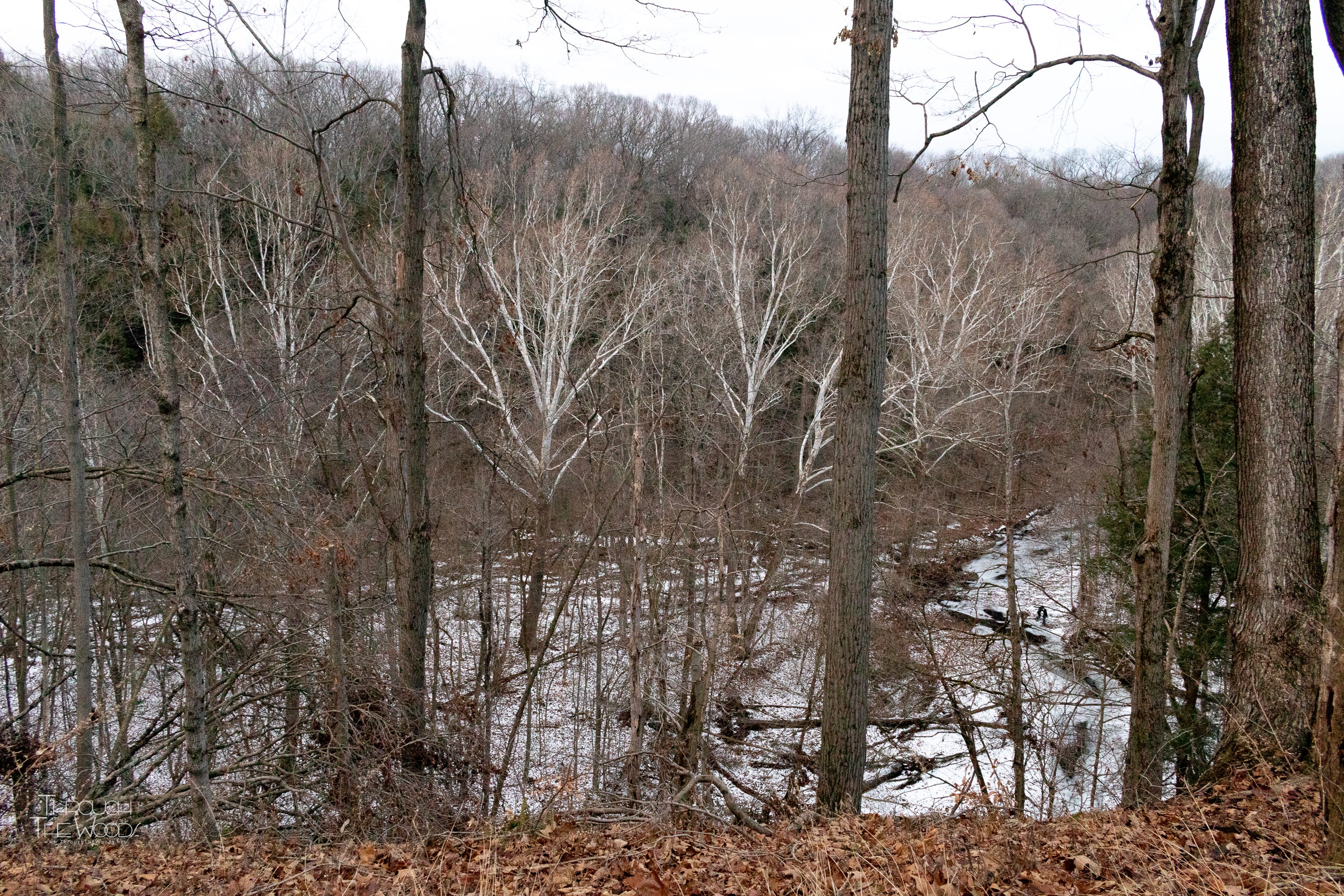
Now is the time to really appreciate the diverse shapes of trees. Check out how the limbs grow, some straight, some twisted, some rise up, others hang down.
Every tree species has its own distinct shape.
Start with the trees in your yard, the ones you are familiar with, look at the branches and how they divide, smaller and smaller.
See if you can find other similarly shaped trees.
What trees stand out to you?
Harbinger of Spring
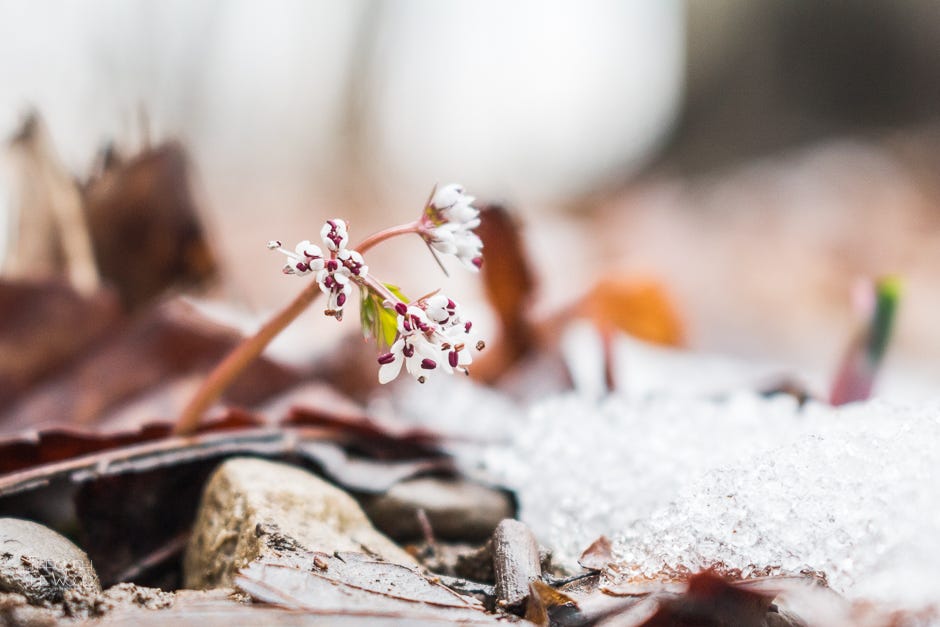
Erigenia bulbosa, aka Harbinger-of-Spring, aka Salt-&-Pepper Plant, is one of (if not) the first wildflowers to bloom. It is native to the Eastern US, blooming anytime from January to May among the leaf matter in deciduous forests.
Turkey Tail
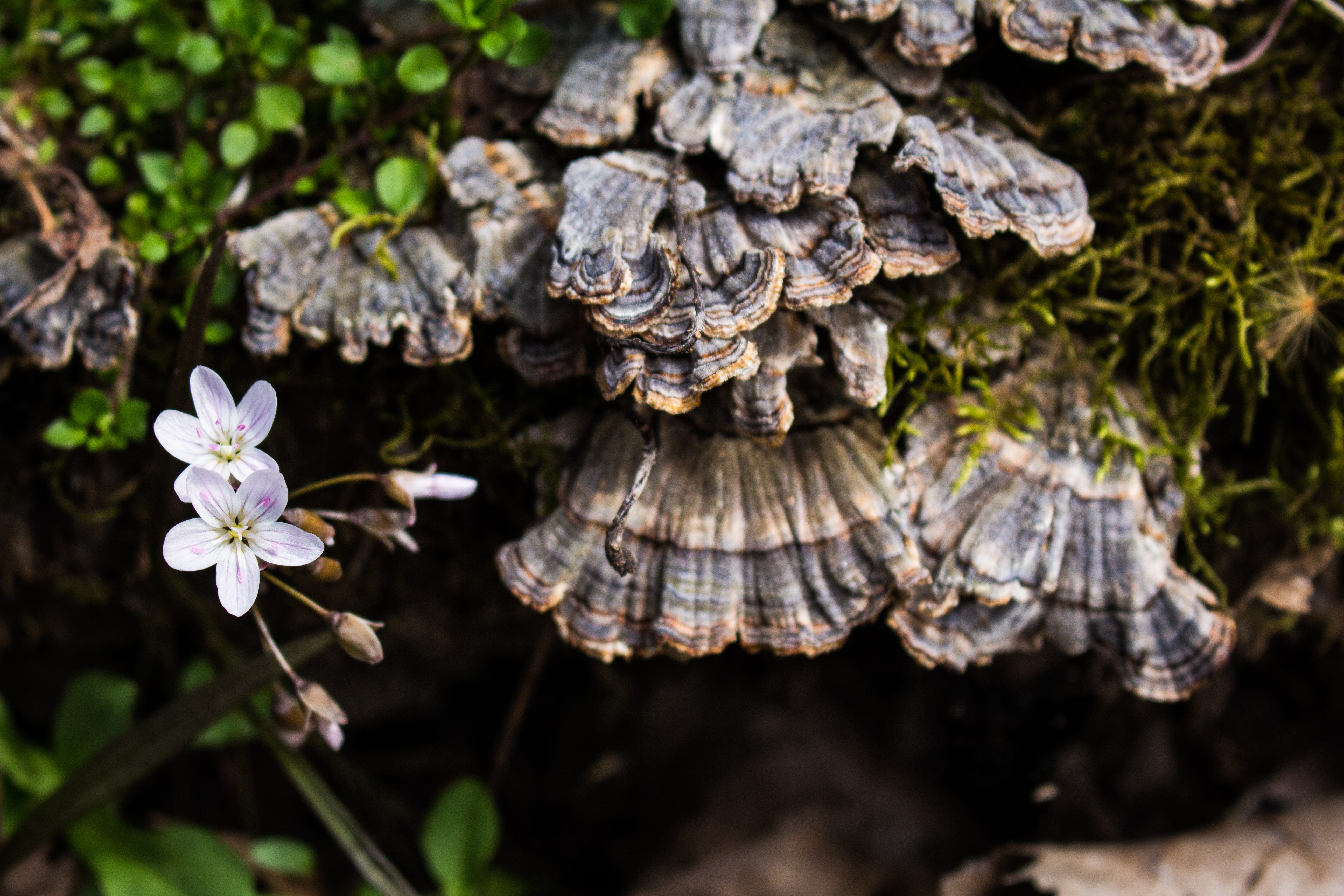
One of the most common fungi is the Turkey Tail. It is easy to identify by its highly zonate (separate concentric color zones) patterning... or so you may think.
At the link below we’ll go over the characteristics of the True Turkey Tail (Trametes versicolor), as well as five others that look quite similar but are in fact completely different!
Scarlet Cup
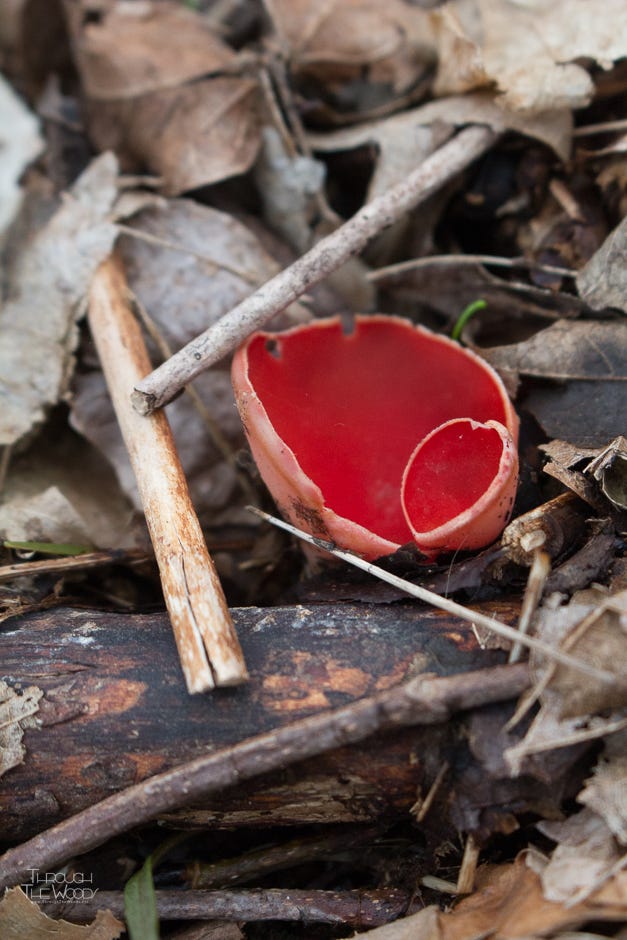
(Sarcoscypha dudleyi(?) or maybe S. austriaca(?) not S. coccinea as it doesn’t grow in the Eastern US - Microscope is needed to differentiate between the three).
Better known as: Scarlet Elf Cup, Scarlet Elf Cap, Scarlet Cup Fungus.
Found in damp forests in early spring this is an abundant fungus that can easily be spotted due to the bright red coloring that stands out against the leaf litter.
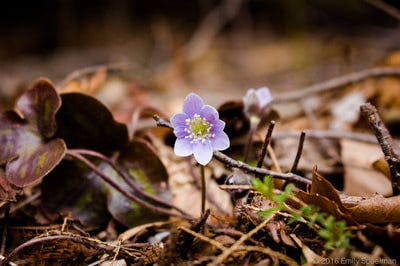
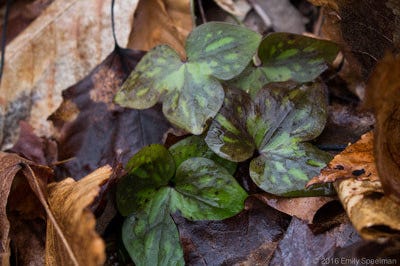
There are only two species of hepatica in North America, both live in the same area: the sharp-lobed and the round-lobed hepatica. Both species look the same except for the three deeply lanceolate lobed leaves are either pointed at the end or rounded.
Each plant plant has several slender, hairy stalks that lead to a pretty flower of five to nine petal-like sepals.
Fun fact- there are no true petals on these flowers, instead they're classified as sepals
"Usually green, sepals typically function as protection for the flower in bud, and often as support for the petals when in bloom."
These flowers come in a variety of colors - white, pink, purple, and blue!
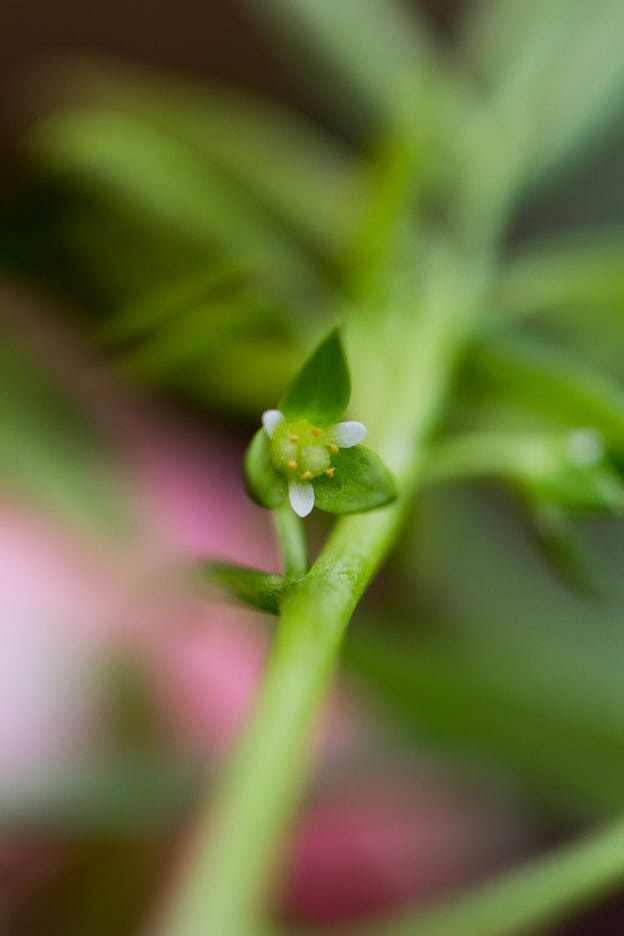
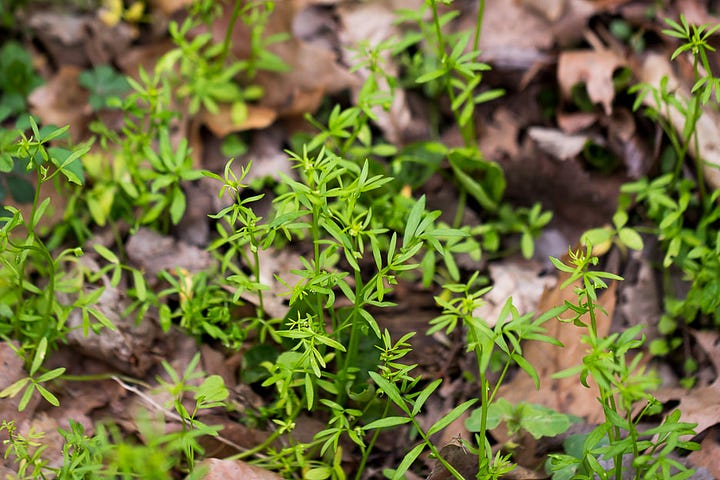
False Mermaid is a very fine delicate native wildflower with tiny green flowers along a long stalk. It is found in loamy soils where it receives dappled light through the forest canopy.
In early spring you can find it blanketing the forest floors here in Wayne County.
It is a species that is threatened by the spreading invasive Garlic Mustard.
We will see you next month with Spring Equinox inspiration, identification and activities.
Until then, Happy Hiking!
“Live in each season as it passes; breathe the air, drink the drink, taste the fruit, and resign yourself to the influence of the earth.” - Henry David Thoreau
Comments
Nothing yet. Say the first thing.
Sign in to join the conversation.