
This is the long overdue follow up to my article on how to save money on groceries. One of the ways my family saves money is by reducing our trips to the grocery store by only doing one big shopping trip per month. Whenever I mention once-a-month shopping, I get alot of questions.
Not only does shopping once a month save me money on the gas it would take to drive to the grocery store every week, but I find that with shopping once a month, I spend less money than if I tried to shop once a week. Grocery shopping comes with the temptation for impulse buys, and so limiting my trips to the store cuts down on that temptation. I also keep more careful track of what I actually have left in my pantry, so that I’m less likely to buy something that I actually already have at home.
I had once-a-month shopping modeled to me by my mom when I was growing up - we often went shopping just once a month, with short stops in between for perishables. It was natural to continue doing my shopping that way as an adult.
1. A deep freezer. It is an advantage if you want to grocery shop just once a month to own a big deep freezer. If we didn’t have one, it would be more challenging to go a month between shopping trips. We have had a deep freezer for our entire married life because we are a hunting family, and we need a big freezer to store our supply of meat for the whole year. I use the deep freeze for more than meat; I buy alot of fruits and vegetables in frozen form, and I freeze our bread. I buy big bags of cheese and freeze half of it until we need it.
Another benefit we have - which is not an essential but is really helpful - is that we have a second fridge in our garage. It’s an old fridge that was left there when we moved into our house, and it still works great, so we use it for extra space for items that need to be refrigerated. You could definitely shop once a month without two refrigerators - I did for years. A second freezer, on the other hand, is probably necessary if there are more than 2-3 people in your family.
2. A place to buy in bulk. Since we shop once a month and have a larger family, buying in bulk is a must. We have a Sam’s Club membership, and we get alot of our most used items there - cheese, honey, eggs, apples, peanut butter, etc. It saves us money, and I don’t have to worry so much about running out of an item before the month is through, since we are buying bigger quantities.
3. A place to store food. It was alot harder to buy a month ahead at our old house because we didn’t have a pantry and we had limited cupboard space in our kitchen. I ended up storing alot of bulk items in our laundry room. You need room to store a month’s worth of food, but unless you live in a house with very limited space, you can get a little creative with storage and still make it work.
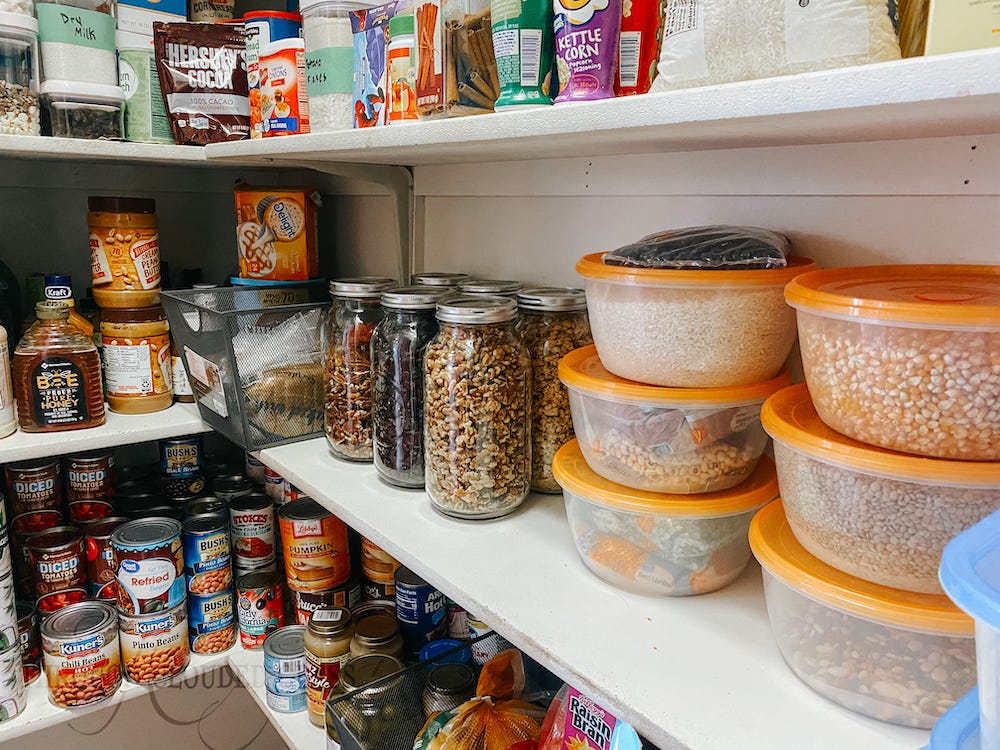
At the beginning of the month I go through our pantry for ideas of what I could make over the next month using food I already have. It always surprises me how many options I come up with before even going to the grocery store! Then I start my grocery shopping list by filling in the ingredients that are not in my pantry.
There are several items that I know we are going to need each month, regardless of what I end up making for dinner, so those go on the list. Typically it’s these items:
Basic Ingredient List
Frozen chicken
Frozen sausages or meatballs
Ground beef (when we don’t have game in the freezer)
Cheese
Bread
Cereal
Oatmeal
Rice
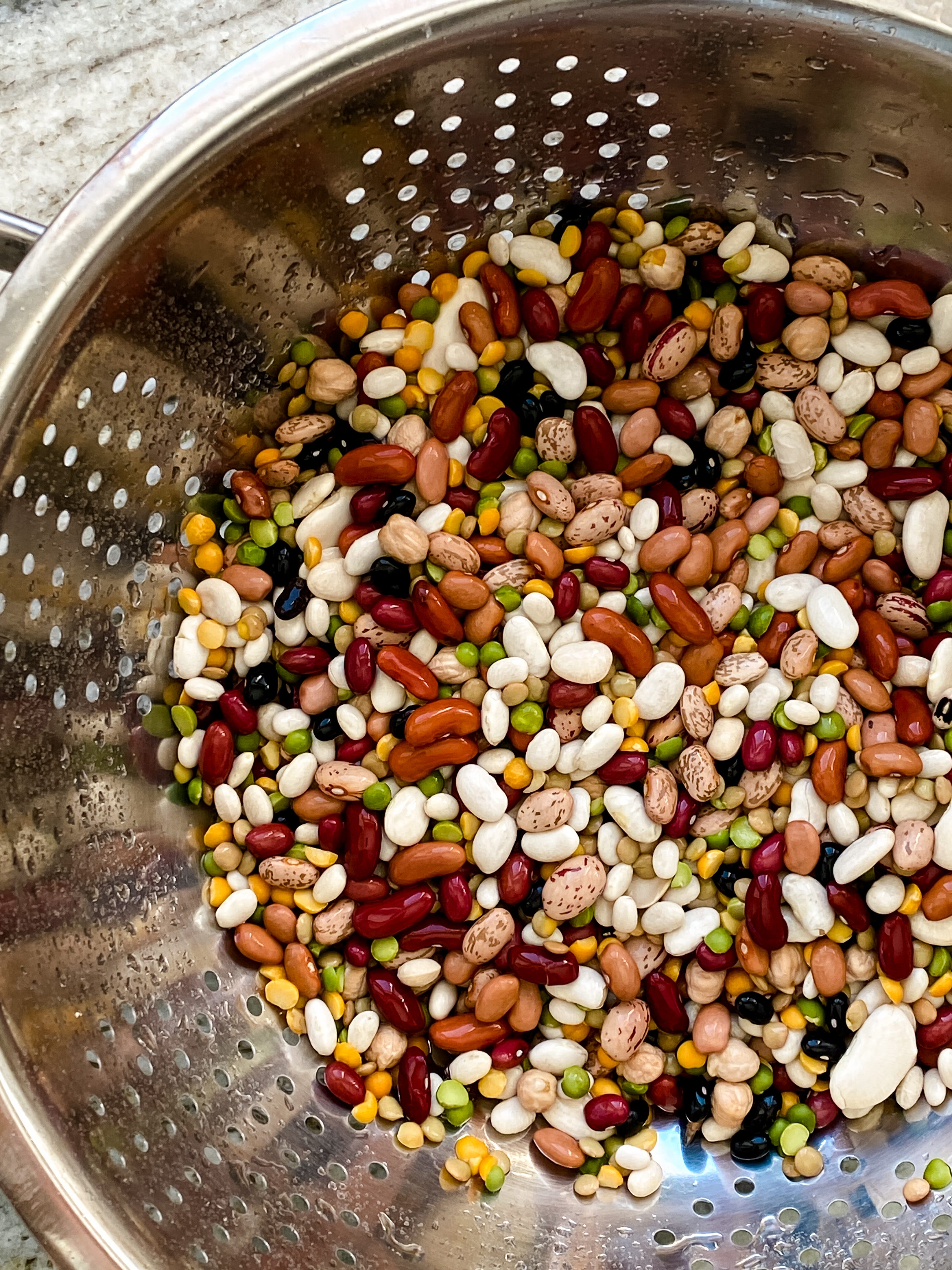
Beans (canned or dry)
Canned vegetables
Lentils or quinoa
Noodles
Pasta sauces
Broth
Tortillas
Frozen Vegetables
Frozen Fruit
*Some Fresh Produce
Peanut Butter
Canned jams/jellies
Honey
Sugar
Flour
Eggs
Butter
Olive Oil/Coconut Oil
Vinegar
Milk
Sour cream
Yogurt
Cottage Cheese
Extras (for baked goods):
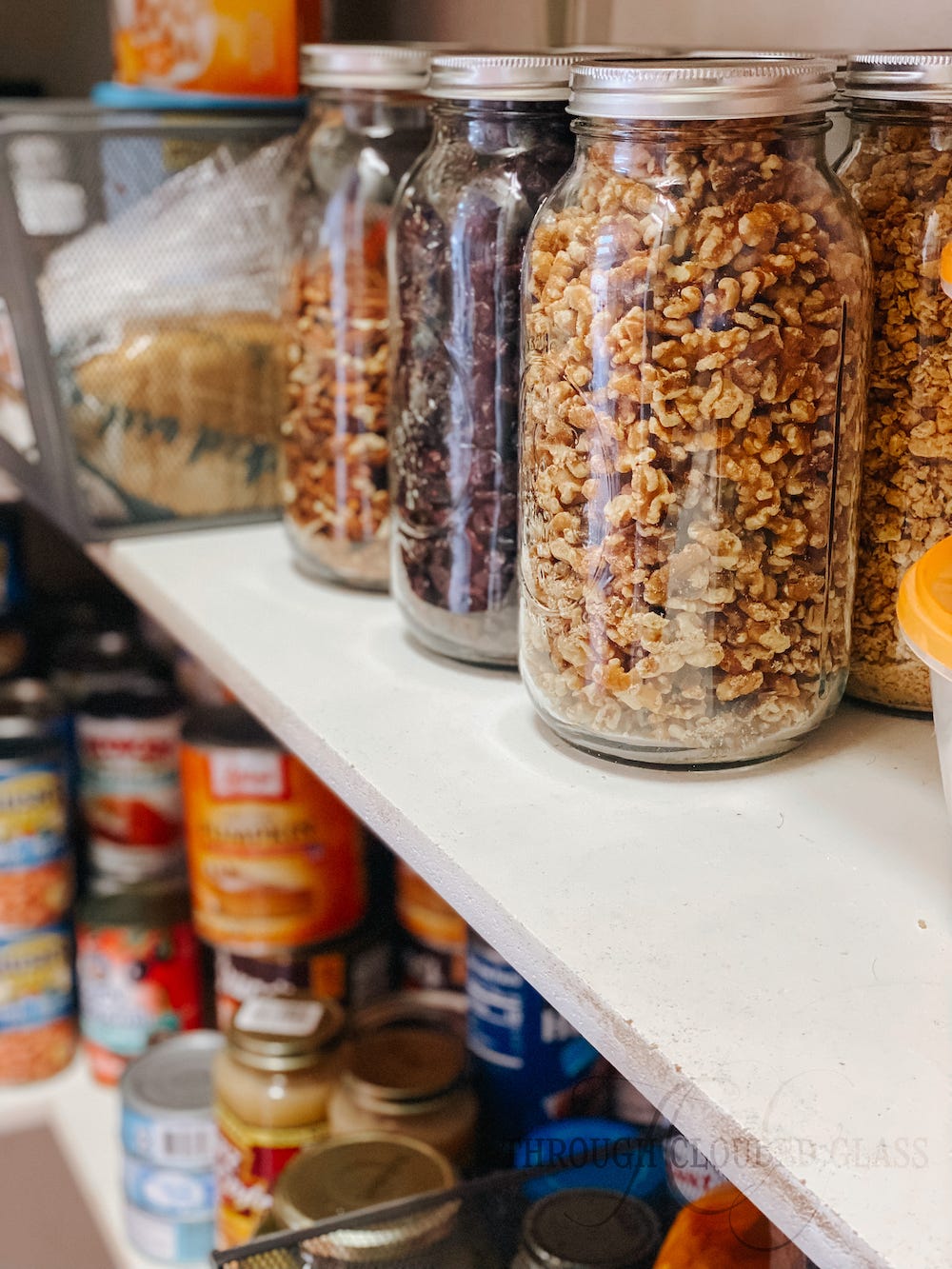
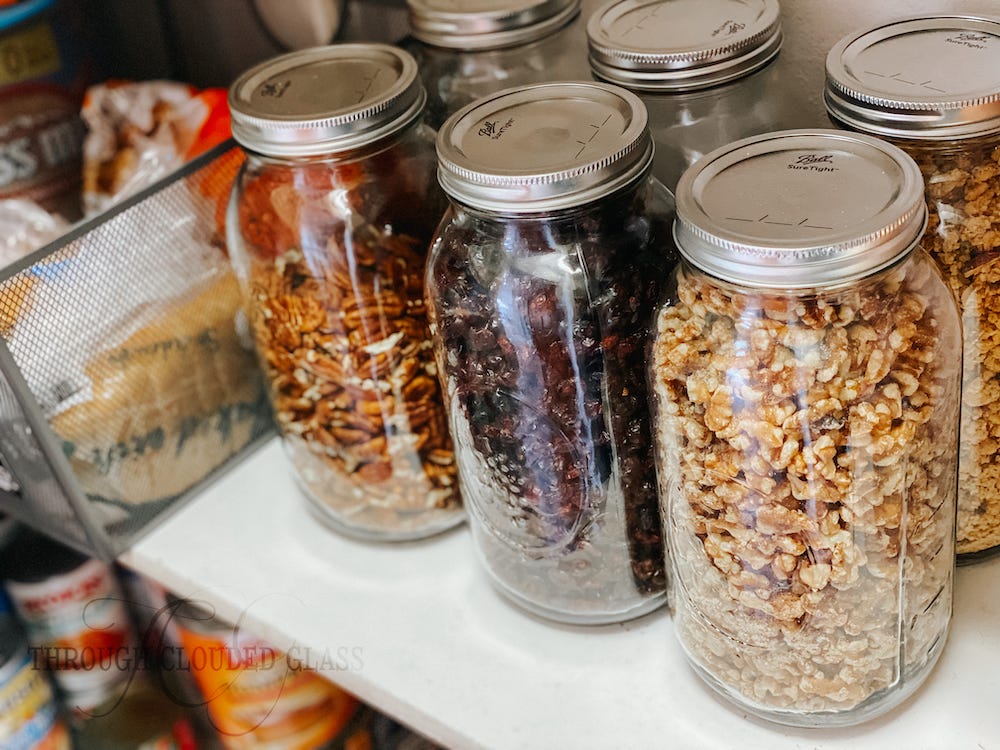
Nuts
Raisins
Craisins
Chocolate Chips
I used to make a detailed list with price estimates and take an entire day to shop in person, including stops at several grocery stores. But in 2020, many grocery stores started offering grocery pickup, and that is how I shop now. Shopping online before actually going to pick the food up, and I believe it saves me even more money because I can see exactly how much everything will cost before I check out. It gives me time to fine-tune my list to fit in my budget. You can read more about this in my article on how to save money on groceries here:
How To Save Money On Groceries
·
November 10, 2025

Our family has never paid more than $200 per person per month for groceries, and we are often well under that amount. Whenever I mention that to people, I get questions about how we manage to spend so little on groceries each month. In this post I am going to give you all my tips and tricks for saving money on groceries. If you aren’t doing any of thes…
As I mentioned, there are alot of items that we end up freezing each month.
-All the meat that is purchased goes immediately into the freezer.
-Bulk bags of cheese are opened and separated into two freezer bags. We put one into the fridge to use, and one in the freezer, ready to be pulled out when we need a fresh bag. We also freeze extra blocks of cheese, though it does make block cheese crumbly, so we don’t freeze unless we have to.
-We freeze all loaves of bread and tortillas that are not going to be used right away.
-I freeze any fresh produce that is freezer-friendly and that I know we won’t be using right away.
Aside from freezing, I also have these five gallon buckets with gamma seal lids for my grains, flour, and rice. It’s a safer way to store larger quantities of dry goods to ensure mice, moisture, or insects don’t get into it.
Usually a couple times of month we make a very quick stop at the store for perishable items that won’t last the whole month, like milk. We may occasionally have a craving for a specific meal, or I might have missed something on my grocery shopping trip, and we’ll buy ingredients for that specific meal. But for the most part, we don’t have to do a shopping trip until the beginning of the next month.
As I mentioned, we do buy alot of vegetables and fruits frozen, or freeze certain things ourselves - for recipes that call for vegetables, such as soups or casseroles, frozen vegetables are easier to store and work just as well. We use frozen berries for our cereals and yogurt, and frozen fruit for smoothies. Frozen produce can keep in the freezer for quite a long time, and the affects to the nutritional value are negligible, so you are still getting most of the benefits of fresh fruits and veggies.
Some produce actually does keep quite well in the fridge. For instance, we buy carrots, apples, onions, and oranges fresh and keep them in the fridge, and they easily last most of the month before looking a little wrinkly or old. Potatoes last really well just in our pantry. I buy alot of peppers (bell peppers, jalapeños, etc), and they keep for around 2-3 weeks in the fridge.
With produce that does not keep as well (tomatoes, cucumbers, etc.), if I bought them for a specific meal, I make that meal toward the beginning of the month. For certain produce that we might like to have on hand, like bananas, I’ll just buy some when we make our 2-3 milk stops during the month.
I also live in a dry climate, which I’m sure helps with food spoilage as well. I imagine areas of higher humidity may be worse for produce longevity.
No! I end up planning some meals, but in a general sense. I know what kinds of meals we like to eat, and I buy the basic ingredients for those meals, but without planning anything down to the day.
I think through the ingredients I have and come up with a list of possible meals for the whole month - a sort of a list of options. It’s usually a list of 15-20 meals that I could potentially make (because I know there will be leftovers, nights eating out, nights that we just wing it, etc). Then I make sure I have all the ingredients on hand for those meals (plus usually a few new recipes I want to try).
Typically the meals we like to eat are different arrangements of alot of the same basic ingredients (see my basic ingredient list above). If I have those on hand, I can make most things I want to make for the month, without having to plan out every detail.
If you have a good amount of freezer/refrigerator space and are currently shopping once per week, you could start by stretching out your grocery shopping routine from one week to two weeks between, and see how it works for you. If it goes well and you like it, you could move to three or four weeks next and see if you find it helpful.
If you don’t, that’s fine too! Shopping once a month won’t work for every family. It works for us because (1) we live in a rural area about 40 minutes from the nearest big town, (2) we eat rather simply (no special diets for anyone in our family), and (3) we have a good amount of freezer space, and (4) I get particularly tempted to buy “extras” when I am in the store, so being in the store less is very helpful for our budget. You may not have the same situation, benefits, or struggles that we do, but if you think shopping less often would help you, start slow until you find that sweet spot for your family.
Comments
Nothing yet. Say the first thing.
Sign in to join the conversation.