
My FYP was full of drama about the Set Active x Parke collaboration drop in late October. And if you’ve never heard of these two brands or the drama until today, that was me back in October when all of this randomly popped up on my feed, so let me catch you up. Set Active is a Baby Millennial, Gen Z activewear brand launched in 2018 by Lindsay Carter, and Parke is a Gen Z denim brand launched in 2022 by Chelsea Parke, both of which have a massive cult following. So it was all the rage when these two powerhouse female-founded brands teamed up for what was going to be an epic drop - Set x Parke, an 8-piece capsule collection of leggings, sports bras, a linen set, and two sweatshirts, the most coveted of them being a reversible logo mock neck sweatshirt that has “PARKE” written on one side and “SET” on the other.
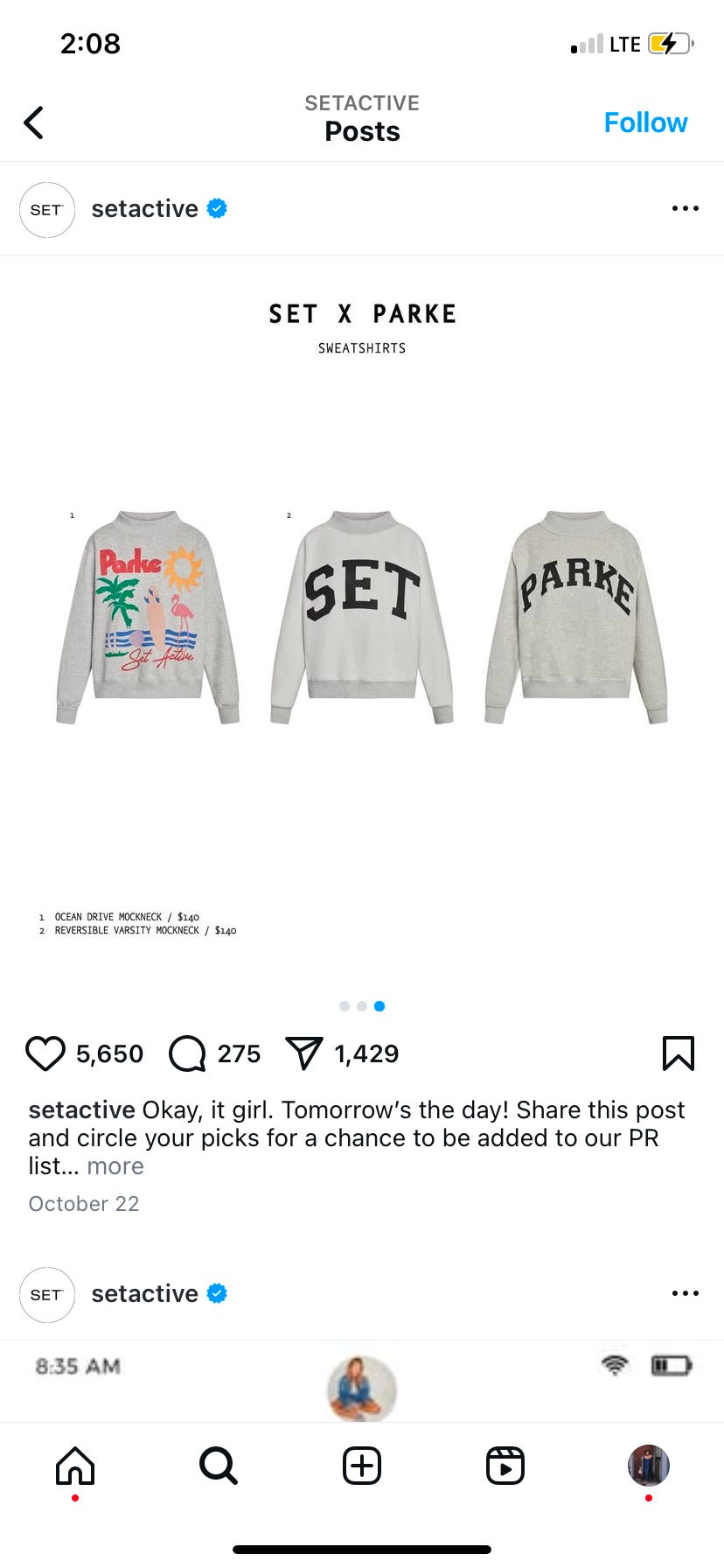
The day of the drop was October 23rd at 1 PM sharp and the anticipation was at an all-time high. All the Set Active and Parke girlies set multiple alarms and blocked off time in their schedules; because mind you this was a work day, had their credit cards in hand and fingers hovering over their keyboards to quickly add to cart. And the day of the drop was epic….but not for the reason anyone expected. Within seconds, the Set Active website would crash resulting in thousands of customers unable to get their hands on the coveted sweatshirt causing my FYP to erupt into mass hysteria - girls sat with vacant expressions in front of their computers, and a few were even in tears over their inability to obtain the goods. Lindsay, the founder of Set Active, addressed the issue regarding the drop and announced that pre-orders would be available, with shipping expected within eight weeks—but likely sooner—from the drop date, and with that, my FYP died down.
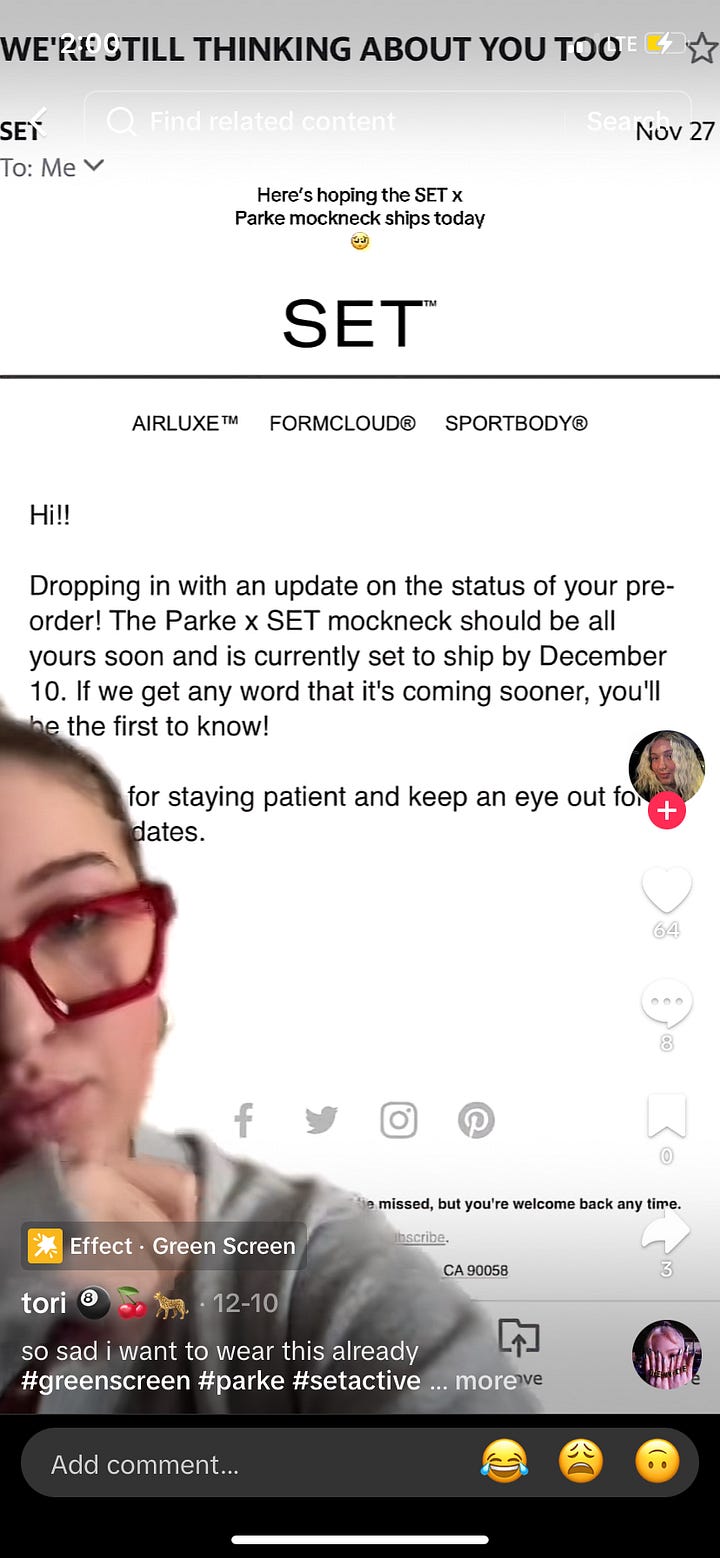
But a few weeks ago, frustrations reignited when pre-ordered customers received notification that their shipping date was pushed back from December 10th to December 20th. Video after video again flooded my FYP with customers expressing their discontent. While Set Active and Parke attempted to ease frustrations by offering a 25 percent off coupon for future purchases—code "wearesorry25"—it was only applicable after a second Set x Parke drop during Set Active's “Setmas” celebration. A decision that further enraged customers, who felt it was in poor taste to push forward with the second drop while the previous drop orders remained unfulfilled. And as a result, some reached out to Set Active’s customer service to cancel their orders, while others voiced concerns about the overall culture of drops.
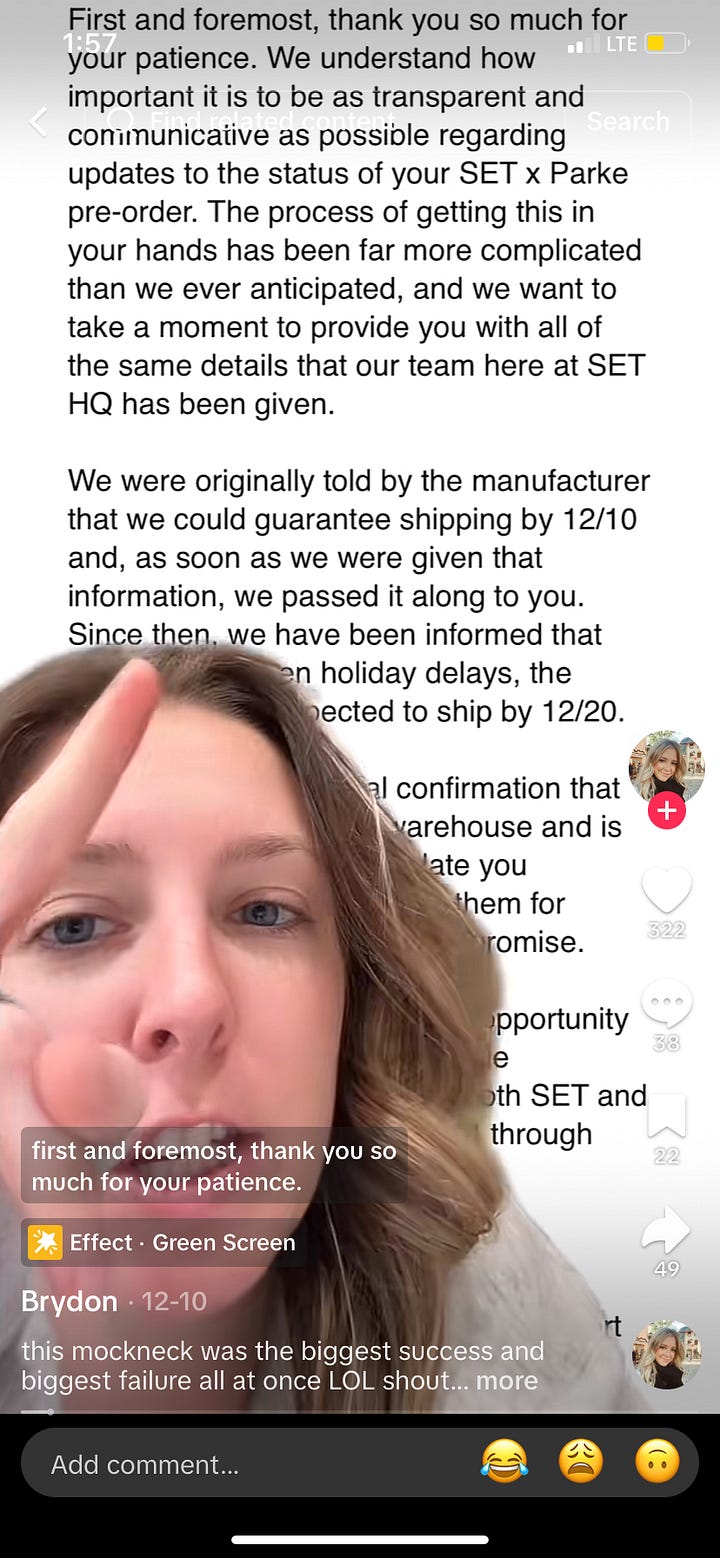
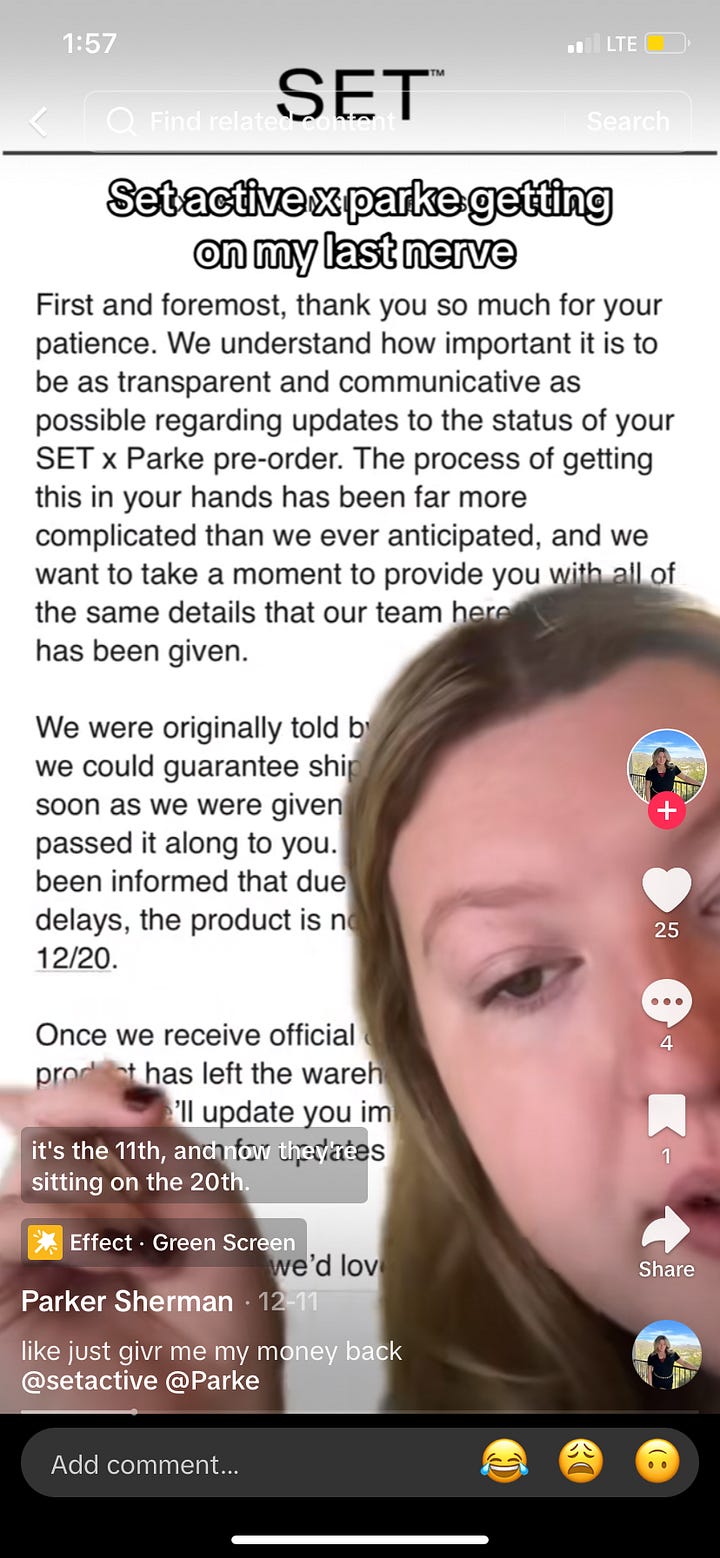
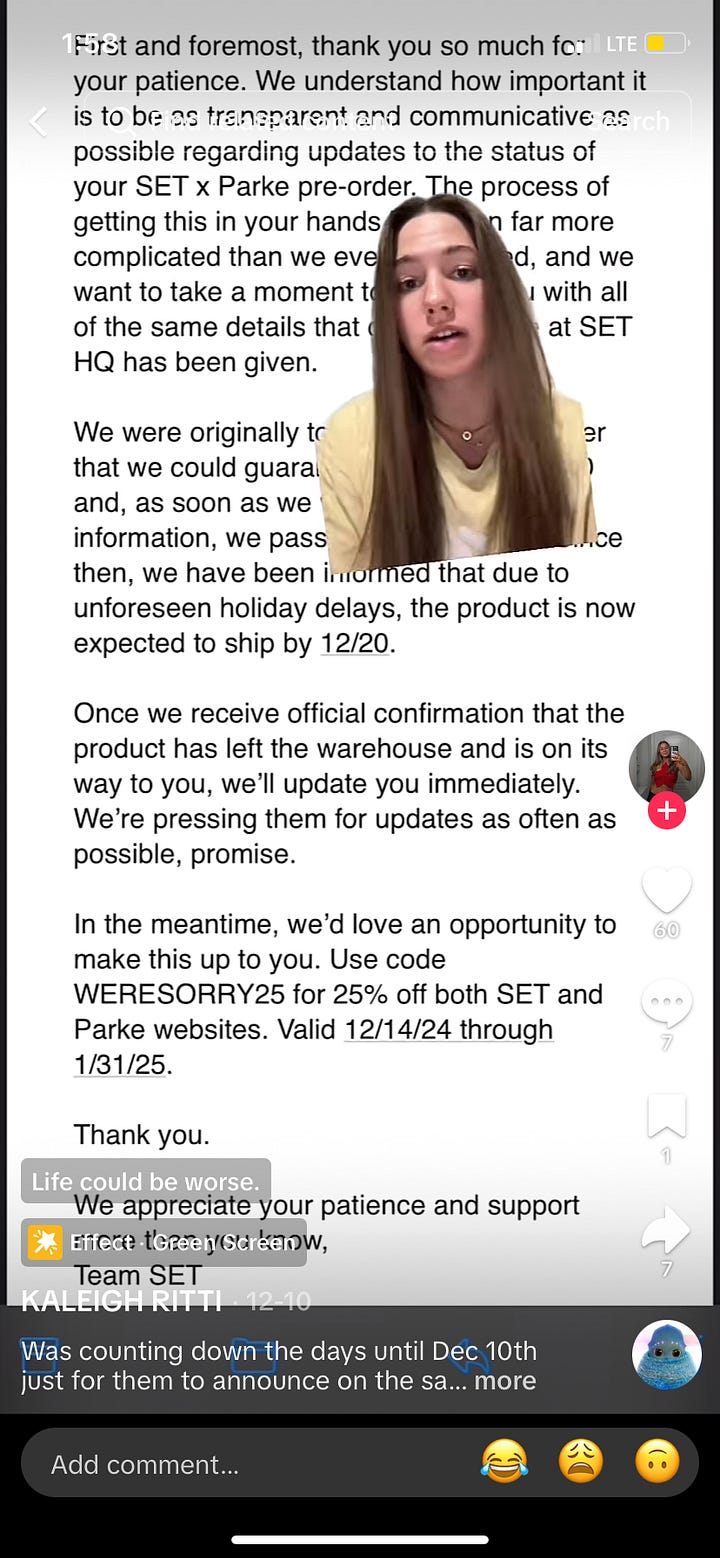
Over the last few years, drops have become an integral part of a brand’s business model. From the many collab drops from Supreme to most recently the North Face x Skims collaboration, more and more brands are leveraging this strategy to create buzz and engage with their customers in a new way. But drops aren’t a concept, and this Queue-it article outlines the history of this practice and its evolution. Growing up in the 90s, I remember the hallway chatter surrounding a Saturday morning Jordan drop—what we older millennials called a release. Kids sacrificed sleep to be first in line, waiting for HOURS to snag the latest pair of J’s, and the rest of us holding our breath all weekend, eager to find out who managed to score them. What a time to be alive!
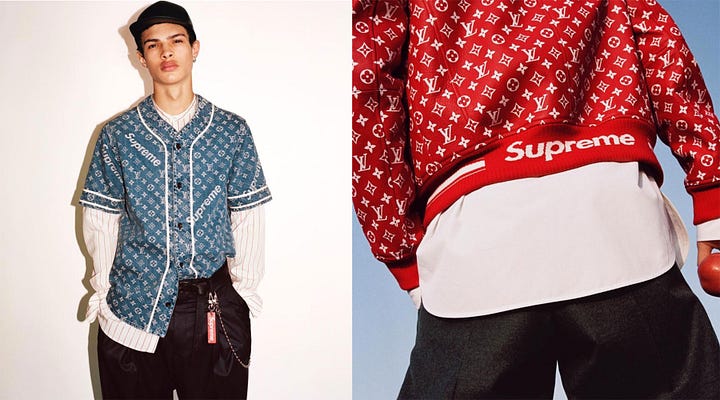
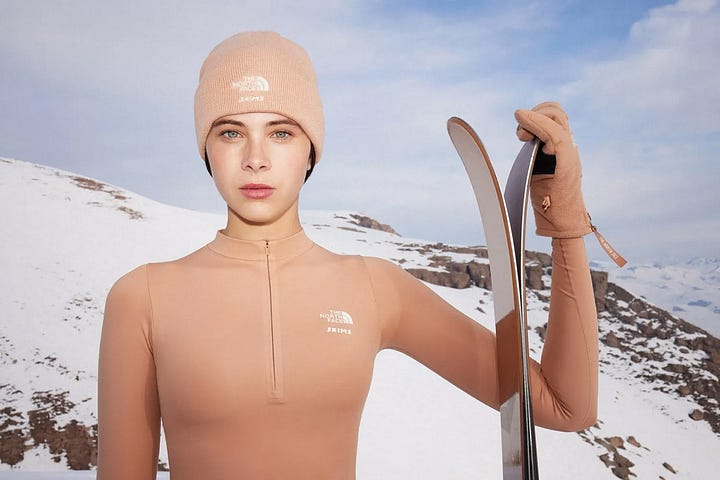
However, the difference between drops in the ‘90s and how many established brands use them, by way of partnered collabs, is that some emerging brands are built on that business model. Brands like Daily Drills and Dairy Boy have structured their business models around weekly or monthly drops, which is negatively impacting their consumer base. In a TikTok post on October 23rd; the day of the first Set Active x Parke collaboration drop, creator Allegra Jacchia, expressed her frustration with brand drop culture saying, “I can’t keep up, my wallet can’t keep up and it’s giving me so much anxiety.” She says she did attempt to purchase from the drop but ultimately removed herself from the situation only to find that two other brands were doing the same thing and asks the question, “When did shopping become so anxiety-inducing?” and the reactions to her post echo the same sentiments with one commenter saying, “Daily Drills, Dairy Boy, Parke, Set, like I am TIREDDFFF” and another saying “It’s getting out of hand honestly”. Feelings like this are not isolated to this post which begs the question: Is this the end of drop culture?
I spoke with Julie Turkle, who’s spent the last 30 years in licensing and luxury collabs, about her take on the Set x Parke drop and drop culture in the future.
“It seemed they just weren’t prepared”, Julie says of the first Set Active x Parke drop. “They built this collab up and didn’t prepare for everybody to pull through. It’s a delicate balancing act when you have this kind of strategy, releasing collabs sporadically or monthly because you’re getting everyone excited, by sharing the behind-the-scenes, product samples, photo shoots, etc. - something influencers do best, so they can buy. But when you're not prepared, there comes a tipping point where people will get upset and the strategy backfires.”
Not being prepared is something Linsday, founder of Set Active, acknowledges, in a way, saying in the comments of her apology video that product orders were placed in advance, and neither brand could predict the virality that came during the marketing rollout. But you would think with each brand in their own right having such cult followings that have caused individual drops to sell out, they would’ve over-prepared. And this line of thinking led some customers to believe that the lack of product was pre-mediated to drive more sales, and it’s not a far-fetched idea. Brand drops heavily rely on FOMO marketing, a strategy that capitalizes on people's fear of missing out to drive consumer engagement and action. The point is to create a sense of urgency around the drop - it’s a limited-edition style that will never come back, to get your customers to scramble to be the first in line to buy. It’s a bit aggressive with the frequency of promotion to the launch date and focuses less on the product and more on what it means to have it, often leading customers to abandon the tiny bit of reasoning and critical thinking most have when making purchases. And it’s rumored that brands will intentionally have limited quantities for their drops causing them to “sell out”, to keep customers on their toes who missed out as they wait for the next one - which is often the following week.
And this strategy works.
“While I can’t say for sure this is what happened here”, (speaking of the Set x Parke drop) Julie says, “brands that have this drop collab strategy feel like not having enough can work for them, there is some game to this whole thing but in the long run, I don’t see how that can be sustainable”. And this is the issue brands like Set Active and Parke are facing. In a TikTok from creator Ali King says she thinks continued use of this method will, “piss off a lot of people that are just not gonna be returning customers.” And this sentiment tracks, with some customers, now vowing not to shop with either brand and other brands that use this selling model moving forward. But for every customer who cut them off, they still have die-hard fans who saw this drop debacle as a positive saying under Lindays apology post saying, “Not your fault your brand is so good everyone wanted”, “This drop was amazing and you should be proud” and the ever popular, “They can never make me hate you”. The question is, will the bad about this drop and drop culture outweigh the good? Will brands start to see an uptick in negative online chatter about it and a dip in sales forcing them to abandon cart?
From a branding perspective, there is still potential for brands aiming to integrate this into their business model that won’t piss their customers off. According to Julie, brands must get ready for the sale by informing fans in advance, being transparent about limited stock, developing a pre-order strategy beforehand, and potentially providing early access to dedicated fans.
From a customer standpoint in Ali King’s words “Women want to be able to buy something without our cortisol going through the roof”, time will tell.
Thanks for reading thoughts from my voice memo! This post is public so feel free to share it.
editors note: as of this posting, customers have started to receive their sweatshirts from the October drop and all is calm again.
No posts
Comments
Nothing yet. Say the first thing.
Sign in to join the conversation.