
Why are you re-reading Harry Potter again, Samantha?
It’s for kids, you say.
Read some real literature for a change, you say.
Plot holes, you say. Too many adverbs. Needless endangerment of children, you say.
Listen. I’m not interested in your lame opinions on any of that nonsense. If you have anything negative to say about Harry Potter, I’m gonna stop you right here. You probably don’t like me and I definitely don’t like you, so just get out (I’m talking to you, Mom).
Anyway, I digress. Why am I reading Harry Potter again? Besides the fact that the Wizarding World is one of the most wonderfully immersive fictional places ever written?
Because Harry Potter is the single best hero in YA fiction ever written and I will die on this hill.
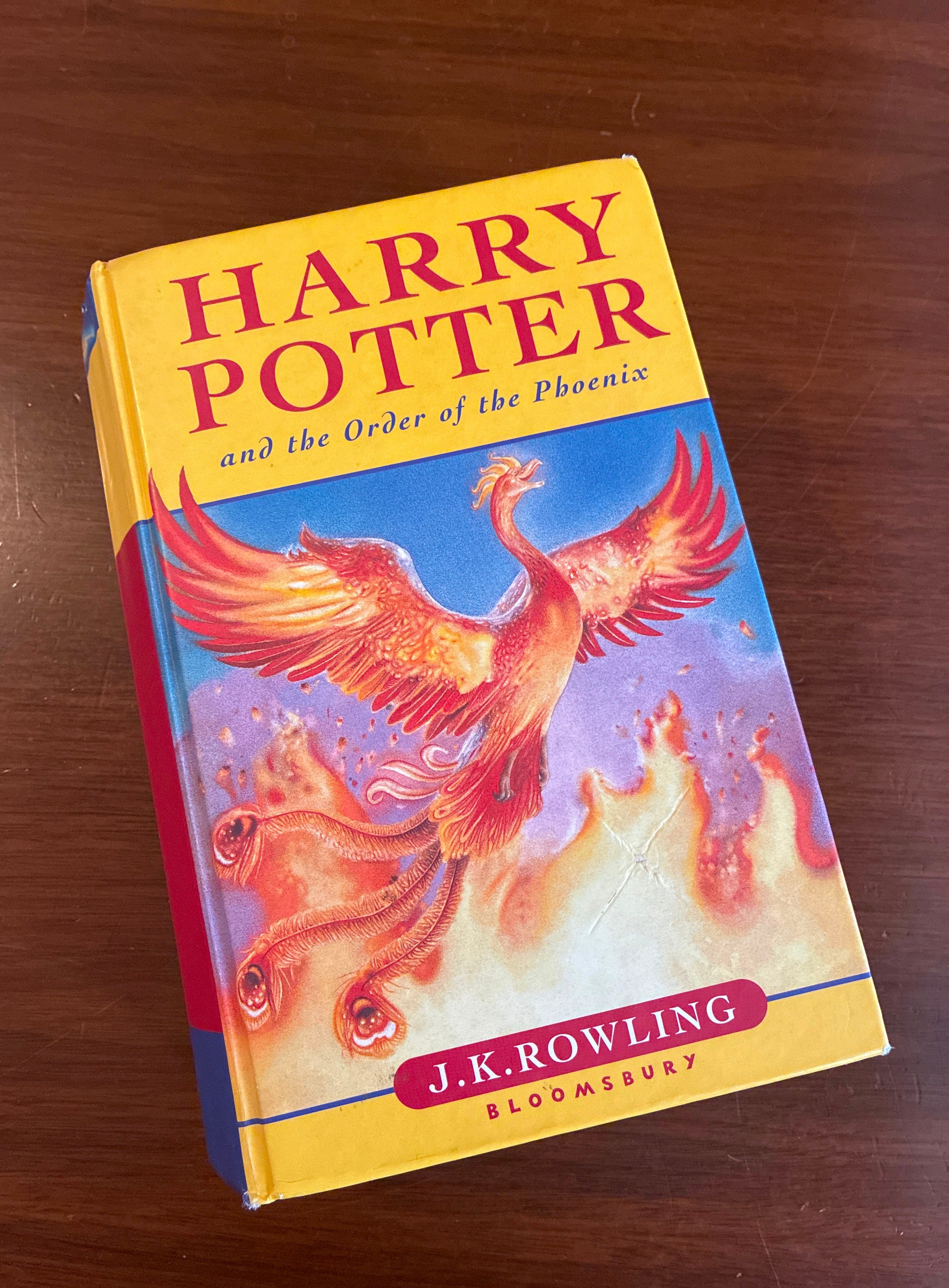
Have I always thought this? No. I used to hate Harry Potter (the character, not the series). I used to think he was self-absorbed and kind of whiny, with a whopping hero complex and a self-destructive need to be involved in absolutely everything.
The more I’ve revisited the Wizarding World, though, the more I’ve understood that it is precisely those fatal flaws in Harry that make him such a compelling hero. He has the nerve to exist in an infuriating paradox of courage and stupidity, moral conviction and selfishness, unbreakable tenacity and devastating inability to consider consequences. He is willing to take on the greatest evil of his time alone, yet remains utterly crippled without the help of those around him.
In other words, Harry Potter, as JK Rowling wrote him, is a real human being. He wrestles with a desire to vindicate himself, which at times causes tangible, even traumatic harm to others (like his reckless use of Sectumsempra on poor Draco in book 6, truly one of the most excruciating sequences in any book ever). He suffers deep wounds which circumstance forces him to carry in isolation, then lashes out at the people he cares about most. He harbors bitterness against others for not having endured the things he has. He self-consciously dismisses the friendship of others, like Luna and Neville, when it conflicts with the image he wants to present—and then learns, later on, that those friendships are the ones that will actually walk through fire with him. He forgets to ask for help. He refuses to be manipulated by unscrupulous people. He makes assumptions based on hurt and prejudice. He confronts his doubts with raw honesty. He risks his life and his reputation, time and again, for what is right—simply because it is right. He emerges victorious because of his ultimate belief in goodness, and rightness, and the need to defend them. Not to mention, he is the king of zing (and when I read his exchanges with toad-face Umbridge in The Order of the Phoenix I feel the catharsis deep in my soul).
Harry is a very realistically flawed human being, but pretty much the best possible person you could expect from anyone who’s endured so much trauma. For a character with demonstrably zero knowledge of Christ, Harry exemplifies the character of Jesus to a startling degree (I really think all good heroes, secular or not, have this in common, but that’s a topic for another newsletter). He is in many ways who I, in my deepest self, want to be: a person who stays the course, following the path to the bitter end, because it’s right. Who fights while maintaining the kind of vulnerability that would, from the outside, seem like a liability—but which actually enables one to fight the good fight out of love for the good, not just hatred of evil.
Harry never falls into the trap that so many people in his world do—like Mr Crouch, so consumed by his revulsion towards Death Eaters that he let justice be clouded by revenge. Like Cornelius Fudge, so in love with control that he muddled the truth with illusion. Like Snape, so wounded by isolation that he refused to let himself truly touch goodness.
Here, amidst all these tragic and believable characters, you have Harry Potter—a boy who, by all worldly accounts, has every excuse to be overcome by darkness, yet at every turn, defies darkness and chooses to grow outward. He never gets jaded. He allows himself to be wounded deeply. And it is precisely this openness, this ability to love, as Dumbledore says, that makes him the kind of hero that can truly defeat Voldemort. The kind of hero who stands, not because he knows he can win, but because he refuses to bow to evil. The kind of man whose mistakes drive him toward healing. Like the sword he pulled from the hat, Harry meets evil and is bloodied in the process, but in the end, imbibes only that which strengthens him.
No posts
Comments
Nothing yet. Say the first thing.
Sign in to join the conversation.