
Apparently, some Australian high schools now include a John Steinbeck novel in their English curriculum, but back in my day, this was not the case; that’s my excuse for why I hadn’t read a single Steinbeck book until this year! (I’ve now got a bunch on my to-be-read list, don’t worry.)
We picked Travels with Charley for our most recent Thoughtful Travellers Book Club read and I not only enjoyed it thoroughly but was pleasantly surprised at how many lessons for thoughtful travellers Steinbeck included in his otherwise gentle and chatty tale about his road trip around the United States.
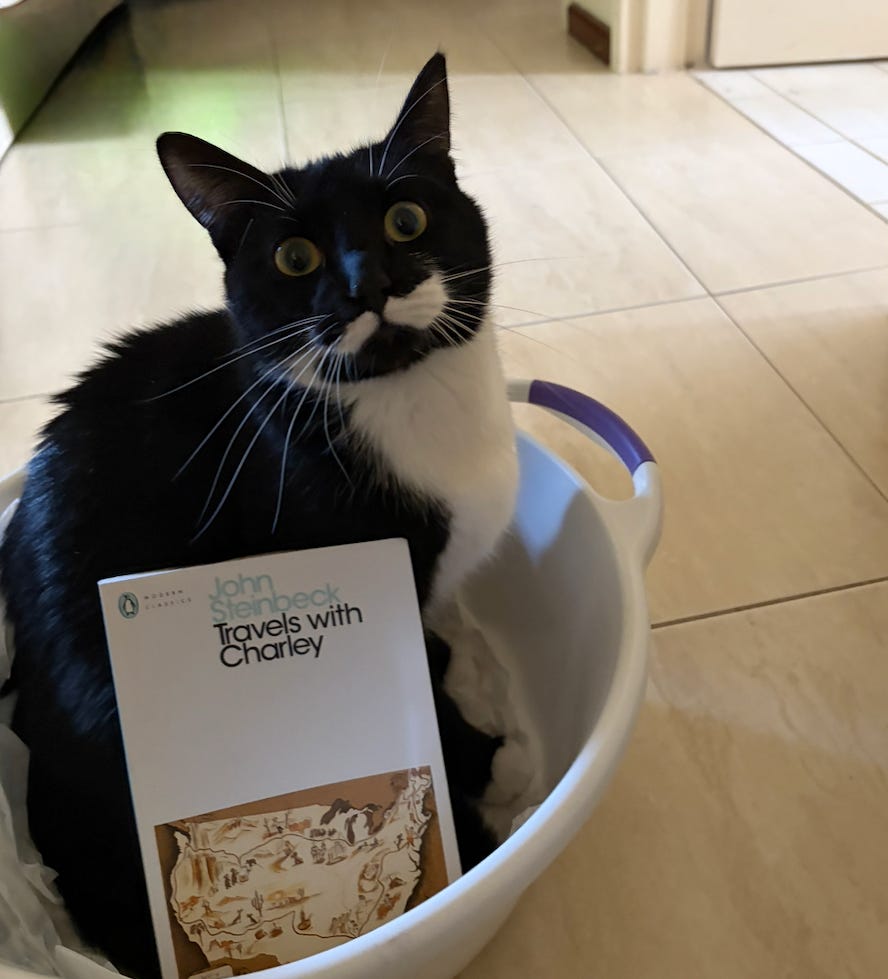
If you’re not familiar with this book, it’s a mostly-true (criticisms of this creative non-fiction being more creative than non-fiction abound, but I don’t really mind either way) story about John Steinbeck driving his camper-truck clockwise around the US in 1960. The Charley of the title is Steinbeck’s standard poodle, an elderly dog who clearly enjoys a good road trip too - but you can see my cat above was very unimpressed to realise the book I was reading had a dog main character, oops!
A recurring theme in Steinbeck’s travel tales was that some of the complaints we have about travel and tourism today aren’t as new as I thought. One of his most telling observations was this:
One goes, not so much to see, but to tell afterward.
In 2026, this could be adapted to “but to tell everyone as soon as possible”, thinking of many travellers’ need to immediately post on Instagram to show people where they’ve been (and I don’t pretend for a moment that I’m immune to this). Back in 1960, I guess, this might have been the phenomenon of the post-trip slide show, which didn’t reach as many people but was found similarly excruciating by some of the audiences!
You know I love to be spontaneous as much as possible when I travel (while understanding that sadly, it is less possible in many places to do this). Steinbeck and I are on the same page here about not doing too much precise planning, and at one point he muses:
I wonder why it is that when I plan a route too carefully it goes to pieces, whereas if I blunder along in blissful ignorance aimed in a fancied direction I get through with no trouble.
There’s always less trouble if you don’t get stressed about following a precise, careful itinerary, right?
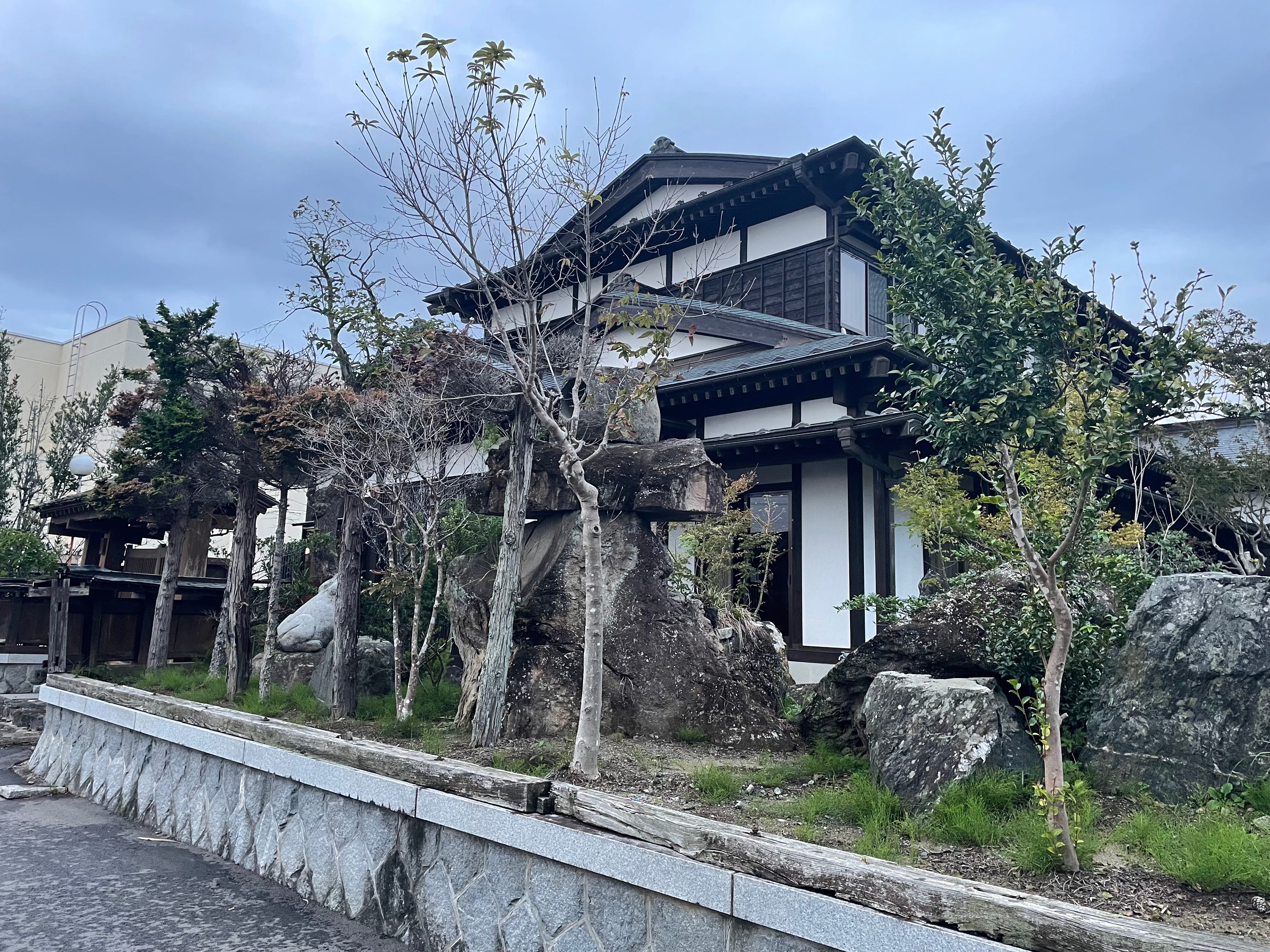
Steinbeck also really aligns himself with my whole thoughtful travel idea when he highlights how travel is a really individual experience - and SHOULD be a really individual experience! (In 2026 lingo: don’t go somewhere to take the exact same photo you saw on Instagram, this is not a fun and exciting way to see the world!)
For example, Steinbeck describes a trip he took to Prague, and a man he met who had been there at the same time:
Joe and I flew home to America in the same plane, and on the way he told me about Prague, and his Prague had no relation to the city I had seen and heard. It just wasn’t the same place … we brought home two cities, two truths.
I really worry that social media and the internet in general have created a lot of “sameness” in people’s travels. For example, you’d know that Japan has become a very popular place to visit, and I often find myself talking to people here in Perth who have been in the last couple of years. I can usually predict exactly where they have been: Tokyo, Kyoto, somewhere in the snow (choice from about three places only), maybe Osaka if they stayed longer than a week in the country. And I can mostly guess the exact places they saw in each city. This is fine … I guess … because these are iconic parts of Japan but also … I think everywhere in Japan is iconic? And the places without the huge crowds are way more interesting because you don’t have to stand in a long queue.
Part of the problem, I think, is that the internet has made us more removed from the places we are visiting while we are actually there. All the information we need is literally in our pockets so we don’t need to chat with as many local people to find out how to get somewhere, to ask where there’s a good restaurant, or even for help when we’re lost. Steinbeck suggested that while he set out on his road trip to find the “truths” of his country, he realised along the way that there was no single truth, and that your experience is completely dependent on the individual people you meet along the way. So it stands to reason that if you are meeting fewer individual people your trip will be less different to others who are following a similar itinerary.
In the last chapter of Travels with Charley, Steinbeck describes journeys in this way:
they are things in themselves, each one an individual and no two alike.
I think it’s a good goal for thoughtful travellers to strive for our journeys to be unlike those of others - would you agree?
If you want to hear what Justin and I thought about Travels with Charley, you can watch our chat on the video below or listen to the audio versions via the links that follow; and if you want to keep up to date with our next book club books, you can join our Thoughtful Travellers Book Club list, too!
I’m both pleased and a little surprised that a book from many decades ago resonated so much with me, but it was a real joy to read and a good reminder that thoughtful travellers are, indeed, all around us. Hooray!
No posts
Comments
Nothing yet. Say the first thing.
Sign in to join the conversation.