
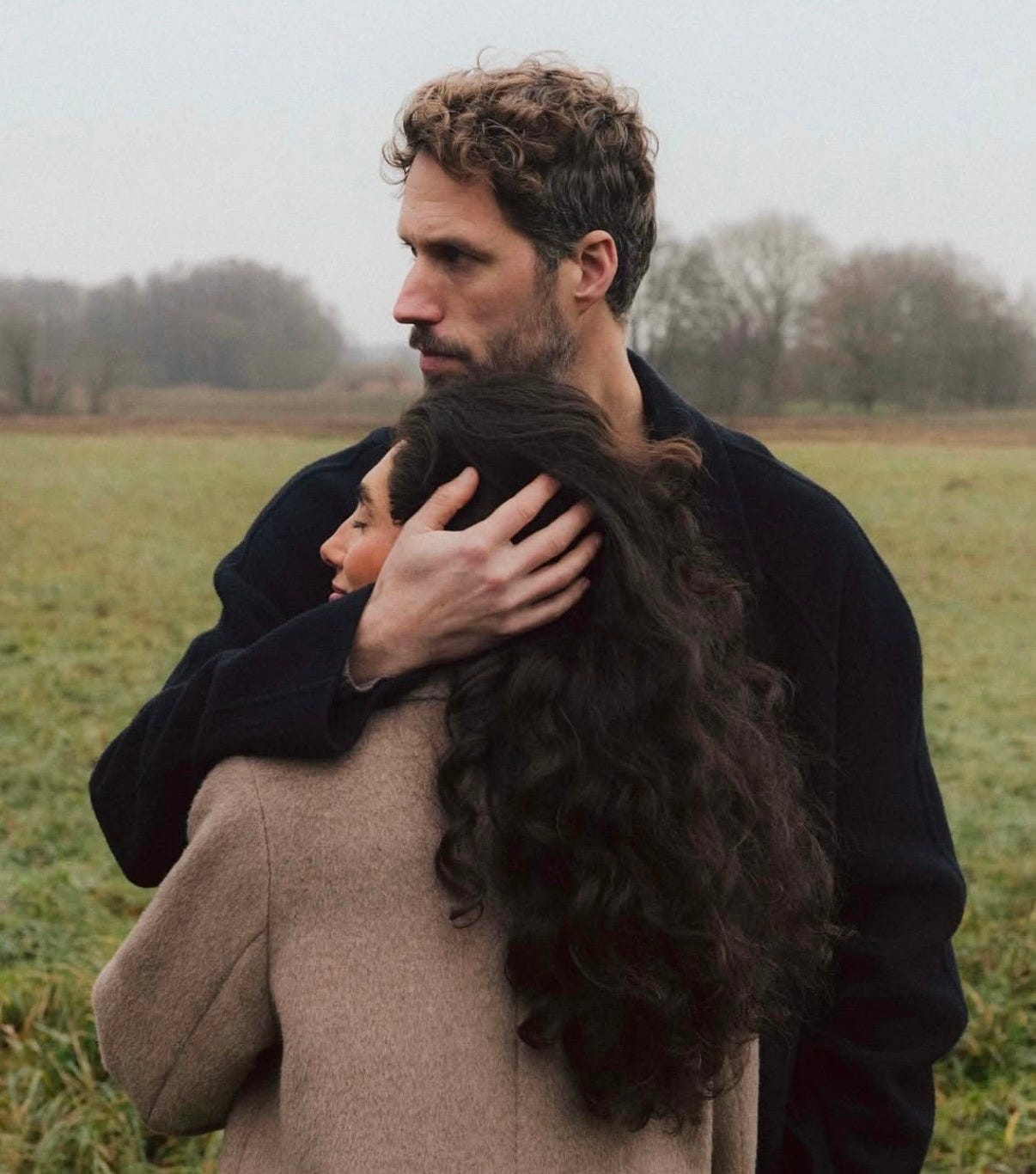
This morning Rudmer was sanding a piece of oak outside our atelier. The sound is almost meditative. Slow, repetitive, patient.
It made me think about how different his work looks today compared to when we first met. Back then he spent most of his days behind a screen, designing brand identities and typography. Today he works with wood, clay, and space.
The shift didn’t happen overnight. It was gradual. Quiet. One curiosity slowly leading to the next. That pretty much sums up his personality too. Never the one to take center stage, so I will.
This week I asked him about it, how a graphic designer slowly becomes a carpenter and a potter.
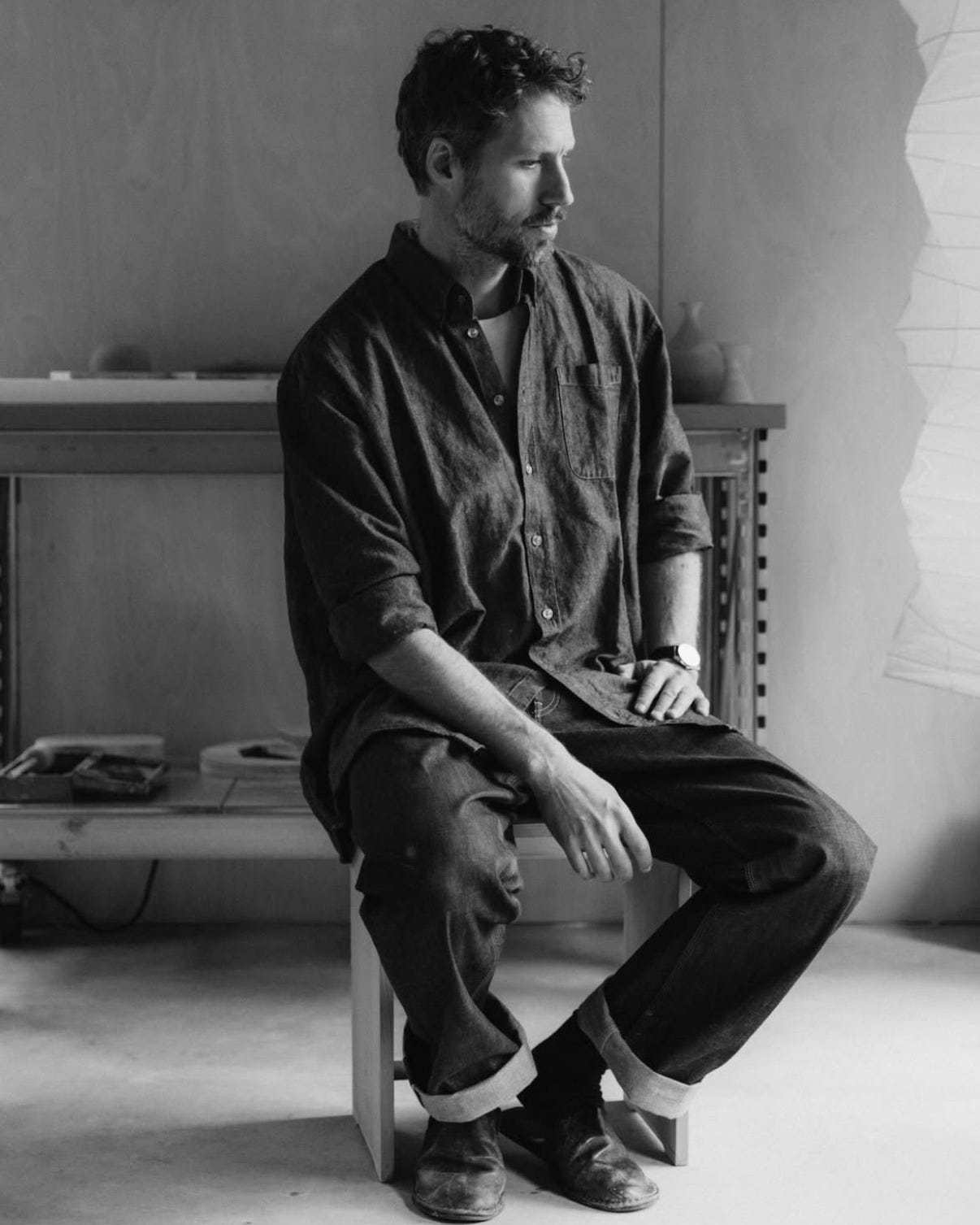
G
You studied graphic design and worked in the field for years. When did you first realize design was something you wanted to dedicate your life to?
R
I didn’t really have a turning point or a big “aha” moment. It was always something that lived in me.
As a child I built wooden huts and constantly drew my dream house, without ever thinking I would become a designer later. During my skateboarding years I built an entire skate park for the neighborhood using scrap wood from construction sites.
So I can’t point to one specific moment. I just remember it always being there.
One thing I do remember very clearly is being upset in high school because I wasn’t allowed to take both craft and drawing as subjects. I had to pick one. Eventually I chose drawing, and during one of the classes my teacher told me I should become a graphic designer.
At the time I didn’t fully understand what that meant, but it stayed with me.
G
You had a successful career in graphic design. Awards, recognition, great projects. From the outside it looked like you had “made it.” Did it feel that way from the inside?
R
I always felt content with what I was doing. But looking back, I also realize there was something missing.
The industry itself has changed a lot as well. When I started, graphic design felt much more like a craft. There were specialized printers, endless paper choices, ink, and different printing techniques. Designing was physical, working with materials.
A lot of that has disappeared over time.
Today the timeframes are much shorter and the possibilities at the printer are far more limited. It still exists, but much less than before. I think that’s one of the reasons I slowly felt less passionate about being purely a graphic designer.
I began to feel drawn toward fields where craftsmanship plays a bigger role.
G
When did you start working with materials like wood?
R
When I was 25, I bought my first apartment. It was in an old school building, so my apartment used to be a classroom.
My budget wasn’t very big, so I built most of the furniture myself. I made a wooden table from old floor boards that came from my parents’ house. I cladded one of the walls with wood and it turned out really beautiful. I still love it today.
But the first piece I really designed intentionally was when we moved in together.
You wanted a desk, and because I knew how much you love stationery, writing, and journaling, I felt the desk had to be something special. So I researched, sketched, designed, and eventually built it.
You loved it so much.
That moment really triggered me to explore this side of design further.
G
You often say graphic design taught you how to see. How did that translate when you started designing objects and spaces?
R
One of my biggest inspirations has always been Donald Judd.
His work has such a strong graphic quality but also this extra spatial dimension. I feel very drawn to that. It helped me translate my graphic design thinking into something more architectural and physical.
Clay, on the other hand, is a completely different story.
Almost nothing I knew before was useful when I started working with clay. It’s unpredictable. There are rarely straight lines or a straightforward way of working.
And that’s exactly why it challenges me so much. It forces me to look at design from a completely different perspective.
G
What was it like learning carpentry from scratch?
R
I’m a true perfectionist, and that works very well in graphic design. On a computer I can make something perfect down to the very last detail.
With wood, I learned that you simply can’t.
There is no way to make it perfect to the very last millimeter. But I started seeing that as a challenge, learning the craft well enough that it becomes perfect in my own way.
That patience, and my drive to make things as precise as possible, helped me learn quickly.
The cladding of our cabin is a good example. It’s built from narrow wooden panels that had to follow the architectural shape of the cabin. I had never done anything like that before, especially not on that scale.
But I worked on it for countless hours, learning while doing. And in the end it turned out beautifully.
Patience and determination really carried that project.
G
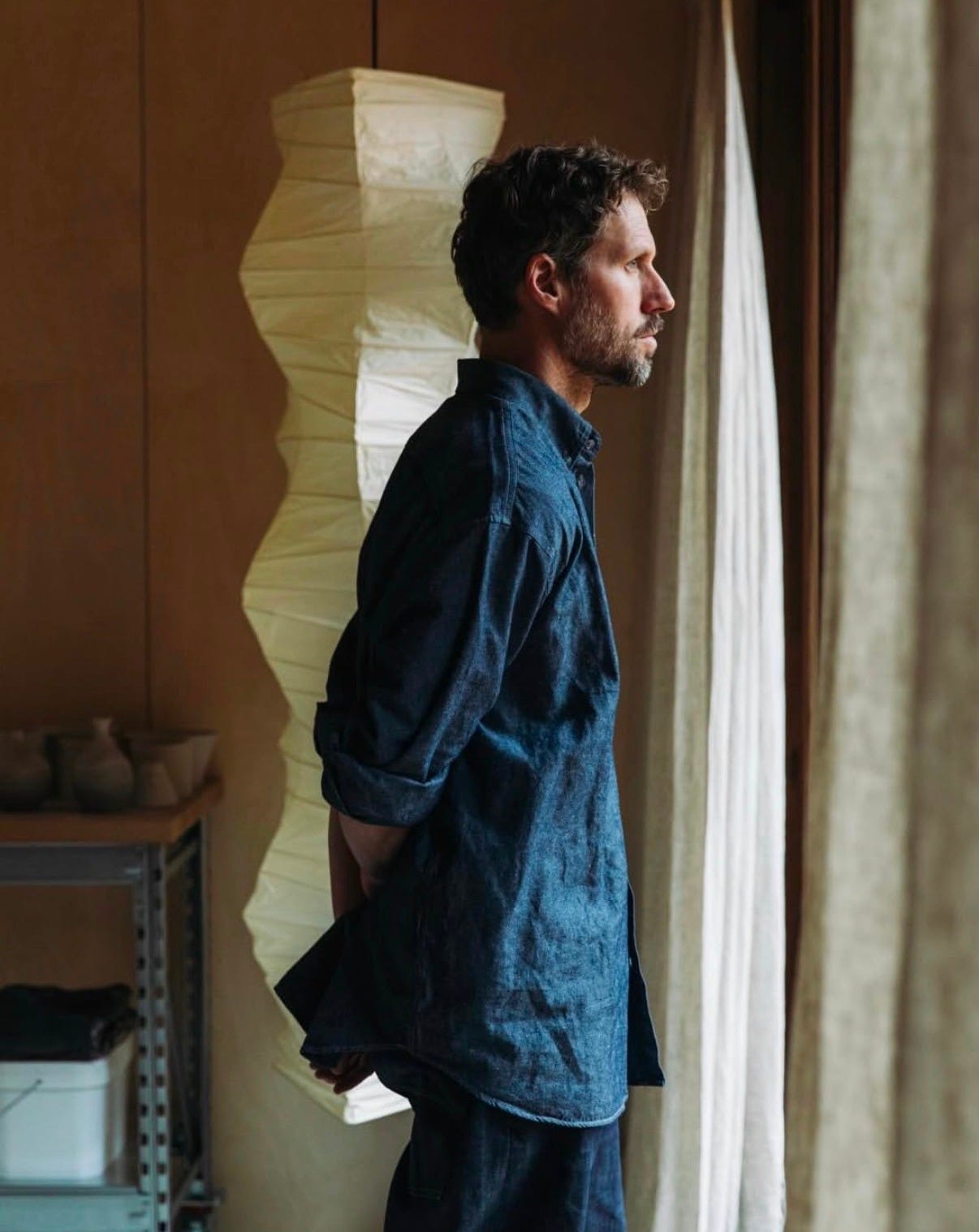
Recently you started learning pottery from your dad. Watching the two of you work together has been one of my favorite things. What does that experience mean to you?
R
It means a lot to me.
Seeing his hands work in clay and create beautiful objects that we use every day, like our coffee cups, is very special.
His hands are my hands.
It feels like I can continue his legacy by learning his craft and evolving with it. My father actually started pottery later in life, after retirement.
Having this shared passion with him again feels really meaningful.
He taught me how to ice skate as a child, which eventually led me to compete in short track speed skating at a high level throughout my childhood and teenage years. Later, I was even able to teach him some of my techniques.
Learning pottery from him feels similar.
G
If someone walked into your atelier today, they would see clay, wood, tools, sketches. How would you describe your practice now?
R
I’ve never stopped being a designer.
Probably not even for a single day of my life.
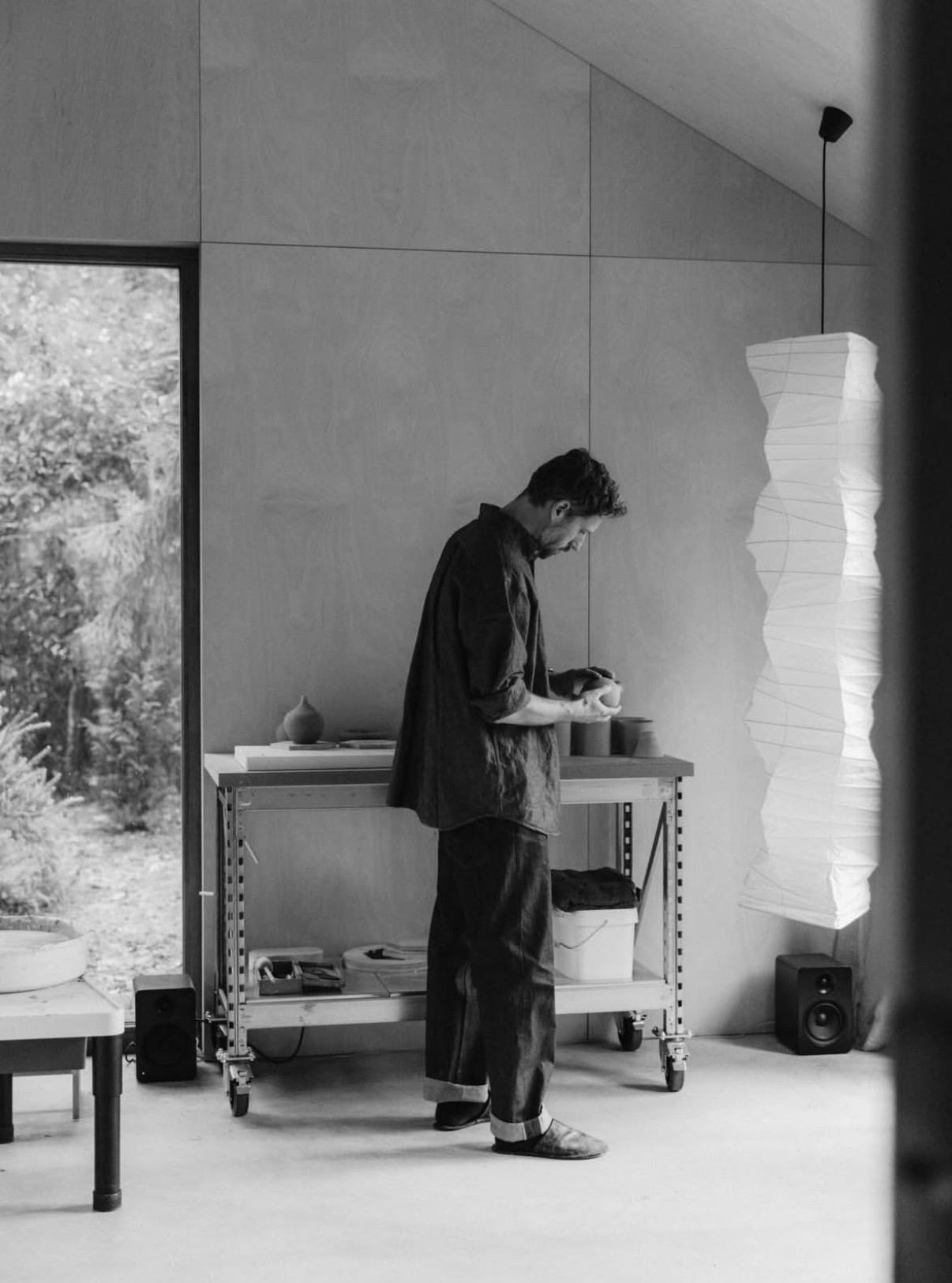
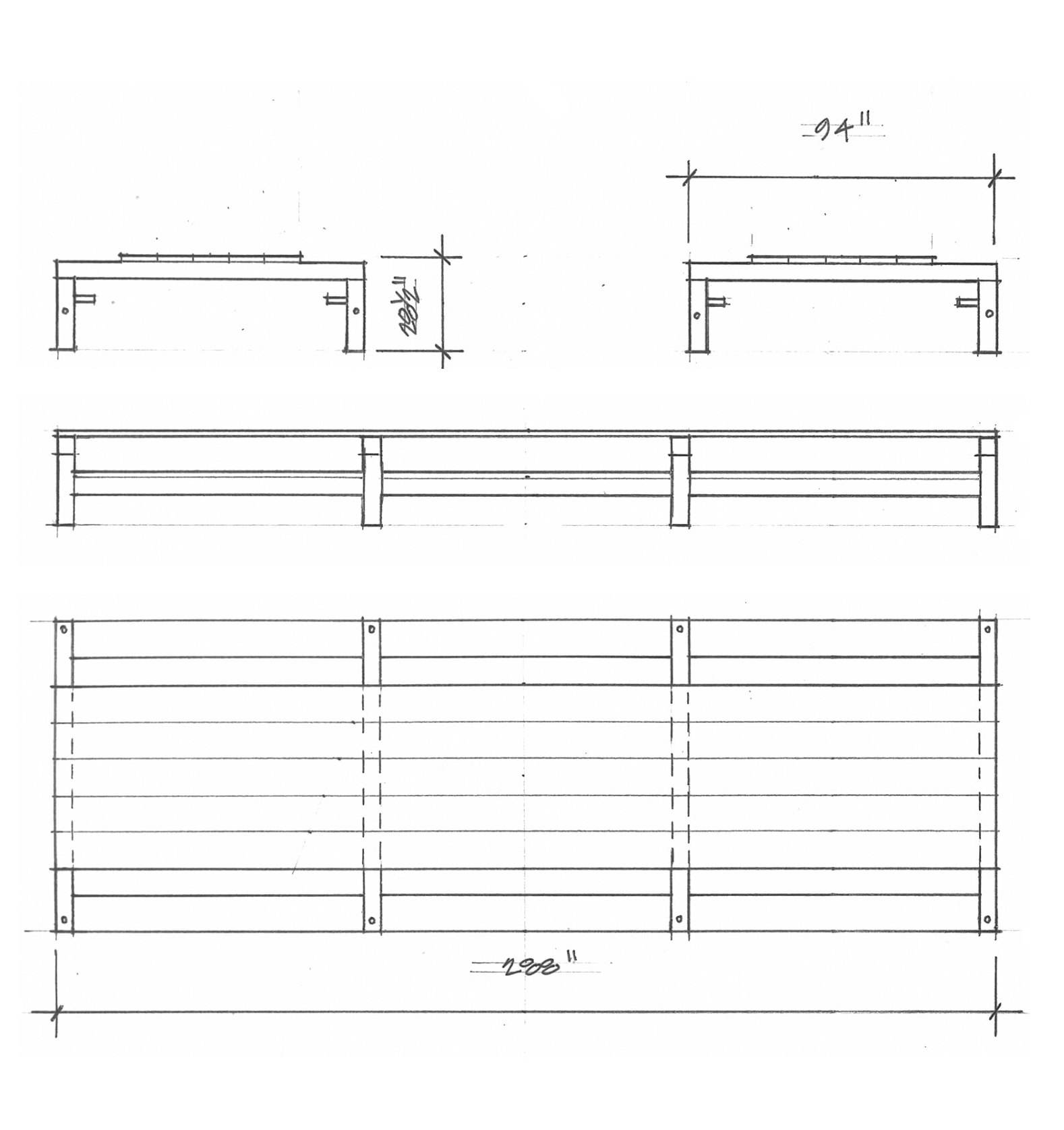
The space I work in has been designed by me. The workbench I use for pottery has been designed by me. Everything I make embodies my thinking as a designer — just in different dimensions and materials.
G
What would you tell someone who feels curious about another discipline but is afraid to start over?
R
I discovered that I love many different disciplines, but I only found that out by actually doing them.
There’s something very liberating about trying, falling, getting up, trying again — and either succeeding or deciding it’s not for you.
You learn either way.
I never thought I would work with clay because I believed the material didn’t fit my way of working. But by trying it, I realized I could use my skills in a completely different way.
The challenge itself is fulfilling.
Try the thing you’re curious about. But also try the thing you think might not be for you.
You might be surprised.
Watching Rudmer move from screen to wood to clay has taught me something about creativity.
It isn’t fixed.
A graphic designer can become a carpenter.
A carpenter can become a potter.
A career can evolve into something completely different from where it started.
The common thread isn’t the medium.
It’s curiosity.
Objects, ideas, books, spaces, and moments that feel considered. Useful. True.
We’re glad you’re here. Let us know if there’s anything you’d like to read from us. Hope to talk to you next week.
Gisele and Rudmer
No posts
Comments
Nothing yet. Say the first thing.
Sign in to join the conversation.