

This is a longer post on some of the theology underlying spiritual direction. The TL/DR is: we are all called to holiness, the path of holiness is unique for each of us, the understanding of these paths is studied in spiritual theology, and all of this is important to spiritual directors and those who seek to go deeper into the life of the spirit.
Towards the end of his life, the theologian Germain Grisez said he considered the universal call to holiness the most genuinely revolutionary thing to come out of the Second Vatican Council, but that it was not developed deeply enough. (Grisez himself explored the subject in The Way of the Lord Jesus and other work.)
“They didn’t draw the conclusion that needed to be drawn,” he remarked in conversation. “It’s not what God calls you to do which decides how holy you are, but how well you respond to God’s call. In other words, you don’t have a better or worse calling depending upon what you’re called to do, but you can respond well or not so well to what God’s calling you to do. Holiness is, in a sense, a generalized and universalized calling.”
This was not always considered the case. Holiness was the calling of the avowed religious and ordained, a rarefied air breathed only in the monastery or at the altar. Laity could and should strive for a kind of holiness, but there was a lingering sense that ordinary people were stained with the muck of the roads they travelled, and elevated piety was perhaps the most for which they could hope. Marriage, sex, money, possessions, labor, debt, and all the concerns of the world weighed too heavily upon them to join the ranks of St. Benedict or St. Teresa of Avila.
There is an element of truth to this. The traditional purgative ways of ascent are not as easily achieved by one living in the world. And yet, some of the radical penances and asceticism of the avowed religious are themselves a luxury of the monastic cell. The universal call to holiness does not see the avowed or ordained life as the high road to heaven, but as one path among many open to each individual. The road of the Christian life has many branches traversing strikingly different landscapes, but all have a single objective: union with God in Christ.
Holiness is the perfection of graces we all receive with the sacraments of initiation. From Lumen Gentium:
It is therefore quite clear that all Christians in any state or walk of life are called to the fullness of Christian life and to the perfection of love, and by this holiness a more human manner of life is fostered also in earthly society. In order to reach this perfection the faithful should use the strength dealt out to them by Christ’s gift, so that, following in his footsteps and conformed to his image, doing the will of God in everything, they may wholeheartedly devote themselves to the glory of God and to the service of their neighbor. Thus the holiness of the People of God will grow in fruitful abundance, as is clearly shown in the history of the Church through the life of so many saints…. The forms and tasks of life are many but holiness is one.
This should seem uncontroversial to us living now, in an atmosphere conditioned by the Little Way of Therese, the Council, the post-conciliar popes and saints, the example of writers like G.K. Chesterton and Dorothy Day, and the consistent urging of Mother Theresa for everyone who seeks God to “find their own Calcutta.” Be holy where you are is not a radical statement, but it does represent a shift that needs to be acknowledged as we begin exploring spiritual theology.
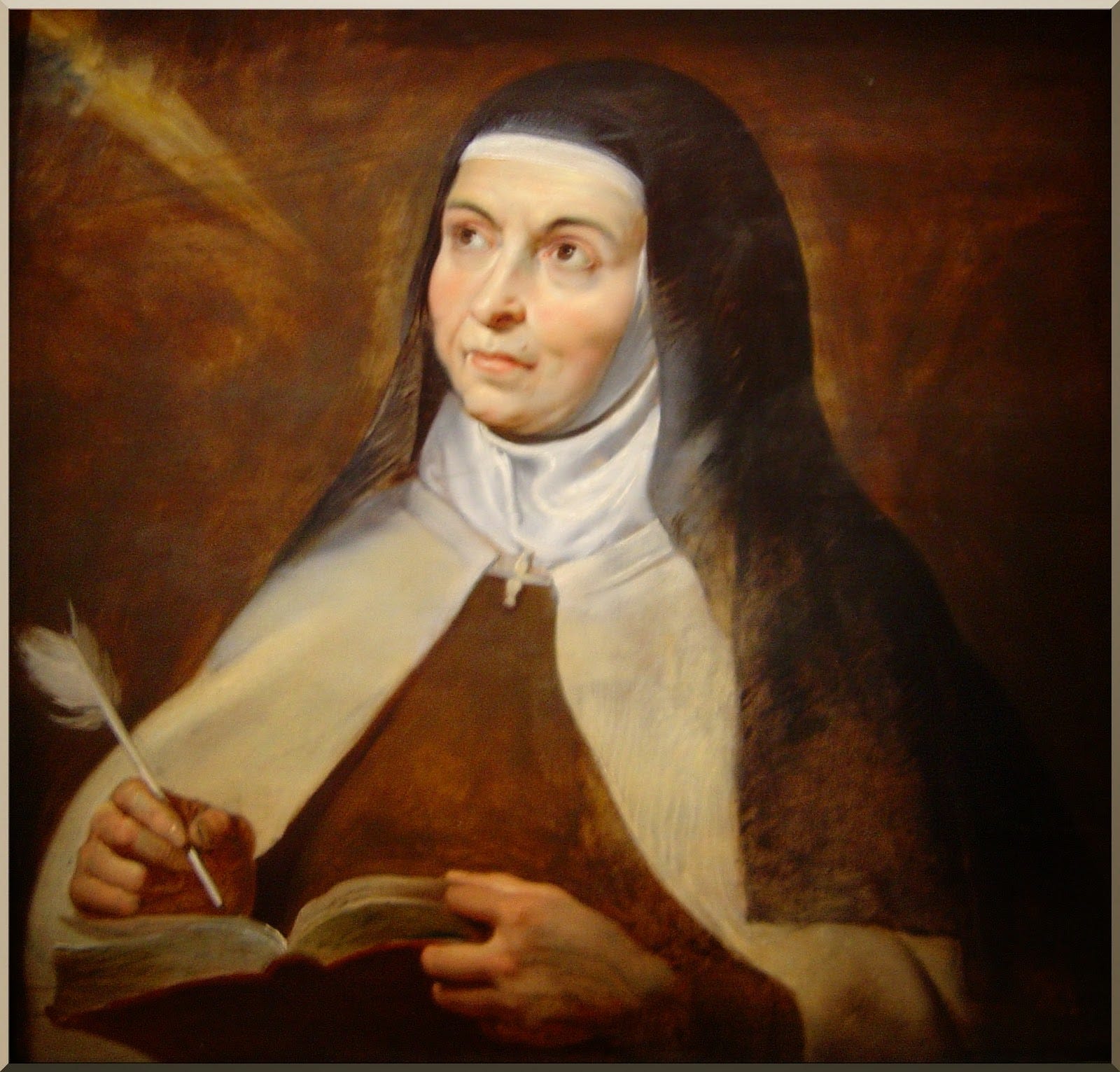
Theology is not a static discipline, and its contours have shifted over the centuries. Moral theology is, in the most general sense, the study of avoiding sin. That’s not to say it’s a Minimum Daily Requirement kind of theology, but that it deals with living an ethical Christian life. And no, I’m not going to get into the distinctions between ethics and morals. I’d get letters.
Spiritual theology concerns the aspects of Christian life involved in growing closer to God. Quite obviously, moral theology is a factor in that life, but spiritual theology is a discipline unto itself. As Jordan Aumann notes, it goes by various names: spirituality, spiritual life, devout life, supernatural life, interior life, mystical evolution, and theology of Christian perfection (from Aumann, Spiritual Theology).
Today, spiritual theology is mostly understood as the combination of ascetical theology and mystical theology, with ascetical theology concerning the early stages, study, and practices of the spiritual life, and mystical theology concerning the higher reaches of the spiritual life. There are many ways to break this down and a number of technical terms that, frustratingly, can mean different things to different people, but let’s make it very very simple and call the ascetical aspect what you do and the mystical aspect what God does. (If you’re wondering why the church rejects Centering Prayer, it’s because it blurs this crucial distinction.)
We tend to think of ascetical practices as rigorous, penitential, even punishing–as bodily mortification. That’s not all of it, however. From the Greek askeein, ascesis means developing a skill, so when St. Paul uses athletic metaphors, this is what he means.
Do you not know that in a race all the runners run, but only one receives the prize? So run that you may obtain it. Every athlete exercises self-control in all things. They do it to receive a perishable wreath, but we an imperishable. So I do not run aimlessly; I do not box as one beating the air. But I discipline my body and keep it under control, lest after preaching to others I myself should be disqualified. 1 Co 9:24–2
The Greek for that last line more literally translates as “I pummel my body and make it a slave.”
Mystical, from the Greek mystikos, means hidden or secret, usually referring to secret rites for initiates to a cult. We need to be careful here because the language can suggest gnosticism, as if there is some concealed wisdom unavailable to ordinary Christians.
In Catholic rites of initiation, it means the person is being formed in the faith. After an adult is fully received into the church, they go through a process of mystagogy, which doesn’t mean they get their decoder ring or secret handshake. Instead, it’s a further unfolding of the faith with assistance of Holy Spirit, who now has pitched His tent in the catechumen. In mystagogy, someone who has received the graces of the sacraments is accompanied deeper into the life of the church so they can more fully understand and cooperate with the Spirit.
In a sense, every Christian is always practicing some kind of ascesis (a discipline) in order to open themselves to a potential mystical experience (a deeper experience of God). The discipline may be going meatless on Friday, fasting, penance, a habit of prayer, a particular devotion, or works of mercy. The word may call to mind medieval spiritual olympians who consumed nothing but a teaspoon of muddy water and a communion wafer each day, but everyone has their own ascesis, their own spiritual discipline. We are all training to run the race all the time.
At the same time, mystical may suggest to us ecstasies, infused contemplation, miraculous visions, and the like, but it also can extend to the person quietly praying who experiences the movement of the spirit in the soul. The discipline clears the field for the encounter with God. It disposes us to the divine. We can’t seize is. But we can make ourselves ready, as the bride prepares for the bridegroom. This is part of the work of faith, and it’s a good reason to seek out a trustworthy spiritual director who can accompany us on the road.1
At this point, we should have a clearer sense of the distinctions inside spiritual theology, and why it is relevant to all Christians, particularly those seeking spiritual direction. As Jordan Aumann writes:
Christian spirituality is therefore a participation in the mystery of Christ through the interior life of grace, actuated by faith, charity, and the other Christian virtues. The life that the individual receives through participation in Christ is the same life that animated the God-man, the life that the Incarnate Word shares with the Father and the Holy Spirit; it is, therefore, the life of God in the august mystery of the Trinity. (Aumann, Spiritual Theology)
I’ve cited Fr. Aumann, a Dominican, several times because his text is one of the few systematic treatments of the subject. His Thomism and his systematic methods are, obviously, related, but also point to the limitations of the work–and Aumann was not blind to these limitations. He acknowledges that the dynamic nature of Christian spirituality largely defies a Scholastic approach.
Theology may indeed be “the science of God,” but the theology of spirituality is so interior, and works at such an existential level, that its domain is more properly personal and pastoral than theological. “There is no science of singulars,” so each mystic isn’t a data point that can be ordered along certain lines. Every soul’s path to God is unique, sharing only three common elements:
it is to the Father
through the Son
and by the Holy Spirit.
And yet, the entirety of the Catholic faith draws from the same well, and is inspired by the same Spirit. The same Tradition and the same Scripture are the bedrock of every individual’s experience. Some commonalities can be found. Some traditions are subject to a systematic approach. Certainly, Teresa of Avila and John of the Cross, Ignatius of Loyola, Benedict of Nursia, Francis and Claire, and others developed spiritual paths that can be called “systems” in the broad sense.
I am not a Thomist. Although I have a deep respect for St. Thomas himself, I think the theological death-grip of the various schools of scholasticism between Cajetan and Garrigou-Lagrange was a bad thing for Catholic theology, and that the Ressourcement was an absolutely essential corrective.
I point all this out because spiritual theology does not function in the same way as moral or dogmatic theology. I’m sure someone from some sub-discipline of Thomism could argue that spiritual theology, per se, doesn’t even exist. Fortunately for me, I don’t care. It’s a useful term for the totality of the religious experience encountered by spiritual directors. Aumann himself offers a pretty good definition:
that part of theology that, proceeding from the truths of divine revelation and the religious experience of individual persons, defines the nature of the supernatural life, formulates directives for its growth and development, and explains the process by which souls advance from the beginning of the spiritual life to its full perfection.
I’ve gone through all this at such length so I don’t have to do it again, nor do I have to fall back on endlessly defining terms and slotting experiences into a system. (Not being a Neoscholastic has its benefits.)
I’m satisfied with my own definition of spiritual theology: how we reach God.
What we see in Aumann’s definition is what makes this an important area of study: it is the way spiritual directors can understand a diverse array of people and their unique experiences of the divine. Each seeker–each spiritual directee–is particular and unrepeatable, and yet the spiritual life can and does fall into recognizable patterns.
We are all called to go deeper, and yet we all travel that road in different ways. I spent 2,000 words explaining this because I hope to explore some of those roads with you. I, too, am still finding my way, and when I sit at a hospital bed or meet a new student, I’m learning as well. Each new soul is a chance to encounter another facet in the infinite, glittering jewel that is God and his creation. And every time, I make the same prayer before I say anything: God, please don’t let me screw this up.
We are also called to be perfect, as our Father in heaven is perfect, and yet Confession is a sacrament, forgiveness was central to the preaching of Christ, and even the best soul can lose the path sometimes. We’re supposed to spend our lives working this out, walking the pilgrim trail from birth to death so we can behold God face to face and know, at last, as we are known. Spiritual theology isn’t a map of that trail, but perhaps it’s a guide to making that map.
Jordan Aumann, Spiritual Theology
Fr. Thomas Acklin and Fr. Boniface Hicks, Spiritual Direction: A Guide for Sharing the Father's Love
Germain Grisez, The Way of the Lord Jesus (full text)
Unfortunately, there are spiritual directors who have abused this trust, and leaders who tolerated it at the very highest levels of the church. This is abominable. If you enter into spiritual direction and your gut is telling you the director is off, or violating boundaries, or betraying trust, listen to your gut.
Comments
Nothing yet. Say the first thing.
Sign in to join the conversation.