

A poll released in the first week of August revealed that 74% of Floridians favor Amendment 3. The poll echoes Governor Ron DeSantis’s June 24 comments in Bradenton that “the people are ahead on this issue,” as a supermajority of Florida citizens are ready to vote “Yes!”
Yet, everyone in government and their lobbying associations are against Amendment 3. The Florida Association of Counties rejected all 10 property tax proposals as presented by the 36-member Florida House Select Committee on Property Taxes. Those proposals include the November ballot referendum.
Locally, Bob McPartlan and Brooks Robinson rejected the sentiments of polled voters on Amendment 3 last Friday at the IRC Taxpayer’s Association (IRCTPA) candidate forum. They said they will vote against it. IRCTPA President Lance Lunceford said 22 of the 28 questions, or 78% submitted, were on Amendment 3. On Monday, the Property Tax Appraiser Wesley Davis mailed Truth in Millage (TRIM) notices to homeowners showing another tax increase due to rising property values.
McPartlan and Robinson have given explanations why local governments should keep the gravy train rolling. They recite the Florida Association of Counties’ argument on how there will be a tax shift. McPartlan often uses the example of how disabled veterans will be hard hit by the shift. Robinson told the Republicans for Life, “There will be some counties and cities that find revenue in other places. Those will be non-property taxes—those are your non-ad valorem fees and assessments,” adding, “I believe those assessments harm the low income, the fixed income, and the disabled more than property taxes [do].”
Robinson repeated the tax shift premise at the NAACP forum. But a raising of fees and other taxes requires votes. Will McPartlan and Robinson increase taxes on the people who cannot afford it? If they already agree it is a dire budgetary situation if Amendment 3 passes, then most likely, they will do so. McPartlan has a history of asking for, and, voting for tax increases.
Commission Chairman Deryl Loar said at the IRCTPA forum that the Commission will not be able to get to the projected $21 million estimated revenue loss in year one by raising taxes and fees. He commented that 80% of government is human employment and salaries will have to be cut by $16 million. He said, “At the end of the day, it is bodies and services that will be eliminated.”
Yet, budgeting is not a zero-sum game. The economic reality has shown that property taxes have grown in the last five years at more than double the rate of inflation. Indian River County’s general fund alone has increased $75 million since 2021-2022. The excuses show the Democrat and majority of Republican candidates’ hearts are not with the voters on Save Our Homes From Excessive Property Taxes.
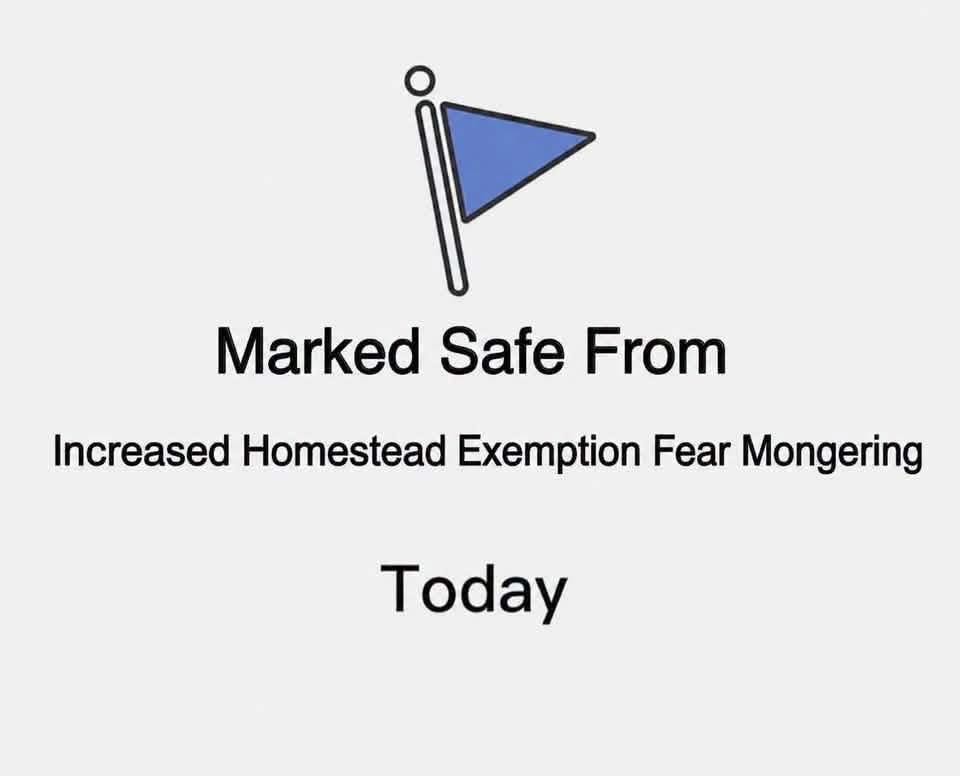
The one person who is with the voters is Jennifer Pippin. Not only has her stance on Amendment 3 separated her from the typical government candidate in this race, but the recent super PAC mailer fueled by dark money has made those same citizens angry. They are vocalizing it across social media. Pippin has received multiple supportive emails, with some saying they are switching their vote from another candidate to her. The negative mailer has been a positive experience.
“Since the hit piece mailer came out, my social media pages are up 63% to 73%, and website traffic has increased 82%,” said Pippin, adding, “People have emailed me saying they have received their TRIM notices and their taxes have risen again. They add that ‘I am voting for you because I cannot afford another increase.’”
Pippin noted at the IRCTPA forum that the county is “flush with cash,” which she emphasized by sharing the growth of property values. She shared that IRC has seen total taxable assessed property values more than doubled in the last 10 years, from $13.4 million in 2016 to $29.3 million in 2025, according to the IRC Property Appraiser. There has been $8.7 billion in new taxable values over the previous 4 years for a 51% increase in revenue.
Pippin knows the issue. She rejects the tax shift argument adding she will not vote for them. She has made bold proposals about non-governmental organizations that are being funded by taxpayer dollars comparing them to nonprofits that provide similar services with 100% private funding.
For Pippin, government should provide the essential services for all citizens. She is intentional about them as listed in the 20-page bill. She often refers to “line 414,” where the resolution mandates property tax revenues be allocated for “core services,” which include public safety, natural resources, education, roads and bridges, bond obligations, and government retirement plans. The bill also includes home rule initiatives.
Many say the referendum’s language is not strong enough, but the intentionality of a candidate is paramount if they want to be holding elected office. The language of the referendum addresses the spirit of the law, and Pippin clearly gets it. The other candidates in both districts do not project any connection to the referendum, but rather fear its passage.
Pippin has spent time visiting with Gifford residents on the campaign trail. Robinson admitted he didn’t knock on doors, when asked by the NAACP moderator the Yes-or-No question, “Have you knocked on any doors in Gifford during this campaign?”
Hardingham and McPartlan said they came to Gifford for petition signatures, so they could get on the ballot. Only Pippin said, “Yes. 73 [homes].”
Pippin has been out hearing the people’s concerns. She told Gifford residents at the NAACP debate that 60% of the families have homesteaded properties and will receive money in their wallets. The other 40% will not see a change in their property costs unless the commission votes for a tax shift increase.
The NAACP asked candidates about the Gifford Plan, which was introduced in 2002 and updated in 2014. It has many infrastructure promises that are currently left unfulfilled by the county commission. Hardingham said to the NAACP audience, “Gifford was promised money when these gated communities went up all around it.”
Pippin told the NAACP that whether it was the board of county commission or the District 2 representative, someone needs to be held accountable. Joe Flescher has been the commissioner since 2006 and is retiring this year. The 5-term commissioner who failed to get the Gifford Plan completed during a decade of unprecedented revenue growth, has endorsed McPartlan. He responded to the Gifford Plan, saying, Amendment 3 will make it difficult. He also called its passage “a sad situation for Gifford.”
The county has what is known as the Urban Service Boundary (USB). It is the area that is ready for development because it has the infrastructure in place to expand into new projects. A study was done for the county on the USB area. The results were revealed on October 30, 2024, showing the current boundary can handle forecasted population growth out to 2050.
Pippin has been stating that the county’s current agriculture and conservation areas will remain untouched based on this study and county plan. The existing underutilized property plus areas within the boundary are plentiful. The days of agriculture are not over for Indian River County, but gone are the days of endless citrus groves along US 1 supporting the whole county.
The county is in a transition and needs to find other industries to keep skilled people and their families. The housing construction focus and building of the gated communities have left the top 3 employers in Indian River County government entities. Number 1 is the school district. The hospital was totally public until Cleveland Clinic took over management. Third is the county administration unless Piper has finally passed them in employee numbers. That must change, and Pippin is the only candidate stating it clearly.
Pippin has been clear about reinvigorating what is already available in vacant industrial and retail space in the county. You will not hear from her a push to build new town center-style developments like McPartlan. Pippin is not against projects but wants equal focus on restoring what is available already.
How?
She wants to streamline building permitting. She tells the story of a local businessman and resident who wanted to build a second business in Indian River County. The red tape and permitting was so cumbersome and time consuming, they took their business to another state. Entrepreneurs need cooperative and simple processes from government.
Pippin is the next generation of leaders that are determined to serve. While other candidates despondently recite the end of local government, Pippin’s optimism for real change comes with the experience of being a family-first advocate. Pippin has had victories being a local liaison for parents and their children in public schools. The advocacy work she did with parents at the school district helped transform it from 38th, when she started, to 5th in the state.
She advocated at the state level too. She was personally invited to serve at the Florida Department of Education (FLDOE). Pippin served on their student testing and media specialists training committees. She and 2 other moms with facts and data convinced 9 members of the FLDOE media specialist committee to vote for her proposed certification course in accordance with Florida law.
Her team’s research on COVID was used by Governor DeSantis at his March 18, 2021 public round table on Florida’s COVID policy. Pippin has known many victories with state and local governments in her advocacy work. She never took a salary but paid her own way. Pippin believed in the mission and was intentional about the work.
On the County Commission, the rule is getting to 3 votes. Sunshine Law makes it difficult but one thing Pippin will have is the people behind her. Why? Jennifer Pippin has always stood with them, advocating for their concerns.
Comments
Nothing yet. Say the first thing.
Sign in to join the conversation.