

The 10th edition of cheminformatics summer school in Strasbourg came to an on the 26th of June. Below are some of the more appropriate images that I found on my phone over the last week. Apologies to everyone who’s not in them.
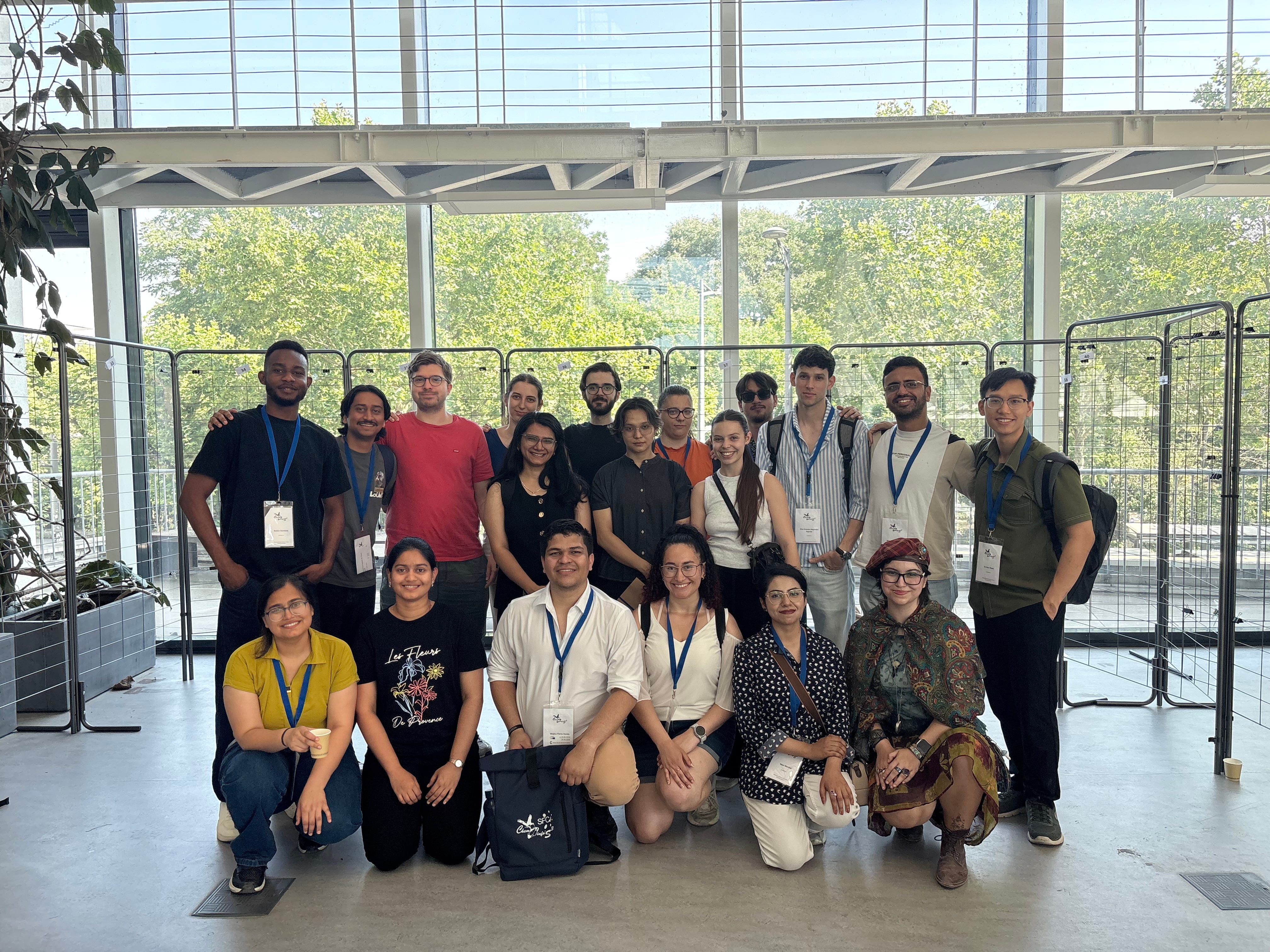
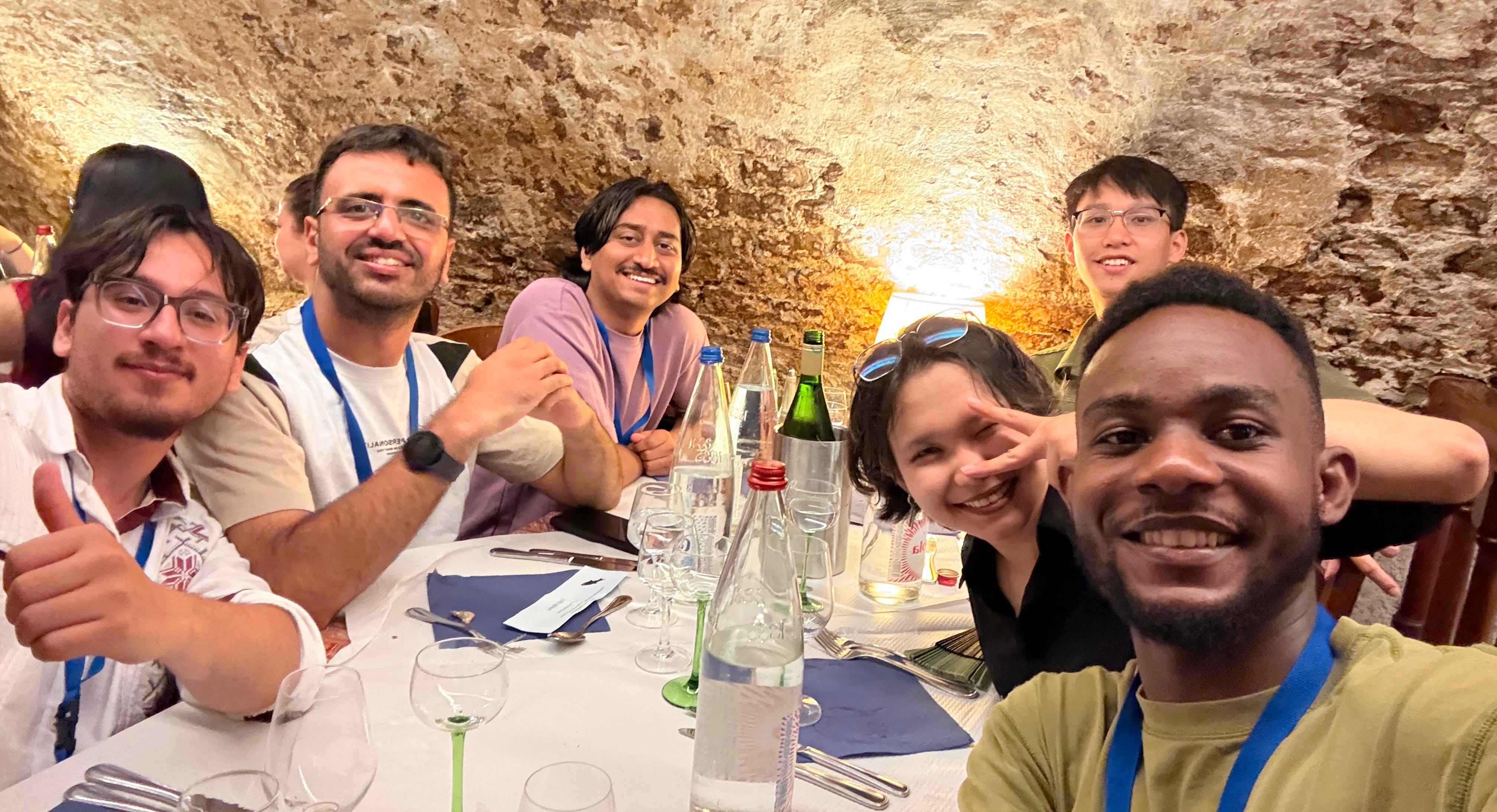
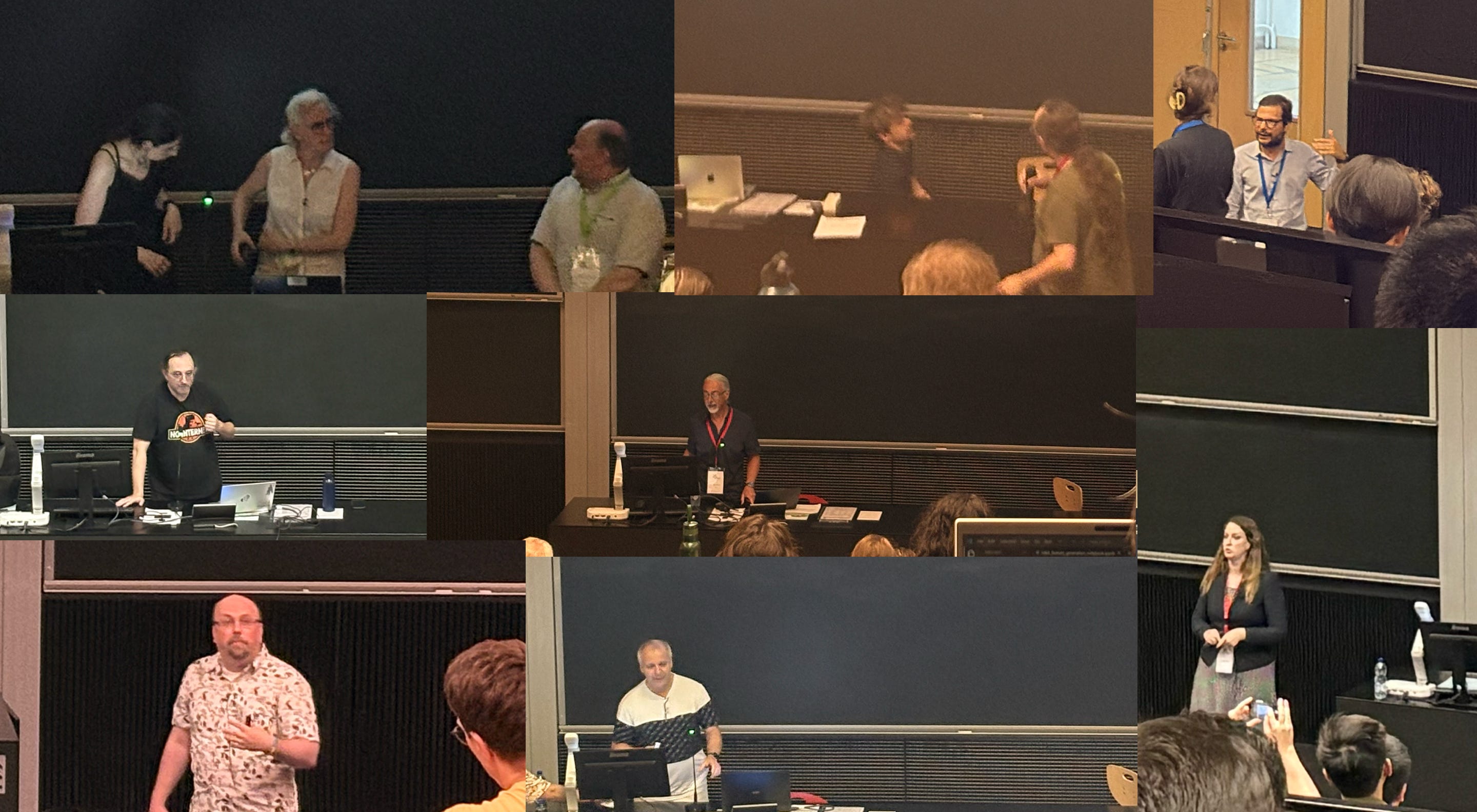
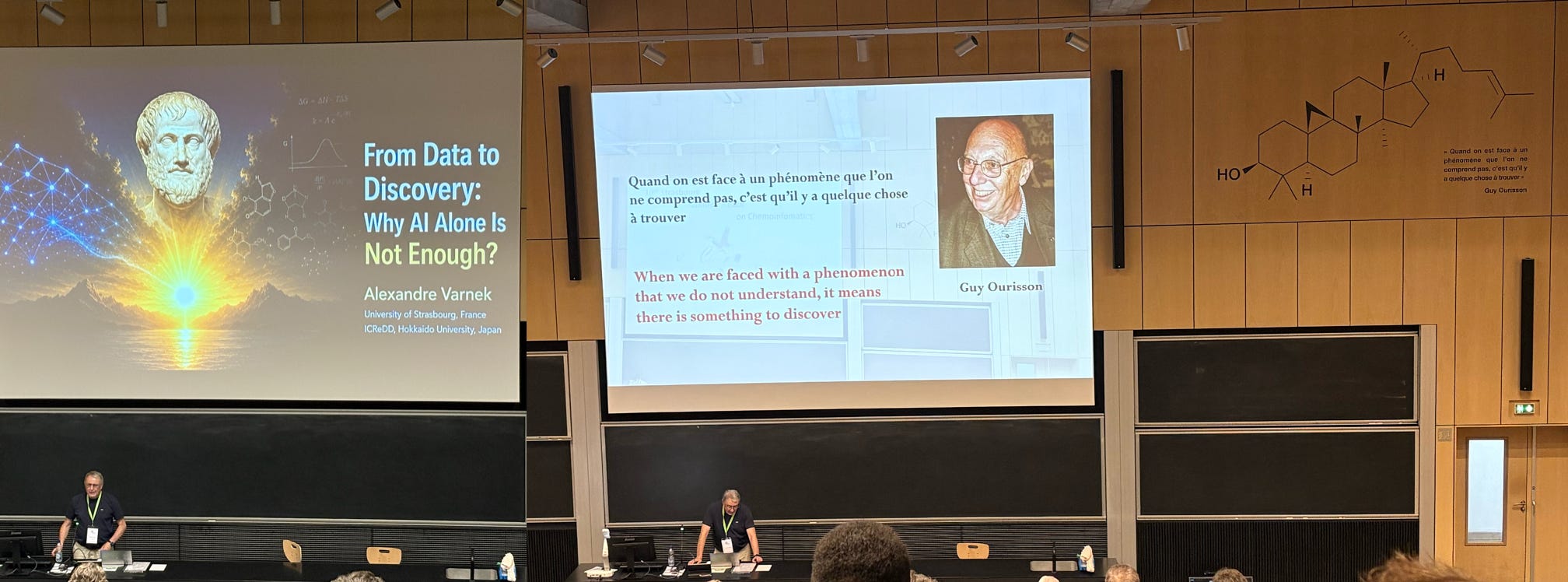
Once again, many thanks to the organizers of the event and the co-ordinators of the Erasmus Mundus Master Program in ChEMoinformaticsPlus for their support.
Clustering high-throughput screening hits into initial SAR series leaves medchemists with the tedious task of manually refining the groups to fix clustering / misclassifications. Fährrolfes et al. instead built a human-in-the-loop workflow to improve this. They start with a standard k-means++ assignment and present a flattened projection using a modified Stochastic Proximity Embedding algorithm. What makes this interesting is the feedback loop: when an expert manually drags a molecule to a different cluster to correct it, a modified Pegasos online Support Vector Machine instantly treats that reassignment as a hard constraint. It then incrementally updates the multi-class decision boundaries without retraining completely. The authors demonstrated that this interactive setup cuts the required manual refinement steps roughly in half across several benchmark datasets. Code can be found here. Good read !
Depenveiller et al. present a method, PP-MAPS, which extends dynophore analysis from small-molecule ligands to protein-peptide complexes. The practical obstacle is that peptides come encoded as part of the macromolecule in MD outputs, so most pharmacophore engines refuse to treat the peptide as a ligand. PP-MAPS solves this by enforcing the peptide at the end of each PDB frame and delegating feature detection to LigandScout or the open-source CDPKit. The output is a pharmacophore-type frequency matrix aggregated over the trajectory per residue, this makes comparisons across peptides and receptor variants possible. The CDPKit path runs end-to-end without a LigandScout license. Worth a read if you work on peptide therapeutics or need a compact way to summarize how a conformational ensemble fills a binding groove. Code can be found here.
BEACON: a Bayesian optimization inspired strategy for efficient novelty search
Benchmarking docking and ML re-scoring screening performance for KRAS G12D in pancreatic cancer
Development of a double-pharmacophore workflow for screening subtype-selective M
Enhancing molecular property prediction of transformer models with dual graph representation
Adaptive Interval Selection for Near‐Infrared Spectra via Fused Lasso and Backward Interval PLS
Mechanism-Informed Rules Tunably Balance Novelty and Feasibility of Predicted Enzymatic Reactions
Robustness of Protein–Ligand Binding Affinity Prediction Models to Docked and Predicted Structures
tmQM-RDF Data Set: A Knowledge Graph Representing Transition Metal Complexes
Guided Adaptive Diffusion: An Evolutionary Framework for Multimodal Atomistic Structure Prediction
Sampling out-of-distribution chemical spaces via Bayesian flow
Hold on tight: the kinetic profiling of opioid receptor ligands using the CORAL-MD
Universal graph-based identifiers of chemical structures for linking large material databases
CycleVI: isolating cell cycle variation with an interpretable deep generative model
A Molecular “Thermometer” for Measuring Effective Non‐Local Exchange
Insights to Orientation Dependence of Molecular Conduction Modeled by High‐Level Quantum Embedding
Recent Advances in Targeting RNA Splicing Factors with Small Molecules
Photocage Prodrug Coupled with Injectable Hydrogel for Self-Amplified Photochemotherapy

“paula”@paularambles


emozilla @theemozilla
I felt a great disturbance in the Force, as if millions of voices suddenly cried out in terror and were suddenly silenced. I fear something terrible has happened.
4:53 PM · Jun 26, 2026 · 1.03M Views
44 Replies · 1.03K Reposts · 30.1K Likes

David Sun@arcticinstincts
thank you for the math advice


Mathematica @mathemetica
"I don't have any magical ability. I look at a problem, play with it, work out a strategy." — Terence Tao
11:12 AM · Jun 26, 2026 · 176K Views
37 Replies · 129 Reposts · 3.51K Likes

Ash Jogalekar@curiouswavefn
Victor Weisskopf on why scientific style is important and why Pauli's lectures exemplified it.

4:14 AM · Jun 26, 2026 · 4.64K Views
3 Replies · 17 Reposts · 94 Likes
Ash Jogalekar@curiouswavefn
Very nice semi-quantitative estimation and justification of the Born-Oppenheimer approximation from Bethe and Jackiw, Intermediate Quantum Mechanics (Bethe said he learnt these kinds of orders-of-magnitude estimations from Fermi, the master of the art).
5:34 PM · Jun 22, 2026 · 2.58K Views
2 Reposts · 45 Likes

No Context Brits@NoContextBrits

2:48 PM · Jun 28, 2026 · 663K Views
169 Replies · 3.27K Reposts · 55.4K Likes
Best,
Manas
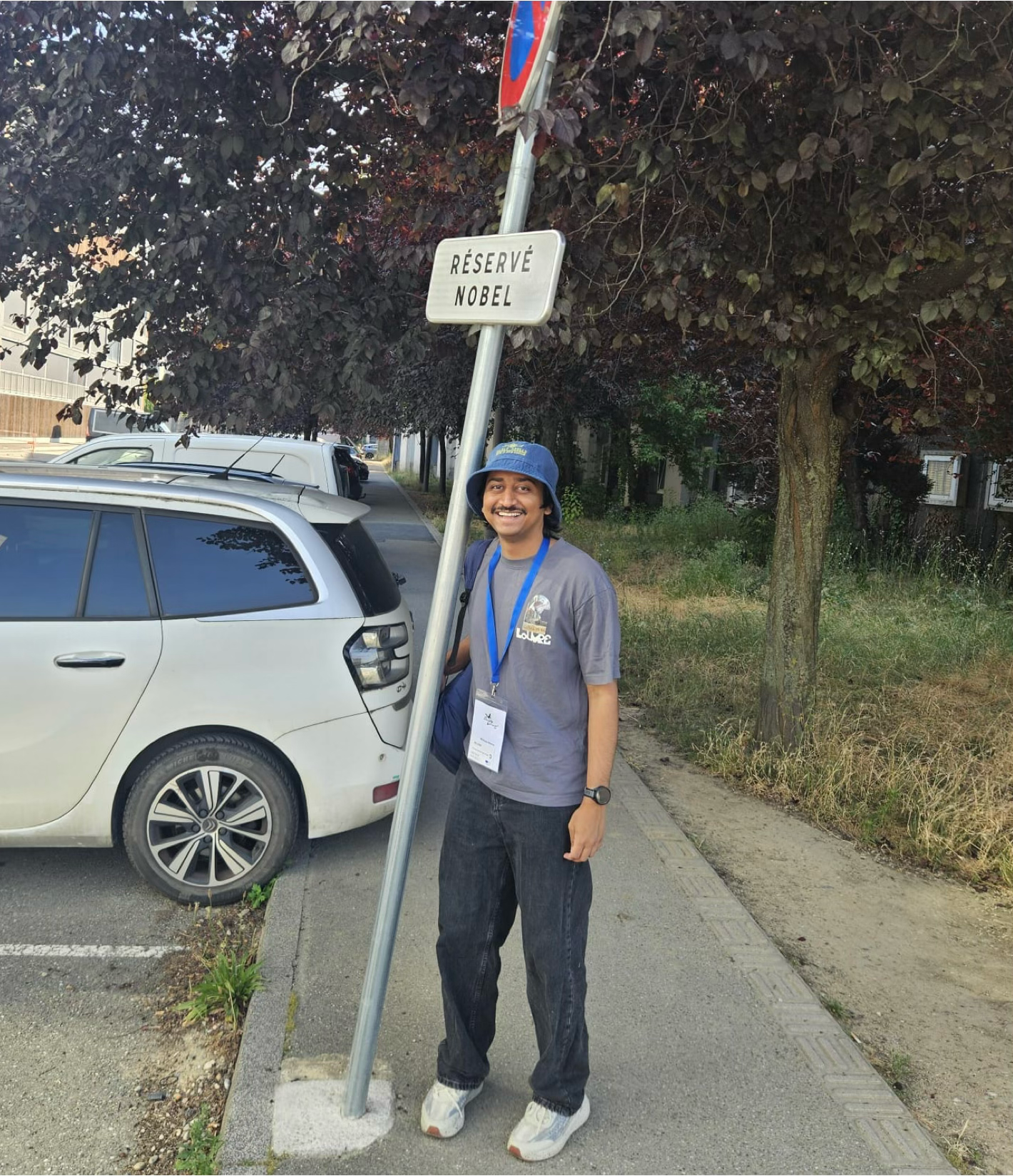
Guess who’s parking spot this is ?
Comments
Nothing yet. Say the first thing.
Sign in to join the conversation.