
The UK Parliament noted in June 2026 that government was still working to understand the cumulative power and water demand from announced and proposed AI Growth Zones and hyperscale data centres through 2035.
Stephen Flynn, Scotland’s Cabinet Secretary for Economy, Tourism and Transport, has welcomed the investment, jobs and economic potential associated with AI data centres, while the Scottish Government has also acknowledged the need to assess their wider energy and climate impacts. The tension is obvious: the economic benefits are being promoted before the full cumulative costs are known.
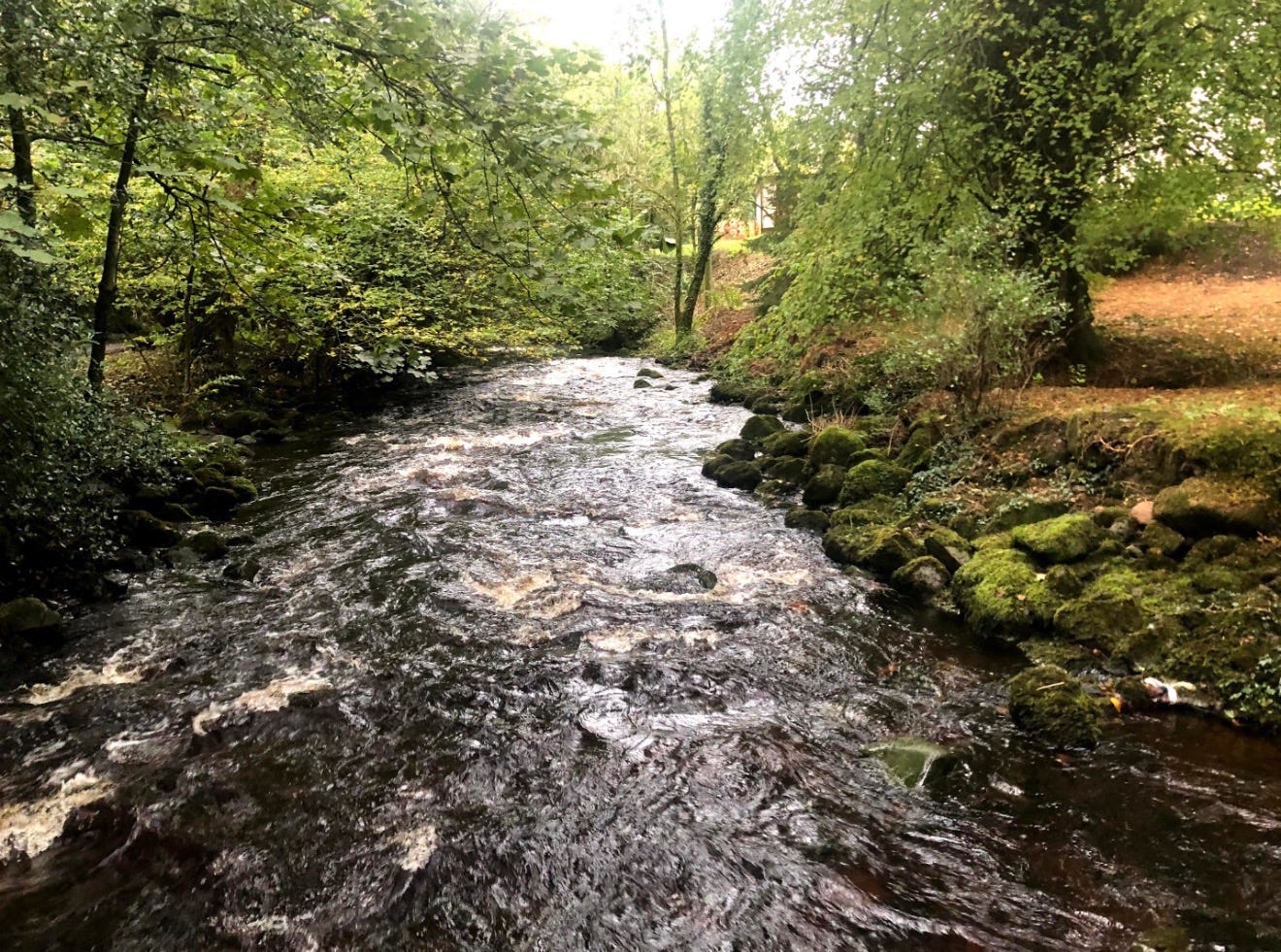
But what more is there to understand? The problem is not one data centre, but the cumulative demand of hundreds of them drawing on the same finite water and electricity supplies.
A single data centre can consume between roughly half and the full power output of Torness. Individual developments may look manageable in isolation. The cumulative effect is another matter.
The National Energy System Operator projection cited by Parliament is that data-centre electricity consumption could quadruple by 2030 .
An AI data centre requires a consistent power supply, so if you power it with renewables you need a backup generator which will burn fossil fuels, or a very large battery farm which could still run out. The obvious solution is nuclear power, but that exacerbates the problems of heat and water requirements, not to mention waste.
Then there is the heat. Slough in England, which has multiple data centres, is estimated to be between 2 and 9C hotter than it otherwise would be. It has been suggested that the heat could be used to heat homes, but there are nowhere near enough houses near the data centres and they do not shut down in the summer when heat is not required.
Then there are the water requirements. There is a lot of water on Earth, but relatively little readily available fresh water. About 97.5% of Earth’s water is saline. Only around 2.5% is fresh water. Of that freshwater, roughly 69% is locked in glaciers and ice caps, about 30% is groundwater, and well under 1% is in lakes, rivers, wetlands and the atmosphere where it is comparatively accessible to people and ecosystems.
The amount of clean, accessible freshwater available is actually limited. Aquifers can be depleted much faster than they recharge, particularly during drought, and AI data centres can compete for the same local supply.
In August 2026, Romania’s navy carried out a controlled explosion on a rock formation in the Danube to redirect more water towards the Cernavodă nuclear power station, after severe drought and record-low river levels threatened its cooling-water supply. What happens when there is no more water to redirect?
Separately, in Ukraine, the Kakhovka Dam was destroyed on 6 June 2023. That caused the Kakhovka Reservoir to drain dramatically and disrupted the main source of cooling water for the Zaporizhzhia Nuclear Power Plant. The IAEA explicitly recorded the resulting loss of reservoir water available to the plant.
AI data centres rely on a dependable source of water for cooling. England is already projected to face a public water-supply deficit of up to five billion litres a day by 2055 without further action, even before the full additional demand from industries such as data centres is resolved.
In Scotland, this is no longer theoretical. By late July 2026, several areas had reached SEPA’s highest ‘Significant Scarcity’ level, forcing temporary restrictions on water abstraction. Groundwater across eastern Scotland was already low or very low.
In Fayetteville, Georgia, residents near a QTS data-centre campus reported unusually low water pressure. A county investigation later found industrial-scale water connections serving the site, with roughly 29–30 million gallons drawn before the issue was identified.
Erin Brockovich reported complaints from rural residents living near large data-centre developments whose well water had fallen to a trickle, in some cases only “dripping into a bucket”.
In Ashville, Ohio, residents have opposed a proposed AI data-centre and associated power project above the Teays Valley Aquifer, the community’s drinking-water source, raising concerns over water extraction, contamination and long-term pressure on groundwater supplies.
Residents living near data centres in places including Vineland, New Jersey, and Wolfe County, Kentucky, have reported persistent low-frequency humming and industrial noise from cooling systems, transformers and other infrastructure, including continuous noise severe enough to disrupt sleep.
Ranchers have also reported constant humming or hissing near large computing and industrial facilities alongside serious livestock reproductive problems. In one case described publicly by Erin Brockovich, cattle owners reported that over the course of a year they had experienced no live calf births.
And then there is the danger of intellectual dependence. Relying on AI is probably more likely to weaken our capacity for critical investigation and analytical thinking. We are more likely to gradually lose the habit or ability to research, question evidence, reason independently and detect errors if we routinely delegate those functions to AI.
We should also worry about political surveillance. Powerful governments or private billionaires l could combine AI, large-scale data collection and surveillance technology in ways that threaten privacy, civil liberties and democratic accountability.
Considering some of the uses and some of the behaviours of AI, do we actually need all of this?
AI data centres support surveillance systems, cameras, phones, satellites, databases and biometric systems. AI models analyse it all for facial recognition, behavioural profiling, location tracking, predictive policing or intelligence work. The data centres provide the computing and storage needed to run those systems at scale.
These are not just warehouses for data. They are part of the infrastructure that can make mass surveillance and population-level tracking possible. And we are feeding that system with one of the most essential and finite resources on Earth: fresh water.
Under international human-rights law, indiscriminate or arbitrary mass surveillance can interfere with rights including privacy, freedom of expression, association and peaceful assembly.
More fundamentally, this is about the most basic condition of human life: water. As freshwater becomes increasingly scarce, we have to decide whether its use by machines should ever take precedence over the needs of people, animals and future generations.
Politicians may eulogise the numbers of jobs created by data centres. But that is short term thinking. Do we really want to risk reducing available water to our future generations? Do we need to hand over scarce natural humanity need to keep advancing in this way? And to what end?
Freshwater should be a resource for humans and animals first. AI data centres help to make that increasingly impossible, and if we want our children and their children to have the same access to fresh water, it requires a fundamental long-term view.
Comments
Nothing yet. Say the first thing.
Sign in to join the conversation.