
About once a quarter, I have to battle off the all-consuming urge to quit my job, sell all my belongings, and move my family onto a small farm. I could do it, I convince myself every time. I’d be so much happier. Let’s move to the woods! I’ll stay home with the kids, I say. I want to be the one to teach my kids about the world, I say. It could be so fun, I say.
The idea of going offline and disconnecting is so trendy right now. There is an increasing desire to shift towards a more intentionally slow lifestyle. Wellness and intentional living influencers are overrunning the social media platforms, pumping out content about how emotionally regulated they are now that they are “living offline,” and their 500k highly engaged followers really love and identify with this message. Please don’t miss the irony here.
In corporate America, WFH capabilities and email on our phones make it almost-impossible to maintain a healthy/any sort of work-life balance. Work from home has become living at work. I’ve been in meetings where the sole topic of discussion was ways to protect and respect our time off. Tips included setting emails to delayed send and removing badge notifications from outlook and teams apps. For those working in corporate, email and teams in our pocket makes it even more difficult to clock-out when we get home. In response to this, people are looking for ways to create that separation on a personal level. Especially for corporate employees that have young kids like myself, the desire to feel like a meaningful contributor to their childhood is strong, because it feels harder than ever to achieve.
What Have I Been Reading and Writing?
·
Jul 6
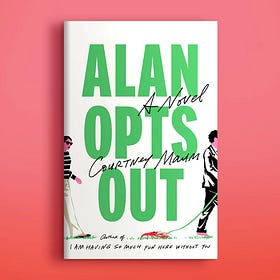
Last week I finished The Correspondent by Virginia Evans (my 19th book of the year). One of my biggest takeaway’s was how large Sybil’s life was able to become because she kept it as “analog” as possible. Yes, there were the occasional emails instead of handwritten letters, but
Among all the hustle and bustle of a fast-paced career based in NYC and demanding schedules, it’s easy to idolize a life disconnected. The idea of “living off the grid” is more appealing than ever. And I think the appeal of going “off the grid” in 2026 is easy to understand. If “living off the grid” used to mean no internet, no electricity, manually drawing water from a well, only hand-sewn clothes, the meaning and application has changed in this digital age. In 2026, the idea of “off the grid” can be something as simple yet drastic as “I deleted my Instagram, I got rid of my smartphone.”
Without going full isolation-mode in the Alaskan wilderness (outhouse required, electricity not provided), people are shifting to a “slow-living” lifestyle. Trying to land somewhere in the middle, the idea of a home “off the grid” in 2026 can be one where there are no screens in the house, and the iPhone is treated like a landline. No instagram or TikTok. No Microsoft teams. Just me, my kids, and a garden.
Privilege aside, I’d be lying if I said the general idea of Tradwifery wasn’t at least a little appealing. No team huddles? No project deadlines? No “circling back” or “putting a pin in this”? Where do I apply!? Between the constant juggling act of excelling at my work, leaving room for my husband to excel at his, and insuring the children are involved in enough hobbies to be well-rounded, upstanding citizens, it’s hard to not think about how much easier it would be if the only thing on my calendar for today was 1. Plant the Garden.
Beyond the matters of a healthy work-life balance, the slow-living lifestyle is appealing as a way to reconnect with our partners, our children, and ourselves. If there is no instagram, there is no doomscrolling.
To simulate the “off-the-grid” vibes today, you have to be able to actually afford it - both financially but also mentally. When I get home from work, I am lucky enough (most days) to be able to put my “work phone” down and be present with my family. That is because I’m college-educated and work a corporate 9-5 job with benefits and very minimal overtime or weekend obligations. But if I had to plant, tend and harvest a garden, something would burn down. I want to be a ble to give my children a better life than my own. In my version of a “better life,” that means their college would be paid for, which requires a million dollars (literally). While I would also like them to understand the value and benefit of growing their own food, I don’t have time to do that if I need to make one million dollars.
But I can find time to browse Zillow in any area with annual property tax estimates of $1,300 (they do exist) at the expense of the project deadlines that I need to meet to be paid actual dollars.
The search is on for ways to disconnect within the confines and demands of our individual lives and jobs. Bricking our phone, gray-scaling our home screen, Do Not Disturb for the hours we choose. The person with the lowest screen time wins. I only follow people on Instagram I personally know. Everyone is searching for ways to be harder to reach and harder to influence.
Being disconnected is the new status symbol, and fully embodying the “slow-living” lifestyle (literally and entirely) is largely unattainable. Only the most privileged among us - with time to invest - are able to overhaul their values, stay home with their children, and “enjoy” the slowness of a life with no Google Calendar or meeting reminders.
Every quarter I make my pitch to my husband - I just need 3-5 acres. I could homeschool the kids. I want to feel like I do something that matters. And every quarter, he talks me off the edge in time for me to join my next meeting. The slow-living lifestyle as an entire way of life isn’t realistic for our family, but I still idolize it for myself and my children. In general, it does align with my values and what I want for my kids. But I have to marry that with my own professional ambition, as well as my husband’s.
Most people can’t afford - financially or mentally - the investment that is actually required for the modern day version of “off the grid.” I can’t have a garden, because I can’t mentally afford to have to keep another thing alive. So I have to find ways I can afford to slow down. We’re screen-free in this house. We have been telling our children the TV is broken since March and we may never turn it back on. I’m still on the grid, and I still answer work calls after 5pm sometimes. But I balance that with my self-imposed rule of not ever working in the airport.
No posts
Comments
Nothing yet. Say the first thing.
Sign in to join the conversation.