
“(I felt very still and very empty, the way the eye of the tornado must feel, moving dully along in the middle of the surrounding hullabaloo.)” — The Bell Jar, 3
“What if manuscripts can absorb and store more than just ink and words? What if their pages can pass on dark energy along with dark stories? Ghosts have more than one way of making sure their stories are heard—of ensuring that the past is not forgotten, but rather pressed into our minds.” — Monsters in the Archives, 82
The Bell Jar by Sylvia Plath and Monsters in the Archives: My Year of Fear with Stephen King by Caroline Bicks
While a semi-autobiographical novel about a young woman’s mental health struggles and a work of literary criticism about Stephen King’s work (including drafts and marginalia) may appear to have very little in common, the mind can’t help but start searching…
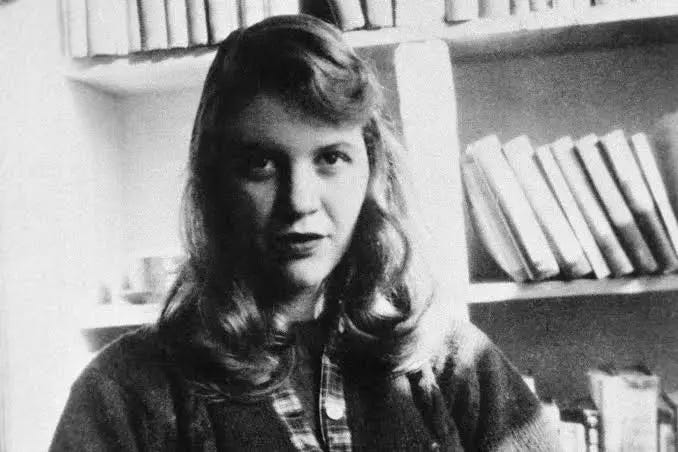
Sylvia Plath’s reputation, someone both beloved and reviled, is, in some ways, larger than her life, and it’s challenging to separate our reading of her work from the woman who wrote it. Her poetry and prose, her marriage to Ted Hughes, her hospitalization at McLean Hospital and experiences with electroshock therapy, as well as her suicide have fused into a powerful cultural mythology, and she’s become both an icon and a cautionary tale, a tragic example of how poorly mental illness, particularly in women, has been understood and treated. Plath herself overshadows Esther Greenwood, just as Plath’s death often overshadows Plath as a real person. At the same time, her racism and considerable blind spots in the text can’t, and shouldn’t, be ignored.
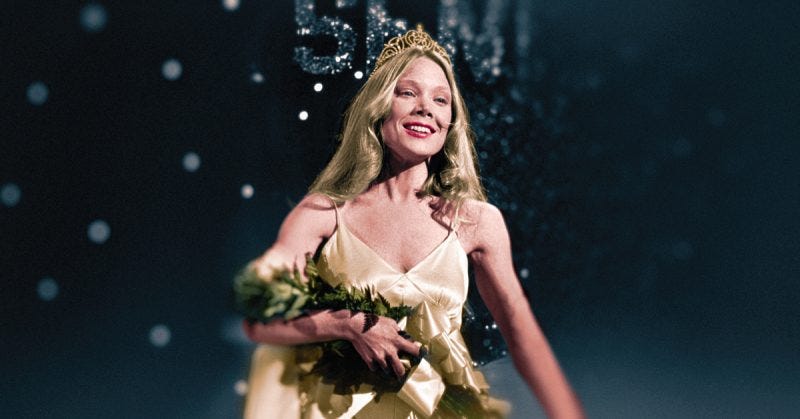
Caroline Bicks, a Shakespeare scholar, is the first scholar given access to Stephen King’s archives, who is the subject of Monsters in the Archives: My Year of Fear with Stephen King. These two subjects, Shakespeare and horror, create such a fascinating overlap, and seeing how a Shakespeare scholar close reads the work of a horror writer is its own pairing. What’s also compelling is how Caroline Bicks shares her childhood fears and how facing them through storytelling becomes part of this whole process. Each of the texts she explores — The Shining, Carrie, Pet Sematary, ʼSalemʼs Lot, and Night Shift — have all been made into films, so the fear exists in multiple mediums.
One of the things I enjoy about a chaos pairing is how quickly our minds start to work to relieve the chaos and to start making connections. An example popped up just in the description of Monsters in the Archives: “What makes Stephen King’s writing stick in our heads and haunt us long after we’ve closed the book?”
Can’t the same be said of The Bell Jar, and Sylvia Plath?
I’m sure there will be many more connections in our future.
Reading Guides published every Monday: September 7, 14, 21, 28
Zoom Meeting: October 4
Weeks 1 & 2 (weeks starting September 7 and September 14): The Bell Jar
Weeks 3 & 4 (weeks starting September 21 and September 28): Monsters in the Archives
(We decide the books early in order to give everyone plenty of time to access the books, especially for those of us using library books and Libby where a wait time might be involved)
The first reading guide is out September 7!
“Sylvia Plath’s The Bell Jar, a poignant exploration of a young woman’s struggle to navigate modern life and womanhood in mid-century America, is her seminal work and an enduring classic that has proven to be just as relevant today as it was when originally published in 1963.
Sylvia Plath masterfully draws the reader into Esther’s mind with such intensity that her breakdown feels visceral and real, one that makes the early days of her recovery feel even more fragile. Plath’s exploration into the darkest and most harrowing corners of the psyche is an extraordinary accomplishment and has made The Bell Jar a haunting American classic.” (Bookshop.org)
“Caroline Bicks is the Stephen E. King Chair in Literature at the University of Maine, where she teaches courses in Shakespeare, early modern culture, and horror fiction. She is the author of Cognition and Girlhood in Shakespeare’s World and Midwiving Subjects in Shakespeare’s England; co-author of Shakespeare Not Stirred: Cocktails for Your Everyday Dramas; and co-host of the Everyday Shakespeare podcast. Her essays and humor pieces have appeared in the Modern Love column of the New York Times, McSweeney’s Internet Tendency, and the show Afterbirth.
After Caroline Bicks was named the University of Maineʼs inaugural Stephen E. King Chair in Literature, she became the first scholar to be granted extended access by King to his private archives, a treasure trove of manuscripts that document the legendary writerʼs creative process—most of them never before studied or published. The year she spent exploring King’s early drafts and hand-written revisions was guided by one question millions of Kingʼs enthralled and terrified readers (including her) have asked themselves: What makes Stephen King’s writing stick in our heads and haunt us long after we’ve closed the book?” (Bookshop.org)
*Note: Let’s keep our libraries open and utilize them as often as possible! Get on those Libby lists! But if you are purchasing, all the book links I provide are affiliate links for Bookshop.org and if you’re an Amazon shopper, I have them here as well. The bookstore I support is Octavia’s Bookshelf, a Black and woman-owned bookstore in Altadena, CA that highlights BIPOC writers.
Comments
Nothing yet. Say the first thing.
Sign in to join the conversation.