
Create more content. Get better contracts and work. Land new fun clients. Finish the script I haven’t finished. Plan all my trips home. And, well, plan a wedding.
Yes, a wedding. I’ve been married for 5 years to the most wonderful human being I love with all my heart, but we’re finally choosing to have a party back home in Sevilla. And it’s challenging, expensive, culturally complicated, and also... I want it to be vegan.
Which, in a region not exactly known for plant-based cuisine, is proving to be VERY HARD.
Also super excited to finally have half of my life meet the other half of my life.
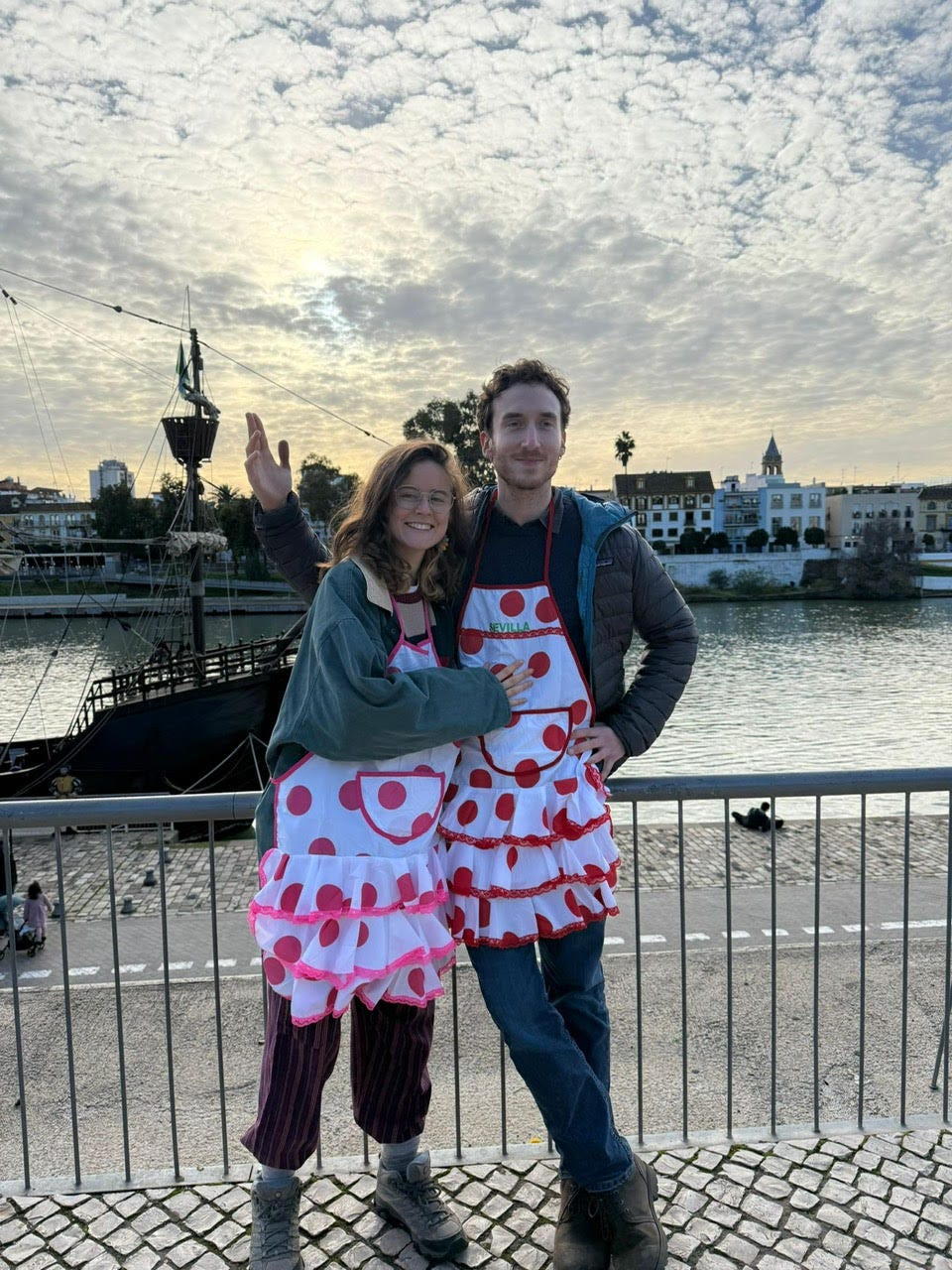
Here’s the situation: most venues work with just one catering company. Our best option in the city? They have put together a nicely curated vegan menu, which is genuinely appreciated, BUT they are clearly not vegans.
The problem? Risotto.
If I have to eat risotto again... It’s literally the only thing I eat at weddings, and obviously, it’s the main dish in this wedding menu too. But well!!! Nothing we can do. We will suck it up and enjoy.
We will eat risotto, hummus, and guacamole for a night.
Let me put this in context: In 2025, around 11.1% of the Spanish population followed either a flexitarian, vegetarian, or vegan diet. That sounds promising, right?
Wrong.
The number of Spaniards who call themselves vegan has increased by 60% to 315,000 people, which sounds like a lot until you realize that’s out of a population of 47 million. We’re talking about less than 1% of Spain being vegan.
And while approximately 2% of Spanish people aged between 20 and 29 were following a vegan diet in 2023, in my parents’ generation? Almost 90 percent of Spaniards followed an omnivorous diet in 2019, and that number hasn’t shifted dramatically.
So, planning a vegan wedding in Andalusia, where meat is practically a religion? It’s... challenging.
Here’s the plot twist: they’re actually not.
According to The Knot Real Weddings Study, the average wedding catering cost in 2023 was $85 per person, but vegan food may be less likely to cause you to overspend, as the cost for beans, rice, vegetables, and fruit is less expensive than high-end meats.
In theory, our vegan menu should be saving us money. In practice? The “specialty” markup for vegan catering in a non-vegan-friendly market can sometimes make it just as expensive, or more, because caterers know they have you cornered.
Plus, there’s the emotional cost. The stress of explaining to family members why there won’t be jamón at a wedding in southern Spain. The anxiety of wondering if anyone will actually enjoy the food. The worry that someone’s going to be hungry or upset.
The hardest part isn’t even the food; it’s choosing who to invite and trying to make it culturally fun for both Americans and Spaniards. How do you explain a vegan wedding to my grandmother, who thinks a meal without meat isn’t a meal? How do you navigate two completely different wedding cultures while staying true to your traditions?
But I’m excited to see how the playlist comes together hahaha. And honestly? If the worst thing that happens is that people eat risotto and complain, we’ll survive. At least no animals had to die for our party.
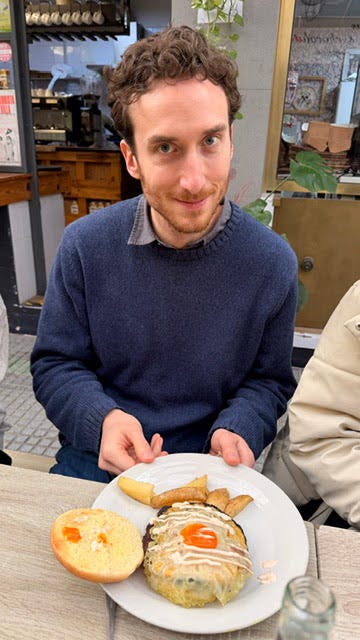
I did Dry January, and it was so eye-opening.
I was so happy waking up every day. I read so much more. I started the year excited about stories and movies (Oscars are around the corner, and I cannot wait. I’ve already watched all the Best Picture nominees, and I truly LOVED Sentimental Value and, surprisingly, Frankenstein too).
But I also missed drinking. Only socially. I felt like leaving parties earlier, less excited to hang out with certain people. I realized who I actually don’t really care about, or people I’m actually not comfortable with.
I enjoyed my first drink after Dry January ended, but it really hurt waking up after that. Not sure I enjoy drinking that much anymore. I won’t quit forever, but I’ll definitely stop drinking as much.
Hot take: Dry January shouldn’t be in January. Worst month to not be able to “go out for drinks” since it’s literally the only plan when it’s freezing outside.
Did you do Dry January?
New York has been the coldest it could have possibly been, and I’m sticking to my running, which is surprisingly so much faster when it’s this cold (fair), but also feels so much better.
The inconvenient part? People fighting for the small piece of street available to walk within the snow. I almost died in Fort Greene last week, trying to go down the stairs and slipping to let an old man go down first.
Follow me on Strava to keep track. If you speak Spanish, you can also watch my cold running chronicles on TikTok.

I’ve been very much in my Fourth Wing era and cannot stop, already on book 3 hahaha.
But on more sustainable matters, I was in love with The Dispossessed by Ursula K. Le Guin. So eye-opening in these crazy times to see politics so clearly and what can happen. I truly, truly recommend it.
I need more book recs.
Rent. Housing. I’ve obviously been very aware of and complained about the situation in Spain, where the housing crisis has been insane. People don’t make enough money to afford rent, and city centers are being colonized by tourists and digital nomads.
The situation in NYC is different, but equally insane.
We’ve been in our apartment for 6 years. Our landlord decided to raise our rent 30% this year. THIRTY PERCENT.
So now we’re forced to move out after years here. We want to stay in our neighborhood, but the prices are skyrocketing.
Here’s what’s actually happening in NYC right now:
The median rent in Manhattan is expected to reach over $5,000/month in 2026, representing a 5% increase from November 2025. Brooklyn median rents are expected to surpass $4,000/month for the first time.
But here’s the real problem: NYC’s rental vacancy rate fell to 1.4% in 2023, the lowest in over 50 years. That means less than 2 out of every 100 apartments are vacant. When supply is this tight, landlords can charge whatever they want.
Why is this happening?
Decades of underproduction: NYC’s housing growth rate has lagged well behind peer cities for decades, even as the city’s economy boomed.
People aren’t moving: The annual turnover rate for NYC rental units is 41% lower than the national average. Rent-regulated tenants stay put (rightfully so), which means fewer units are available for everyone else.
Young professionals keep coming: Between 2021 and 2024, NYC attracted twice as many recent college graduates as any other U.S. city.
High mortgage rates: With mortgage rates at 6%+ and projected to stay that high until 2027, potential homebuyers are staying in the rental market instead.
The result? 46% of rent-stabilized tenants are rent-burdened, meaning housing costs consume more than 30% of their income. Among low-income tenants earning under 50% of the area's median income, 84% are rent-burdened.
And it’s getting worse. The NYC shelter population rose 8.6% in 2024, the third consecutive annual increase, averaging over 87,000 people per night.
This isn’t just a NYC problem; it’s a systemic failure of housing policy. But it feels very personal when you’re the one being forced out of your home after six years.
I don’t have answers. I’m just one more person trying to figure out how to stay in the city I’ve chosen to build a life in.
Hoping Zohran has an answer.
In lighter news, I started crocheting again! I used to do this in college and had forgotten how meditative and fun it is. I’m making a t-shirt.
I’m also trying to learn to sew on my new machine so I can put all these old clothes and street finds to good use. There’s something deeply satisfying about making things last, about repairing instead of replacing, and truly turning someone’s garbage into a fun project.
Focus on ONE new thing this month. Pick one area where you want to reduce waste, be more intentional, or shift your habits:
Start composting
Track your food waste for two weeks and see what patterns emerge
Join a Buy Nothing group and participate actively
Learn to repair one thing instead of replacing it (check out the Repair Café of your neighborhood)
Make one staple from scratch (bread, yogurt, kimchi, etc.) You should def follow me on TikTok if you want to do this.
What are you trying to focus on this month?
February 8, 15, 22 - Vegan Candle Making Class for Beginners (Sustainability Workshops) The Vegan Candle making Workshop highlights the history, importance, and health benefits of vegan candles while also discussing the toxicity of paraffin wax
February 11 - #Talk: International Day of Women and Girls in Science, Instituto Cervantes. The event brings together leading women in science and policy: Dr. Robin Bell, glaciologist at Columbia University’s Lamont-Doherty Earth Observatory; Almudena Fernández UNDP’s Chief Economist for Latin America and the Caribbean (LAC); Dr. Allison Caine, cultural anthropologist at the University of Wyoming, whose research explores health and well-being in rural contexts; and Janet Babin, award-winning journalist specializing in climate and sustainability.
February 13 - NYC Microplastics Symposium
NYC Microplastics Symposium featuring a series of talks, panel discussions, poster demonstrations, and a networking reception
February 28 - ECOLOGICAL CITY - Art & Climate Solutions Workshop (PUPPET)
Create Puppet Art with Artists for Ecological City - Procession for Climate Solutions
February 21 – Lunar New Year Celebration at Queens Botanical Garden
Lion dance, performances, crafts, and more. FREE.
Ongoing – Master Composter Certificate Course
The NYC Master Composter program is back! Take workshops on composting science, advocacy, and community building. Open to anyone 18+ who wants to get involved in community composting. Currently funded through June 30, 2026. Sign up here
First Sunday of Each Month – Repair Café El Barrio
El Barrio Artspace (215 East 99th Street) 11 am-2 pm
Bring broken items and learn to fix them with volunteer experts. Donation-based.
Mar 28 - Street Tree Care with Plant Xchange
Join to care for and add mulch to the street trees. Thanks to District 38 Council Member Alexa Avilés!
Ongoing – NYC Curbside Composting
Now citywide! Check if your building is enrolled on DSNY’s website
Ongoing – NYC Trash Academy
Still, the best free program to learn how the city’s waste system works. Enroll here
Share the events you are joining this month!!!
Time still feels weird. I’m starting the year wanting to do everything at once, which probably means I’ll burn out by March. But maybe that’s the lesson: sustainability isn’t just about the planet. It’s about sustaining ourselves. Our energy. Our capacity to keep showing up.
I’m choosing to focus on one thing at a time. (Well, okay, maybe 2)
See you next month,
Lusi
P.S. Follow me on TikTok for running in the cold, vegan recipes, and general chaos, all in Spanish! If you’re learning the language, it’s a fun way to practice while getting sustainability tips.
No posts
Comments
Nothing yet. Say the first thing.
Sign in to join the conversation.