
ThirdSpace BUZZ is an edgy newsletter on whatever the fuck I want.
When scientific dishonesty intersects with digital public shaming, the consequences extend far beyond academic journals.
Research fraud corrupts truth and wastes vital societal resources, while cancel culture replaces due process with rapid, unyielding judgment.
Together, these forces dismantle institutional integrity, fuel intense ideological polarization, and inflict catastrophic, irreversible harm on individuals caught in the crossfire.
🍌

Sponsored by:
Help us grow by sponsoring our newsletter and reaching an engaged community.

“Life’s fragility lies in its sudden, indifferent interruption.”
— Adam Sternbergh

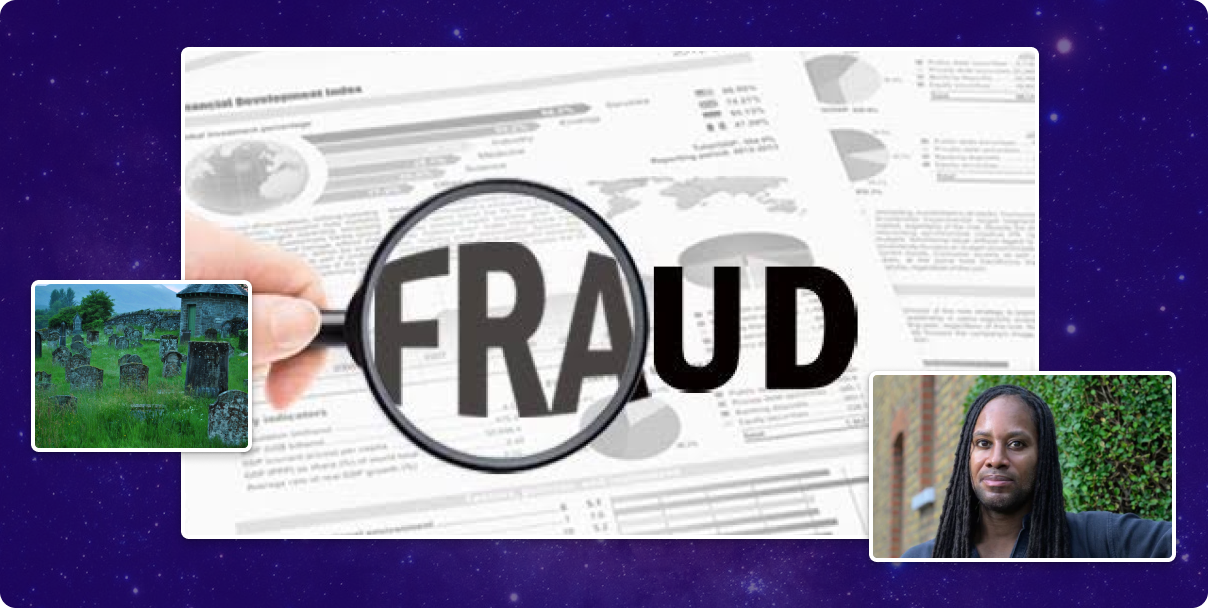
In an era driven by virality and moral outrage, the boundary between holding bad actors accountable and unleashing destructive mob justice has blurred. When high-profile academic misconduct meets the hyper-reactive engine of online cancellation, the result is rarely a measured path toward truth or justice.
Instead, institutions panic, ideological factions weaponize the narrative, and the human beings at the center face swift reputational and personal ruin. Examining how deception and digital outrage interact exposes a growing crisis in modern society—one where truth is compromised, nuance is lost, and the fallout carries permanent real-world consequences.
The integrity of modern higher education rests upon two foundational pillars: rigorous empirical truth and open, transparent debate. When these pillars crumble, the consequences extend far beyond academic journals and university halls.
The intersection of systemic research fraud and hyper-polarized digital cancellation represents a profound institutional crisis—one where scientific deception poisons public trust, ideological shields obscure basic accountability, and unyielding public shaming drives individuals to total personal collapse.
At its core, research misconduct—defined legally through the triad of fabrication, falsification, and plagiarism—is a deliberate breach of the social contract. When researchers make up data, manipulate analytical models, or steal the work of others, they waste public resources, invalidate clinical and social guidelines, and undermine the credibility of legitimate scholarship.
However, the mechanism through which modern society responds to misconduct has undergone a radical transformation. The rise of cancel culture has introduced an engine of rapid, decentralized public shaming. While advocates view public cancellation as a vital mechanism for demanding accountability from entrenched figures, its mechanics often bypass formal due process in favor of online swarming, reputational destruction, and immediate professional excommunication.
When academic fraud and public cancellation collide, the result is rarely a measured calibration of justice. Instead, institutions panic, ideological factions convert misconduct into proxy battles, and targeted individuals face a level of hostility that can quickly spiral into severe psychological distress, harassment, and irreversible real-world harm.
The case of Jason Arday, the former Cambridge University sociology professor who became the institution’s youngest Black professor at age 37, stands as a stark case study in the intersection of academic deception, institutional failure, and culture-war volatility. Arday’s rapid rise through British academia was presented as a miraculous triumph over extraordinary personal adversity, but subsequent investigations exposed a widespread network of academic fraud and personal fabrication.
The unraveling of Arday’s academic corpus began with deep forensic scrutiny of his published research and doctoral thesis.
Philosopher Nathan Cofnas identified over 100 passages in Arday’s 2015 PhD dissertation from Liverpool John Moores University (LJMU) that directly copied a 2009 thesis by Paula Zwozdiak-Myers. Statistical analysis identified 188 sentences that were identical or near-identical, with a calculated probability of occurring by chance as one in 100 billion. Arday’s text retained specific copy-editing errors and unique phrasing from the original source.
In a 2018 study published in Social Sciences, Arday presented interview quotes that he claimed were gathered from his own qualitative field research. Investigations revealed these passages were stolen verbatim from an epidemiological study published by Anjum Memon in BMJ Open, with quotes re-attributed to fictional subjects.
Arday initially claimed to have utilized specialized qualitative software (NVivo) and a secondary investigator to validate his interview data. When questioned, he quietly retracted these claims, effectively admitting to falsifying his methodology.
Beyond his academic papers, Arday constructed an elaborate personal mythology that served to cement his status as an unassailable cultural hero.
Arday built his public narrative on claims of being diagnosed with severe global development delay and autism, remaining non-verbal until age 11 and illiterate until age 18. Former schoolmates directly contradicted these accounts, recalling him speaking normally throughout childhood.
He claimed to have raised over £5 million for charity by completing extreme physical endurance tasks, including running 600 miles in six days and completing 30 marathons in 35 days—nine of them supposedly on a fractured fibula. Medical experts noted the physiological impossibility of running marathons on a broken leg without intervention, and historical charity records failed to verify the claimed fundraising totals or injury narratives.
Arday repeatedly cited severe racial persecution, alleging he received death threats, bullets, and a severed pig’s head in the post. Subsequent police inquiries and local investigations found no official records or physical evidence corroborating these events.
Arday’s academic focus centered on Critical Race Theory and the dismantling of perceived “whiteness” within British higher education. He consistently argued that institutional racism was the primary determinant of Black academic outcomes and framed institutional standards as tools of systemic exclusion.
When scrutiny over his work first emerged, Arday and his supporters weaponized this framework to dismiss legitimate inquiries. He labeled criticisms a “vile smear campaign” driven by right-wing racial animus, claiming that critics were using a reactionary “playbook” to target Black scholars. This posture created a powerful deterrent: administrators and journalists hesitated to pursue red flags for fear of being publicly branded as racist. Former students noted that Arday used similar tactics in the classroom, attributing academic disagreements or grade disputes to student “white privilege”.
The handling of the Arday case highlighted a systemic breakdown across higher education and media institutions.
LJMU initially cleared Arday in late 2025, dismissing massive textual copying as an “honest and reasonable error”. Driven by commitments to Diversity, Equity, and Inclusion (DEI) metrics, university leaders prioritized protecting a flagship success story over conducting a rigorous forensic audit.
In September 2025, Times Higher Education prepared a detailed 63-page report exposing Arday’s plagiarism. Arday’s legal team threatened defamation suits, claiming the investigation was racially motivated. The story was spiked, delaying public accountability by nearly a year.
By August 2026, the volume of objective, statistical proof forced the University of Cambridge to launch a formal independent investigation. Arday resigned hours later, citing “unrelenting public scrutiny”. On August 14, 2026, amid intense national media coverage and the collapse of his academic career, Arday was found dead in south London.
Academic Integrity
Methodological falsification and unverified hiring fast-tracks.
Devaluation of legitimate scholarly credentials and erosion of peer-review standards.
Institutional Governance
Ideological anxiety preventing timely investigation of red flags.
Breakdown of public trust in higher education institutions and oversight bodies.
Public Discourse
Polarization into binary proxy wars where individuals become political symbols.
Destruction of nuanced debate; weaponization of identity politics by opposing factions.
Human Toll
Escalation from public exposure to online swarming and total social isolation.
Psychological trauma, loss of livelihood, and catastrophic personal consequences.
The convergence of unchecked deception, institutional cowardice, and hyper-reactive digital outrage creates an environment where truth is secondary to narrative strategy. When universities fail to uphold rigorous standards of truth out of fear of public backlash, they invite the very mob justice they seek to avoid. Preventing future tragedies requires a steadfast commitment to empirical truth, transparent institutional governance, and a rejection of public shaming as a substitute for due process.
Restoring balance requires a double commitment: holding individuals to the highest standards of truth while rejecting the impulse to let outrage replace justice and human empathy.

Help us grow by advertising your business in our newsletter and reaching an engaged community.

Comments
Nothing yet. Say the first thing.
Sign in to join the conversation.