
A couple of years ago, my partner hurt his knee and needed surgery so I had to take over a lot of household and parenting duties. In the evenings after my family was settled in their various activities, I found solace in my visual journal.
Illustrating and journaling my day is a habit that’s stuck with me for over two years. While I don’t crack open my mini art kit everyday, I try to visit it at least once a week. Drawing and painting bring me joy and a bit of calm to my hurried days. I focus on the process and not the finished artwork.
I’ve found this peace in my sketchbook so how can I channel this mindset into my writing practice?
I put so much pressure on myself to get the book right the first time around. I set such high expectations for myself when I was drafting Full Exposure and Something Cheeky. This meant that I often ignored my intuition or was completely blocked for weeks at a time.
When I start to spiral in this way, I remind myself what I tell my writing coaching clients: the first draft just needs to exist. All the magic happens during editing.
Back in August we went on a big family vacation in Portland, Oregon. My super awesome, super organized sister planned our itinerary which include a beautiful tour of the Columbia River Gorge. I tucked my sketchbook in my purse, hoping I’d have a chance to capture some of the gorgeous scenery.
It wasn’t until our last stop at Vista House where we had a long enough time for me to attempt to draw the amazing view in front on me. After my bathroom break, I found an open spot and worked furiously to lay down my watercolors. (I also took a ton of photos because gorgeous!)
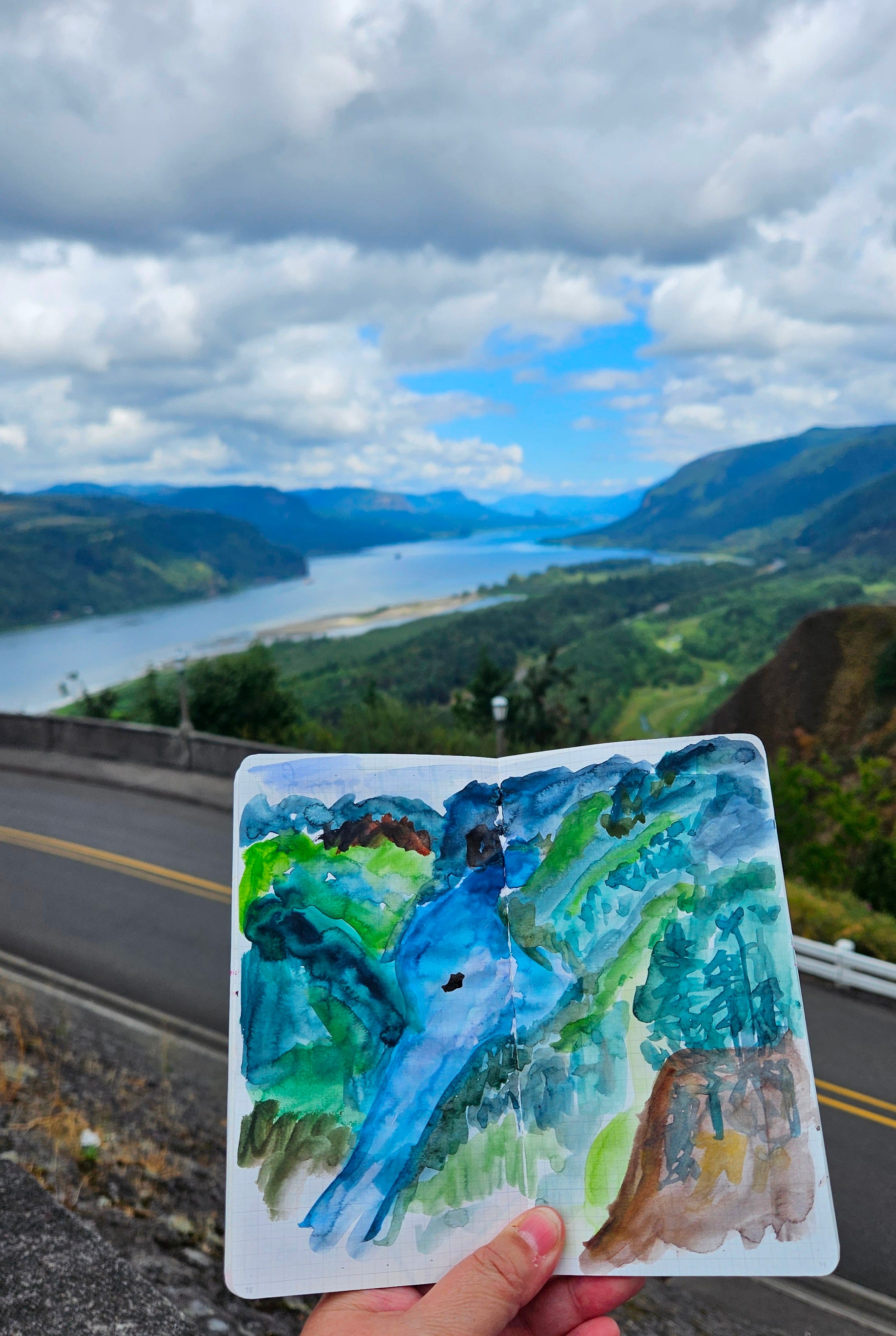
As you can see from the photo, I painted broad strokes, trying to add the biggest shapes and colors. I didn’t have time to layer or add depth to it. I told myself if I could record the big picture, then I add the rest later. The paint was still wet when I buckled my seatbelt back in the tour bus.
I was so focused painting the view that I didn’t have time to stress about getting it “right”—even when people gathered around to watch me paint. What energy I had at the moment wanted to enjoy making my painting come alive. I embraced the excitement of recording this highlight of our tour.
Now I try to approach my first draft with this kind of energy. Get the big picture and the major beats down first. Those big ideas in my head need to exist. It’ll be messy and maybe a bit muddled, but I wrote them down.
Thanks for reading On the Lam! This post is public so feel free to share it.
With my paint still wet, I rushed back onto the tour bus. We had a forty-five minute drive back to the city, so I took this time to reassess my painting as it dried. I compared it with the photos I’d taken.
After the paint dried, I reassessed my work. Where could I add shadows to allow the valley areas to pop? How can I add ink to pull the eye to the mountains? Did I need to add colors that I didn’t have time to mix on location? Should I outline that rock so it’s more evident to the eye?
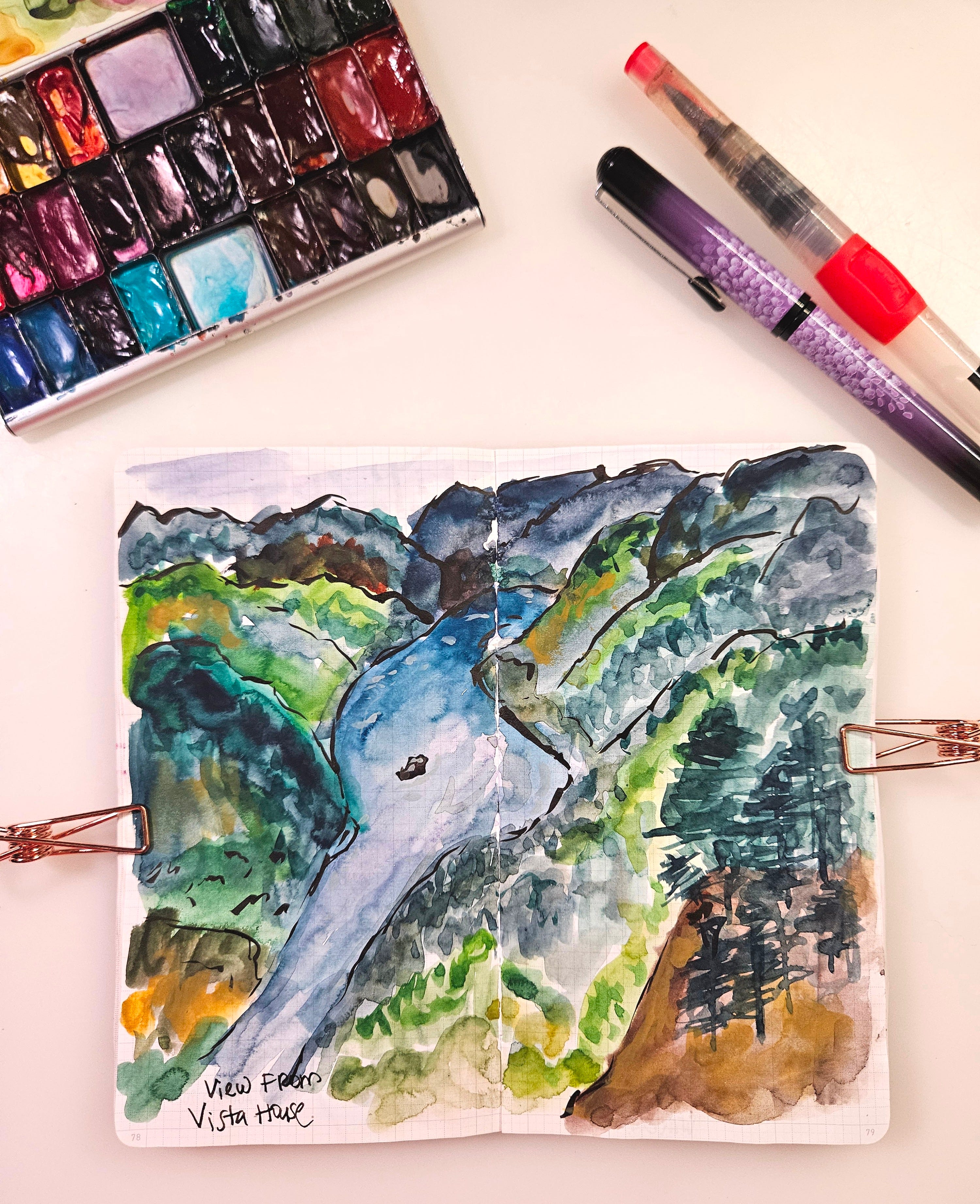
When I painted on location, I knew I’d have time later to refine my painting. I could fix what I could and learn to accept what I couldn’t. I’ve come to learn that those “imperfections” are a part of my art style.
Once I finished adding the layers and details, I took a well-deserved nap until the bus dropped us off at our hotel.
I revised my novel in multiple phases. During my first pass, I look at the big picture things that can make or break a story: character motivation and conflict that pushes them to change (or not). The later passes focus on more detailed, nitpicky things like making my intentions clearly to the reader through word choice or sentence order.
I knew there was a connection between how I approached my visual journaling and drafting my novels, but it took me a while before I could articulate it.
In the end, I love telling stories. In my illustrated journal, I tell the stories for an audience of one: me. I use it as a way to remember what I’ve done and what I’ve seen. Mostly it’s about the food I’ve eaten.
My novels, on the other hand, are stories I want others to read. I’m telling stories that a younger me (and current me) want to read. I know for sure that others want to read them, too.
But the first I must do is tell that story for myself before I can refine it for others to read.
If you’re like me and searching for ways to create a more sustainable writing practice, check out Writer Igniter FLOW Summit, hosted by my friend Gabriela Pereira of DIY MFA. We’ve know each other since our kids were mere babies. Both of us deal with the emotional roller coaster of being writers.
I’m speaking about How to Create a Writing Practice When You’re Low on Spoons and there’s a roster of great talks that will help you find your focus and write!
The virtual summit starts today and is FREE to participate in real time. There’s an optional paid pass where you’ll have continued access to the sessions. I’m also an affiliate for this event so if you choose to upgrade, I’ll earn a small commission. Thanks in advance for supporting me whether you go for the free or upgrade!
This Substack is 100% human-created with my own hands. That means typos so if you spot one, congrats on your future as a copyeditor!
Comments
Nothing yet. Say the first thing.
Sign in to join the conversation.