
Those familiar with this blog know our work on NHLe, aiming at rating over 50 62 leagues (with the NCAA divisions being split and a few other new minor leagues) over the world in order to compare apples to apples when it comes to players coming from different backgrounds.
With the regular seasons having ended everywhere, it was time to heat up the code and roll out the new values for 2026.
If you are not familiar with our approach at NL Ice Data, we explained it in this original article.
Revisiting NHLe part 2
·
February 17, 2024
The question is now an old friend for most hockey fans. How can we compare the performance of a player in Finnish Junior league with a player from the USHL? Or what’s the equivalent of scoring 50 points in the ECHL for the German DEL?
To sum it up:
We are using a Full-network NHLe, players moving up to better leagues and down to lesser leagues are taken into account (it’s not all about moving up to the NHL).
We are using a 5-years rolling model. Here, performances from 2021-22 to 2025-26 included.
Stats are era-adjusted with 2026 level of scoring as reference for each league.
What are the trends?
The trends recorded in 2025 continue, as things have definitely stabilized since the aftershock of the last NHL expansion (each expansion (nhl+ahl) removing about 50 players from the rest of the world).
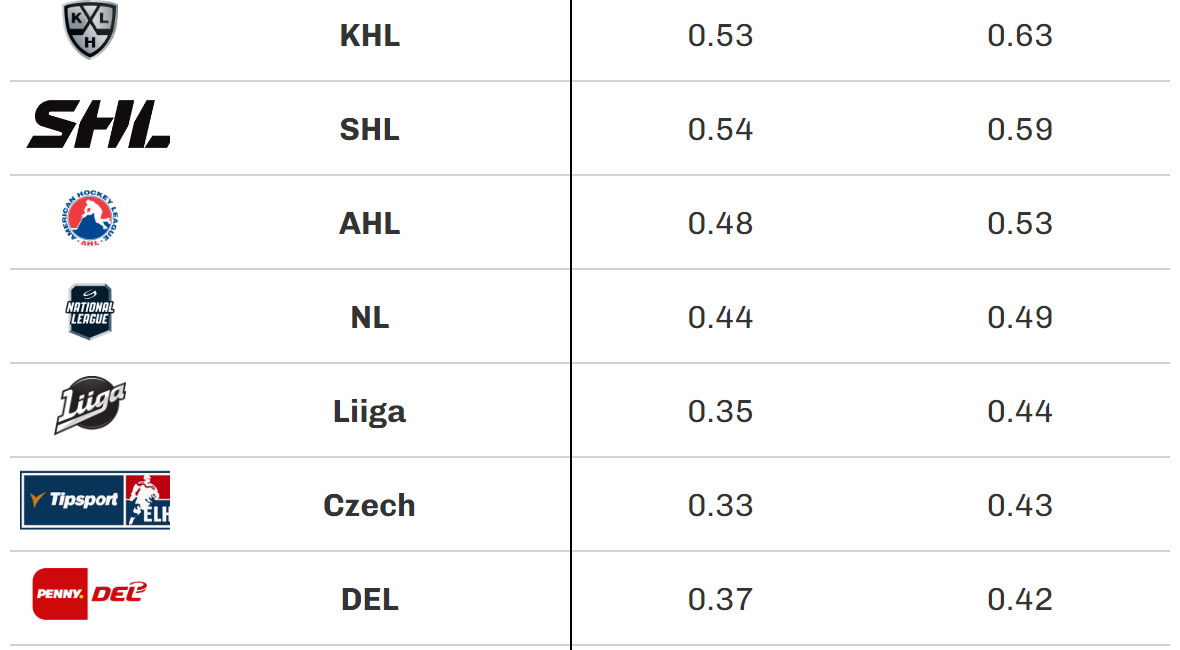
The best european leagues are even gaining some tractions, with the SHL catching up to the KHL and the swiss NL continuing to grow.
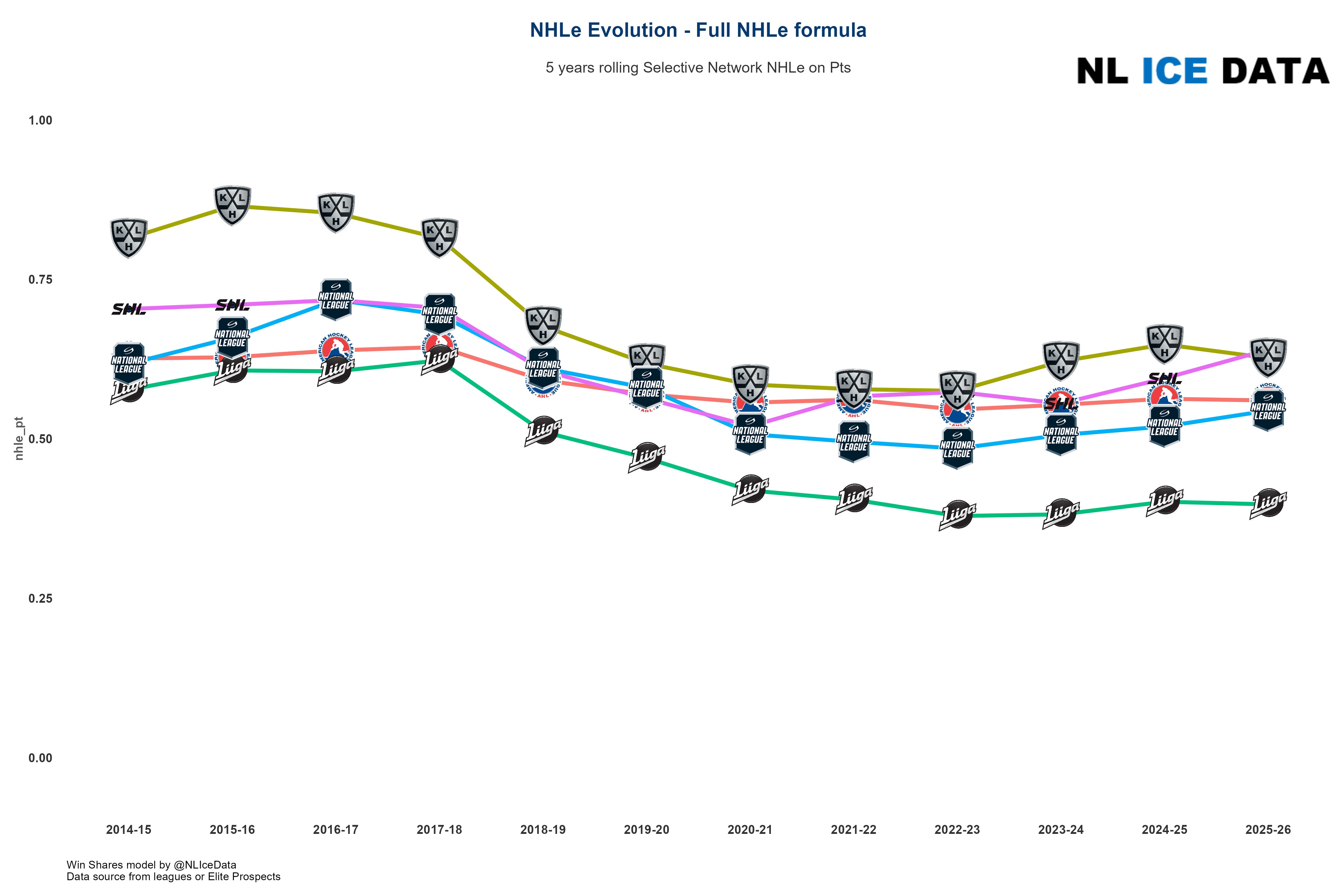
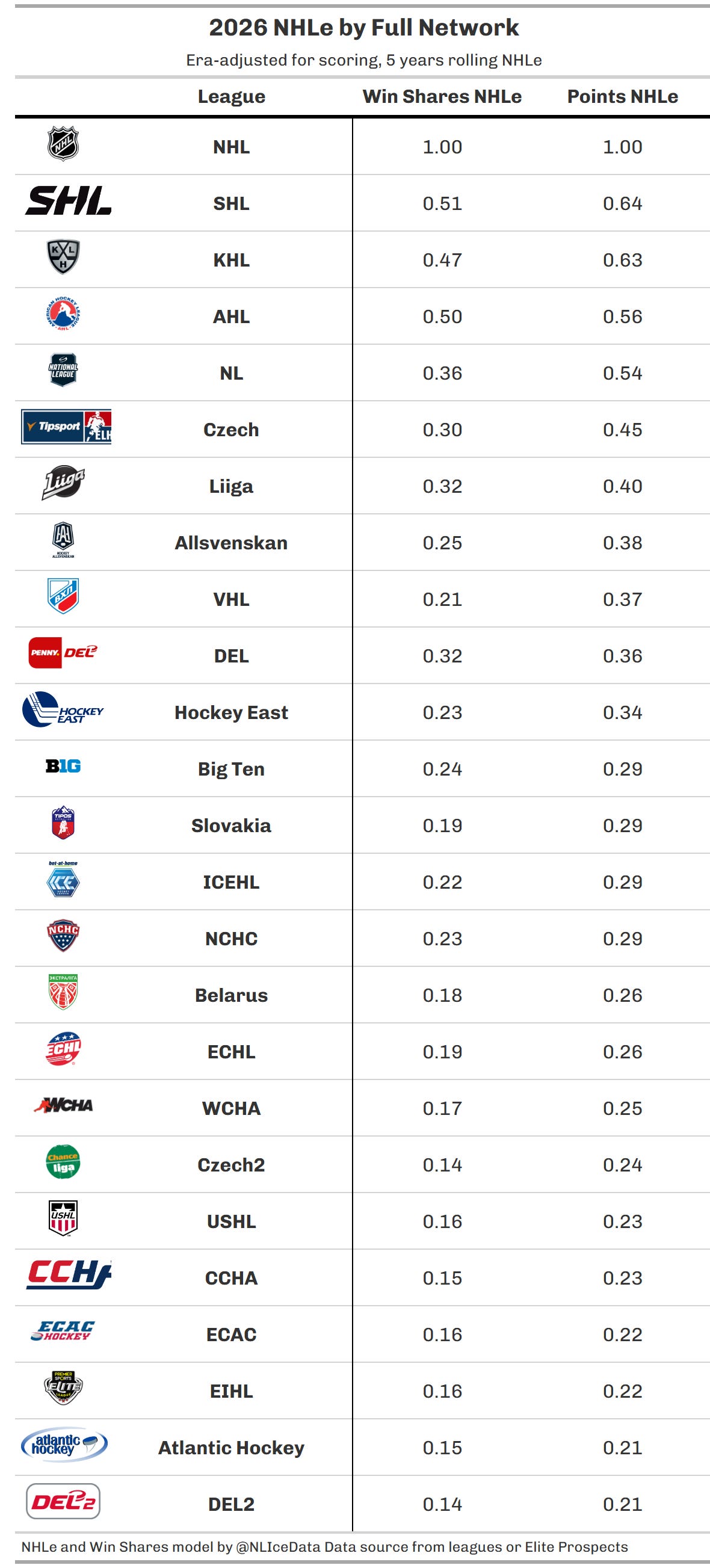
The SHL has actually taken over both the AHL and KHL, either on Win Shares or points NHLe, which is quite a statement. Some veteran AHLers/NHLers returned home, the SHL is attracting the best talent from Liiga and other leagues, and players are coming and going a lot between the SHL and the NL.
Behind that trio, the swiss NL is on its own level, while the Czech Extraliga still leads over the finnish Liiga and german DEL.
Second level leagues like the russian VHL and the swedish HockeyAllsvenskan still represent excellent alternatives to other top-country leagues like Slovakia or the (mostly) austrian ICEHL.
Hockey East and Big Ten divisions still leads the NCAA, while the USHL remains on top of all OHL, WHL, QMJHL.
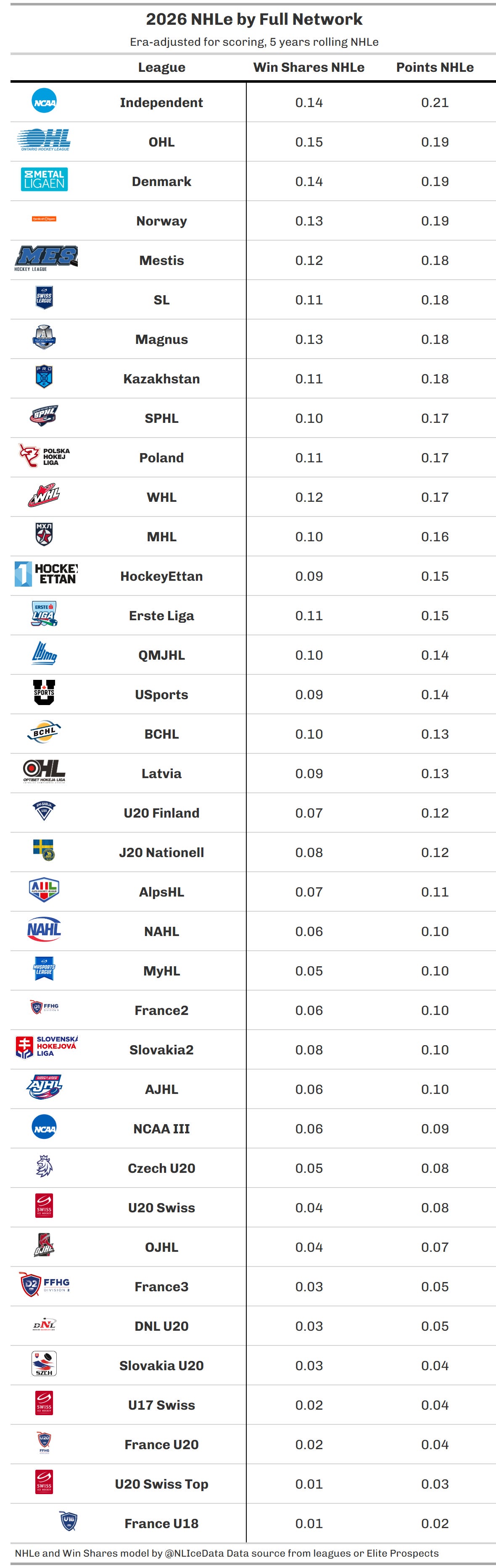
If we want to look at trends over the last 3 years, we clearly see the SHL (and the Allsvenskan) and NL moved up, something of no surprises for those paying attention to European hockey. NCAA divisions and the USHL are also on the rise (compared to canadian junior leagues).
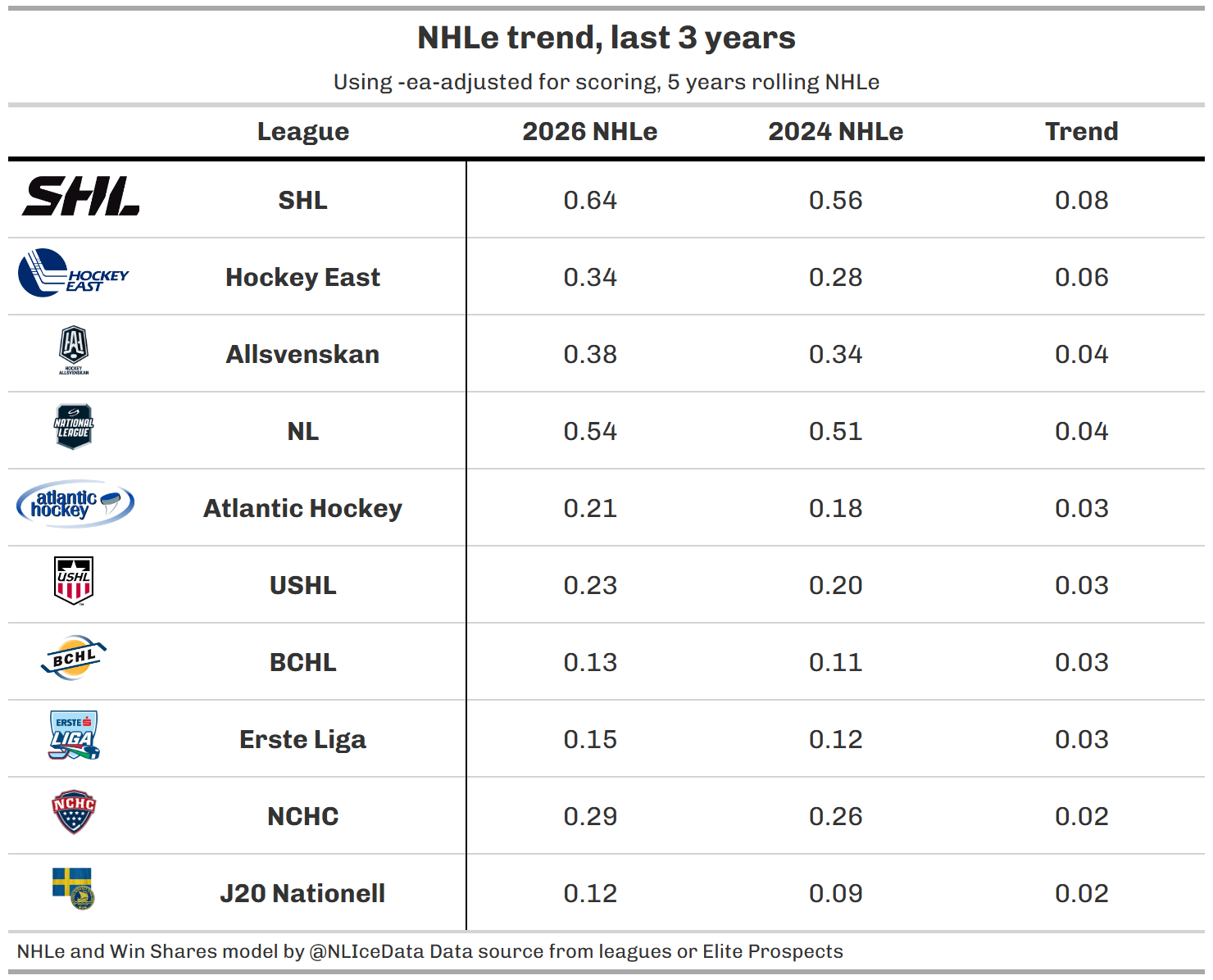
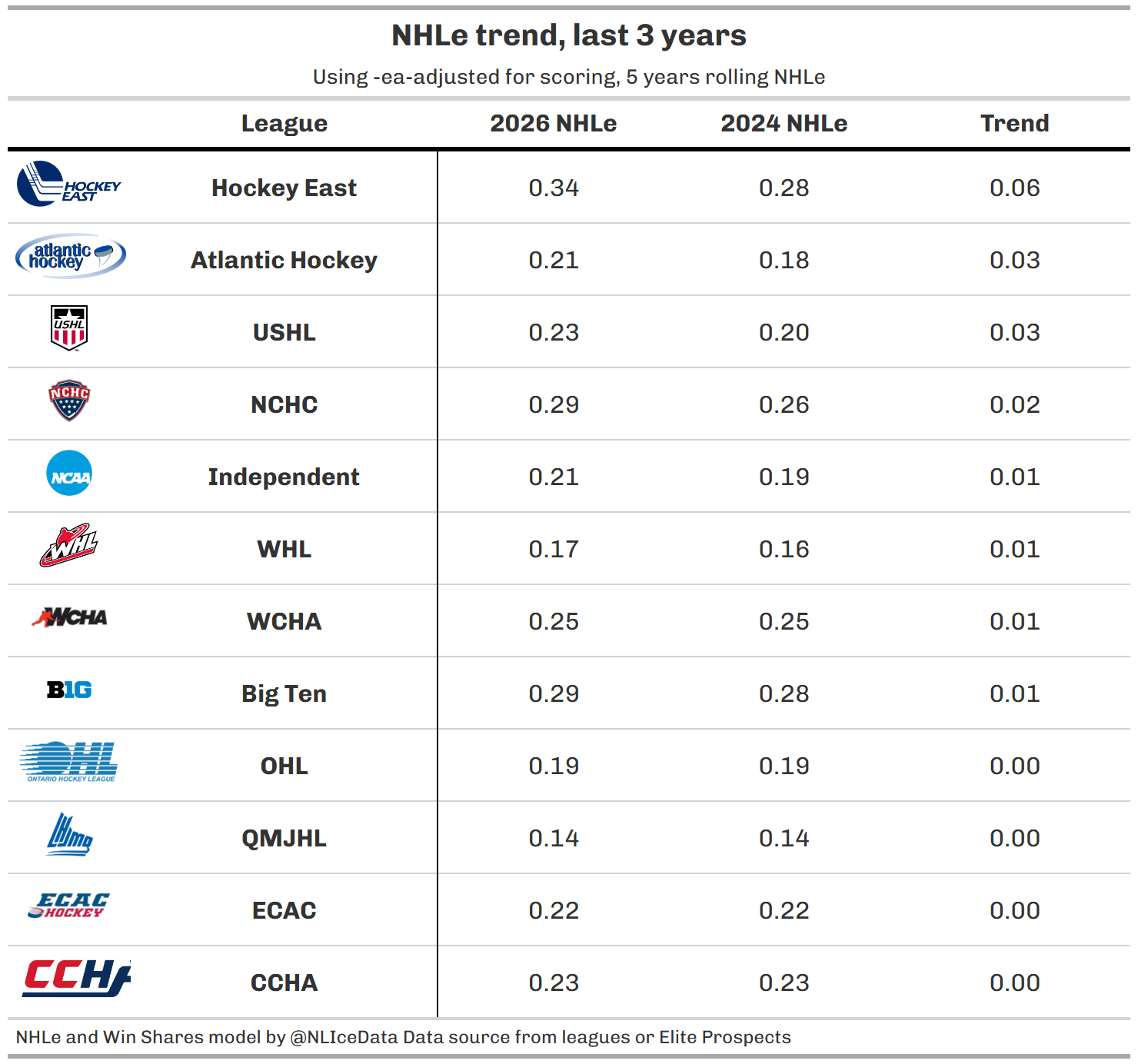
Looking at the leagues trending down, nothing much is happening, but stalling when other leagues are getting better means you actually taking a step back.
In that regard, the OHL and QMJHL do not look good here. Changes are small, but signs are there.
Comments
Nothing yet. Say the first thing.
Sign in to join the conversation.