
Like Work Forward? Please like ❤️, subscribe 📨, and (most of all) share 🔄
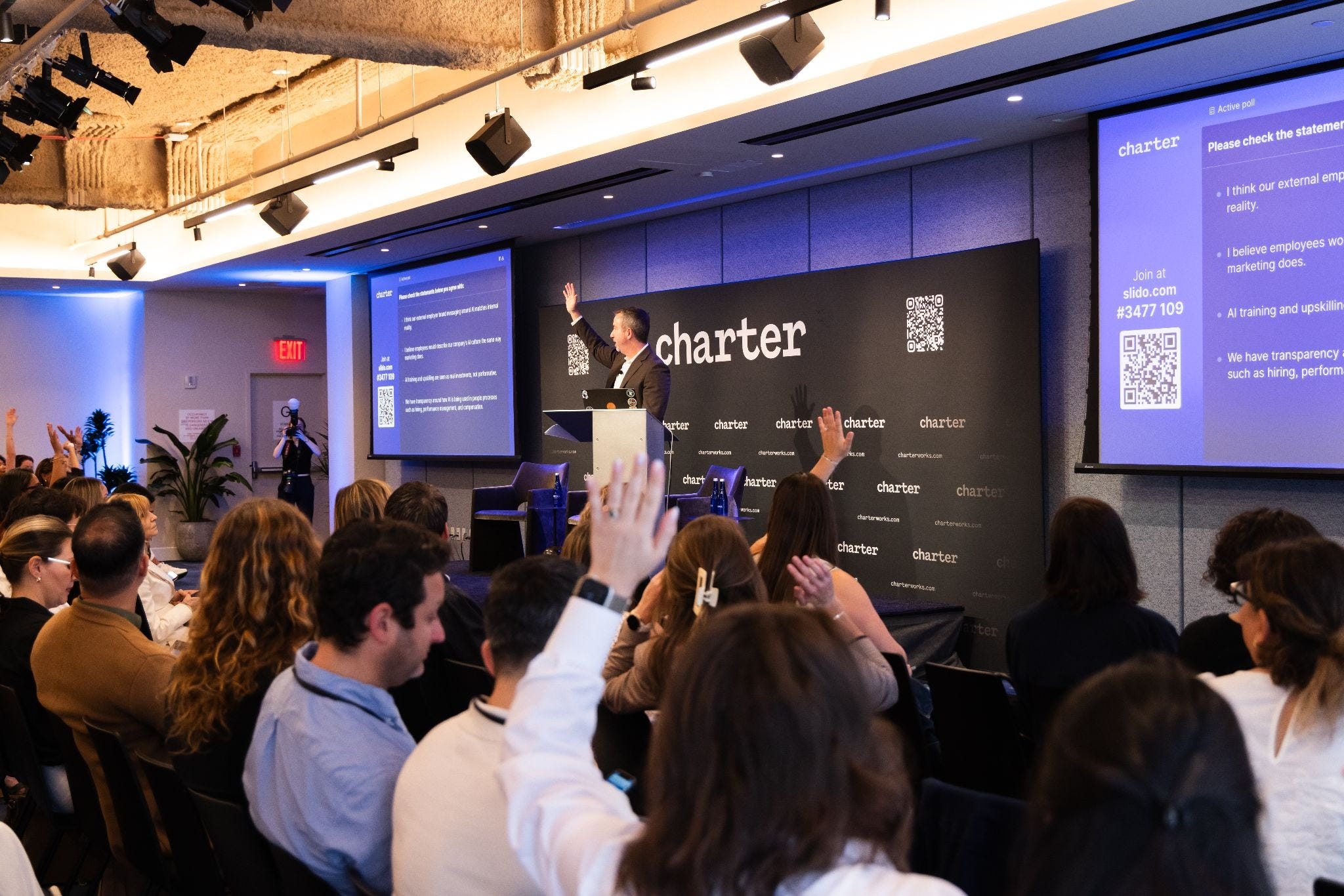
About 150 senior leaders said they were fine, but their teams were nervous. It felt more than a bit like one of those “I’m fine, but I’ve got a friend” moments.
We were at Charter’s New Employer Brand Summit, where I ran a quick live poll from the stage. The first question asked how people felt about AI in their own work, and the answers came back overwhelmingly upbeat: 67% positive, a wash of words like curious, efficient, empowered, and excited.
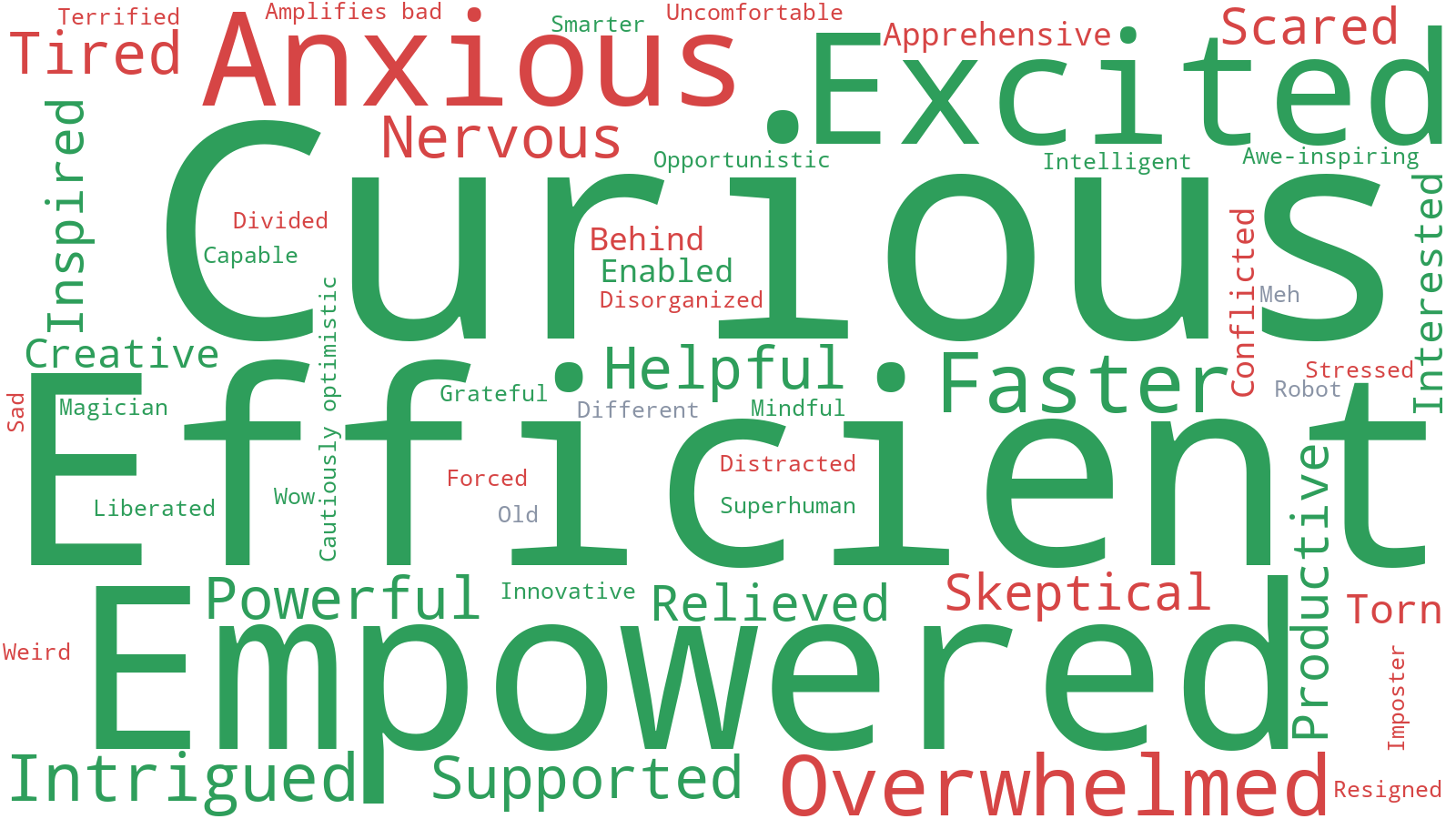
Q: What’s one word that describes how AI makes you feel?
Then I asked the same room how they thought everyone else in their organization felt, and the mood inverted. Only a third stayed positive, while 65% turned negative and landed on words like nervous, anxious, scared, and overwhelmed.
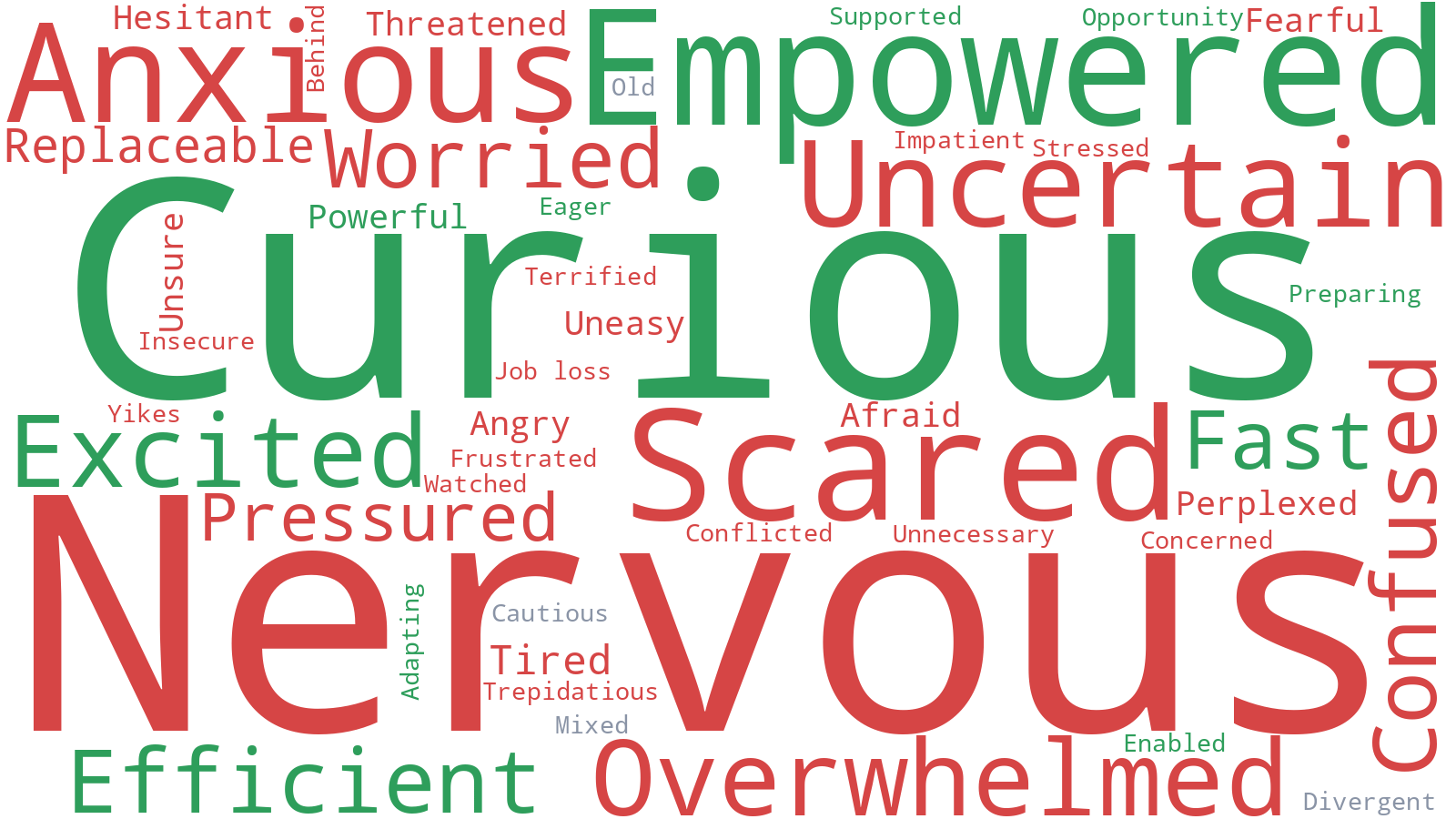
Q: What are one or two words that describe how you think AI makes people in your organization feel?
Those are two considerably different readings of the same challenge, separated only by whether someone was describing themselves or the colleague sitting next to them. As I said from the stage, we were all telling some version of the same story: I’m fine, but everyone else is worried.
Having talked with plenty of folks, “I’m fine” isn’t where leaders are either. Coming together though helped us all learn and understand we’re not in this alone.
Most of those leaders carry real uncertainty of their own, about the technology, about their teams, and about their own ability to steer through a shift none of us fully understands yet. Admitting that out loud feels risky when you are the person everyone turns to for steadiness, so the worry gets relocated onto a safer target: the team, the org, everyone else in the building.
Psychologists have a name for this: “pluralistic ignorance” describes what happens when individuals privately feel one way, assume the group feels the opposite, and then conform to a consensus they’ve assumed which may not exist. You scan a room of composed faces, decide you are the only one who is unsure, and fix your own expression to match. Run that in the C-suite and you produce a collective confidence that nobody truly feels.
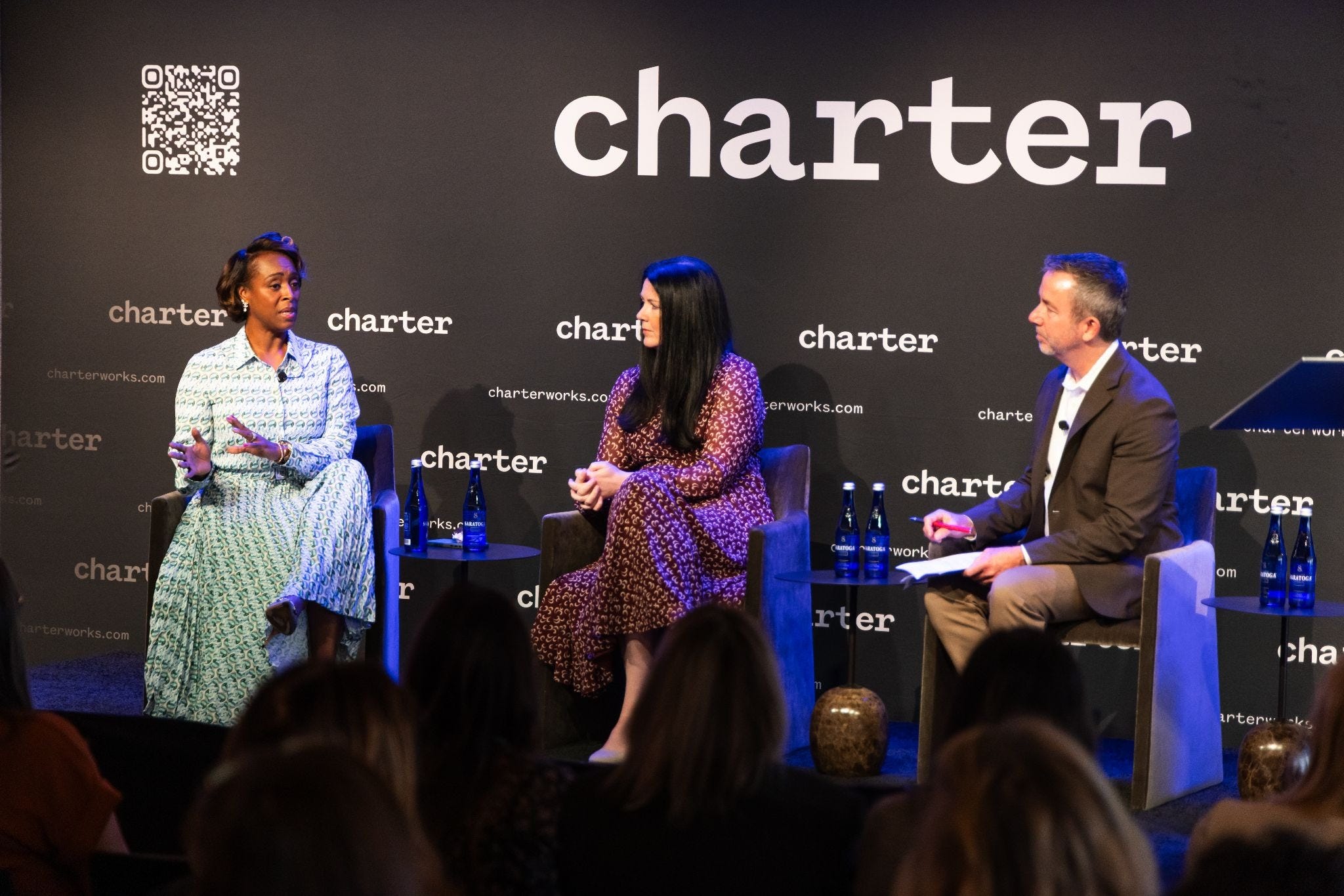
I talked with Katie Burke, chief operating officer and Harvey, and Doniel Sutton, chief people officer at Pinterest, about this in our session. What’s the CPO and CEO partnership look like, when 80% of CEOs are fearful of losing their jobs if they don’t get gains from AI? Katie’s take: you have to get real with each other, and the CPO almost always has to go first.
That’s hard, but better than the alternative, which is leaders who reach for control: mandates, monitoring dashboards, adoption scorecards, and the occasional layoff dressed up as motivation. Snowflake’s CIO recently bragged that he cut part of his team to push the rest toward AI, explaining that “at the time, my team hated me, but I thought it was a provocative way.” Yeah, I’d follow him into battle…
Each of those moves manufactures more of the exact anxiety it was meant to fix, which is the doom loop running on schedule.
Too many leaders are feeding it right now while trying to assure everyone, themselves included, that they’re fine. That’s why I’ve always loved Charter: human-centered leaders, growth mindset, and a community where leaders can turn to each other for real talk. We got a lot of that…
The conversation with Doniel and Katie was a big part of the antidote that showed up on stage this week.
Our talk centered on a premise that sounds obvious but rarely survives two tough quarters: high performance does not depend on fear, hustle theater, or bro culture, and usually runs the other way.
Katie was refreshingly blunt about the state of things: Everyone is under pressure, nobody has it solved, Harvey included. Hearing the COO of one of the most closely watched companies in legal AI say that out loud settles a room faster than any amount of polished reassurance: It lets everyone else know they can get real.
Doniel put the sharpest point on the cost of keeping that act up. “No one does their best work when they’re scared,” she said, and her prescription was for leaders to drop the armor first, to model the uncertainty rather than hide it. That tracks with the case I keep making for courage as a core leadership skill.
Fear does not produce the creativity or the risk tolerance a real transformation demands. It produces compliance, quiet quitting, and people driving adoption for the dashboard while the important work stalls.
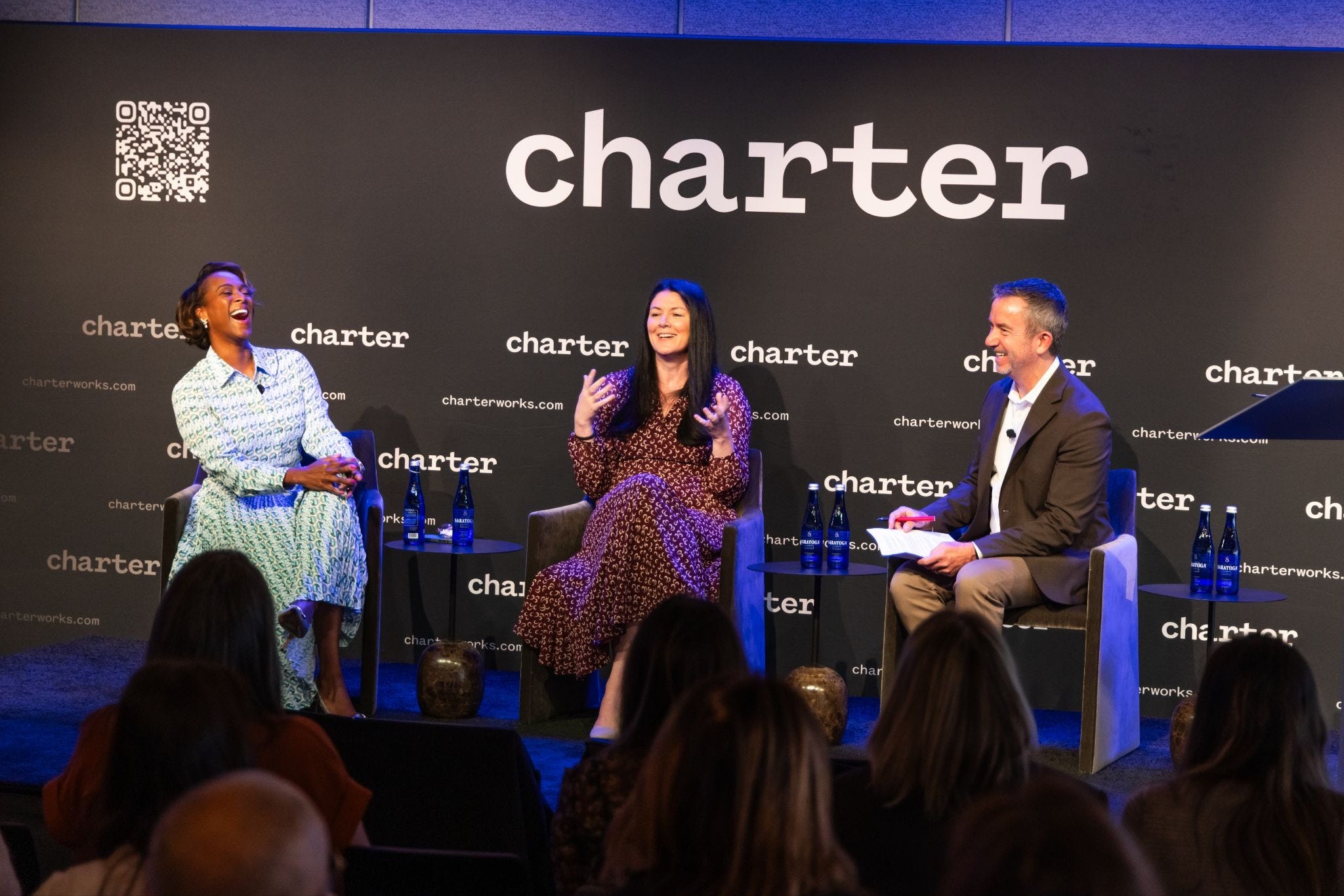
Doniel Sutton, Katie Burke and I clearly had too much fun.
Katie’s other theme was the danger of promising more than you can deliver. The quickest way to wreck trust in a moment like this is to guarantee an outcome you don’t control, so her teams frame things as a bet instead, naming “this is our bet” and what they can reasonably expect to follow.
Given their rapid growth from 200 to over 1000 employees, she also has a back-to-basics discipline aimed at nailing fundamentals like onboarding before chasing everything at once.
“With great growth comes great responsibility,” she said, “and 10 more problems.”
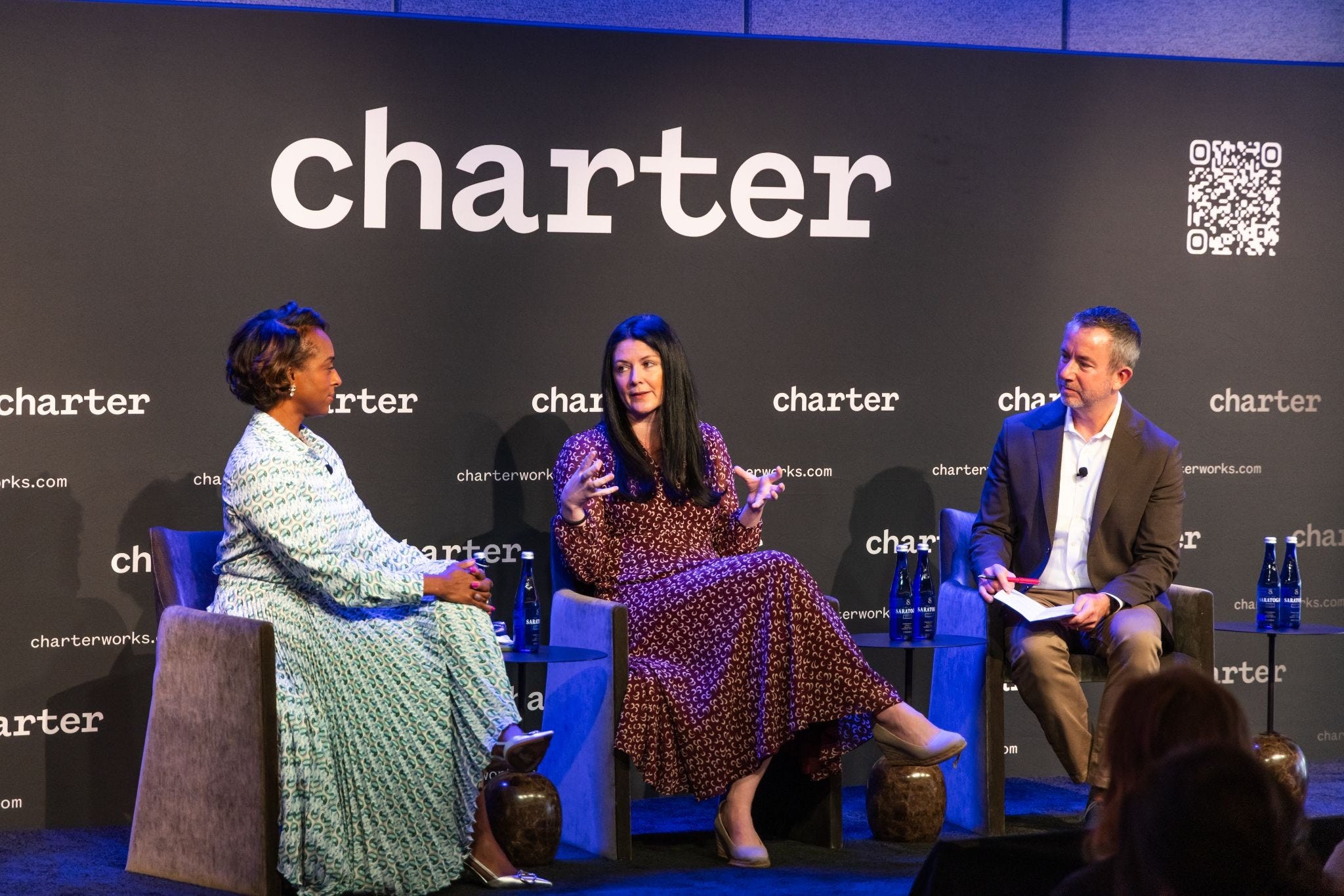
None of this works without managers, which was one of Doniel’s major points. At Pinterest, knowing how to use AI in your role has become an expectation, and the people who make that real are managers rather than some separate transformation office. She has written about why that makes good managers more important, not less:
“They’re the connective tissue bridging the gap between company strategy and execution. They are player-coaches who actively shape the culture of our company by creating space for teams to learn, grow and develop.”
Her conclusion is one I’d underline: “Some people think AI is making managers optional. I’d argue it makes the good ones matter more than ever.”
Katie made the structural version of the same point, that transformation needs both top-down direction and bottom-up energy, since you can’t expect individual contributors to carry it alone.
Harvard’s Linda Hill backed it up with research, like Genius at Scale. In her work on innovative organizations, the leaders who build them “pay close attention to whether people feel both valued and able to add value.” The armor that the “I’m fine” gap keeps everyone wearing is precisely what blocks that feeling.
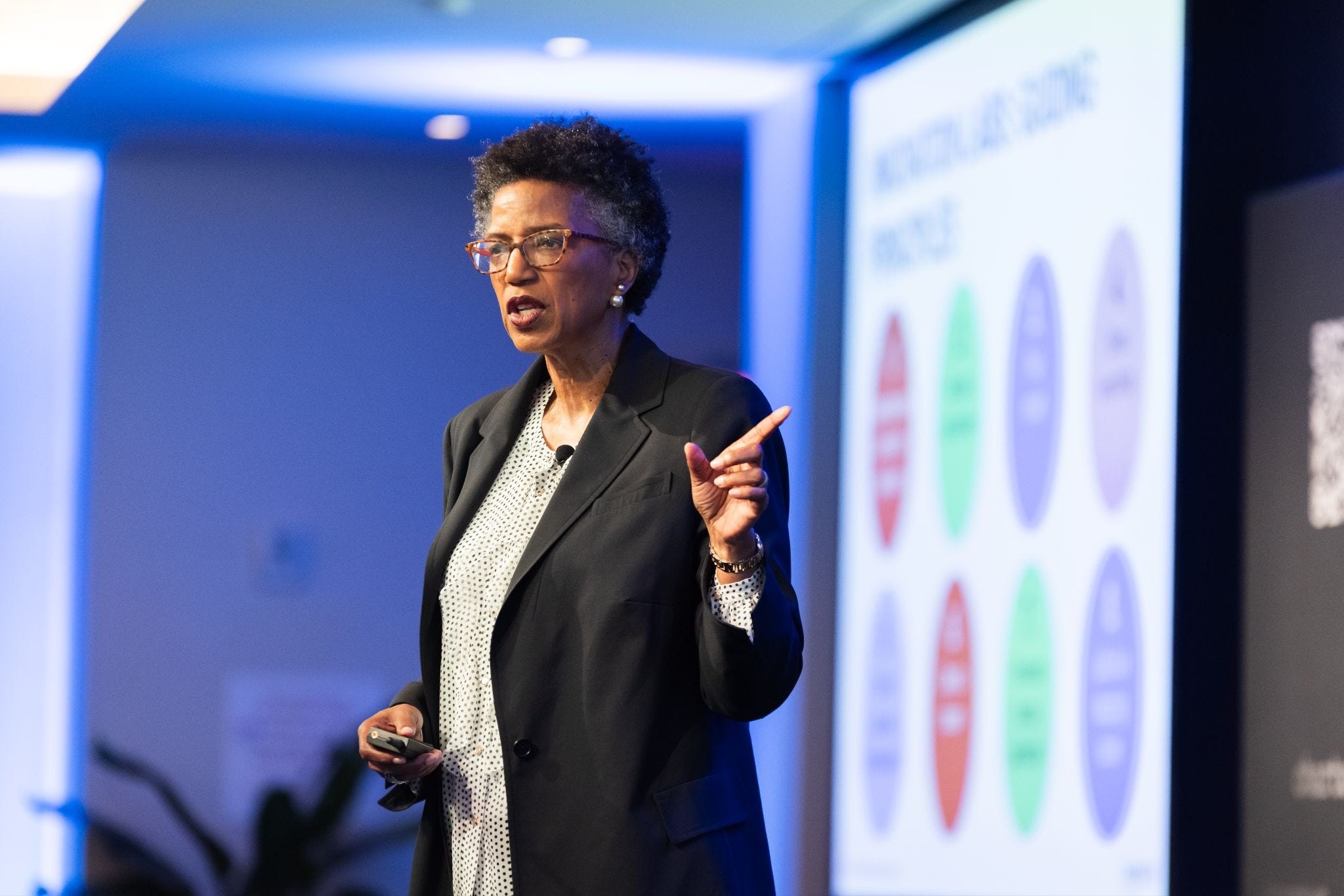
Harvard professor Linda Hill
Grace Zuncic offered her insights rooted in a few discussions: when leaders rush to solve, ideas never get room to breathe, and “all ideas generate more ideas” only when it’s safe to float a half-formed one.
Bloomberg’s Matt Boyle captured the mood of the whole event. “Workers are stuck. Managers are stuck. The job market is stuck (unless you’re doing HVAC for data centers.) Everything seems stuck.”
My own bias, for the record: I love this work, and getting to stand in rooms like this and ask the uncomfortable questions is a privilege. The most useful moment all day was a few leaders admitting, on a stage, that none of us has a crystal ball.
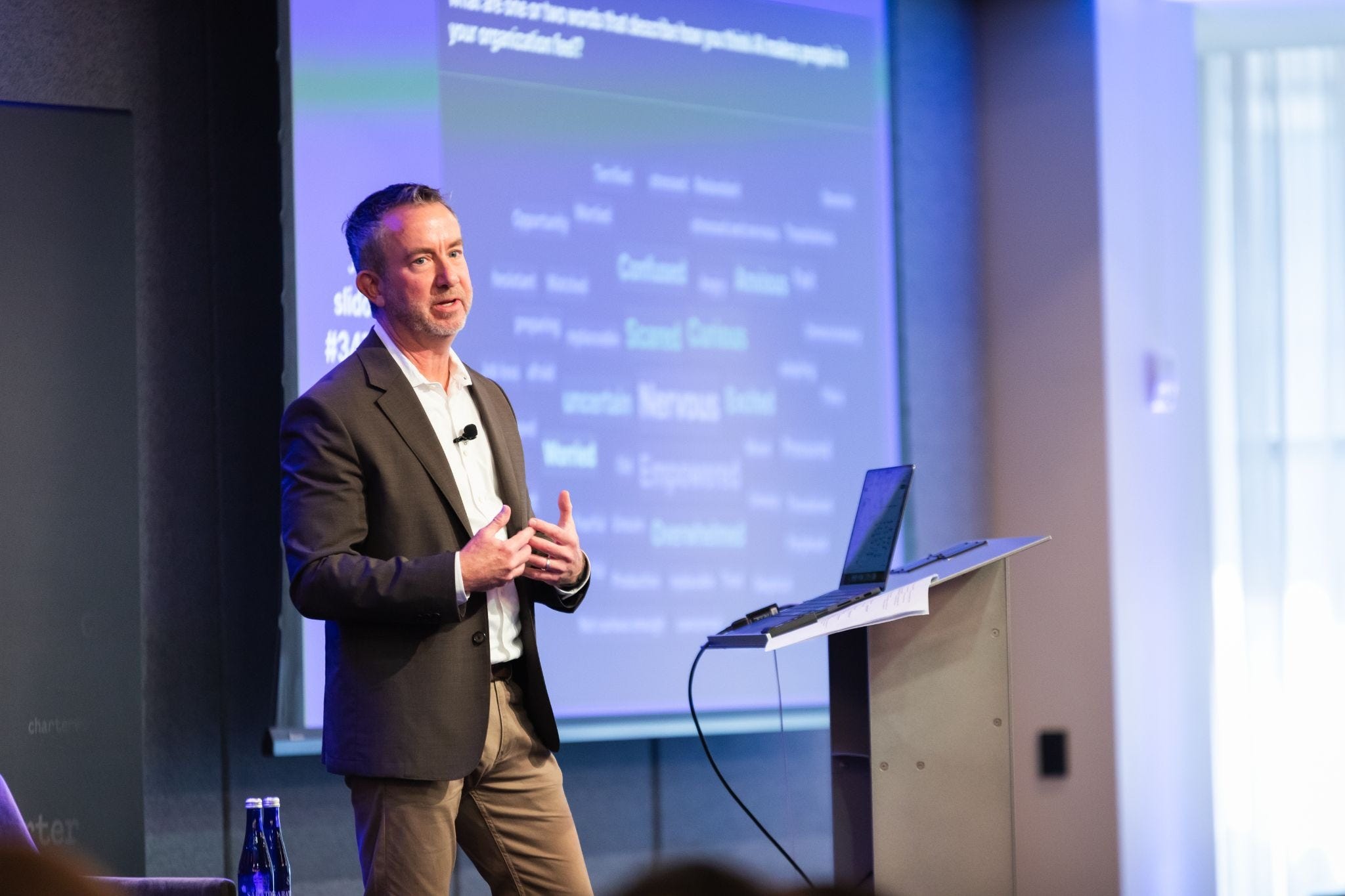
That room poll was a thermometer, the Charter AI Pulse will be the real study.
Adoption itself is just a first step (and one that has been gamified), and just over half the room reported that 80% or more of their organization uses AI at least weekly. As Zapier’s Brandon Sammut has said, “97% adoption rates mean almost nothing.” The harder questions are about impact: on growth, innovation, and how people feel while all of this lands on them.
That’s why Charter and I are partnering with Christina Janzer, who led research and analytics at Slack and one of my Future Forum co-founders, to build Charter’s AI Pulse. Those of you who followed Future Forum know the model that we built: rigorous, unbiased research paired with practical guidance from leaders doing the work.
This time the subject is AI’s real effect on people and work, tracked over time rather than captured in a single anxious snapshot. I am sooo excited to be doing this with Christina and the Charter team!
We’ll be sharing the first full round of findings on October 21st at Charter’s Workplace Summit in New York and online.
Go first. Before you ask your team what they’re worried about, name your own uncertainty out loud. The leader who drops the armor first gives everyone else permission to stop performing.
Lead the real room, not the imagined one. Find out how people feel through honest conversation and skip-levels rather than another survey, so you’re managing the mood that exists instead of the one you’re projecting onto them.
Trade certainty for a clear bet. Borrow Katie’s framing. You can admit you don’t know exactly how this plays out and still hand people a direction worth committing to.
Back your managers. They’re the connective tissue, so equip your player-coaches to facilitate AI and hold the human side of the work, and stop assuming either that ICs will drive the transformation or that good managers are now optional.
Certainty isn’t the route to success. So here’s the question: What would change on your team if you told them that you’re still figuring this out too?
Like Work Forward? Please like ❤️, subscribe 📨, and (most of all) share 🔄
Daron Acemoglu, MIT economist in the NYTimes:
“I guess that summarizes the attitude of some people in Silicon Valley. Yeah, there was no committee for the direction of the Industrial Revolution. And what did we get? In the early stages, we got children working to death in coal mines. Conditions in factories became horrible. Wages for many workers fell. Now A.I. is changing things much faster and affecting many, many sectors at the same time.”
Financial services CEO to Diane Brady at Fortune, talking about the latest AI model release:
“Oh God, no! Not another thing.”
So say we all.
Comments
Nothing yet. Say the first thing.
Sign in to join the conversation.