
The Greek pantheon and its myths transmitted something more profound than individual moral lessons. They embedded into Western consciousness fundamental attitudes about law, knowledge, human limits, and the sacred order of things. These attitudes continue to shape how we live, often unconsciously.
In this series we are exploring how some of our modern cultural aspects trace their roots millennia into the origins of the West: the Greco-Roman world and its forefather, Classical Greece. The first of the series was more epidermal, going over Gods and their attributes; this one is going to delve deeper into the mythical realms of Greece.
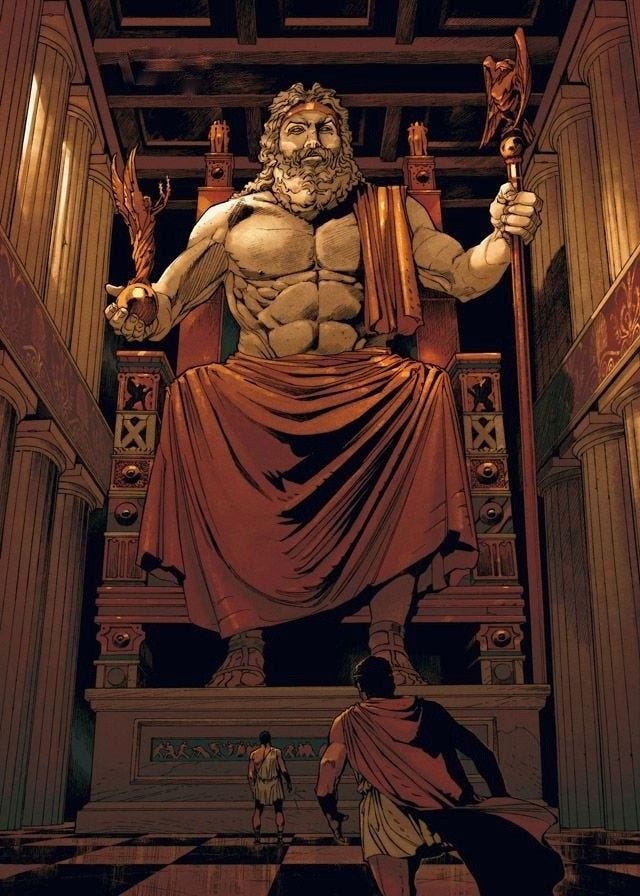
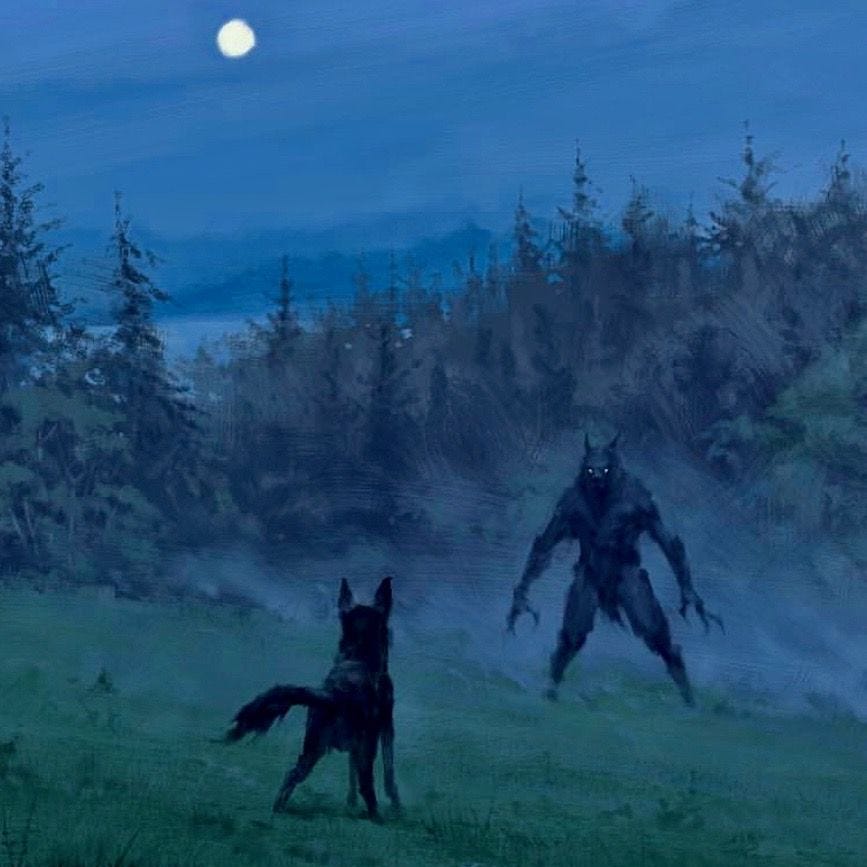
The Punishment of Lycaon: The Rejection of Cannibalism and Human Sacrifice
The Myth
Lycaon, king of Arcadia, wished to test whether Zeus was truly omniscient. He murdered one of his sons (or a child), cooked the flesh, and served it to the god who had come to his table disguised as a traveler. Zeus, recognizing the abomination, overturned the table in disgust, destroyed the palace with lightning, and transformed Lycaon into a wolf, condemning him to eternal hunger for human flesh.
Its Meaning
This myth draws an absolute boundary between civilized humanity and barbarism. The gods themselves are revolted by the consumption of human life. Through Lycaon and similar stories, the Greeks declared that human sacrifice and cannibalism are not acceptable offerings but degradations that reduce man to the level of beasts. The divine order demands respect for human dignity, even in ritual.
Its Modern Ethical Aspect
This ancient stance survives in the West’s deepest moral reflexes: the visceral horror at genocide, at regimes that treat populations as expendable, and at any system—political, economic, or ideological—that reduces human beings to raw material or mere units to be consumed for a greater purpose.
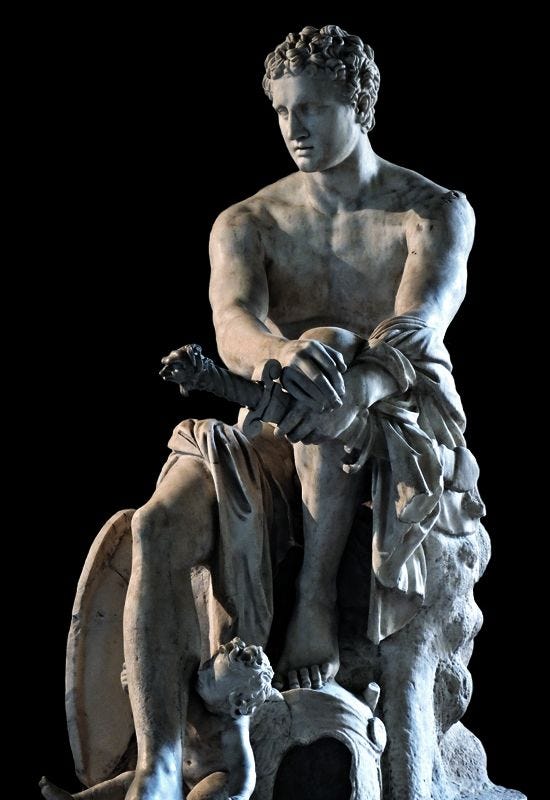
The Trial of Ares on the Areopagus: Even the Gods Are Subject to Law
The Myth
After Ares murdered Halirrhothius, son of Poseidon, in a rage, the gods assembled on a rocky hill in Athens to hold a formal trial. Evidence was presented, arguments were heard, and Ares was judged according to due process. The hill thereafter became known as the Areopagus.
Its Meaning
The myth asserts that law is not a human convenience or a tool of the powerful, but a cosmic principle that binds even the gods. No being, however divine or violent, stands above judgment. Order requires accountability that transcends status.
Its Modern Ethical Aspect
This conviction remains at the foundation of Western legal culture. The principle that no one—not presidents, billionaires, celebrities, or states—is above the law, and that due process must be impartial, continues to define constitutional governance, international tribunals, and public demands for accountability.
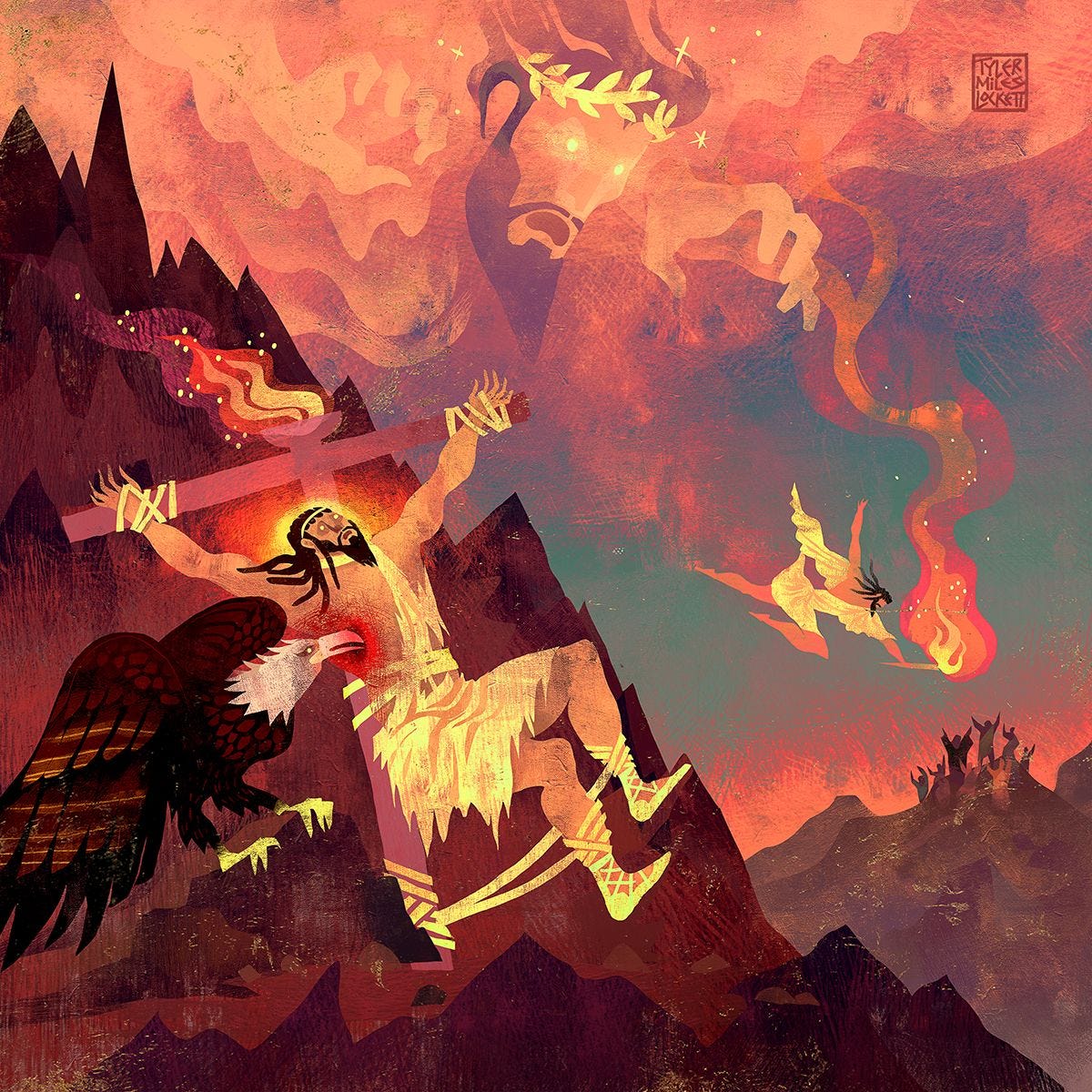
Prometheus and the Gift of Fire: The Cost of Forbidden Knowledge
The Myth
Prometheus stole fire from the gods and gave it to humanity, enabling technology, crafts, and civilization. In punishment, Zeus chained him to a rock in the Caucasus where an eagle daily tore out his regenerating liver. Prometheus endured eternal torment for the benefit of mankind.
Its Meaning
The myth acknowledges that technological and intellectual progress genuinely benefits humanity, yet insists that knowledge taken from the divine order carries an inescapable price. Advancement is real, but never innocent or without consequence.
Its Modern Ethical Aspect
This Promethean tension lives on in Western attitudes toward science and innovation. We celebrate breakthroughs in medicine, energy, and technology, yet remain haunted by the suspicion that certain boundaries—nuclear weapons, genetic editing, artificial intelligence—may exact a civilizational or existential cost we have not yet fully paid.
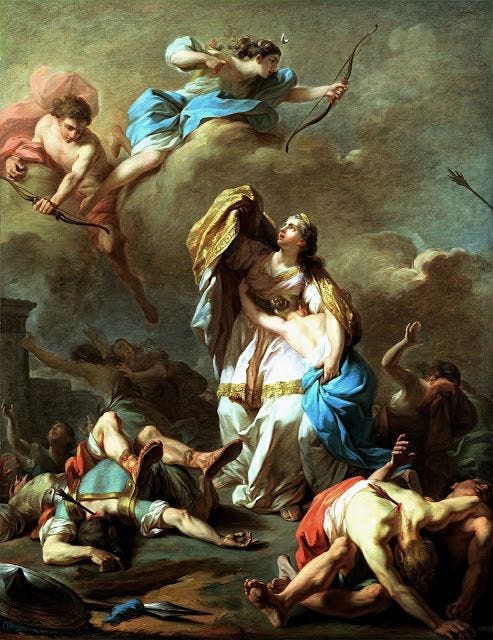
The Fall of Niobe: The Destructive Power of Hubris
The Myth
Niobe, queen of Thebes, boasted that she was superior to the goddess Leto because she had fourteen children while Leto had only two. Apollo and Artemis responded by slaughtering all of Niobe’s children. Overwhelmed by grief, Niobe turned to stone, forever weeping.
Its Meaning
Hubris is not mere pride but the arrogant disruption of cosmic hierarchy and proportion. The myth teaches that mortals who place themselves above the natural and divine order invite catastrophic restoration of balance.
Its Modern Ethical Aspect
This ethical warning persists whenever Western societies criticize unchecked ego in politics, finance, or technology. It appears in restraints on monopoly power, backlash against celebrity or executive excess, and recurring warnings that leaders or systems claiming exemption from ordinary limits will eventually face reckoning.
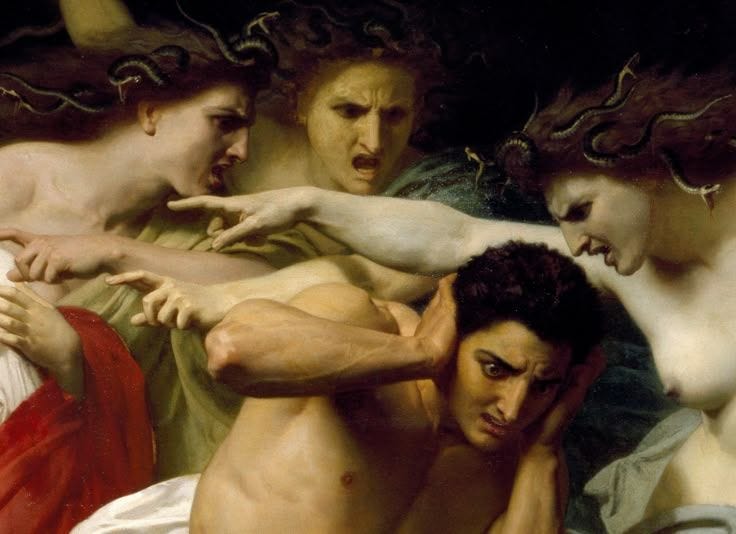
The Transformation of the Furies: From Vengeance to Civic Justice
The Myth
After Orestes killed his mother Clytemnestra to avenge his father, the Furies—ancient deities of blood vengeance—hounded him. Athena intervened, established the first human jury on the Areopagus, and transformed the Furies into the Eumenides, benevolent guardians of the city.
Explore Greece - Find Nostos in Athens
Its Meaning
The gods themselves oversee the evolution from primitive cycles of revenge to structured, impartial justice. Raw retribution must give way to deliberative law if civilized community is to endure.
Its Modern Ethical Aspect
This transition remains a core template for Western justice systems: the preference for courts over feuds, truth and reconciliation processes over endless retaliation, and institutions that prioritize social healing and due process over pure vengeance.
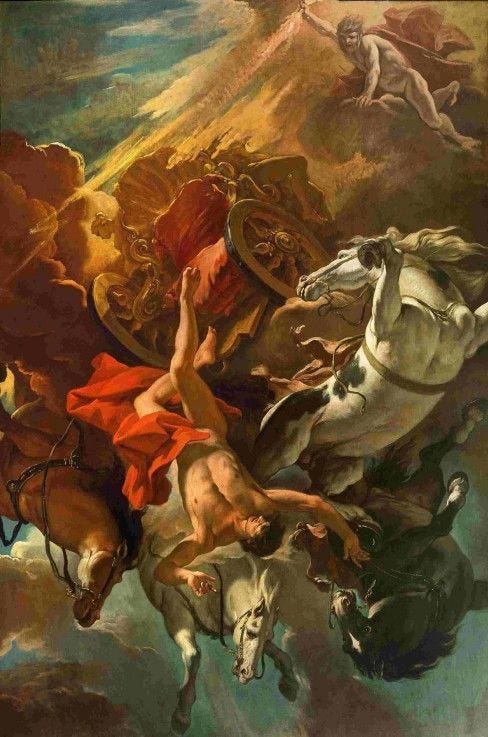
The Fall of Phaethon: The Perils of Power Without Mastery
The Myth
Phaethon, son of Helios, insisted on driving his father’s sun chariot for one day to prove his divine heritage. Unable to control the immortal horses, he lost control, scorched the earth, and threatened the cosmic order. Zeus struck him down with a thunderbolt to prevent catastrophe.
Its Meaning
The myth warns that ambition and power without the corresponding capacity and wisdom lead to disaster. There are boundaries between mortal reach and divine prerogative that cannot safely be ignored.
Its Modern Ethical Aspect
This insight survives in Western cautionary narratives about overreach—in reckless political decisions, untested financial systems, or technological experiments that risk large-scale harm. It reminds us that not every height is meant for those who have not mastered the forces they seek to command.
Zeus Confronts Kronos: The Maturation of Masculine Authority
The Myth
Kronos, fearing a prophecy that one of his children would overthrow him, swallowed each of his offspring at birth. His wife Rhea saved the youngest, Zeus, by substituting a stone wrapped in swaddling clothes. Hidden on Crete, Zeus grew to maturity.
Comments
Nothing yet. Say the first thing.
Sign in to join the conversation.