
Not many men have lived a life full of adventure, war, grit and exploration, like Alexander the Great. Most recognize a great general in him; others, a king.. but he was also a philosopher, a mercurial explorer and a restless spirit.
His Greek education, ideals of heroism but also knowledge of ancestral myths made him a very curious man, eager to discover new worlds and claim immortality, like his ancestors, Heracles and Dionysus. During his campaigns he encountered strange men, women and beasts.
The Celts
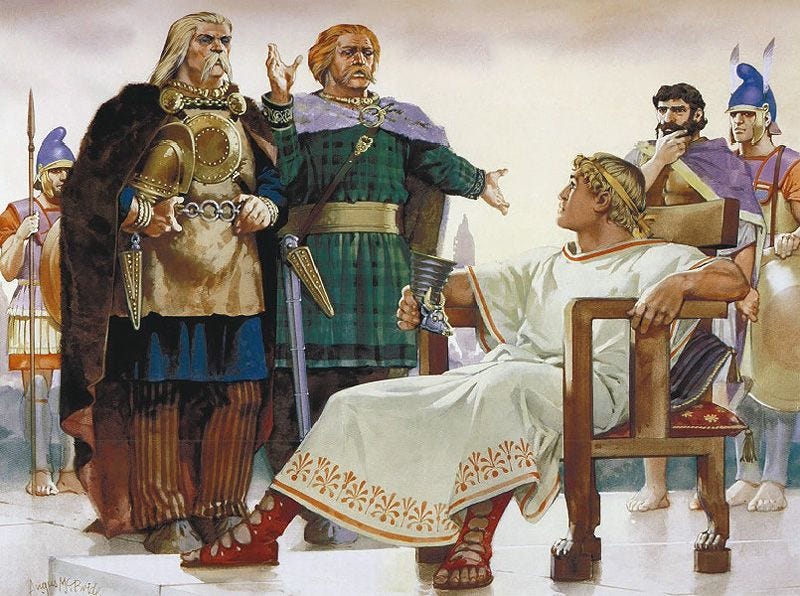
The most famous direct interaction between them occurred in 335 BC, during his early Balkan campaign. Alexander had just subdued the Thracians and Triballians along the Danube River, clearing the North of Greece from hostile tribes. While campaigning in the region (near the lower Danube, in what is now parts of modern Bulgaria/Romania/Serbia), a delegation of Celtic tribes—likely from groups living near the Adriatic or further west/north in the Balkans—approached him.
They came to offer friendship, alliance, or a treaty of mutual hospitality and non-aggression, as Alexander was securing his northern flank before launching his massive invasion of the Persian Empire. This encounter is recorded in ancient sources like Arrian’s Anabasis of Alexander (drawing from earlier accounts) and mentioned by Strabo and others. Alexander, always curious (thanks to his education under Aristotle), questioned the tall, fierce-looking Celtic envoys—described as haughty, wearing torcs (golden neck rings), and colorful cloaks. He asked what they feared most in the world, likely expecting them to flatter him by saying “you” or his power. Their famous reply? They feared nothing—except that the sky might fall on their heads (or sometimes phrased as “that the heavens might fall”). Alexander reportedly muttered that they were arrogant braggarts, but he still concluded a pact of friendship with them and sent them away peacefully.
This anecdote highlights the Celts’ reputation among Greeks for extraordinary bravery (or reckless confidence), fearless even of the impossible. It’s often interpreted as them saying they feared literally nothing earthly, using cosmic catastrophe as the only hypothetical they could name. Interestingly, some later Celtic delegations even appeared before Alexander in Babylon near the end of his life (around 323 BC), showing ongoing diplomatic contact.
The Amazons (and his lost heirs - maybe)
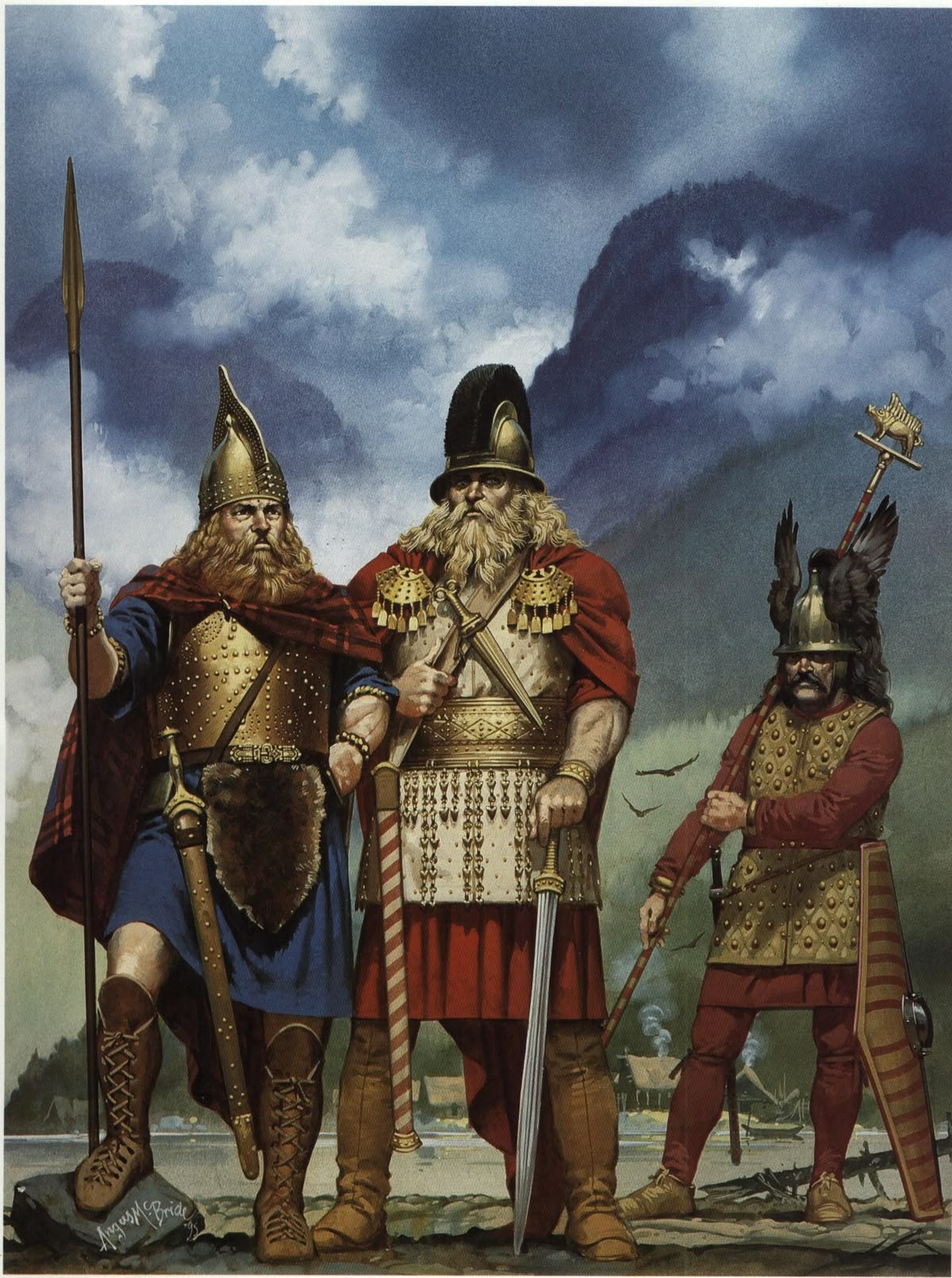
One of the most debated and romanticized tales was that Alexander not only met the Amazons, the mythical fearless women the Greeks fought during the Iliad, but he actually hooked up with their leader. While in Hyrcania or Parthia (modern northern Iran), after defeating Darius, Alexander supposedly met Thalestris, queen of the Amazons (mythical warrior-women). She arrived with 300 armed women seeking him out, impressed by his fame around 330 BC.
Thalestris allegedly requested to bear his child, believing their union would produce superior offspring (ancient eugenics thinking). Sources say they spent about 13 days/nights together before she departed. Historians like Arrian and Plutarch treat this as dubious or legendary — possibly propaganda, exaggeration, or confusion with Scythian/Sarmatian women warriors (who did fight and ride). Some companions reported it happened while some others denied it, but it became a popular story in later romances, blending history with myth while supporting a theory that his bloodline survived.
Illyrians & sacrifice of children
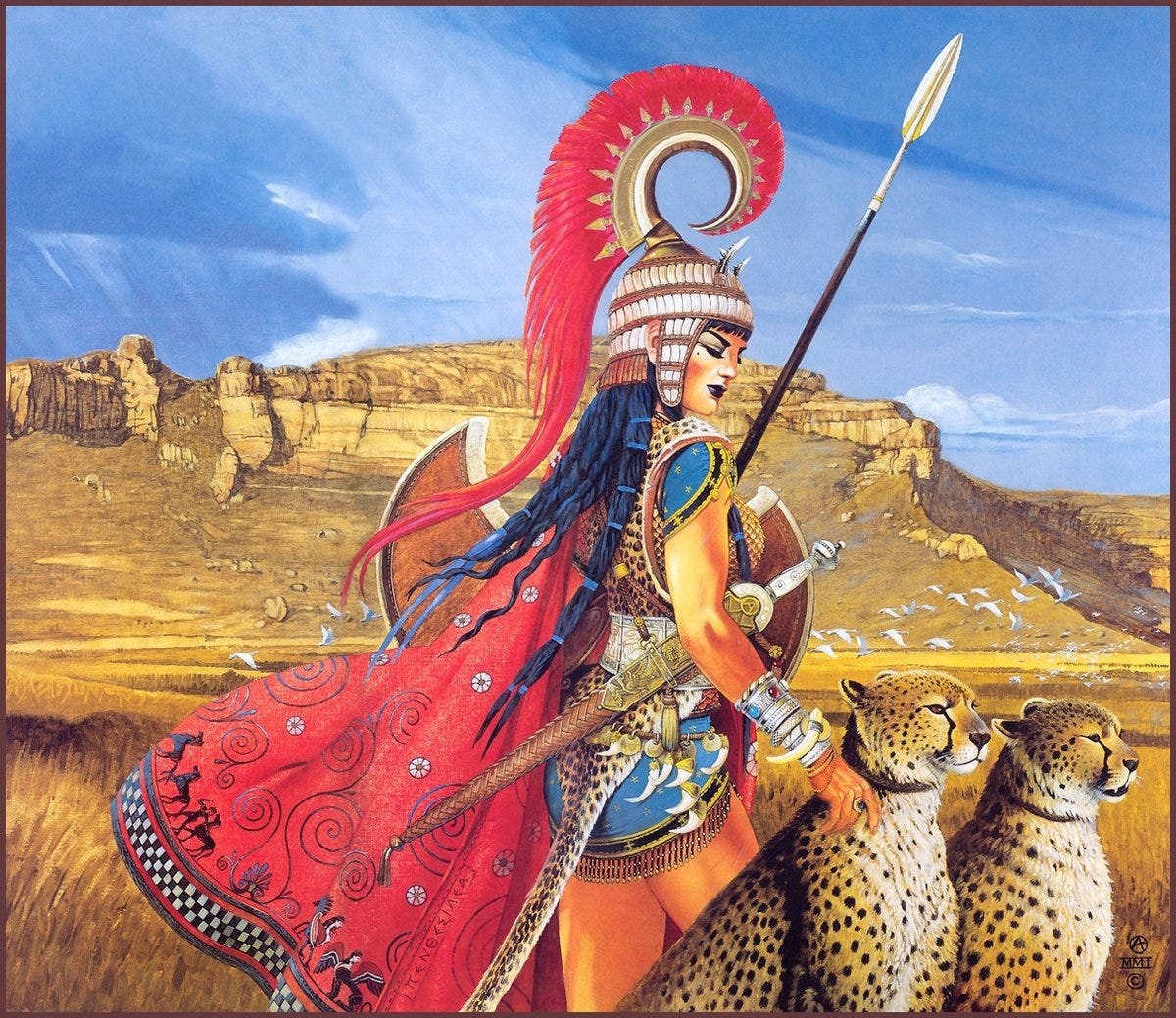
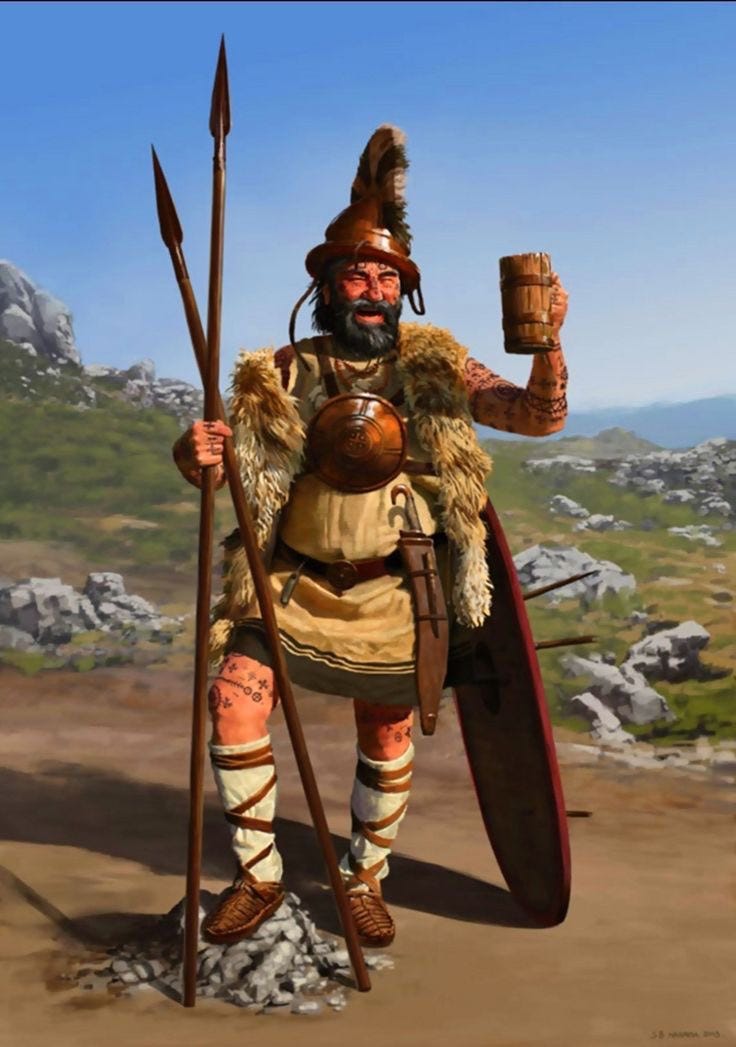
Yes, there was a striking episode involving the Illyrians and human sacrifice (specifically children) during Alexander the Great’s early Balkan campaigns in 33 BC. This occurred during the Siege of Pelium (also called Pelion), a fortified city in what is now Northern Epirus, held by Illyrian forces under Cleitus (son of Bardylis, an earlier Illyrian king who had fought Philip II). Illyrians were considered barbarians by the Greeks and very hostile to the northern Greek kingdoms of Macedonia and Epirus.
Alexander marched north to suppress a rebellion by Illyrian tribes (including those led by Cleitus and supported by King Glaukias of the Taulantii) who had seized Pelium while he was dealing with the Triballians and Thracians along the Danube. According to ancient sources (primarily Arrian in his Anabasis of Alexander, Book 1, drawing from Ptolemy and other contemporaries, and referenced in other accounts), when Alexander’s army arrived at Pelium, Cleitus performed a ritual sacrifice before engaging or confronting the Macedonians. He reportedly sacrificed three boys, three girls, and three black rams (or similar phrasing in sources). This act is described as a pre-battle or propitiatory rite, likely to secure divine favor or omen for the upcoming fight. The children were presumably Illyrians themselves; human sacrifice was not unknown in some Balkan or “barbarian” cultures of the era, though rare and shocking to Greeks.
Alexander himself did not participate in or offer human sacrifice; he observed or learned of it as part of the enemy’s preparations. He was disgusted and determine to exorcise them. The Macedonian army then besieged and ultimately forced the Illyrians to abandon Pelium after clever maneuvers (including a feigned retreat to lure them out), leading to Cleitus’ defeat and flight.
This incident stands out as one of the stranger, more grim cultural clashes Alexander encountered early in his reign. It underscored the “barbaric” practices (from a Greek perspective) of some neighboring tribes, contrasting with Macedonian/Greek norms where animal sacrifice was standard but human sacrifice was largely mythical or condemned (e.g., rare echoes in older myths like Iphigenia).
Diogenes the Cynic
Diogenes (Ancient Greek: Διογένης, romanized: Diogénēs), also known as Diogenes the Cynic (Διογένης ὁ Κυνικός, Diogénēs ho Kynikós) or Diogenes of Sinope, was a Greek philosopher and one of the founders of Cynicism. This bad hombre was named Cynic, which derives from the Greek word for “dog” (cyon). Because he lived like a dog, gave 0 Fs and bit like a Rottweiler too.
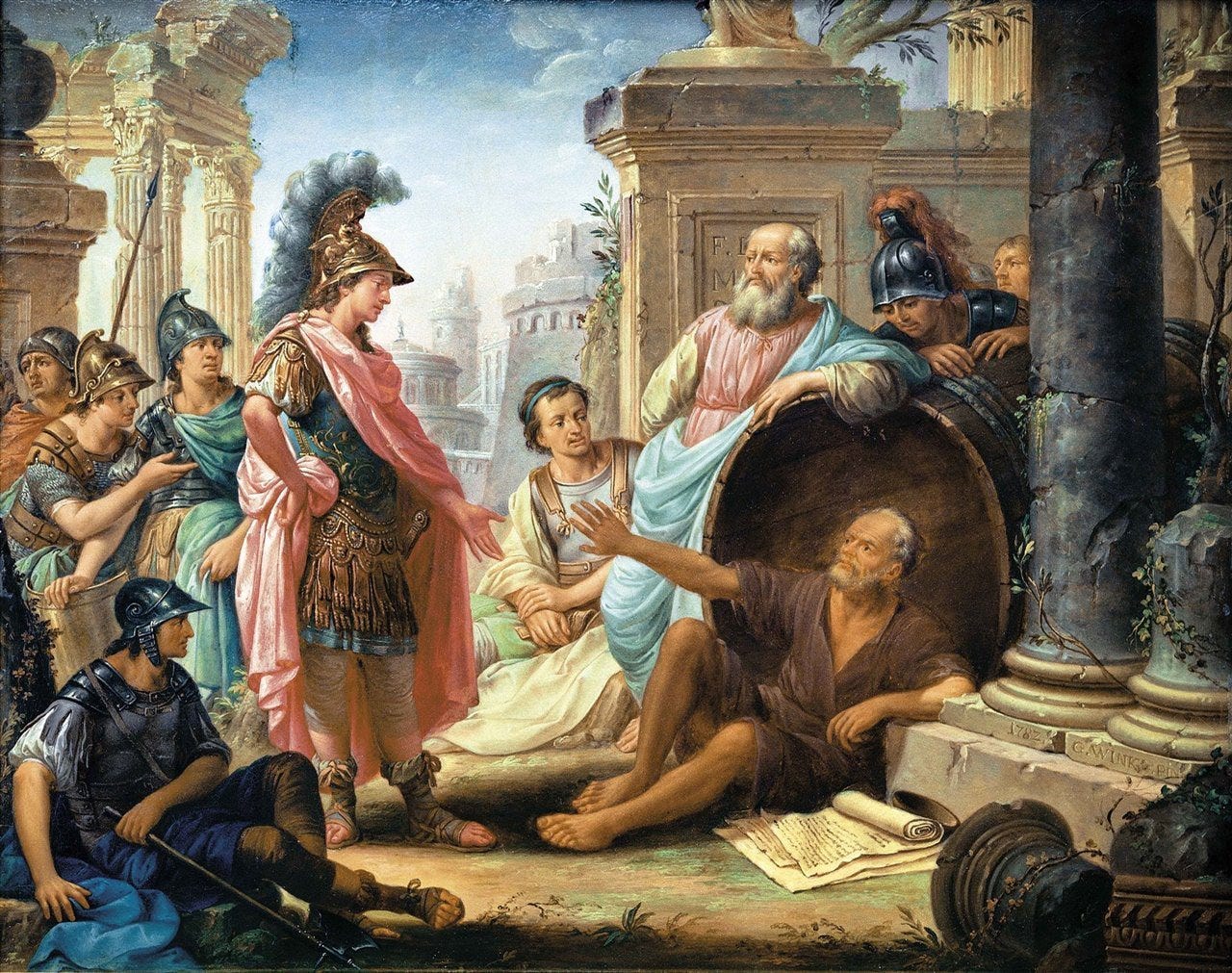
They met in Corinth where Alexander had asked all the Greeks (except those as**oles, the Spartans) to gather and reaffirm him as their leader against Persia. Our boy was busy, but not too busy to continue exploring and engaging in philosophy, which is indicative of his character; during those days, he met Diogenes the Cynic who was famous for denouncing earthly matters and for being a pr*ck; when Alexander met Diogenes, who lived alone and homeless but still enjoyed the reputation of a wise man, he asked him if he needed anything, trying to engage in conversation.
Diogenes asked the king to move away because he was blocking the sun and disrupting his sunbathing time (BASED – you see that Greeks are madmen, right?). He also made sure to ask him if Alexander was the “bastard” from Macedonia, obviously “testing” him. He was playing with the myth that northern Greeks were pushing: that Alexander was not just the son of Phillip but also Zeus. Alexander was initially insulted but quickly gave it up jokingly and after a while said: “was I not Alexander, I would probably be Diogenes”. Diogenes asked the king to move away because he was blocking the sun and disrupting his sunbathing time (BASED – you see that Greeks are madmen, right?).
He also made sure to ask him if Alexander was the “bastard” from Macedonia, obviously “testing” him. He was playing with the myth that northern Greeks were pushing: that Alexander was not just the son of Phillip but also Zeus. Alexander was initially insulted but quickly gave it up jokingly and after a while said: “was I not Alexander, I would probably be Diogenes”.
Naked Indian Sages & the game of Riddles
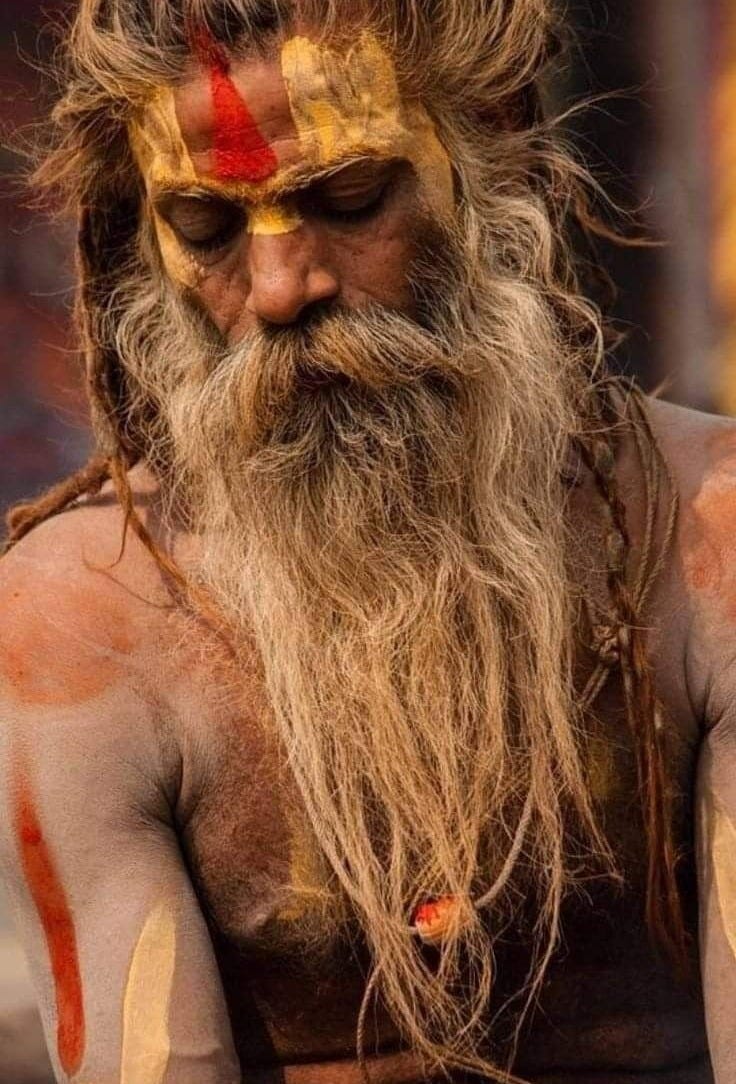
One of the most fascinating and philosophically rich encounters Alexander the Great had during his Indian campaign (around 326 BC) was with the gymnosophists — Greek for “naked philosophers” or “naked wise men.” These were Indian ascetics, likely Brahmin sages, Jain monks, or similar holy men (sadhus) who lived in extreme simplicity: often nude (or minimally clothed), owning nothing, practicing severe self-denial, meditation, and detachment from worldly desires.
After subduing rebellious Indian groups (including the Mallians and others), Alexander reportedly captured ten gymnosophists accused of inciting revolt against a local ruler (Sabbas or similar) and stirring trouble for the Greeks. These sages were known for their clever, concise answers, so Alexander tested them with difficult, paradoxical questions — threatening death to the first who answered wrongly, then the rest in sequence, with the oldest as judge.
Some of the famous riddles and replies (from Plutarch and variants in other sources): Which is older, day or night? “Day is older by one day.” When Alexander showed surprise, the sage added: “Strange questions deserve strange answers.” How can a man be most loved? “If he is most powerful, yet inspires no fear.” (A subtle jab at conquerors who rule through terror.) Which is stronger, death or life? “Life — the sun rises strong but sets weak.” Which is greater, land or sea? “Land — the sea is only part of it.” Who are more numerous, the living or the dead? “The dead — but do not count those who no longer exist.” Which animal is the cleverest? “Man” (or in some versions, variations on human superiority or deception). Alexander was impressed by their wit and let them go with gifts, showing his respect for their intellect despite the supposed hostility.
The Jews.. Did Alexander dream of God? Was his coming foretold?
The famous account of Alexander the Great’s encounter with the Jews comes from Jewish tradition, primarily recorded by the historian Flavius Josephus and echoed in later rabbinic sources like the Talmud. It is important note that only Jewish and no Greek accounts describe this incident. so it’s debatable. In the year 332 BC, as Alexander the Great swept through the lands of the Persian Empire with unstoppable force, his army had just captured the stubborn cities of Tyre (those demon worshippers purified by Greek fire) and Gaza.
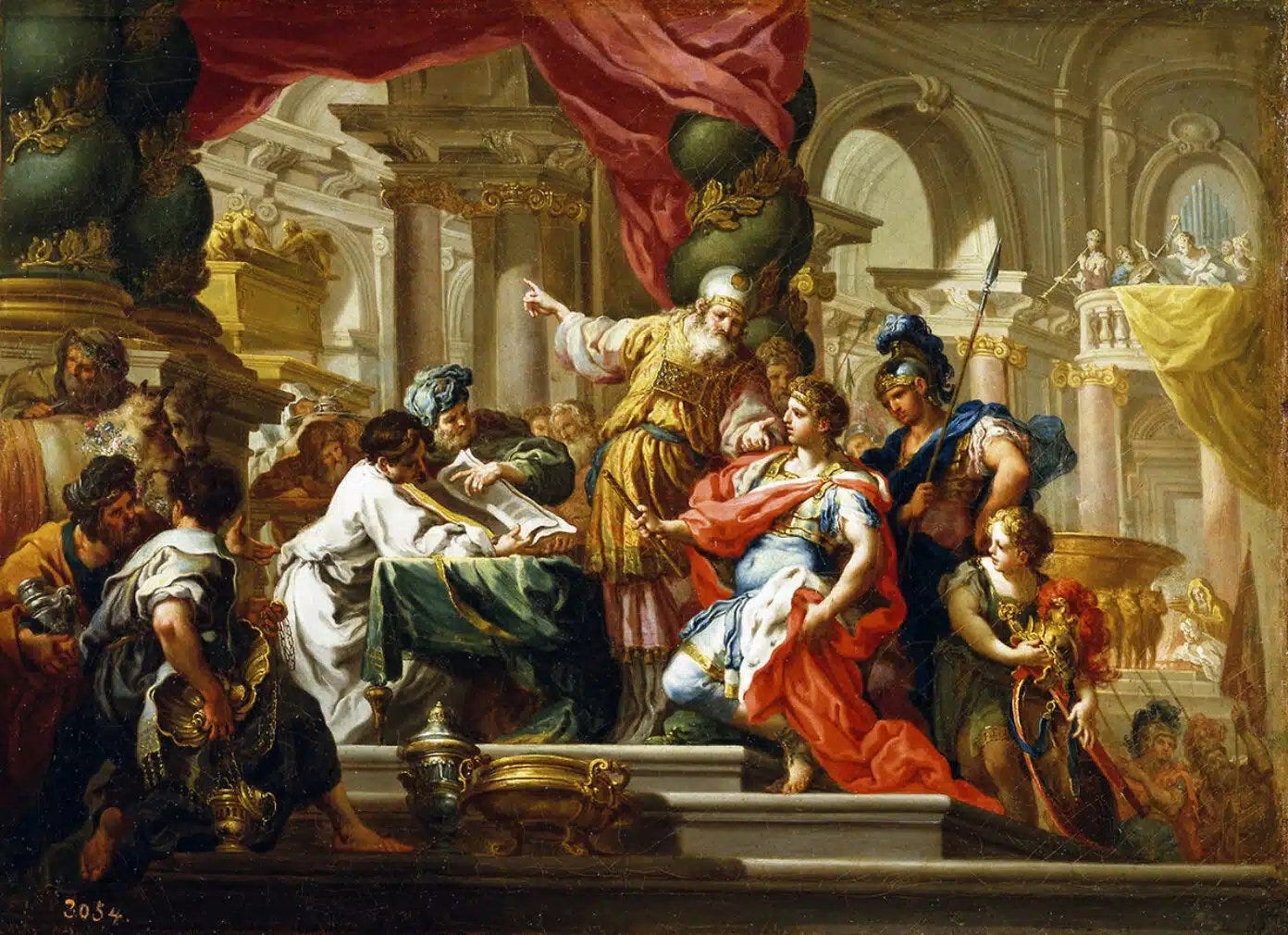
Word soon reached Jerusalem that the young conqueror was advancing southward, and the Jewish High Priest—Jaddua—faced a grave dilemma. Alexander had demanded submission, tribute and soldiers from the Jews, just as the Persians had long required, but the High Priest had sworn loyalty to King Darius and could not break his oath. Fear gripped the people of Jerusalem. They knew the might of Alexander’s forces and the fate of cities that resisted him. In desperation, the High Priest prayed earnestly in the Temple, seeking guidance from God. He received a divine vision in a dream: he should have no fear, but instead adorn the city, open its gates, and go forth to meet the approaching Greek king. The priests were to wear their full ceremonial garments, and the people should dress in white as a sign of peace and purity. So it was done. The High Priest, resplendent in his purple and scarlet robes, the golden plate on his miter bearing the sacred Name of God, led a solemn procession out of the city gates. Behind him came the other priests in their finery, and the rest of the people followed in white robes. They advanced to greet the Greek army. When Alexander saw this sight from afar, something extraordinary happened. The great conqueror, who commanded kings to bow before him, dismounted from his horse (or stepped down from his chariot), approached the High Priest, and acknowledged him. His generals and soldiers stared in astonishment.
Thanks for reading TheBlackWolf’s Lair! This post is public so feel free to share it.
Parmenion, one of his closest companions, asked why the lord of so many nations would humble himself before a Jewish priest. Alexander replied that he did not honor the Jews but God. In a dream he had seen long before—while still in Greece—an angelic figure promised him victory over the Persians and assured him that God would guide his campaigns. Seeing the fulfillment of that promise, Alexander bowed not to the priest himself, but to God. Together they entered the city of Jerusalem. Alexander ascended to the Temple Mount, where, guided by the High Priest, he offered sacrifices. The priests then unrolled the scroll of the prophet Daniel and showed him passages foretelling the rise of a mighty Greek power that would overthrow the Persian Empire. Alexander recognized himself in those words and rejoiced at the prophecy. In gratitude and respect, he granted the Jews important privileges: they could continue to live according to their ancestral laws without interference, they were exempted from tribute during the sabbatical year every seventh year, and similar freedoms were extended to Jewish communities in Babylonia and Media.
Battle with Cthulhu and the sun-cult of fishmen
This episode is indeed one of the coolest and strangest but it’s parallel to Alexander; after India, he split with his fleet and agreed to meet again in Mesopotamia while he personally led the army through the desert of Gedrosia, which no army had managed to cross.
Comments
Nothing yet. Say the first thing.
Sign in to join the conversation.