
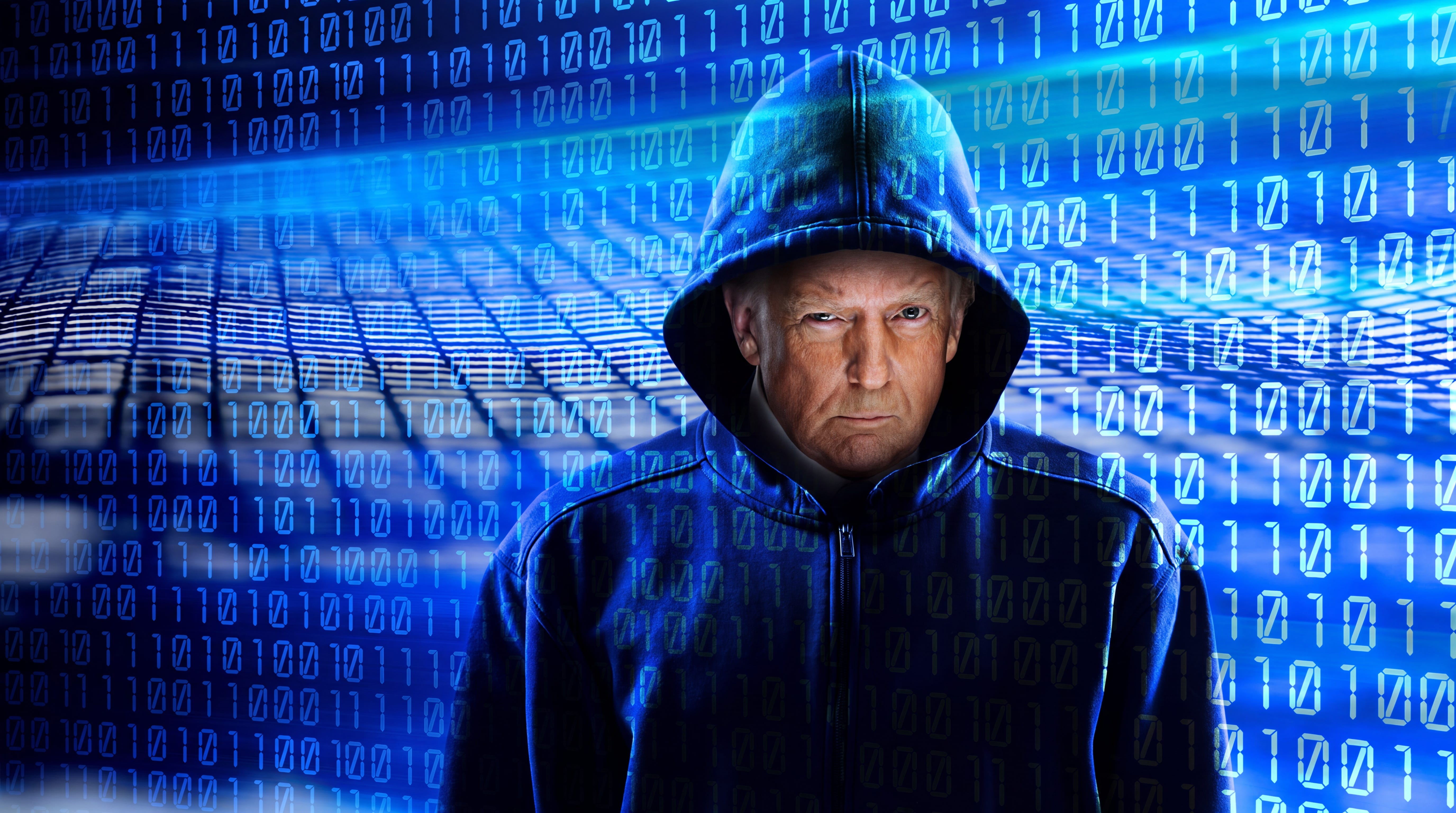
On August 12th, President Donald Trump signed a National Security Presidential Memorandum (NPSM) allowing AI and tech companies in the private sector to launch cybersecurity attacks, in collaboration with and at the discretion of the Pentagon.
Trump’s latest NPSM — Expanding Capabilities To Combat Transnational Cyber-Enabled Crime — states that it builds upon Executive Order 14390, “Combating Cybercrime, Fraud, and Predatory Schemes Against American Citizens,” signed on March 6th 2026, to take steps to address cyber‑enabled crime targeted against Americans. “This memorandum expands the fight against TCO-perpetrated cybercrime by incorporating the ingenuity of the private sector,” the NPSM reads.
“It is the policy of the United States to use all instruments of national power, including the innovative capabilities of the private sector, to combat cybercrime. By partnering with vetted United States companies subject to the direction and oversight of the Federal Government, we will enhance our ability to counter TCO threats and combat transnational cybercrime, fraud, and other predatory schemes against American citizens.”
The NPSM creates a new “Program” that “authorize[s] Participating Companies […] to conduct Cyber Surveillance Operations and Cyber Effects Operations against foreign Cyber-Enabled Transnational Criminal Organizations (CE-TCOs), under the control and oversight of the Federal Government.”
The program will be overseen by appointed heads from the Department of Homeland Security (DHS) and Department of Justice (DOJ).
Specific actions that can be conducted by these companies include “Cyber Effects Operation or Cyber Surveillance Operation;” which refer to:
“Activities conducted in or through the interdependent network of information systems that includes the Internet, telecommunications networks, computers, information systems, industrial control systems, networks, and embedded processors and controllers for the primary purpose of collecting information or intelligence — including information that can be used for future Cyber Effects Operations — from information systems, networks, physical or virtual infrastructure controlled by information systems, or information resident thereon, with the intent to remain undetected.
“Cyber Surveillance Operations entail accessing such information systems without authorization from the owner or operator or by exceeding authorized access. Cyber Surveillance Operations include those actions essential and inherent to enabling Cyber Surveillance Operations, such as manipulation or temporary disruption that is not intended to cause physical effects or impact the usability of physical or virtual infrastructure.”
Citing the fact sheet, the White House lists reasons why now the NPSM:
Ransomware attacks, phishing campaigns, financial frauds, sextortion schemes, and impersonation scams are often coordinated campaigns run by sophisticated TCOs based outside of the United States.
The most vulnerable among us—seniors, children, and low-income families—are disproportionately targeted, with scammers draining life savings, stealing the benefits of years of work, and destroying lives.
In 2025, American consumers reported losing more than $20.8 billion to cyber-enabled crime.
73% of U.S. adults have experienced some kind of online scam or attack and 98% of Americans believe scams pose a threat to individuals in the U.S., with two-thirds saying it is a “major” threat.
One in seven young people who experienced sextortion as a minor reported harming themselves in response to the abuse. Until now, outdated frameworks, gaps in coordination, and the absence of meaningful consequences have allowed these networks to thrive.
The American private sector is the most innovative and technologically advanced in the world—which provides a critical offensive cyber advantage for the United States.
By partnering with vetted U.S. companies, we will enhance our ability to counter TCO threats and combat transnational cybercrime, fraud, and other predatory schemes against American citizens.
The merging of big-tech and the federal government and the Pentagon has been a constant under the Trump administration.
Last year, for example, the U.S. Army appointed executives from OpenAI, Palantir and Meta to Lieutenant Colonels — a rank that grants access to the Pentagon.
This latest NPSM also falls in line with the Pentagon and Secretary Pete Hegseth’s plans to fully integrate AI systems into the military.
Trump’s latest NPSM comes after a recent cyberattack in Minnesota that took nearly several dozen water systems offline.
One cybersecurity ‘expert’ said there was “moderate confidence” that the attack was carried out by Iran. Yet interestingly, Trump was quick to say it was not Iran and instead blamed the state Governor for the problems and called that administration “grossly incompetent.”
It was another propaganda stunt, and I don’t buy that narrative for a second.
Nevertheless, longtime readers of The WP know that I have been warning about this type of thing since 2021, warning that we were going to get this sort of thing, and here we are.
Again, for the umpteenth time, WEF founder Klaus Schwab warned in 2020 that a “cyber pandemic” would make the Covid War look like child’s play, as critical infrastructure, utilities, and financial institutions and more would collapse and send the world into utter chaos and disarray.
For those who are confused as to why a cyberattack — because I still see comments not understanding the bigger picture — you need to consult the WEF’s Cyber Polygon simulation they did years ago, predicting and scripting massive cyberattacks just as “Covid” was scripted and planned for years.
Unlimited Hangout has a great article detailing this and I highly recommend that you read it. A snippet of that article reads:
Though Cyber Polygon 2021 is months off, it was preceded by Cyber Polygon 2020, a similar WEF-sponsored simulation that took place last July in which speakers warned of a coming deadly “pandemic” of cyberattacks that would largely target two economic sectors, healthcare and finance. Cyber Polygon 2020 was officially described as “international online training for raising global cyber resilience” and involved many of the world’s biggest tech companies and international authorities, from IBM to INTERPOL. There were also many surprising participants at the event, some of whom have been traditionally seen as opposed to Western imperial interests. For example, the person chosen to open the Cyber Polygon event was the prime minister of the Russian Federation, Mikhail Mishustin, and its main host, BI.ZONE, was a subsidiary of the Russian-government-controlled Sberbank. This suggests that the overused “Russian hacker” narrative may be coming to an end or will soon be switched out for another boogeyman more suitable in light of current political realities.
A “cyberattack” would act as the perfect pretense to justify the rapid acceptance of a new tokenized, blockchain, digital ID, omni-AI financial and pre-crime system. They’ll make up some ruse (just like they did in 2020) as to why we need this new technology — safer, faster, more secure, etc. — and people will be in such a fright and disarray many will accept it.
I have published a number of warnings so far this year.
We are now one step closer to this techno-fascist, cyberpunk dystopia, where the private tech sector can now leverage cyber warfare against opponents, governments and other corporations that are causing them hassle and competition; and vice-versa, the government and Pentagon can now leverage these tools against those it seeks to oppress and mediate.
Translation: you and I.
Luke 21:9 But when ye shall hear of wars and commotions, be not terrified: for these things must first come to pass; but the end is not by and by.
If you enjoyed this report and others like it, please consider sharing this post and supporting The WinePress down below!
Thanks for reading The WinePress News! This post is public so feel free to share it.
[7] Who goeth a warfare any time at his own charges? who planteth a vineyard, and eateth not of the fruit thereof? or who feedeth a flock, and eateth not of the milk of the flock? [8] Say I these things as a man? or saith not the law the same also? [9] For it is written in the law of Moses, Thou shalt not muzzle the mouth of the ox that treadeth out the corn. Doth God take care for oxen? [10] Or saith he it altogether for our sakes? For our sakes, no doubt, this is written: that he that ploweth should plow in hope; and that he that thresheth in hope should be partaker of his hope. (1 Corinthians 9:7-10).
The WinePress needs your support! If God has laid it on your heart to want to contribute, please prayerfully consider donating to this ministry. If you cannot gift a monetary donation, then please donate your fervent prayers to keep this ministry going! Thank you and may God bless you.
To support The WinePress, you can contribute by doing one or more of the following:
You may send cash, check or letters to this address:
Jacob M. Thompson
#119
12820 Adams Rd.
Granger, IN 46530
If you decide to send a check, please do not address it to “The WinePress.” Please address it to the name listed.
You can become a paid member on Substack.
You can also donate electronically by hitting the link below:
Comments
Nothing yet. Say the first thing.
Sign in to join the conversation.