
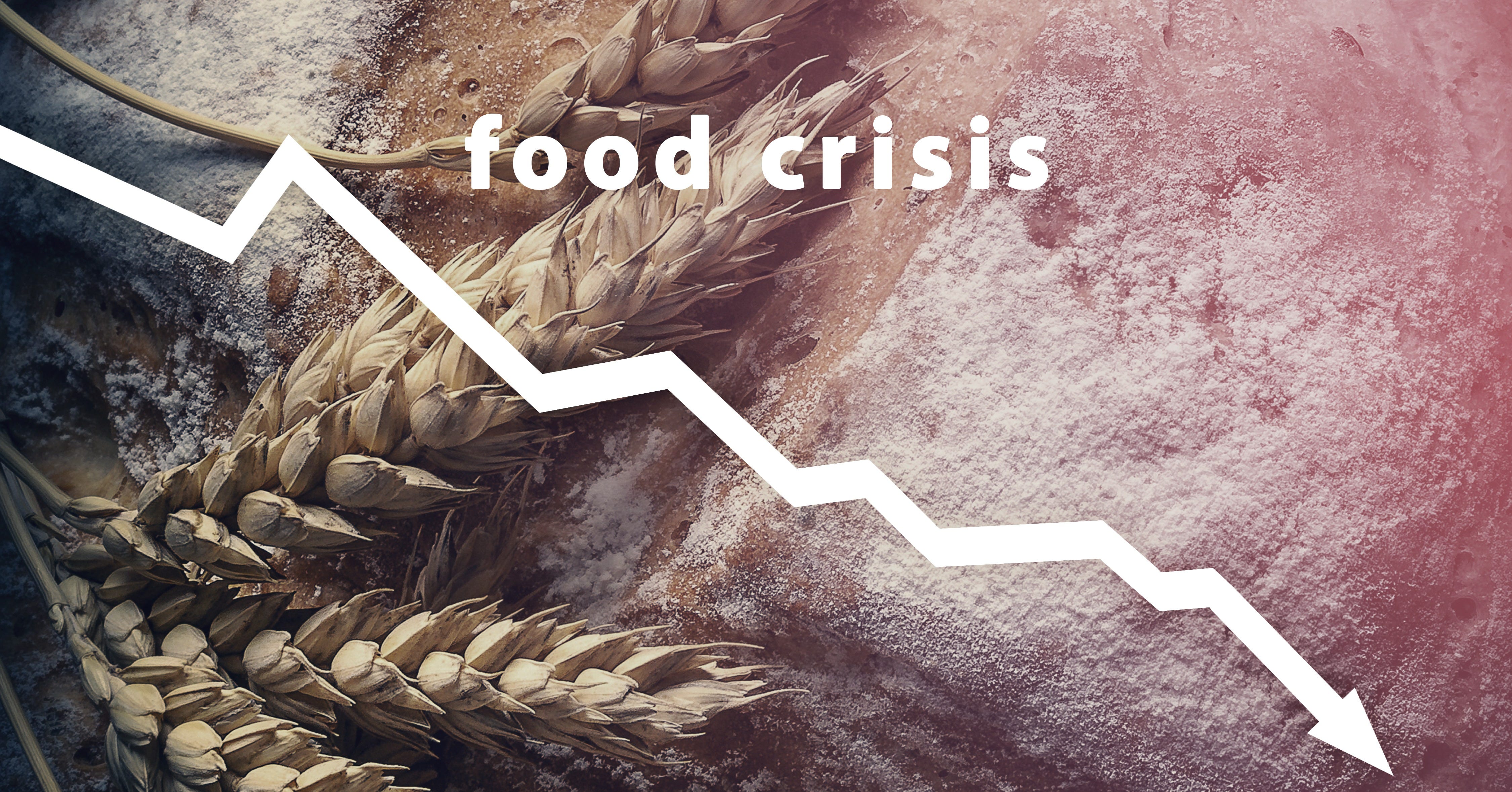
JP Morgan, the world’s largest commercial bank by assets, published a fresh report that warns that the world is potentially walking into a massive food insecurity and shortages in 2027, if the wars around the world impeding shipping are not soon resolved.
Led by London-based senior global economist Nora Szentivanyi and her team at the bank, JP Morgan published a report titled “Food Security Is National Security: A Compounding Storm;” which focused on the so-called the “Five Ws”: War, Weather, Warehousing, Water, and Waste.
“Successive shocks since COVID have compounded, eroding food production capacity and keeping food price pressures elevated into 2027,” Szentivanyi said, adding that “this is not a short-lived shock; it has reduced the likelihood of near-term disinflation, and the food inflation cycle is likely to exert pressure through 1H27.”
She believes global food inflation will accelerate from 2.8% in the first half of 2026 to 5% in the first half of 2027.
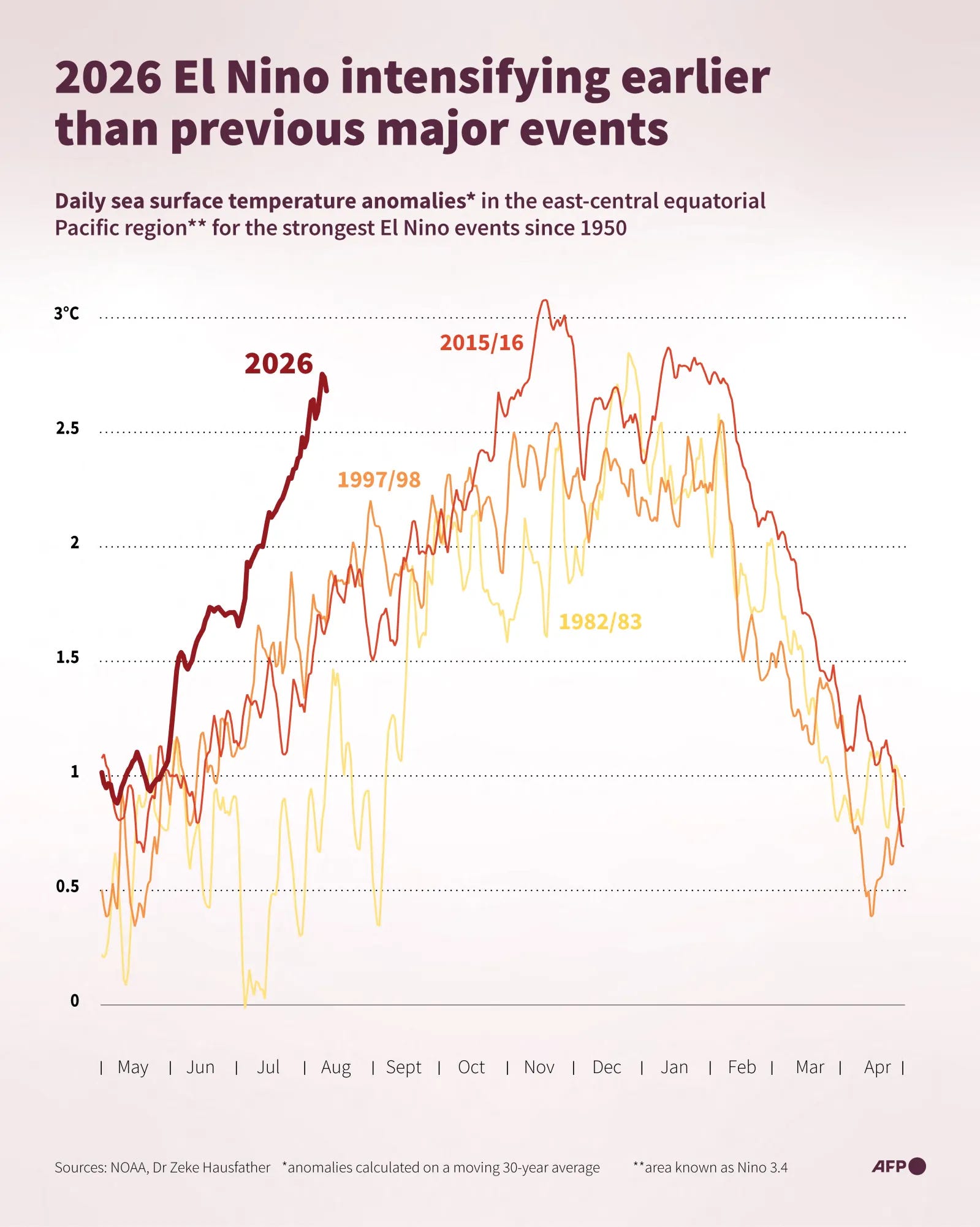
A big factor in this is fertilizer shortages, coupled with growing risks for an El Niño.
“Disruptions in the Strait of Hormuz and the coming super El Niño are adding to fertilizer and food price pressures.”
“[…] crop and price effects are still building and agricultural impacts lag the oceanic peak by 6 to 12 months.”
“Exposure is concentrated in South and Southeast Asia, including rice, sugar, and coffee; West Africa, including cocoa; and parts of East and Southern Africa. EM bears the brunt of El Niño. The largest food inflation responses are concentrated in EM Asia and Latin America, where weather-sensitive agriculture plays a larger role in economic activity, and food carries a higher weight in consumption baskets. India, Colombia, Indonesia, Brazil, Taiwan, and Korea emerge as among the most sensitive economies”
The WinePress has previously warned of fertilizer shortages caused by the Iran war and the closure of the Strait of Hormuz. In April, a Farm Bureau report revealed that 70% of surveyed farmers could not obtain the necessary amount of fertilizer needed for the growing season.
In July, President Donald Trump quietly issued a proclamation declaring a national emergency and authorizing temporary trade restrictions on Morocco to gain access to more phosphate fertilizers; which partially stated: “Global supply chains for phosphate fertilizer and fertilizer inputs, including imports of such products into the United States, have been disrupted in recent months by, among other things, conflicts in fertilizer-producing regions as well as trade actions taken by major fertilizer-producing countries.”
JP Morgan has previously warned that this conflict would greatly disrupt global fertilizer trade.
In a May report — “Climate Intuition: Food security under pressure: Iran conflict disruptions and a brewing El Niño” — Dr. Sarah Kapnick, Global Head of Climate Advisory at the bank, wrote that this latest war stacks upon the disruption created by the Russia-Ukraine war.
Kapnick warned at the time:
“The Iran conflict is slowly rippling through fertilizer availability and planting decisions, which will only be fully realized months after being initiated. Even if the conflict ends today, there will be lasting residual impacts if shocks cascade. Seasonal climate predictions become important in this case as one of the potential shocks.”
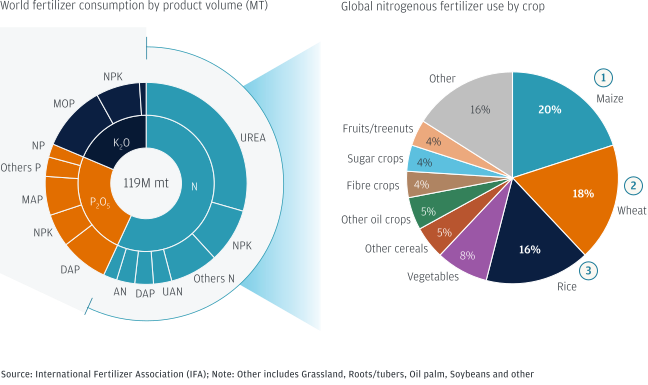
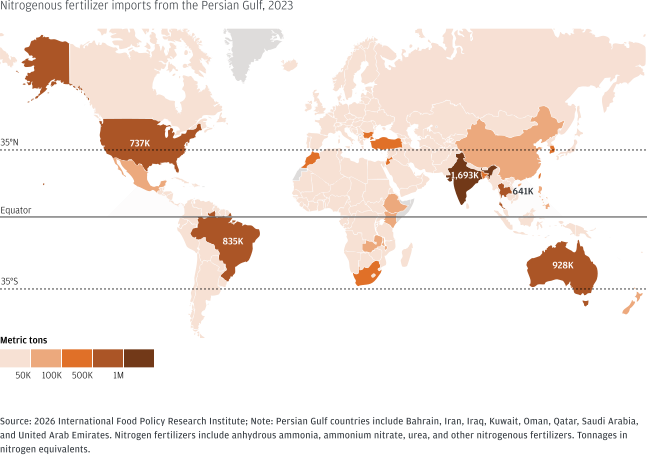
“Synthetic nitrogen production converts natural gas into urea, a nitrogen-rich fertilizer used globally. Over 36% of global urea is imported from the Persian Gulf, where production plants typically have a steady feedstock supply of natural gas. Since the beginning of the Iranian conflict, the production of these materials has slowed, and the shutdown of the Strait of Hormuz has inhibited global trade – leading to rapid supply reductions and commodity price increases.”
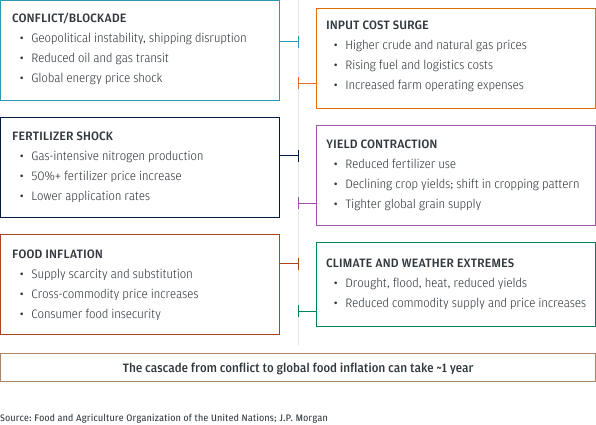
Furthermore, in April, in another report detailing the fallout for the Iran War and Hormuz closure, Szentivanyi said at the time: “Rising fertilizer prices could lift global food inflation temporarily to 4–5%, but we expect the impact to show up with a considerable lag.”
I was unable to locate the original report from JP Morgan, so perhaps they may have temporarily removed it, I am not sure, but we nevertheless understand the salient parts of what they have written.
The simple fact of the matter is I have said very early on, and repeatedly since March, that this “war,” as is the never-ending Russia-Ukraine conflict with ever-shifting goalposts, is the next major global phase of the Great Reset; and the strategic failure by the United States is more or less designed to bring the world to a crawl. They are nothing more than climate lockdowns. We are witnessing a major energy crisis around the world that will only get worse, diesel being the big one especially; and then you factor in the fertilizer epidemic that will be felt in 2027, on top of everything else.
The public won’t understand what is happening until it is too late, per usual, but we know why; and if you have been paying attention to what has been going on, following our reports on this for years, then NONE of this is a surprise: we expected it and planned for it.
Proverbs 22:3 A prudent man foreseeth the evil, and hideth himself: but the simple pass on, and are punished.
Jeremiah 14:13 Then said I, Ah, Lord GOD! behold, the prophets say unto them, Ye shall not see the sword, neither shall ye have famine; but I will give you assured peace in this place. [14] Then the LORD said unto me, The prophets prophesy lies in my name: I sent them not, neither have I commanded them, neither spake unto them: they prophesy unto you a false vision and divination, and a thing of nought, and the deceit of their heart.
If you enjoyed this report and others like it, please consider sharing this post and supporting The WinePress down below!
Thanks for reading The WinePress News! This post is public so feel free to share it.
[7] Who goeth a warfare any time at his own charges? who planteth a vineyard, and eateth not of the fruit thereof? or who feedeth a flock, and eateth not of the milk of the flock? [8] Say I these things as a man? or saith not the law the same also? [9] For it is written in the law of Moses, Thou shalt not muzzle the mouth of the ox that treadeth out the corn. Doth God take care for oxen? [10] Or saith he it altogether for our sakes? For our sakes, no doubt, this is written: that he that ploweth should plow in hope; and that he that thresheth in hope should be partaker of his hope. (1 Corinthians 9:7-10).
The WinePress needs your support! If God has laid it on your heart to want to contribute, please prayerfully consider donating to this ministry. If you cannot gift a monetary donation, then please donate your fervent prayers to keep this ministry going! Thank you and may God bless you.
To support The WinePress, you can contribute by doing one or more of the following:
You may send cash, check or letters to this address:
Jacob M. Thompson
#119
12820 Adams Rd.
Granger, IN 46530
If you decide to send a check, please do not address it to “The WinePress.” Please address it to the name listed.
You can become a paid member on Substack.
You can also donate electronically by hitting the link below:
Comments
Nothing yet. Say the first thing.
Sign in to join the conversation.