
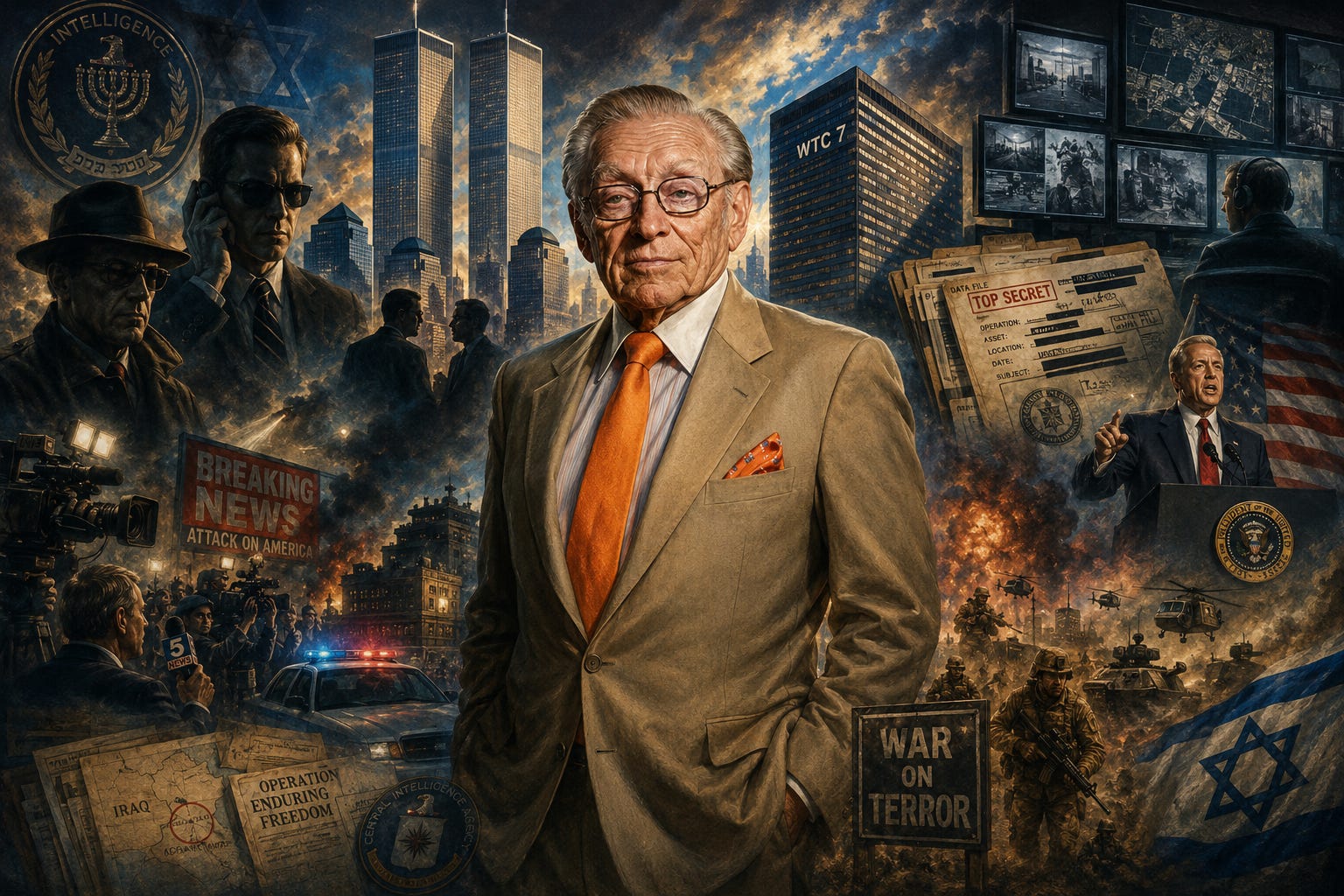
Forty-nine days.
That was all the time between Larry Silverstein taking control of the World Trade Center and watching the Twin Towers vanish from the Manhattan skyline.
On July 24, 2001, Silverstein Properties completed a 99-year lease of the World Trade Center. The deal, completed with retail operator Westfield America, carried an estimated present value of $3.2 billion and was described by the Port Authority as the richest real-estate transaction in New York history.
Seven weeks later, the towers were gone.
And, luckily, Silverstein was not inside them.
By his own account, he had planned to go downtown that morning to meet one of the World Trade Center’s tenants. His wife had other plans. She reminded him that she had scheduled a dermatologist appointment (one he had already canceled the month before) and insisted that he keep it.
So he did.
That dermatologist appointment kept Silverstein away from the World Trade Center on the morning of September 11.
Silverstein later called his survival a “miracle.”
And perhaps it was.
People miss trains. Meetings run late. Alarm clocks fail. A wrong turn, a sick child, or a stubborn spouse can separate life from death by only a few minutes.
That morning was filled with such stories.
But Silverstein’s good fortune did not end with a missed meeting.
The newly leased complex carried approximately $3.5 billion in insurance coverage “per occurrence”. The coverage was required under the lease, and the policies were spread among roughly two dozen insurers.
Terrorism was included in the coverage.
After two planes struck two towers, Silverstein’s companies argued that the destruction should be treated as two separate insurance occurrences.
The insurers argued it was one coordinated attack (and therefore one occurrence).
The dispute dragged through the courts for years because the insurers had not all used the same final policy language.
By the time the lawsuits and settlements ended, the insurers had agreed to provide more than $4.5 billion for the World Trade Center losses and reconstruction.
Consider the optics here.
A real-estate developer fought through a fierce bidding process to gain control of the World Trade Center.
He closed the deal seven weeks before the towers were destroyed.
A doctor’s appointment kept him away on the one morning when being there would likely have killed him.
Then his companies pursued one of the largest property-insurance claims in history.
That is a remarkable run of luck.
And we have not even reached Building 7.
Silverstein already controlled the 47-story office tower immediately north of the main complex.
No airplane struck it, fyi.
The federal government later attributed the collapse to fire-driven structural failure…because fire makes buildings fall like this:
Then came Silverstein’s now-infamous description of the decision to “pull it.”
And the premature BBC report.
Needless to say, the curious case of Larry Silverstein extends far beyond real estate, insurance, and structural engineering.
Because Silverstein was not simply a wealthy New York developer who happened to lease the wrong buildings at the right time.
He was also a deeply connected supporter of Israel with direct access to its political leadership.
A November 2001 Haaretz profile described Silverstein as a longtime friend of Benjamin Netanyahu. According to the report, Netanyahu called Silverstein every Sunday afternoon, regardless of where he was or what the two men had to discuss.
This relationship becomes more relevant when placed beside the other Israeli-linked events surrounding September 11:
Warnings reportedly delivered by Israeli intelligence.
A message received by employees of an Israeli communications company hours before the attack.
An alleged Israeli surveillance network operating across the United States.
And five Israeli nationals detained after witnesses reported seeing them filming and celebrating as the towers burned.
At some point, the question changes.
One thing is nothing.
Two things are a coincidence.
Three things are a pattern.
And more than three…?
Let’s find out.
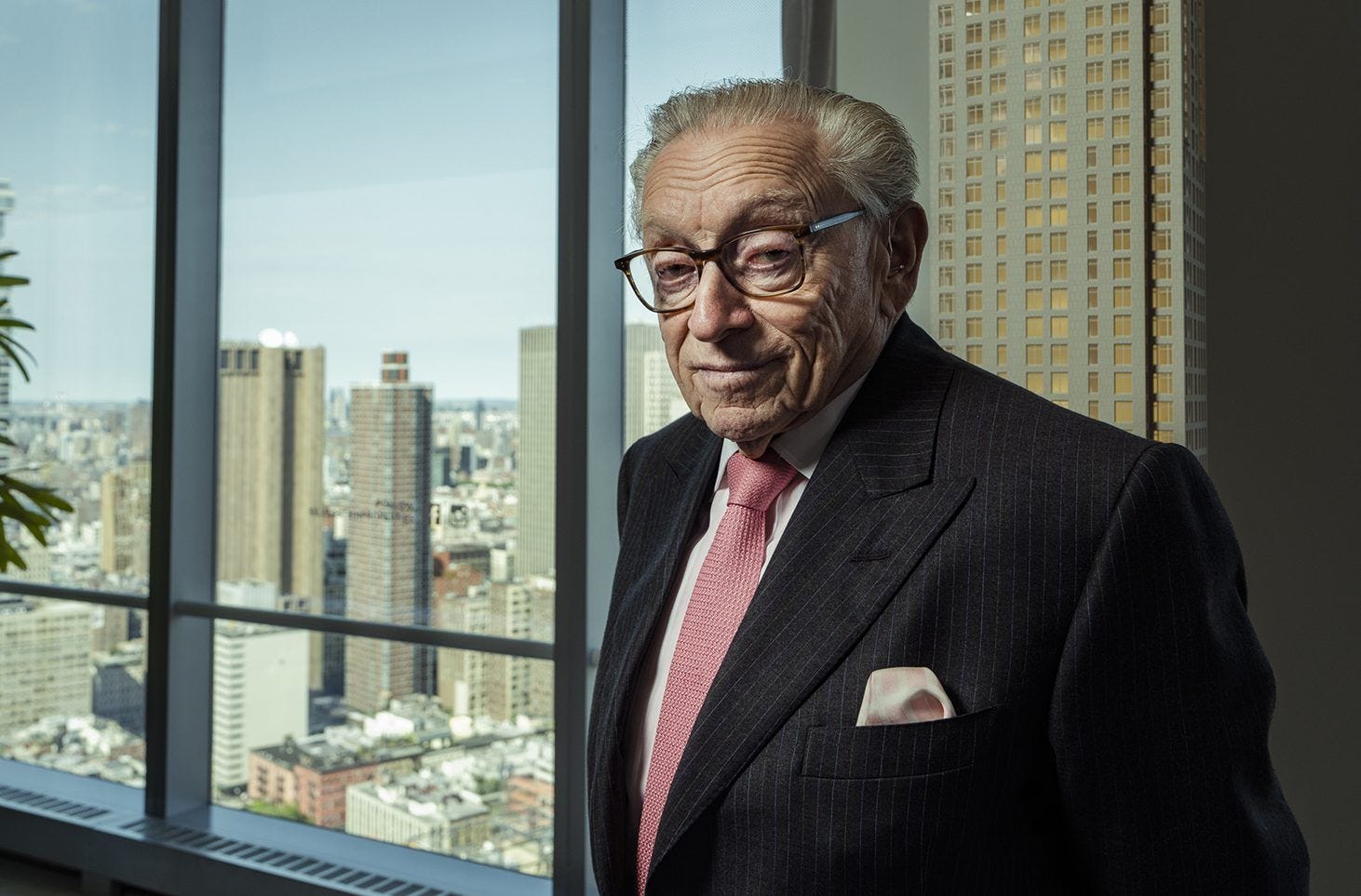
Larry Silverstein did not accidentally inherit the World Trade Center.
He chased it.
By the end of the 1990s, the Port Authority of New York and New Jersey was preparing to transfer the World Trade Center to private management. Rather than sell the land outright, the agency offered investors something nearly as powerful: a 99-year net lease over most of the complex.
For a private developer, it was a rare prize.
The deal offered control of roughly 10.6 million square feet of office space in the heart of Lower Manhattan, including the Twin Towers and Buildings 4 and 5. Australia-based Westfield America would control the shopping concourse, while Silverstein’s group took the office properties.
Interestingly, the Westfield Group was strongly controlled by the Lowy Family Group including non-executive chairman, Frank Lowy, one of its founders. Lowy was a part of the Haganah, a Zionist underground military organization from the 1920s-1948 (it would later become the IDF). Lowy is also chairman of the Institute for National Security Studies, an independent think tank that studies key issues relating to Israel's national security and Middle East affairs.
But I digress…
The estimated value of the World Trade Center lease was approximately $3.2 billion, making it what the Port Authority called the largest real-estate transaction in New York history.
And Silverstein wanted it bad.
Yes. Lusting.
Silverstein’s determination becomes even clearer when you look at what happened during the bidding process.
On January 25, 2001, just days before final offers were due, Silverstein was struck by a car while walking along Madison Avenue.
The crash left him badly injured.
According to Silverstein’s own account of the accident, he lay in the street believing he might die. He was taken to the hospital and placed on strong pain medication.
Then he remembered the bid.
“My God, the best and final is due in two days.”
Rather than step away and allow his team to handle the matter without him, Silverstein continued working from his hospital bed.
In another version of the story, Silverstein recalled asking doctors to stop or reduce the morphine because it clouded his thinking. The pain returned, but so did his ability to focus.
His team submitted the final bid on January 30.
While there was a little drama, he ended up winning the bid. Of course, it helped to have already curried some good favor with Port Authority (the previous owner) from another terrorist attack at the World Trade Center in 1993…and had some friendly faces in the room.
At the time of purchase, some analyses had the Twin Towers as nearly worthless buildings that no rational investor would want.
The towers were outdated.
They contained asbestos.
They required enormous renovations.
There would be substantial long-term costs.
So anyone willing to lease them must have known they would have to be in it for the long haul.
And Silverstein was 70 years old.
Regardless, the entire agreement closed 49 days before September 11.
By late afternoon on September 11, most Americans believed the destruction was over.
Both Twin Towers had fallen.
The Pentagon had been struck.
Flight 93 had crashed in Pennsylvania.
Then, at precisely 5:20:52 p.m., a third skyscraper collapsed in Lower Manhattan.
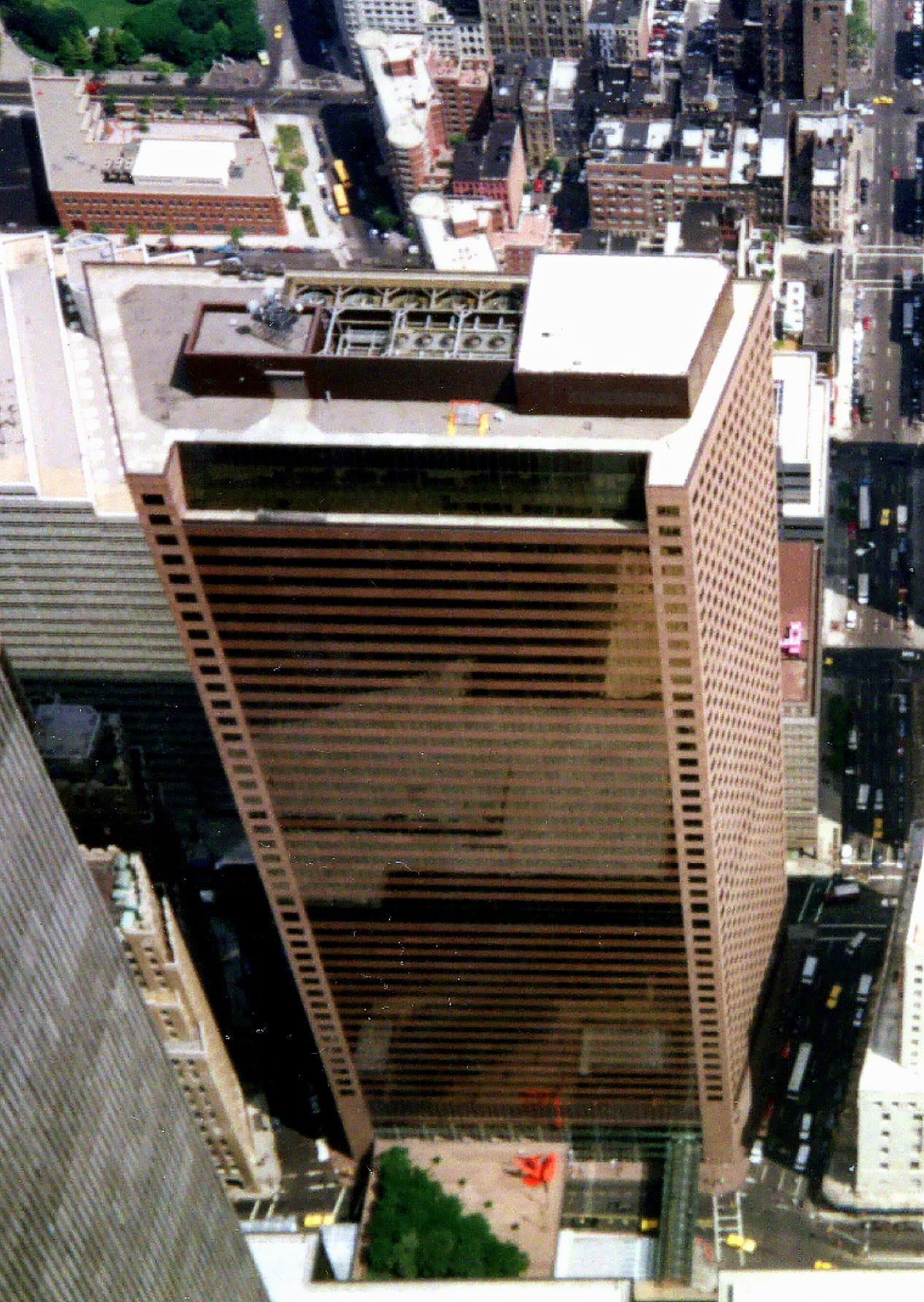
World Trade Center 7 stood 47 stories tall, stretched across an entire city block, and contained nearly two million square feet of floor space. It sat directly north of the main World Trade Center complex, across Vesey Street.
And no airplane hit it.
That fact has driven questions about Building 7 for more than two decades.
The Twin Towers had suffered clear blows. Millions of people watched aircraft penetrate their upper floors.
Building 7 suffered no such impact.
Yet hours later, the entire building dropped toward the ground in a fast, mostly vertical collapse.
And it too belonged to Larry Silverstein.
Building 7 was not included in the 99-year lease Silverstein signed 49 days before the attacks.
He already controlled it.
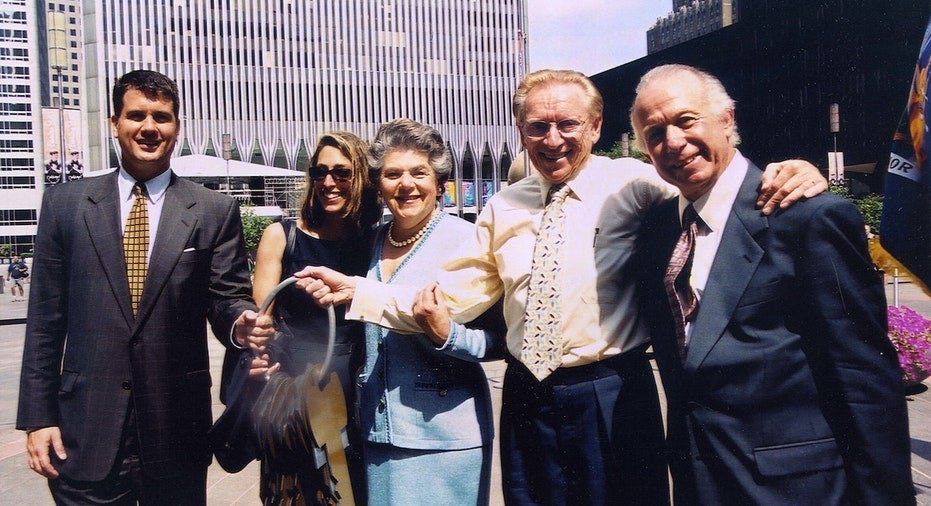
In 1980, Silverstein won the right to develop the final available parcel within the World Trade Center site. Construction began several years later, and the original 7 World Trade Center opened in 1987.
It was Silverstein’s foothold downtown.
Years before he gained control of the Twin Towers, he could look south from Building 7 and see them looming over his property. He later recalled thinking how remarkable it would be to control them someday.
That wish eventually came true.
By July 2001, Silverstein held the lease on the Twin Towers while retaining control of the building next door.
Then he lost all three on the same day…
But Building 7 was different from the towers in another important way.
It housed not only banks, insurance firms, and financial companies, but also government offices. New York City placed its emergency-command center inside the building after the 1993 World Trade Center bombing. Other tenants included the Securities and Exchange Commission, the Internal Revenue Service, the Secret Service, and several financial institutions.
This means that Building 7 contained sensitive operations, government records, regulatory files, and an emergency center created for exactly the kind of catastrophe unfolding outside its windows.
And on the day it was needed most, that command center was not available.
In the 2002 PBS documentary America Rebuilds, Silverstein described a conversation he said he had with a fire-department commander on the afternoon of September 11.
Silverstein recalled being told that firefighters were unsure they could contain the blaze.
His response:
“Maybe the smartest thing to do is pull it.”
Silverstein then said that “they made that decision to pull” and that the building later collapsed.
He claims that he was referring to firefighters.
I’m sorry…pulling firefighters out?
When has someone referred to another person or a team of people as an “it”?
In the demolition industry, “pull it” refers to bringing down a structure, usually in reference to the final “grand finale” moment.
The statement was especially jarring because Silverstein did not say:
We pulled the firefighters out.
He said:
“Pull it.”
Then:
“They made that decision to pull.”
Then the building fell.
If Silverstein meant the firefighters, why did he refer to “it”?
You decide.
At 5:20:52 p.m., the east penthouse on Building 7 began dropping into the structure.
Seconds later, the building’s outer frame descended.
From the most widely seen camera angles, the roofline remained largely level as the façade dropped toward the ground. The building folded inward, sending up a thick cloud of dust while leaving much of the surrounding area untouched.
To the untrained eye, it looked like a controlled demolition.
Surprise…looks like it was.
In a 23-page examination of the physics in the collapse of WTC 7, Charles M. Beck concluded that:
“The building was destroyed in a highly controlled fashion and, contrary to the common sentiment, did not spontaneously collapse.”
The NIST concluded that it was “uncontrolled office fires” that led to the building’s collapse.
A fire-induced progressive collapse.
The agency also acknowledged that, according to their analysis, Building 7 was the FIRST known tall building to collapse primarily because of uncontrolled fires.
The agency also stated that it withheld limited input and results files used in certain Building 7 collapse models.
Do with that what you will.
Their answer wasn’t good enough for a lot of people.
One of those people was J. Leroy Hulsey.
NIST’s explanation is not the only engineering analysis of Building 7.
Between 2015 and 2019, a team led by civil-engineering professor J. Leroy Hulsey conducted a separate structural study at the University of Alaska Fairbanks.
The study was funded by Architects & Engineers for 9/11 Truth, an organization that openly advocates for a new investigation. The university lists a project budget of approximately $316,000.
The UAF team built computer models of the structure, examined fire-loading scenarios, tested NIST’s Column 79 theory, and simulated multiple patterns of structural failure.
Its conclusion directly contradicted the federal government.
According to the UAF final study, fire did not cause the collapse of Building 7.
The researchers concluded that the observed descent required a “near-simultaneous failure of every column in the building.”

That sounds like controlled demolition.
Then there was the news report.
At approximately 4:54 p.m., BBC World correspondent Jane Standley told viewers that the Salomon Brothers Building, another name for World Trade Center 7, had collapsed.
But it had not.
Building 7 remained standing for roughly another 26 minutes.
Worse, during portions of the archived BBC broadcast, the building could still be seen in the skyline behind the reporter as she discussed its fall.
At 5:20:52 p.m., it finally came down.
The BBC later acknowledged the mistake.
But one question remains fair:
Who first told the news agencies that Building 7 had already fallen?
Larry Silverstein’s order to “pull it” is ambiguous enough.
But when taken together with the BBC report, the free-fall of the structure and UAF study, and the reasoning of “it was an office fire”…
How many more “reasons” does there need to be?
It reminds of the guy caught in a lie that keeps having to make up another lie…
If Building 7 was brought down deliberately, who had the access, resources, knowledge, and protection required to prepare it?
To begin answering that, we have to leave the buildings behind.
And examine Larry Silverstein’s connections.
Most people have heard of the Twin Towers. Far fewer have seriously examined Building 7. Share this investigation with someone who still has questions.
Now, Larry Silverstein’s ties to Israel were not and are not hidden.
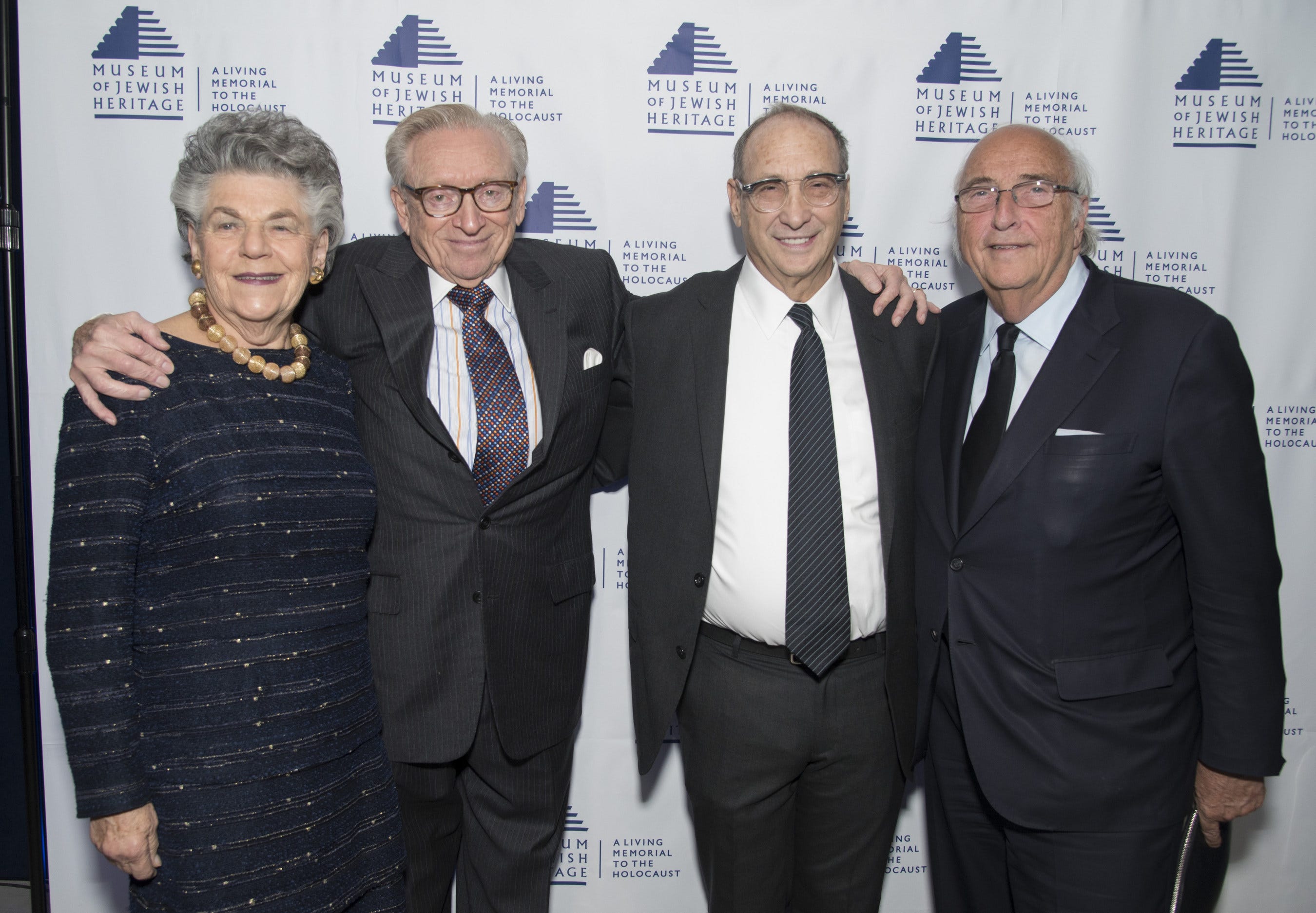
Silverstein had long served in major Jewish charitable institutions. His biographies note that he was a former chairman of the UJA-Federation of New York, a founding trustee of the Museum of Jewish Heritage, and a supporter of organizations connected to Jewish life and Israel.
He also appeared at events for Development Corporation for Israel (better known as Israel Bonds) an organization that sells bonds used to support the Israeli economy.
Now, philanthropy is not espionage.
But Silverstein’s relationship with Israel extended beyond donations.
He knew the people who ran it.
In a recorded conversation hosted by Israel Bonds, Silverstein said he had enjoyed working with nearly “every prime minister of Israel” from Yitzhak Shamir onward.
That would include:
Yitzhak Shamir
Yitzhak Rabin
Shimon Peres
Benjamin Netanyahu
Ehud Barak (heavily mentioned in the Epstein Files)
Ariel Sharon
That is the résumé of a man with access.
Access, of course, is not guilt.
But when one of the “luckiest” men connected to September 11 also maintained direct relationships with the leaders of a foreign state whose intelligence activities repeatedly surface around the attacks, those relationships become relevant.
Of all Silverstein’s Israeli relationships, one stands apart.
Benjamin “Bibi” Netanyahu.
In November 2001 (a little more than two months after the attacks) the Israeli newspaper Haaretz published a profile of Silverstein titled “Up in Smoke”.
So not an acquaintance.
Not someone he met once at a fundraiser.
A friend.
According to the profile, Netanyahu would call Silverstein every Sunday afternoon, regardless of where Netanyahu happened to be or what the two men had to discuss.
Think about what that means.
Benjamin Netanyahu was not merely another Israeli politician. He had already served as prime minister from 1996 to 1999. Before that, he served as Israel’s ambassador to the United Nations and as a senior diplomat in Washington.
He was one of the world’s most recognized voices on terrorism.
Yet he maintained a standing weekly telephone relationship with the man who had just leased the World Trade Center.
Did Netanyahu call Silverstein during the seven weeks between the signing of the World Trade Center lease and September 11?
Did they speak in August 2001?
Did they speak on Sunday, September 9—two days before the attacks?
We may never know, but my money is on that they did talk.
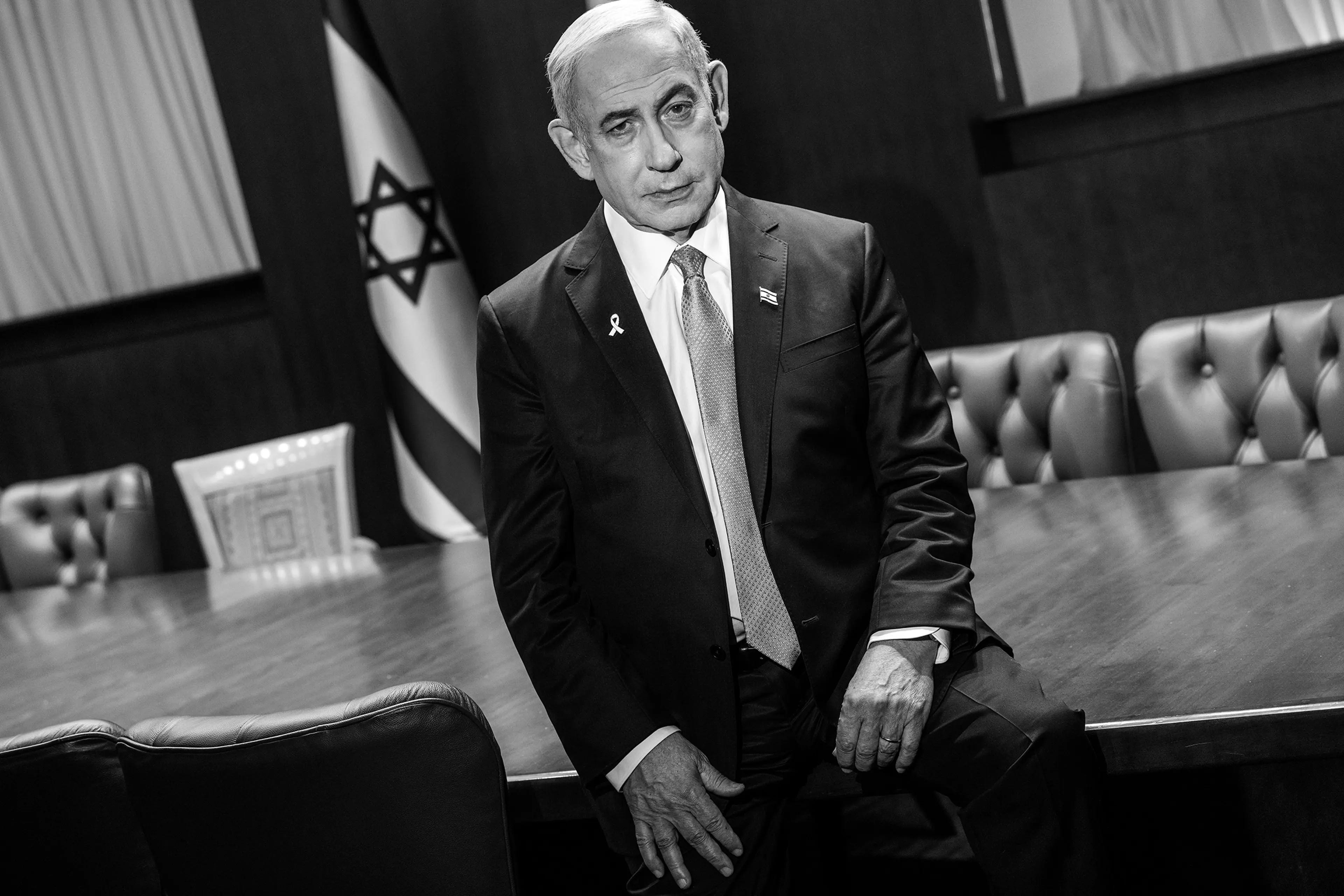
Netanyahu’s place in this story matters because few political leaders had spent more time warning Americans about international terrorism.
Long before September 11, Netanyahu argued that the United States and Israel faced the same enemy.
With eerie accuracy…
He developed that case in speeches, congressional testimony, interviews, and books. His message remained consistent: terrorism aimed at Israel would eventually strike the West, and Western governments would have to respond with the same force Israel used against its enemies.
In other words, Netanyahu did not need September 11 explained to him.
He had spent years predicting something like it.
While Americans watched the towers burn, Netanyahu already grasped what the attacks could do to American public opinion.
His first reported reaction made that clear.
On the evening of September 11, journalist James Bennet tracked down Netanyahu and asked what the attacks would mean for relations between the United States and Israel.
Netanyahu answered:
“It’s very good.”
Then he caught himself.
“Well, it’s not very good, but it’s going to generate immediate sympathy.”
With startling enthusiasm.
Netanyahu’s statement establishes one point beyond dispute:
He believed September 11 would benefit the relationship between Israel and the United States.
And he was right.
Seven years later, Netanyahu was less guarded.
In April 2008, the Israeli newspaper Ma’ariv reported on remarks he made at Bar-Ilan University.
According to the report, Netanyahu said Israel was benefiting from two major developments:
The attack on the Twin Towers.
The American war in Iraq.
Uh, excuse me?
This was no longer a “startled comment” made during the chaos of September 11.
It was a retrospective judgment.
Netanyahu had watched seven years of consequences unfold and reached the same conclusion he had voiced on the day of the attacks:
9/11 benefited Israel strategically.
But motive is rarely proven by benefit alone.
It is built by combining benefit with knowledge, means, opportunity, action—and concealment.
At this point in the story, we have established only the first part.
Israel benefited.
Its leaders knew it.
And one of those leaders maintained a close, regular relationship with the man who had just acquired the World Trade Center.
Silverstein’s ties to Israel did not fade after September 11.
He continued appearing at pro-Israel events, supporting Israel-linked institutions, and maintaining relationships with Israeli leaders.
In 2020, Israel Bonds hosted Silverstein for a public conversation with Carlyle Group co-founder David Rubenstein. The event presented him not merely as a developer, but as a major figure within a network that connected American finance, real estate, philanthropy, and support for the Israeli state.
His family remained involved as well.
At a 2023 Israel Bonds luncheon, Silverstein’s daughter Lisa praised Israel and told attendees that “investing in Israel is investing in the future”. The event reportedly generated more than $61 million in investments and indications for Israel Bonds.
Again, none of this is secret.
The question is not whether Silverstein supported Israel.
He clearly did.
The question is whether those relationships had any connection to what happened on September 11.
So far, no public evidence proves that they did.
But Silverstein’s friendship with Netanyahu creates the bridge to the next stage of the investigation.
Because Netanyahu was not the only part of Israel’s national-security world appearing around the edges of 9/11.
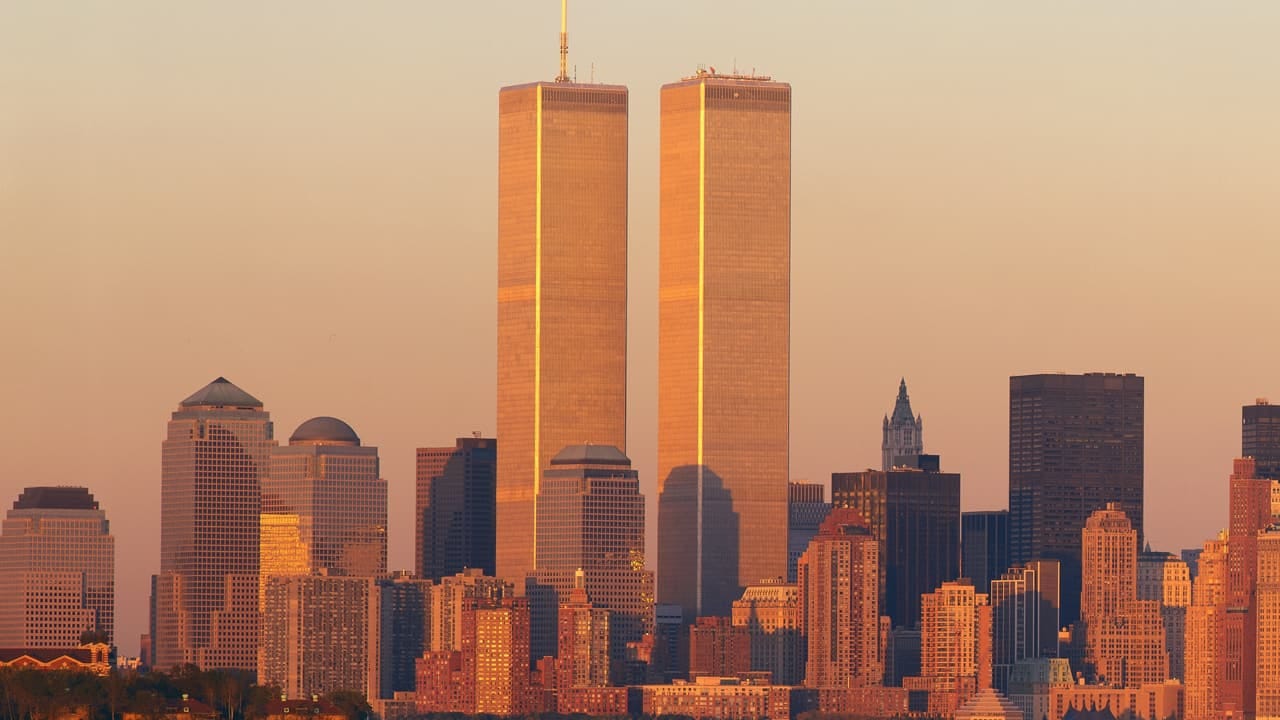
Before examining what Israeli intelligence may have known, one fact must be made clear:
Warnings about an impending terrorist attack
were everywhere in the summer of 2001.
This was not a calm intelligence landscape disturbed by one mysterious message from Israel.
It was a storm.
The 9/11 Commission devoted an entire chapter to what it called “The System Was Blinking Red”. During the spring and summer of 2001, American intelligence agencies received an extraordinary stream of reports suggesting that Osama bin Laden’s network was preparing something large.
In June, one intelligence report warned that something “very, very, very, very big” was about to happen. CIA Director George Tenet later told the Commission that by late July, the threat reporting could not “get any worse.”
Officials knew an attack was coming.
They did not know (or later claimed they did not know) where, when, or how it would occur.
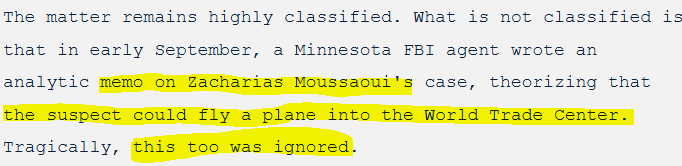
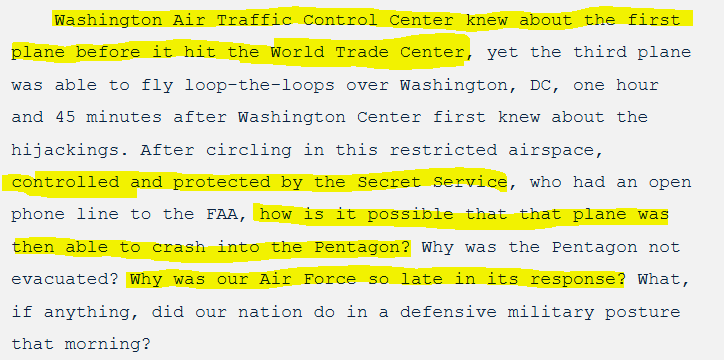
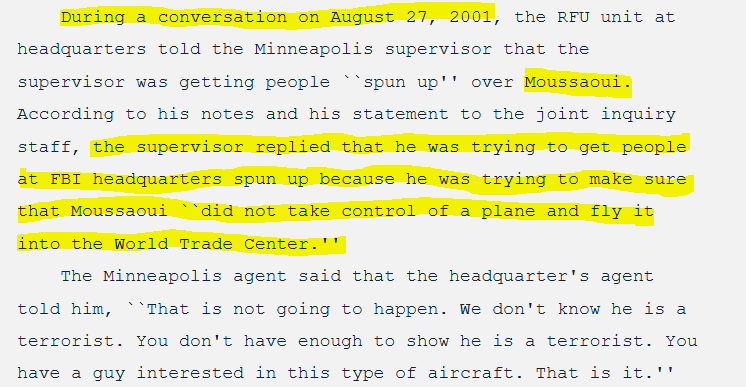
The congressional Joint Inquiry into pre-9/11 intelligence found that American agencies had received information for years suggesting that terrorists were considering attacks inside the United States.
Some reports even involved airplanes.
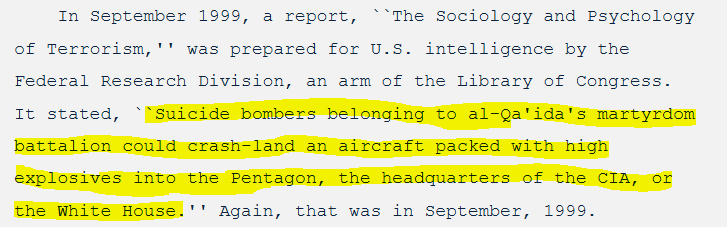
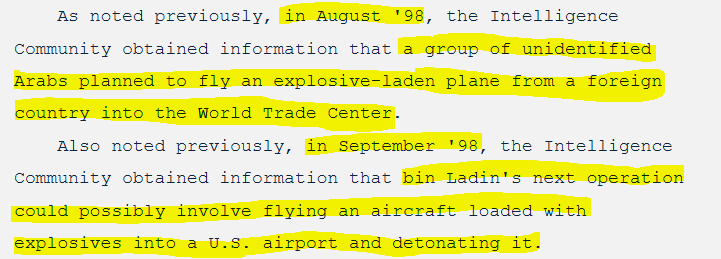
In August 1998, intelligence agencies received information about a possible plan to fly an explosive-laden aircraft into the World Trade Center. Other reports described possible aircraft attacks against targets in New York and Washington.
Excerpts from JOINT COMMITTEE HEARING ON THE EVENTS SURROUNDING THE ATTACK ON THE UNITED STATES ON SEPTEMBER 11, 2001:
I leave it to you:
Did American Intelligence have enough intelligence that 9/11 could have been prevented? Or was intelligence suppressed?
Five days after September 11, Britain’s Daily Telegraph reported that Israeli intelligence officials had warned their American counterparts in August 2001.
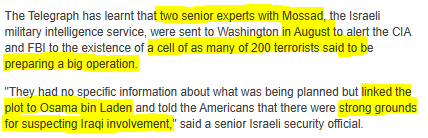
Some interesting things about this warning though:
The warning did not identify the World Trade Center.
It did not provide a date.
It did not explain that passenger aircraft would be hijacked and turned into missiles.
But it placed the expected operation inside America and described Americans as highly vulnerable.
It pointed the finger at Iraq.
But why Iraq?
We now know that 15 of the 19 hijackers were Saudi citizens, while the operation itself was organized and financed by al-Qaeda.
Iraq was not involved.
The 9/11 Commission later found no evidence that Saddam Hussein’s government cooperated with al-Qaeda in planning or carrying out attacks against the United States. There had been occasional contacts between Iraqi officials and people linked to al-Qaeda, but the Commission found that those contacts never developed into a collaborative operational relationship.
So why would Iraq appear anywhere near an Israeli warning
about an approaching terrorist attack?
Because Iraq was not a new suspect.
It was an old target.
Five years before September 11, a group of American strategists led by Richard Perle prepared a policy paper for Benjamin Netanyahu titled “A Clean Break: A New Strategy for Securing the Realm”.
Its purpose was not to protect the United States.
It was to advise Israel.
And one of its central recommendations was unmistakable:
“Removing Saddam Hussein from power in Iraq—an important Israeli strategic objective in its own right.”
Why would overthrowing Saddam help Israel?
Because the authors believed Iraq’s fall could reshape the balance of power across the entire Middle East.
The paper argued that removing Saddam could weaken Syria, strengthen Jordan, break apart hostile regional alliances, and give Israel greater freedom to act against Hezbollah and other enemies.
Iraq was not treated as one threat among many.
It was the first domino.
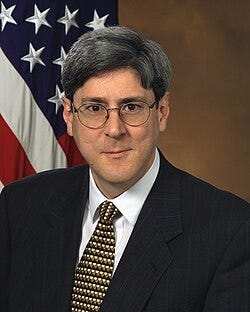
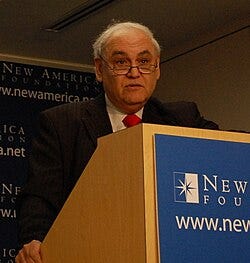
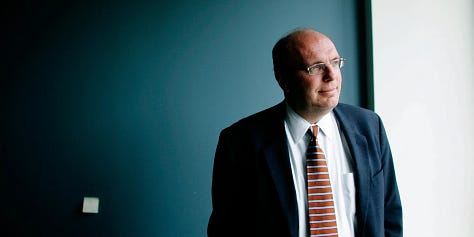
Douglas Feith, one of its authors, became undersecretary of defense for policy in July 2001—one of the most powerful policy positions inside the Pentagon.
Richard Perle?
He became chairman of the Pentagon’s Defense Policy Board.
David Wurmser later worked as a senior Middle East adviser to Vice President Dick Cheney.
The men who had advised an Israeli prime minister that Saddam’s removal was an important Israeli objective were soon positioned inside the American government when September 11 occurred.
This proves something that’s not really discussed:
The plan to remove Saddam existed before 9/11.
The people promoting it already knew what they wanted.
What they lacked was a crisis powerful enough to sell it.
By 1998, the campaign had moved from a paper prepared for Netanyahu into American politics.
A group called the Project for the New American Century sent a public letter to President Bill Clinton calling for the removal of Saddam Hussein’s regime.
Its signers included:
The letter argued that containment had failed and that the United States should be prepared to use military force.
This was January 1998.
More than three years before the Twin Towers fell.
Interestingly, by the time 9/11 happened, nearly all of these men were already inside—or immediately beside—the Bush administration:
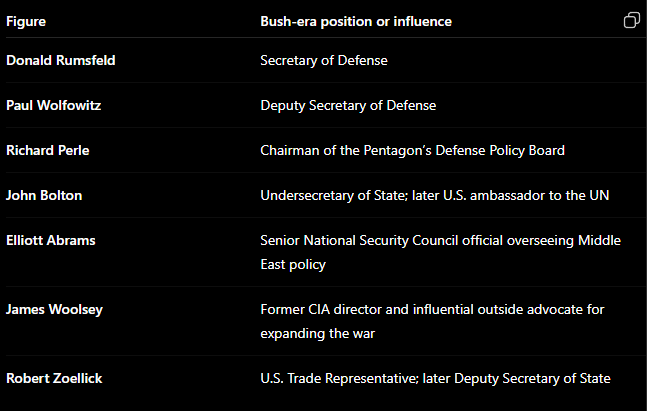
So when September 11 happened, these officials did not suddenly discover Iraq.
They had been trying to solve the “Iraq problem” for years.
The attack gave them an opening.
The speed at which Iraq entered the conversation after 9/11 is difficult to ignore.
According to the 9/11 Commission Report, Defense Secretary Donald Rumsfeld’s instinct on the afternoon of September 11 was to consider striking Saddam Hussein at the same time as Osama bin Laden.
The towers were still burning.
No investigation had been completed.
The hijackers had not all been publicly identified.
Yet Iraq was already under discussion.
Deputy Defense Secretary Paul Wolfowitz pushed the idea even harder.
Secretary of State Colin Powell later told the Commission that Wolfowitz could not justify his belief that Iraq was behind the attacks.
Powell explained that Wolfowitz had always believed Iraq needed to be confronted and saw 9/11 as:
“One way of using this event as a way to deal with the Iraq problem.”

Using this event.
A Pentagon memorandum prepared shortly after the attacks even suggested that the United States might deliberately strike a target unrelated to al-Qaeda—“like Iraq”.
In other words, Iraq did not need to have carried out the attack to become a target of the response.
The strategic goal came first.
The justification came later.
This brings us back to the Israeli warning.
If Israeli intelligence genuinely believed Iraq was behind the approaching attack, what evidence produced that belief?
Did it intercept communications?
Did it identify Iraqi officers?
Did it uncover funding?
Did it possess names?
Or was Iraq attached to the warning because Saddam was already the preferred target of the people shaping Israeli and American Middle East policy?
The record shows that Iraq had been marked for regime change years before 9/11.
It shows that removing Saddam had been described as an Israeli strategic objective.
It shows that several authors and supporters of that strategy later gained influence inside the Bush administration.
And it shows that, almost immediately after the attacks, those officials attempted to turn America’s attention toward Baghdad despite lacking evidence that Iraq had participated.
That does not prove Israel planned to frame Iraq.
But it does show that the machinery for blaming (and attacking) Iraq had already been built.
This is discussed in our series on regime change, as well as the White Rabbit article on Gaddafi:
The most curious part of the reported warning was its estimate that as many as 200 terrorists or suspected operatives were inside the United States.
That was not a small sleeper cell.
That was a network.
Where did that number come from?
Was it based on intercepted telephone calls? Travel records? Human sources Financial transactions? Visa information?
Surveillance conducted by Israeli personnel inside the United States?
Did Israeli intelligence possess names? Addresses? Photographs? Associates?
If Mossad believed hundreds of operatives had entered America, it must have been working from something more substantial than a vague feeling.
And if Israel is “our greatest ally”, why weren’t the specifics shared with us?
Intelligence agencies issue warnings constantly.
Most never lead to an attack.
Some predict events that do not happen.
Others identify the right organization but the wrong country, target, date, or method.
There is an enormous difference between saying:
Al-Qaeda intends to attack the United States.
And saying:
Al-Qaeda will hijack commercial aircraft on September 11 and strike the World Trade Center and Pentagon.
The first is strategic warning.
The second is operational foreknowledge.
The publicly described Israeli warning falls somewhere between them.
And, you have to admit, it is a vague warning.
But then something happened…
A second warning.
This one did not arrive weeks before the attack.
It arrived roughly two hours before it happened.
On the morning of September 11, two employees of an Israeli instant-messaging company called Odigo received an unusual message.
They worked at the company’s offices in Herzliya, Israel, a coastal technology center north of Tel Aviv.
According to Odigo executives, the message arrived approximately two hours before the first aircraft struck the World Trade Center.
The message warned that something bad was about to happen.
It was threatening.
It was unusual.
And its timing was close enough to the attacks that the company contacted law enforcement.
Odigo vice president Alex Diamandis told Computerworld that the message was nonspecific and did not mention the World Trade Center.
“It was the timing that made it unusual.”
After the attacks, Odigo employees searched the company’s server records and identified information connected to the sender. That information was passed to Israeli security services and then to the FBI.
The FBI opened an investigation into whether the sender possessed advance knowledge. Contemporary reporting in Haaretz likewise stated that the two employees had received messages before the attacks and that Odigo was cooperating with Israeli and American authorities.
Do you know what happened?
Absolutely nothing.
This story was memory holed and you’ve probably never heard about it.
Funny how that happens.
At this stage, two separate Israel-linked warning tracks emerge.
The first is institutional.
The second is personal and technical.
Of course, no public evidence connects the two events.
But together they establish something more substantial than a vague rumor.
Information relating to an approaching attack moved through Israeli channels before September 11.
That does not prove Israel planned the attacks.
It does not even prove that Israeli officials knew the exact targets.
But it makes it difficult to argue that Israel had no relevant forewarning whatsoever.
And that issue becomes harder to dismiss when warnings are followed by surveillance.
And that is where the story goes next.
At 8:46 a.m., American Airlines Flight 11 struck the North Tower.
Across the Hudson River, people poured onto balconies, rooftops, sidewalks, and parking lots. Some stared toward Manhattan in silence. Others reached for phones and cameras.
One woman saw something that did not look like shock.
The witness—identified publicly only as Maria—lived in an apartment building with a clear view of Lower Manhattan. Shortly after the first impact, a neighbor called and told her to look toward the World Trade Center.
Maria grabbed her binoculars.
She saw smoke pouring from the North Tower.
Then she noticed three men near a white moving van in the parking lot below.
According to Maria’s account to ABC News, the men climbed or knelt on top of the van and began photographing or filming themselves with the burning World Trade Center behind them.
Yes, you read that right.
It was not merely the cameras that disturbed her.
It was their faces.
"They were like happy, you know … They didn't look shocked to me. I thought it was very strange," she said.
She wrote down the van’s license plate number and called the police.
Before long, the FBI became involved, and authorities issued a statewide alert for the vehicle.
That phone call began one of the strangest (and most carefully buried) investigations connected to September 11.
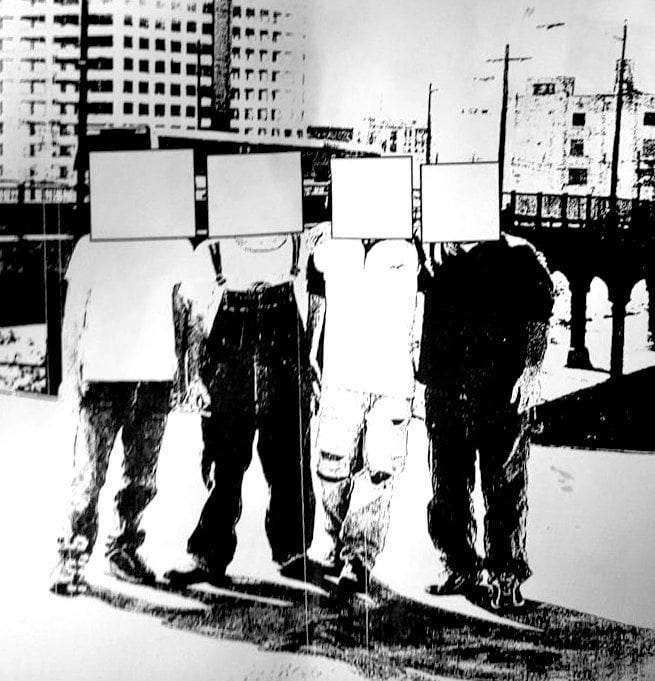
The five men would later become known online as the “dancing Israelis.”
The phrase is loaded.
It often replaces the actual evidence with a caricature, making the story easier either to sensationalize or dismiss.
Released FBI records later stated that the Israelis were observed “celebrating and photographing the World Trade Center explosion within minutes after the WTC was first hit”. The records also said developed photographs showed the men looking visibly happy in nearly all the images.
That is more precise than the phrase “dancing Israelis.”
And arguably more disturbing.
The license plate led authorities to Urban Moving Systems, an Israeli-owned moving company operating in New Jersey.
At approximately 4 p.m., police spotted the “white Chevrolet van” on Route 3 near the Meadowlands sports complex. Officers stopped it and removed five men at gunpoint.
Sivan Kurzberg
Paul Kurzberg
Oded Ellner
Omer Marmari
Yaron Shmuel
All five were Israeli citizens and employees of Urban Moving Systems.
According to ABC News’ account of the vehicle search, officers found one man carrying approximately $4,700 in cash, another holding two foreign passports, and a box cutter inside the van.
There was also A LOT of stuff in the FBI file that was redacted.
The FBI documents did record the seizure of cameras, notebooks, airline tickets with “immediate” international travel dates, Israeli and German passports, and thousands of dollars in cash.
It was also noted that there was no moving equipment. Dollies, straps, etc.
The men’s comments during the stop did little to calm the officers.
According to the police account later cited by ABC News, one passenger said the group had been on Manhattan’s West Side Highway “during the incident.”
Also interesting to note:
The FBI document referred to the attack as an “explosion”, not a plane crash or terrorist attack.
Sivan Kurzberg reportedly told officers:
“We are Israeli. We are not your problem. Your problems are our problems. The Palestinians are the problem.”
Interesting. According to another witness in the FBI files who previously worked for Urban Moving Systems:
“An Israeli employee of Urban had even once remarked, ‘Give us twenty (20) years and we’ll take over your media and destroy your country.‘“
…
Do with that what you will.
The five were turned over to federal authorities and detained.
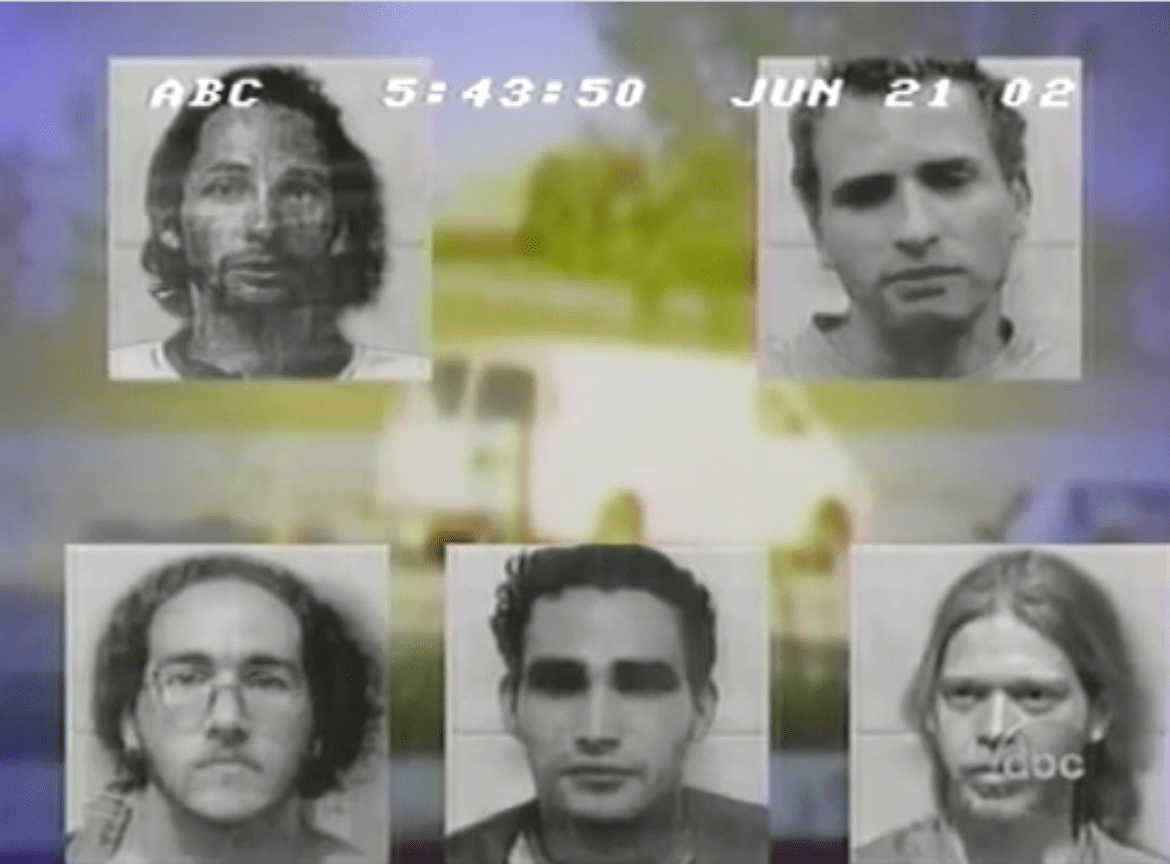
The men initially disputed or minimized parts of the witness account.
The film told a different story.
According to the released FBI investigative material, photographs developed from a camera seized during the investigation showed the Israelis smiling and appearing happy in nearly ALL the relevant images.
The pictures had been taken from more than one location too.
Some were shot from the top of the van.
Others appeared to come from a parking area near Urban Moving Systems’ facility in Weehawken.
One widely circulated photograph reportedly showed Sivan Kurzberg holding a lighter in front of the distant burning towers.
Another showed the men posing closely together as smoke rose across the river.
This is the most important timing question.
Were the men already positioned to film the World Trade Center before Flight 11 struck?
Or did they rush outside after hearing or seeing the first impact?
Maria noticed them after the first plane struck.
However, another witness in the same apartment complex as Maria said he noticed them as early as 8:00am.
The FBI document doesn’t share any conclusive data (that is not redacted) on their actual arrival time.
At first, federal authorities needed to determine whether the men were connected to the terrorist attack.
The FBI opened a full-field investigation on September 14, 2001.
The documents say that evidence from the van included names and telephone numbers “directly associated” with previously identified persons or activities.
Of course those persons and names are redacted.
The men underwent repeated interviews and polygraph examinations. Counterintelligence personnel became involved. Investigators searched their workplace, seized computers (16 computers at the moving company in New Jersey), examined photographs, reviewed travel records, and traced their contacts.

The FBI searched Urban Moving Systems’ facility in Weehawken shortly after the arrests.
What agents found made the company look…suspicious.
The FBI report states that the search uncovered “little evidence of a legitimate business operation”. The search-team leader characterized the company as a possible “fraudulent operation.”
No surprise, the company abruptly ceased operating after this.

Urban Moving Systems was owned by Dominik Suter, an Israeli citizen.
The FBI questioned Suter once after the attacks. He later left the United States for Israel before investigators could question him again.
Then there’s more.
In March 2002, The Forward, a longstanding Jewish-American newspaper, reported that a former high-ranking American official had been regularly briefed by two law-enforcement sources on the case.
According to that official, the FBI concluded that Urban Moving Systems was a front for an Israeli intelligence operation and that at least two of the five detained men were Mossad operatives.

The Forward also reported that names connected to two of the men appeared in an American intelligence database of foreign operatives, causing the matter to become a foreign-counterintelligence investigation.
ABC News later reported that federal authorities’ interest intensified when some of the men’s names appeared in a national intelligence database. Former CIA counterterrorism official Vince Cannistraro told ABC that officials considered whether Urban Moving Systems had been used to run surveillance against radical Islamist networks in New York and New Jersey.
I’m sorry.
Why is another nation’s Intelligence Agency running
surveillance operations on American soil?
And not telling us?
That doesn’t seem like “greatest ally” behavior.
Of course, the key officials were unnamed.
The complete counterintelligence report remains unavailable.
The FBI did not publicly confirm the reported Mossad conclusion.
Israeli officials, naturally, denied it.
After their deportation, several of the men appeared on Israeli television.
During that interview, Oded Ellner reportedly said:
“The fact of the matter is we are coming from a country that experiences terror daily.
Our purpose was to document the event.”
Yeah. “Document the event.”
To document.
That language fits ordinary photography.
It also fits surveillance.
This whole story during 9/11, of course, was memory holed.
What else was memory holed?
The Israeli art students.
This story was reported, investigated, and then largely forgotten. Share it before another documented piece of 9/11 history disappears beneath the label of “conspiracy.”
Comments
Nothing yet. Say the first thing.
Sign in to join the conversation.