
I spent time in the archives again last week.
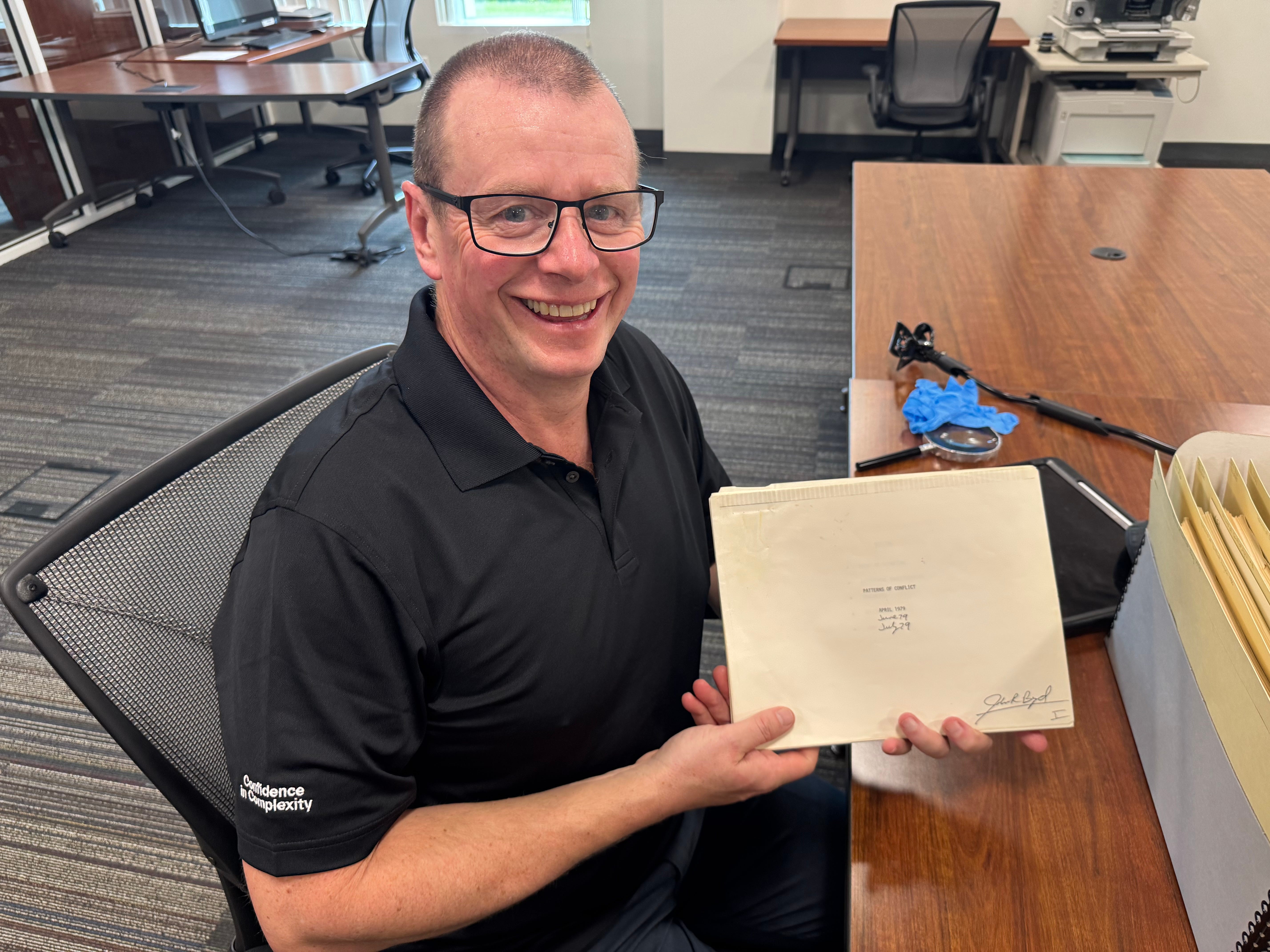
I brought Steve McCrone with me. He was visiting from New Zealand. Watching him go through Boyd’s material was something else. A grown man reverting to kid-at-Christmas energy. That’s what the archives do to serious people.
Here’s what I need to share.
Boyd was working on a presentation he tentatively called “Interconnectedness” — listed as (I) in his own notation. I reached out to Chet Richards this morning to see if he had any awareness of it. Could be connected to Revelation. Could be something else entirely. We don’t know yet.
What we do know is this: the Marine Corps Archives Division will be publishing online access to certain boxes from Boyd’s collection soon. The books likely won’t be included because of copyright, but the intellectual infrastructure is coming. The world is about to get access to Boyd’s codex.
I can’t overstate what that means.
Here’s the thing about most people who write about Boyd. They don’t go to the archives.
Look at the footnotes in some of the recent books on Boyd’s OODA loop. Wikipedia. Surface-level sources. That’s not research. That’s cosplay. When you actually go in, when you sit with the marginalia, you see a completely different man. A voracious, cross-disciplinary thinker who would call out an author mid-book for contradicting themselves two chapters back. Boyd didn’t just read. He interrogated.
I was trying to trace what he knew about Mandelbrot. There’s a reason for that, and it connects to markets, to fractal structure, to things that go deeper than tactics. I looked for Teilhard de Chardin’s The Phenomenon of Man too, which is referenced throughout the collection. It’s not there. That’s a real loss. Capra’s Tao of Physics though? Present. Well marked. I have video of some of the marginalia. That book is doing work.
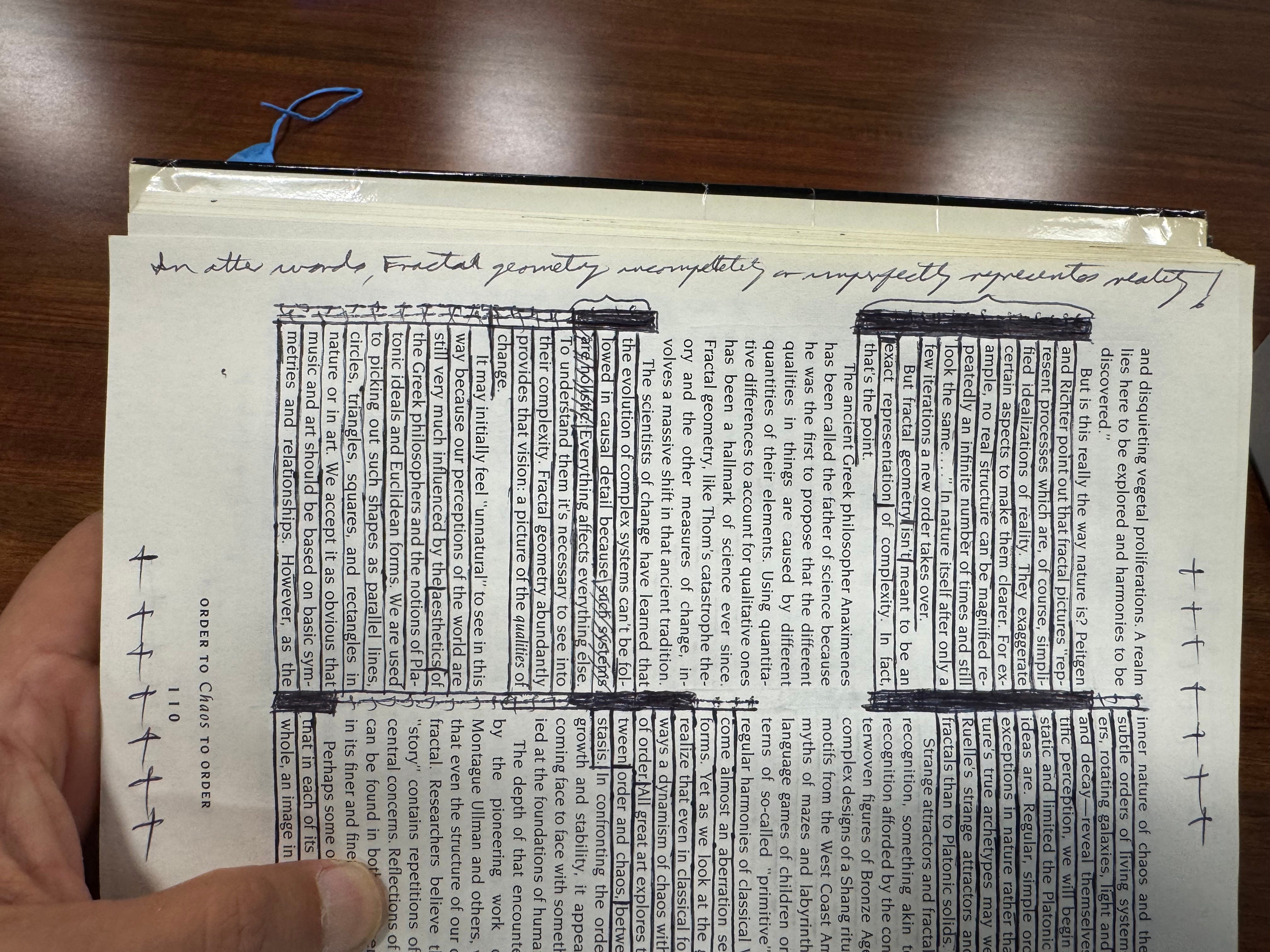
Now here’s the piece that stopped me cold.
I found a memo, short and handwritten, written by Boyd to someone whose name appears to be Jim. Dated 3 November 1992. This is Boyd telling you exactly how to read him. I’ll give it to you straight:
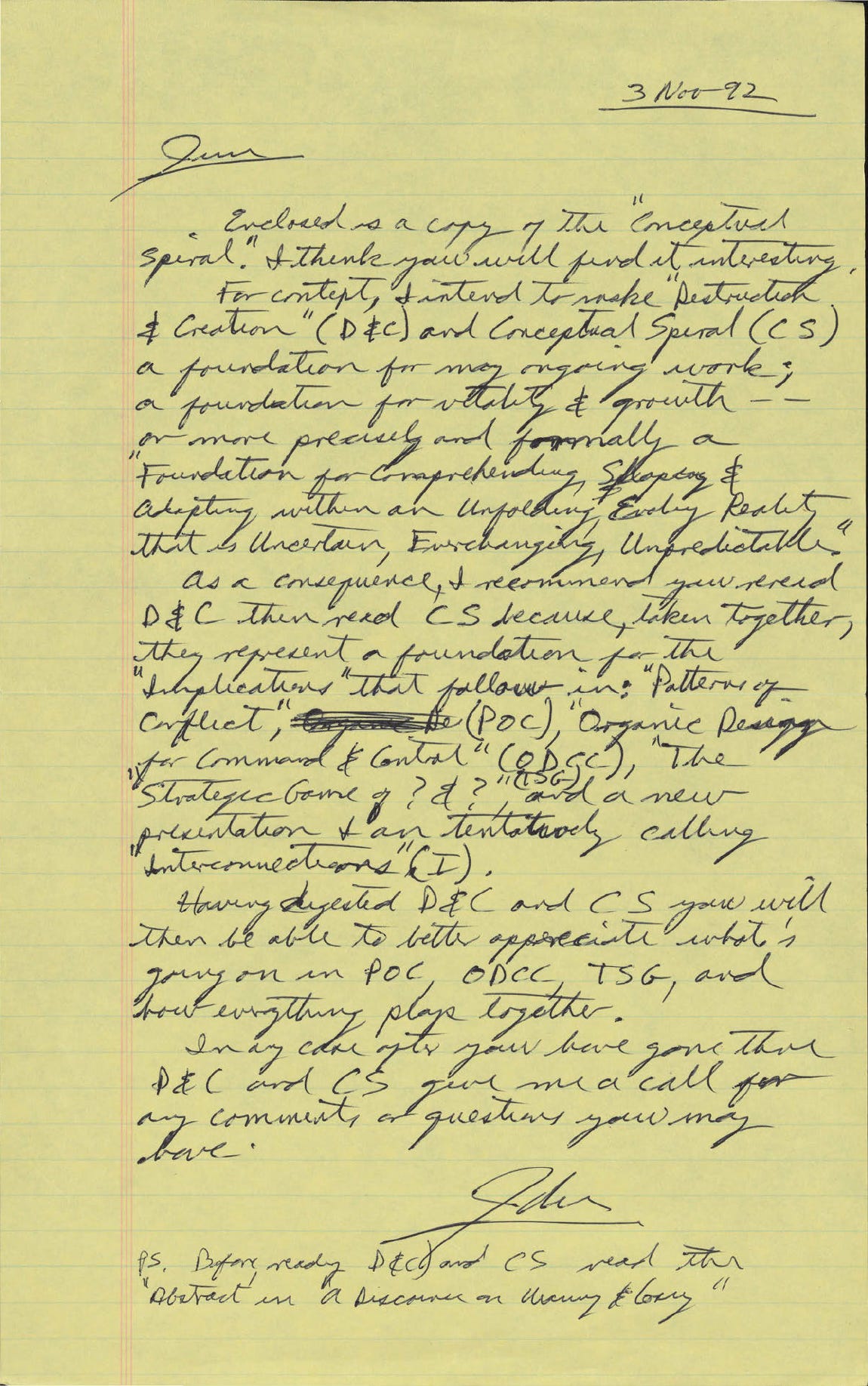
3 Nov 92
Jim
Enclosed is a copy of the “Conceptual Spiral.” I think you will find it interesting.
For context, I intend to make Destruction and Creation (D&C) and Conceptual Spiral (CS) a foundation for my ongoing work; a foundation for vitality & growth — or more precisely and formally a “Foundation for Comprehending, Shaping and Adapting within an Unfolding, Evolving Reality that is Uncertain, Everchanging, Unpredictable.”
As a consequence, I recommend you reread D&C and then read CS because, taken together, they represent a foundation for the implications that follow in: “Patterns of Conflict” (POC), “Organic Design for Command and Control” (ODCC), “The Strategic Game of ? And ?” (TSG), and a new presentation I am tentatively calling “Interconnectedness” (I).
Having digested D&C and CS you will then be able to better appreciate what’s going on in POC, ODCC, TSG, and how everything plays together.
In any case after you have gone through D&C and CS give me a call for any comments or questions you may have.
— John
P.S. Before reading D&C and CS read the “Abstract on Discourse on Winning and Losing.”
Read that again.
Boyd is telling you the reading order. He’s telling you the architecture. D&C and the Conceptual Spiral aren’t supporting material. They are the foundation. Everything else, Patterns of Conflict, ODCC, Strategic Game, flows from that base.
And then there’s Interconnectedness (I).
A presentation that, as far as most Boyd scholars know, doesn’t exist in complete form. But here it is, named explicitly, in his own hand, as the destination. The next thing he was building toward.
This is why the archives matter.
The OODA loop you’ve seen online, four boxes, linear, iterate faster, isn’t wrong because someone misunderstood a diagram. It’s wrong because people skipped the foundation. They skipped D&C. They skipped the Conceptual Spiral. They pulled the loop out of context and handed it to the business world as a productivity hack.
Boyd’s OODA loop sketch represents how living systems comprehend, shape, and adapt within an unfolding, evolving, uncertain reality. The loop is the capstone of that, not the starting point. He didn’t even draw it until 1995.
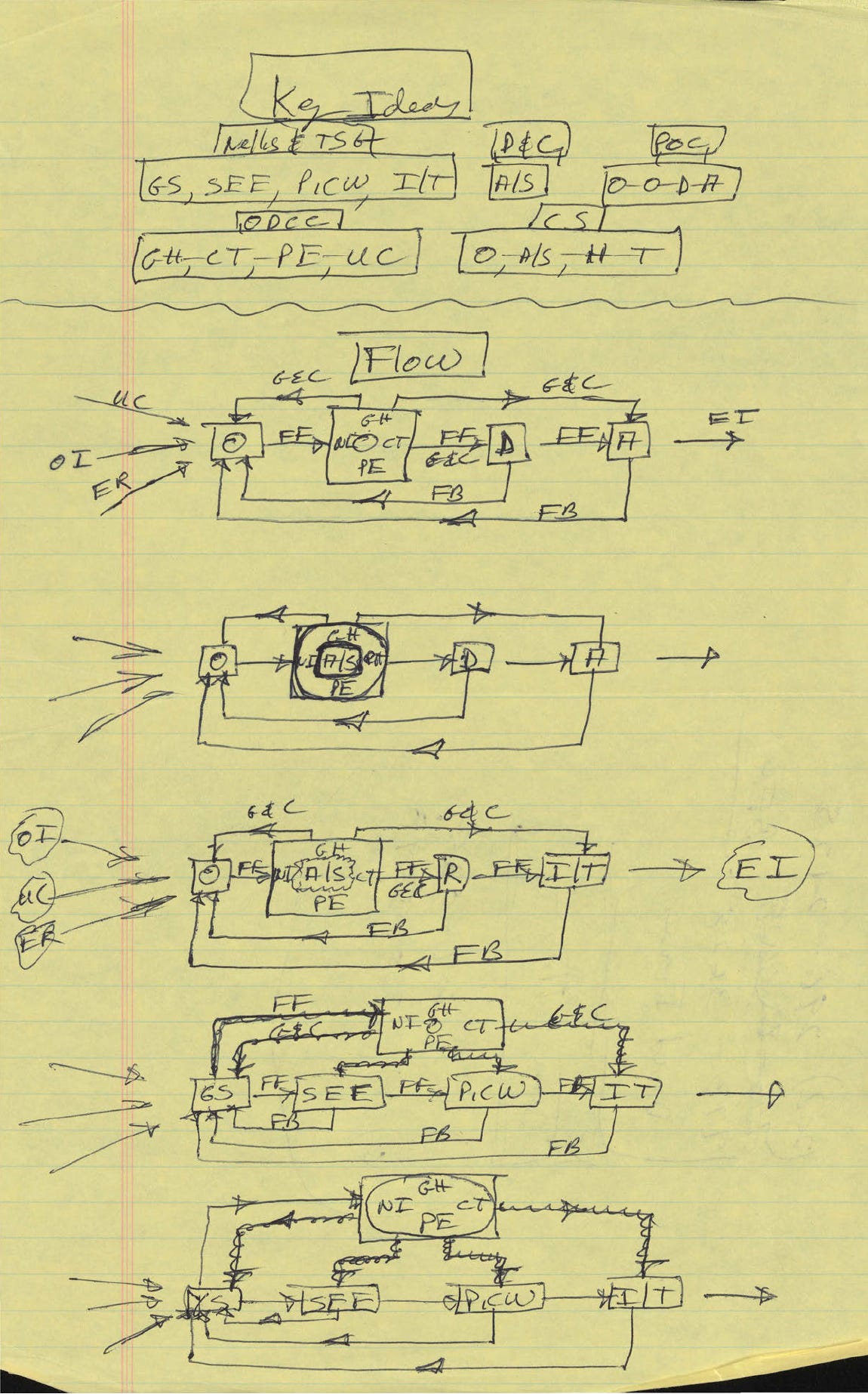
Interconnectedness was where he was heading next.
Think about what that title implies. Not faster cycles. Not better decisions. Interconnectedness. The relationship between systems. The entangled nature of orientation. The way that what you perceive is already shaped by what you are.
That connects to everything we’ve been saying about the Free Energy Principle. Karl Friston didn’t invent this. He formalized it. Boyd was already there, circling it from a different direction.
The archives are the proof.
Go there. Or wait, because access is coming. When it does, the conversation about Boyd changes permanently.
We’ll be ready.
-Ponch
Whirl of Reorientation | No Way Out Podcast | AGLX
Comments
Nothing yet. Say the first thing.
Sign in to join the conversation.